
Where There’s Food There’s Wine
Lately we have been gushing about Italian food, thanks to its recent inclusion in UNESCO as a cultural heritage. One reason why we, here at Vero, are so excited about this incredible achievement for Italy is because we have been fully immersed in the Italian culture for many years: between our American founder and “in house” chef, they have been living and working in Italy for a combined 40+ years! Fun fact, neither has a stitch of Italian blood in their body. So, clearly, there is something special about Italy which caused them to stay for so many years. No doubt, being exposed to the real way of life in Italy which has changed them forever.
When our founder, Sheila Donohue, arrived from New York in 2001 to start living and working in Italy, her familiarity to cooking was limited to the confines of recipes. Her most extensive experiences with wine were a trip to Napa and some social gatherings in NYC to try wines which were mostly mainstream, popular wines, sprinkled in every so often with “up and coming” wines, which, back then included “Super Tuscans”. You can say that her knowledge of wine was also quite limited to what was widely available in the US market at the time. (To give some perspective, Prosecco back then was largely unknown.) Growing up in an American Irish household, she was not accustomed to having wine at all, let alone with food. Admittedly, while dating an Italian American in the 90’s, she did start to learn the tradition of enjoying wine with a meal, but it didn’t catch on.
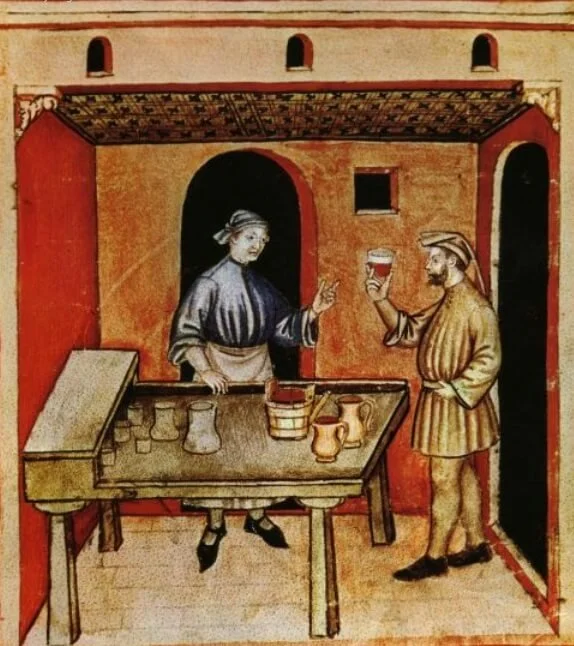
Here’s a page from a book in the 1400s, the Tacuinum Sanitatis, which instructed people on how to live a healthy life, with wine and food integrally part of it.
Then, upon arriving to Italy, she caught on quicky to how Italians loved to linger over a meal, in which there was always a glass of wine to help savor the experience. Little did she know that she was slowly being exposed to a UNESCO cultural heritage.
Like most Americans, Sheila got hooked on everything “really” Italian, meaning not the foods that she’d find in Italian American restaurants, nor Italian wines created primarily to satisfy the foreign markets, like Super Tuscans. Instead, got to experience and learning Italian food and wine on a much deeper level, where the culinary and vinous roots were based on generations of traditions, authentic stories steeped in history, and maximizing what nature provides at “chilometro zero,” aka “KM 0” or going ”0 kilometers” to get food and wine, for the dinner table. All of these aspects made Sheila fall in love with Italian food, and the whole experience surrounding it, which we synthesized into these 3 pillars of what made Italian cuisine achieve UNESCO status.
As Sheila got exposed to different types of wine while living and working in Italy, she became as fascinated with the wine as the food. As you can expect, where there is food there is wine in Italy. Why is that?
The short answer is because authentic Italian wine, local to the place where the grapes were grown which is also where the wine is made and graces the tables of the locals, also falls into the cultural heritage of Italian food, consisting of the same three pillars which helped authentic Italian cuisine to achieve UNESCO status.
It’s not just a hunch that we have to make this assertion. There are many data points to support the linkage in the Italian culture between wine and food.
Case in point is a book written by Andrea Bacci in the 1500’s called De naturali vinorum historia or The Natural History of Wines. The book originated because the pope at the time wanted a book about drinking wine with food, aka what we consider wine and food pairing today. It still considered a complete and accurate reference for wine even today, like when researching the history of rose wines in Italy. Just prior, in the 1450s, the first book about wellness, called Taccuinum Sanitatis, came out which was a reference to Italians, all Europeans as well as Arabs, to stay healthy, which encompassed food, wine, exercise, sleep and managing emotions.
Let’s find out more about the rich heritage of wine and food in Italy and the fascination behind it.
Deep Traditions in Italian Wine that Have Formed an Identity
As we talked about identity and traditions in Italian food, the same holds for wine.
When it comes to tradition, the President of the Italian Women in Wine association, Le Donne del Vino, says “Next to food is wine: It’s not only a symbol of a rapport, but has a deeper meaning of meeting, celebration and from intimate to large gatherings.” Wine brings people together, and is enjoyed more so when food is part of the experience. Like food in Italy, wine also unites the generations and is passed along from one to the next like food.

Lorenzo Corino looking at a barrel of Barla aging in Case Corini’s barrel room.
Winegrowing and winemaking in Italy also gets passed down generation to generation. The first example that comes to mind is the Corino family, made up of 6 generations in Costigliole d’Asti in Piedmont Italy. When our founder first visited the 5th generation, Lorenzo Corino, at the family’s estate, the first thing the Lorenzo spoke about was his family: what each generation did and their contribution to make Case Corini what it is today: an estate focused on old vines, thanks both to the family legacy as well as the priority Lorenzo and now the 6th generation give to preserving their old vines in a regenerative way. The family house was constructed on top of the winery, highlighting the importance it had to the family, yet each generation of the Corino family had another main job, and this continues today. This demonstrates that wine was just 1 part of their life and livelihood, in addition to cultivating other fruits and vegetables.
Another example is Aldo Clerico: in this case we are talking about not only the winery, but also Aldo Clerico and his entire family, which includes his wife Valentina. The Clerico name is well known amongst Barolo wineries as Valentina’s grandfather, who is a Conterno. Aldo and Valentina grew up in “Barolo country” and surrounded by vineyards and whose lives’ rhythms were integrated with vineyard activity. Today, Aldo and Valentina’s lives still follow these rhythms surrounded by nature and family, a Barolo family winery with generations on both sides of the family.
The Febo family farm and winery also demonstrates the strong generational ties that Italian families have to their land and traditions that they’ve shared together. It is what made the current winegrower and winemaker, Davide Febo, decide to quit studying law in Bologna Italy and move back home to Abruzzo, one wine regions of Italy, after his grandfather, Rolando, the former family winemaker, who looked after the vineyards and olive tree groves, passed away. Davide’s family has been an agricultural fixture in their area of Spoltore for so long that there is an olive tree more than 500 years old that traces back to the Febo family. The strong dedication that the Febo’s have for their multi-generational dedication to regenerative farming, winemaking and olive oil traditions resulted in a wine, their Pecorino called Rolland, to be dedicated to Davide’s grandfather.
Importance of Place and Biodiversity
As we move onto the second pillar, our focus turns to the fruits of nature and its deep roots. The place where a food and wine come from in Italy is a testament to authenticity. That place is where magic happens, and is what people have fallen in love with, from locals to tourists to wine and food lovers. It’s an Italian word called “territorio” which really does not have a good direct translation into English, and, not surprisingly, to a society, like America, where people move around a lot.

Antonella Manuli, founder of La Maliosa, reaching for an old vine’s procanico grape cluster, a native grape from Maremma Tuscany.
Italy is, undeniably, the country with the most native wine grapes. Why is this so? According to Ian D’Agata in his book Native Wine Grapes of Italy, it is due to Italy’s rich biodiversity. Sound familiar? This is one of the reasons why Italian cuisine is recognized by UNESCO for its cultural heritage. From arrays of microclimates to diverse soils and a great variety of terrain, and other geographic features, make it ideal for winegrowing and winemaking. The concept of a wine, olive oil or food originating from a place, from Italy and elsewhere is a foundation of Vero’s principles. You can’t talk about biodiversity without reference to where it is.
If you were to try to pin down the exact number of indigenous wine grapes in Italy, you will get different numbers. In part this is because it is a moving target: they are continuing to discover new native wine grapes. In fact, after a farmer in Romagna Italy discovered the famoso grape, which makes a white wine from Italy. They thought that famoso was an extinct wine grape while Jancis Robinson and colleagues did research for their Wine Grapes book, a de facto reference to wine grape varieties around the world.
Our founder gets really excited when she tries a grape for the first time in a monovarietal wine. This excitement led us to be the first ever to import the Boschera grape into America, which makes a unique Pet Nat style sparkling wine in Italy.
Likewise, when Sheila met Irene Balim, the Ukrainian woman who heads up the Frignano wine estate in the Modena province of Italy, she found a kindred spirit who gets even more passionate about rare Italian wine grapes. Irene is committed to reviving hyper local grapes in her area and allowing them to get the level of attention they deserve. Sheila tasted Uva Tosca for the first time at Frignano Italian winery, finding out later that the grape was forgotten after phylloxera hit. Aside from the fact that the grape thrives in high altitudes, so it should really only be planted on mountainous terrain, it was overlooked as Italy’s wine industry bounced back in the 1900s after having lost so many vineyards due to the insect pest infestation. Uva Tosca makes a crisp, cranberry juice like Italian sparkling wine.
Not helping the resurgence of cultivating native Italian grapes after phylloxera was the European Union trying to play Big Brother and telling what wine growers what should and should not plant. The native Italian grape, Schioppettino, was an out right victim of this political action when the government made it illegal to plant in the 1970s. This was while they were encouraging those farming Italy to grow only well known wine grapes, pushing. especially. international varieties. This led to it Schioppettino wine not being made for decades, and it is still hard-to-find across America.
A great example of biodiversity and importance of place when it comes to Italian wine is the maceratino grape which makes an Italian white wine blend from Le Marche, one of the off-the-beaten-track Italian wine regions. It gets its name since it is from the province of Macerata where this white wine Italian is produced. Fun fact: this family winery, Quercia Scarlatta, also makes an Italian olive oil predominantly from 1 olive cultivar that is also hyper local to their regional Italian area.
From Vineyard to Cellar to Dinner Table
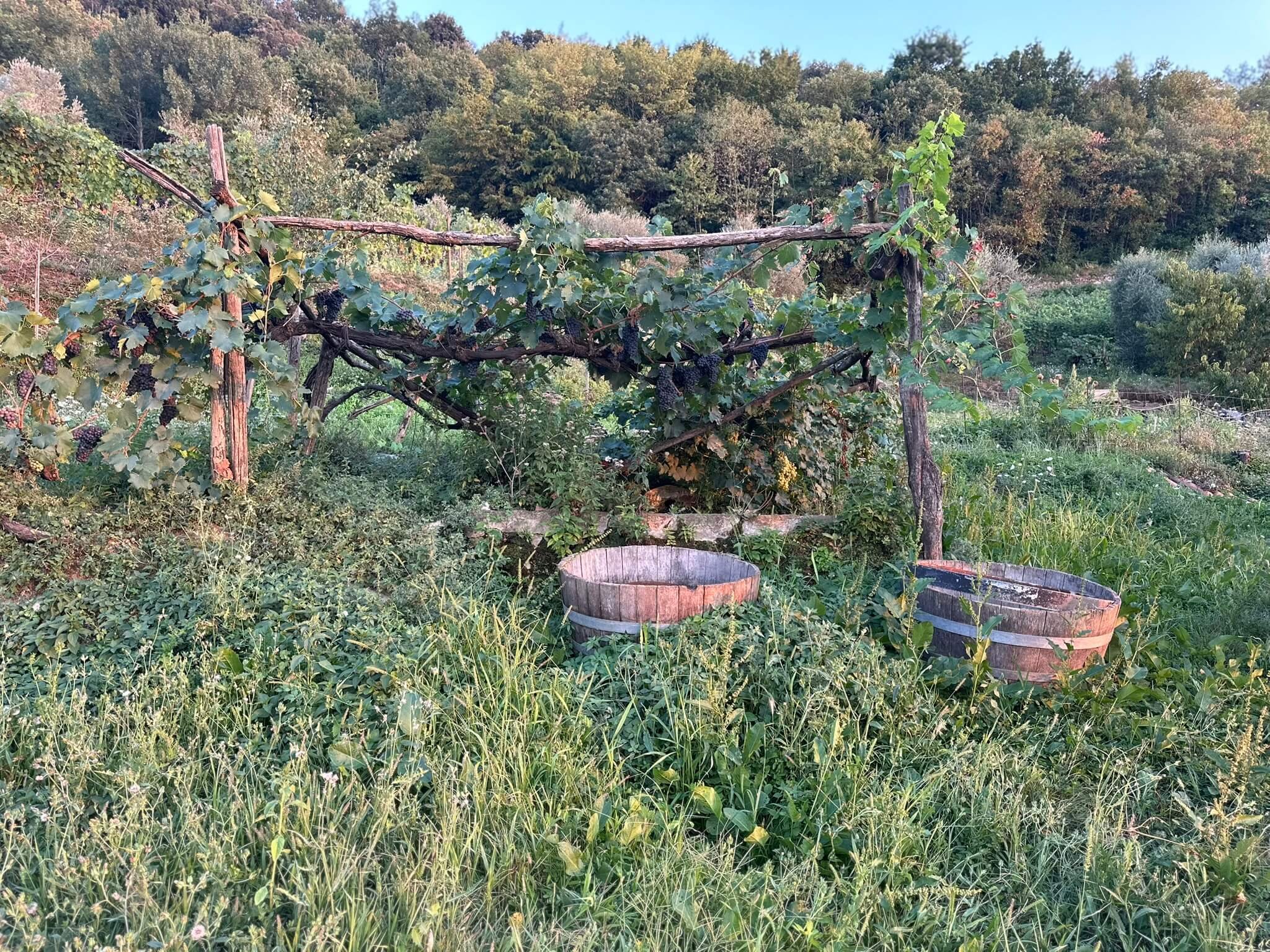
At the ancient spring on Podere Canalino’s historic farm in Montalcino where Canalino gets its namesake.
The third pillar of Italian UNESCO pertains to our concept of farm-to-table and the slow food movement, which we highlighted in our first article right after Italy got the UNESCO award, giving an example of a farmer and chef in Romagna Italy which is an extreme scenario of kilometer 0: he grows, harvests, prepares and serves all in one place. Aside from enjoying a super fresh and authentic Italy experience, this concept clearly provides benefits related to sustainability. Think: no transportation is even needed!
But, let’s go back in time: as we mentioned earlier, wine and food have been attached at the hip in Italy, and elsewhere in the Old World, even in ancient times. But how is it that when you travel around Italy and embark in the Italian food traditions that the wine the locals serve magically pairs with the wine?
To pair wine and food in today’s world is an extensive methodology, as we explained in this article. The modern sommelier is only a recent “official” figure. The concept of achieving wine and food harmony was not done by a professional wine expert. Instead it was something done by the locals who not only followed their intuition but also came about through necessity. There is a saying “if it grows together it goes together.” In fact, heres’ a good tip for finding ideal wine and food pairings: When traveling in Italy and trying the typical Italian cuisine, see what wine the locals are having with their local dish. It is a shortcut to achieve wine and food harmony.

Alberto, winegrower and winemaker of Podere Canalino preparing a meal with vegetables from his ancient farm’s gardens.
Think of the farmers living in isolated rural regions, with little money and lots of mouths to feed: they had no choice but to go with the wine produced by their own vineyards which grew alongside the fruits and vegetables they cultivated and with animals roaming through their farm. Plus, they were very practical: choosing a wine which would make their dish easier to digest. Think in Tuscany, where the sangiovese grape abounds: a dry red wine with some body and tannins helps to ingest fatty and/or heavy foods, like meat dishes made from the locally raised animals. Have a Tuscan Sangiovese paired with steak is one of the all time classic wine and food pairings to this day.
If you have the opportunity to visit Podere Canalino in Montalcino Tuscany, you find yourself on the same property that the Sodi family farmed since 1800. Canalino is called such since there is an ancient spring which has been functional since at least the Middle Ages. This has helped the property to be an ideal place for a farm, cultivating fruit and vegetables, including wine grapes. In fact, Saint Catherine of Siena had a monastery on the property in 1650 where she had vineyards, where the Sodi family sangiovese vineyards are planted to this day. Alberto, who is the winegrower and winemaker for his family’s estate winery, keeps growing a variety of fruit and vegetables which keeps the family, and guests, fed all year round.
When speaking about sustainability and Italian wine, we would be remiss not to mention La Maliosa. It is an “agricultural startup” founded by Antonella Manuli who had a goal to create a farm for the future which was rooted in building up and improving the natural ecosystem in Maremma Tuscany. Her approach has been to leverage what is local and apply modern “smarts” to farm and make natural wine and organic EVOO, using concepts like regenerative agriculture. She even patented a method called Metodo Corino, developed together with viticultural researcher and wine producer, Lorenzo Corino, to document and demonstrate the approach she took to produce high quality natural wine. One of her most recent initiatives which underlines the concept of local growing, preparing and serving is the Saturnalia Wine Bar Tuscan restaurant, not far from her farm, where you can enjoy her Tuscan wines, Italian olive oil and local, seasonal foods.
Experience For Yourself The Living Cultural Heritage of Italian Wine
We wrote this article to share our passion for authentic Italian wine that speaks to the same cultural heritage as Italian food. It is that passion, that our producers have as well, which drive us towards being a bridge between artisan farmers that love their land and wine lovers and foodies across America who crave hidden gems that are hard to find. And there are many more examples we can site of this rich living heritage of Italian wine which we have fallen in love with.
Vero sells to distributors across the USA, as well as licensed establishments in certain states, plus to consumers and businesses who seek out well made boutique wines, olive oils and specialty foods that are farm-crafted in limited quantities by artisan farmers around the world.
For distributors and licensees, contact us to learn more about our portfolio and how we can help you.
For consumers and other businesses and corporations seeking hidden gems of wine and foods, you may purchase in our online store and we ship around the US. We also have an award winning wine club with a popular 3 month wine subscription gift option. Our gift sets provide a handy way to send a personalized and unique wine, olive oil and food gift while we do the heavy lifting to get it shipped to the special someone, partner and client. We organize custom tailored sommerlier led wine tasting, olive oil tasting and wine and food pairing events. Reach out to us to get started.
Some Wines with Deep Traditions

All natural, old vine nebbiolo and barbera blend with no added sulfites and yeast. Aromas of milk chocolate covered cherries, it has a fresh and rich fruity taste with notable tannins and a has a long piquant finish. Name comes from the former owner of the 70 year old vineyard which has a mix of Nebbiolo and Barbera and is down the hill from the childhood home of Lorenzo Corino. After a gentle crushing, fermentation starts with native yeast fermentation and wines are left with skin contact for 6-7 weeks, followed by about 30 months of aging in wooden barrels. As with all of Case Corini wines, this is a 00 wine, nothing added, nothing removed, no yeast, no sulphites added, organic, biodynamic, vegan. In other words, all natural wine.

This is one of the best Barolo wines from the Langhe in Piedmont Italy as well as a great value from one of the storied families of Barolo wineries. This Barolo red wine is the maximum expression of the nebbiolo grape from Aldo Clerico. With vineyards right next to those of Domenico Clerico Barolo vineyards, this Barolo is a good substitute for Burgundy wine.
This garnet colored artisan Barolo has red fruit, rose and spicy leather and tea leaf aromas with elegant structure, long finish leaving a silky mouthfeel. On the nose it is very intense while floral notes mix with typical vineyard scents of violets and red berries. On the palate, the violets blend with licorice flavors and noticeable tannins. A creamy texture from the oak barrels creates a pleasant mix of fresh yet complex flavors.
Tastes Like: Cherries and licorice
Farming & Winemaking Highlights: Biodynamic | Native Yeast Fermentation | Single Vineyard
Fun Facts: This is Aldo's first wine made from 5 different Barolo designated vineyards surrounding his home in Monforte d'Alba, all within the Bricco San Pietro MGA. He vinifies each vineyard and then does an assemblage, creating each vintage a unique expression of his nebbiolo vineyards. It is also made with native yeast fermentation, so can be called a natural wine.
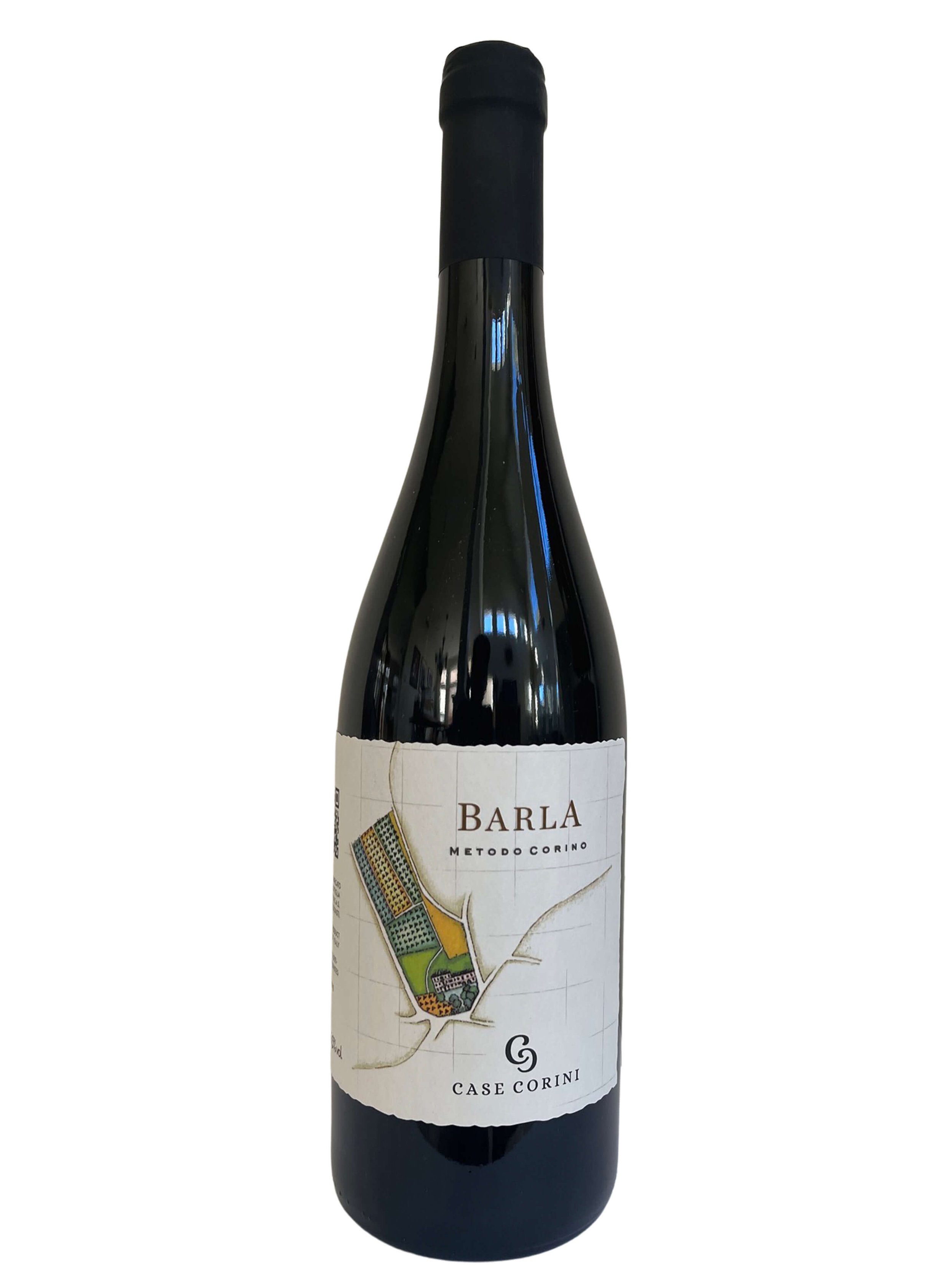
You never had a Barbera like this! Made from 95 year old Barbera vineyard, with some small percentage of other varieties planted over the years in the vineyard. This all natural wine has intense aromas of brandied cherries and a richly textured, delicious dark fruit taste with right balance of fruit, acidity and tannins. Barla is the antique name of the vineyard which used to be the land of an old convent. After a gentle crushing, fermentation starts with native yeast fermentation and wines are left with skin contact for 6-7 weeks, followed by about 36 months of aging in wooden barrels, housed under Lorenzo Corino's family home.
As with all of Case Corini wines, this is a 00 wine, nothing added, nothing removed, no yeast, no sulphites added, organic, biodynamic, vegan. In other words, all natural wine.

Made with native yeast fermentation, this Barolo Serralunga is a special natural wine. Rich on the nose with dried violets typical of the nebbiolo grape, the bouquet is austere and profound with balsamic notes. Once sipped, the earthy texture is out of this world, which marries pleasantly with the structure, fruit and spice of this elegant red. Well accented tannins are soft and decanting is strongly recommended.
Tastes Like: Earthy Spices
Farming & Winemaking Highlights: Biodynamic | Native Yeast Fermentation | Single Vineyard
Fun Facts: This is a single vineyard Barolo from the Serralunga d'Alba village, known to produce the most age worthy Barolos.

Earthy, age-worthy nebbiolo made from 70 year old naturally cultivated vines. Named for the dearly beloved grandfather of Lorenzo Corino. Having a garnet color with orange hues it has a complex, spicy nose with notes of cardamom and cinnamon. When tasting, it is fruit forward, cherry & forest fruits, followed by spices, and chalky tannins envelope the mouth and finishes elegantly. After a gentle crushing, fermentation starts with native yeast fermentation and wines are left with skin contact for 6-7 weeks, followed by about 36 mos of aging in wooden barrels.
As with all of Case Corini wines, this is a 00 wine, nothing added, nothing removed, no yeast, no sulphites added, organic, biodynamic, vegan. In other words, all natural wine.

Made from the sought-after Ginestra Barolo Cru, this single vineyard wine epitomizes the greatness of the nebbiolo grape from the Barolo wine region, in terms of structure, age-worthiness and fruit expression. The native yeast fermentation used in making this natural wine also helps bring out the special and sought after terroir of the Ginestra cru.
An intense garnet color, on the nose this Barolo tends towards red fruits, with a touch of balsamic notes. As it opens on the palate the elegant tannins harmonize with the acidity for an overall richness that creates a pleasant and enjoyable experience while sipping alone or with food.
Tastes Like: Balsamic Tabacco leaves
Farming & Winemaking Highlights: Biodynamic | Native Yeast Fermentation | Single Vineyard
Fun Facts: The Ginestra cru is very limited and only a few wineries have access to harvest from there. Aldo can thanks to his wife’s, Valentina’s, Conterno family vineyards.
Fun Facts: The hands on the bottle represent Aldo’s two daughters; for this reason he often says this is the wine closest to his heart.
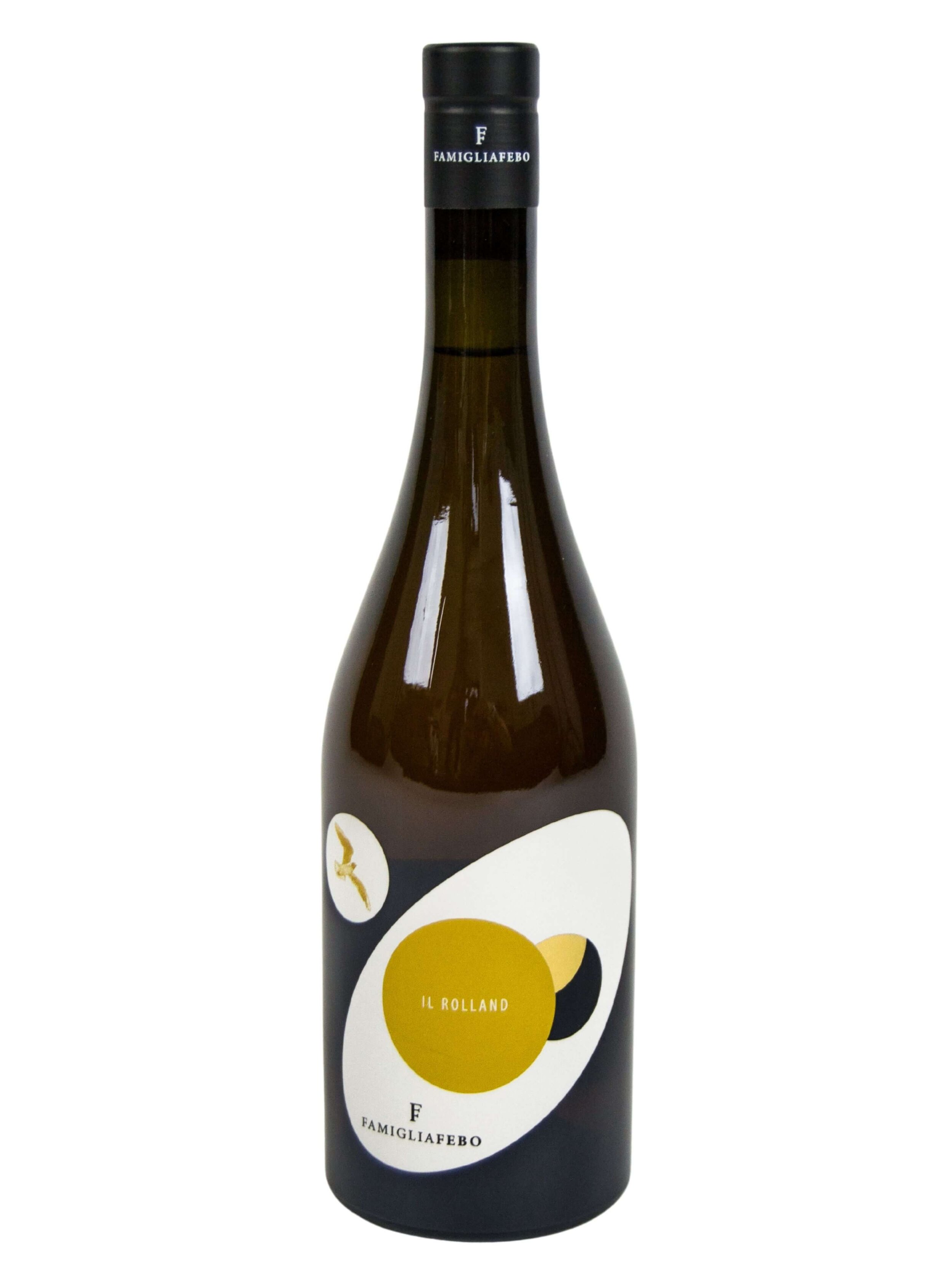
Rolland’s deep straw yellow or rusty color likens it to an orange wine, but this color comes from the vineyard, sun, and weather. A fresh and textured mouthfeel leaves you pondering and wanting to have another sip. We recommend to let it breathe before enjoying to the fullest.
The 2023 vintage offers a drier, more savory, and complex profile. With golden raisin and saffron flavors, it evolves into deeper sensations of caramel, sage, and a pronounced orange rind on the finish. It wraps up with a long, distinctive mineral finish. The 2023 really summarizes well the age-worthiness of this wine.
Region: Italy > Abruzzo > Spoltore & Chieti
Tastes Like: Golden Raisins & Saffron
Farming & Winemaking Highlights: Regenerative Agriculture | Sustainable Winery | Biodynamic | Native Yeast Fermentation | Vegan | Single vineyard | Organic | Natural Wine
Fun Facts: This wine is named for Grandfather Febo, Rolando, who bought the concrete vessels the family ages their wines in.
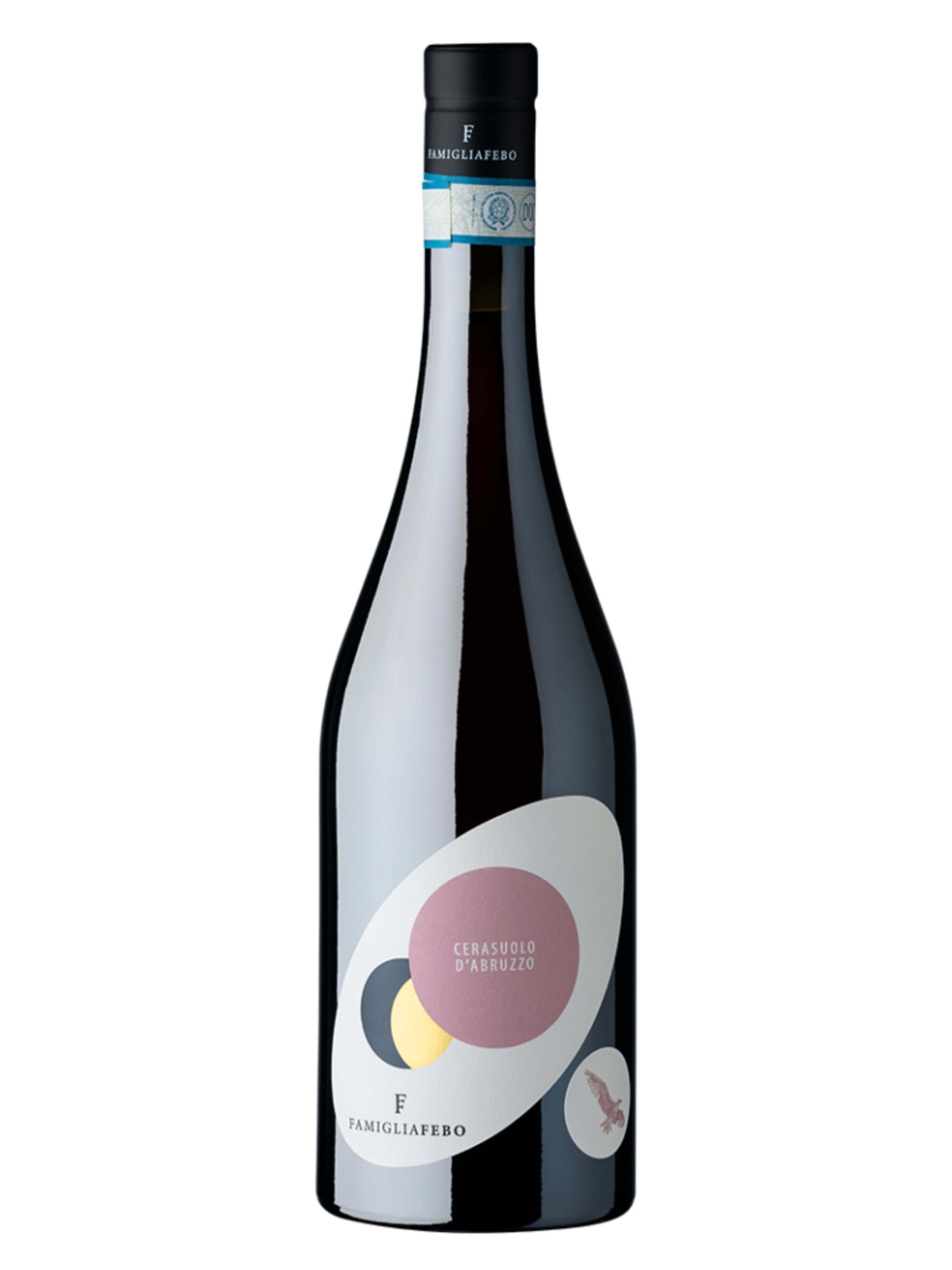
While made as a rosé wine, this Cerasuolo d’Abruzzo is actually more like a light red wine thanks to the dark pigments of the Montepulciano grapes used, farmed on Febo family’s estate vineyards in Abruzzo.
The minimal intervention approach of this natural wine producer results in a lot of vintage variation year after year. For example, the 2021 Cerasuolo d’Abruzzo has a cherry taste with a salty finish, and is considered a “serious” rosé wine while the 2024 is a Rosorange color that bursts with blood orange flavors mixed with cherry.
Region: Italy > Abruzzo > Spoltore & Chieti
Tastes Like: 2021 - Cherries | 2024 - Tart cherries and blood orange
Farming & Winemaking Highlights: Regenerative Agriculture | Sustainable Winery | Biodynamic | Native Yeast Fermentation | Vegan | Organic | Natural Wine
Fun Facts: Both vintages are fermented with native yeast and refined in the winegrower's grandparents' concrete vessels. Great chilled and a good pairing is eggplant parmesan.
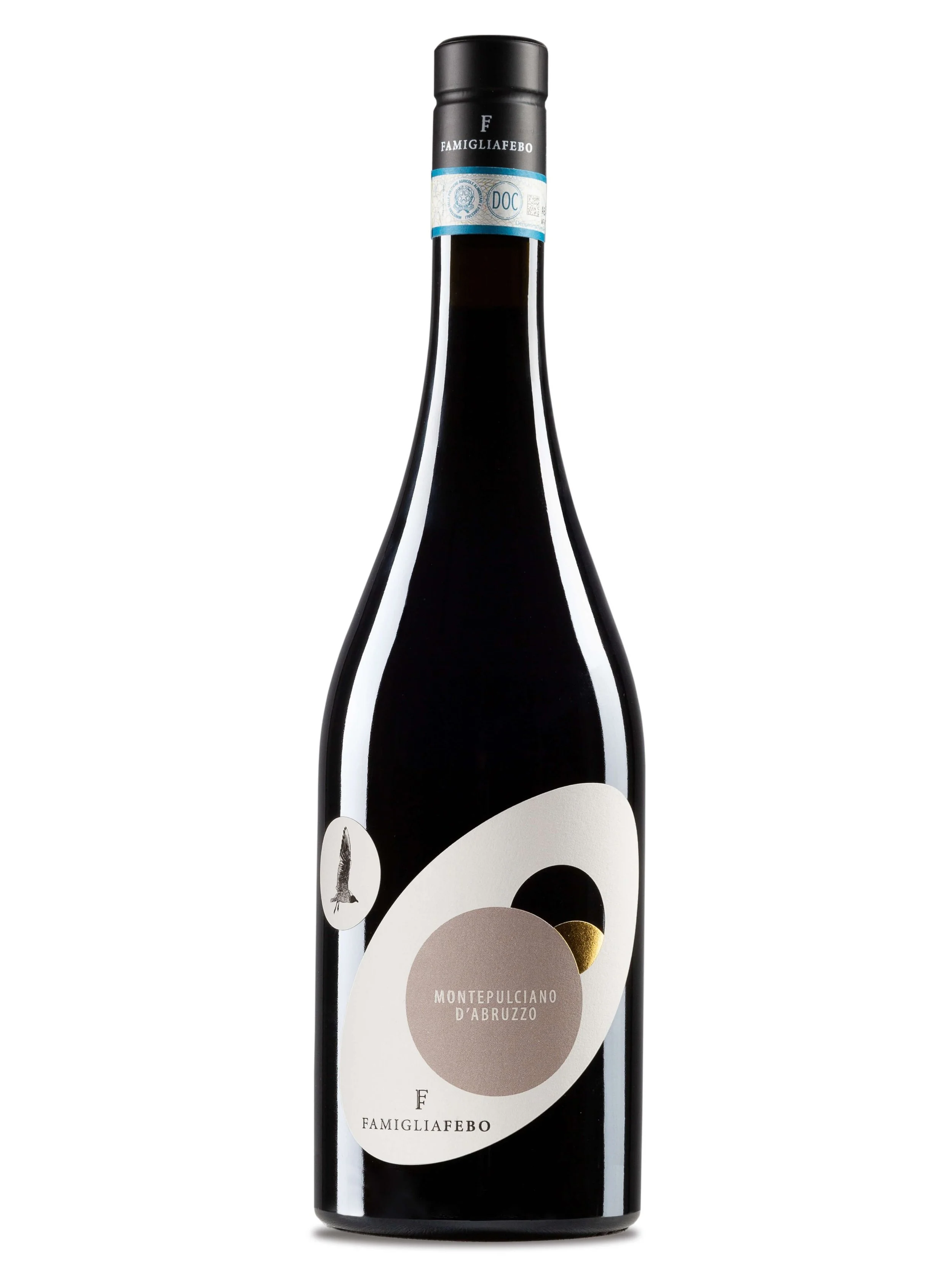
Made with 100% Montepulciano grapes spanning family vineyards in Spoltore and Chieti in Abruzzo, it has aromas of amarena cherries and licorice and a slight funkiness thanks to its 100% natural production. It tastes of dark fruit, with a rich texture and slightly bitter finish, with the funky vibe continuing while tasting. Fermented and refined in the winegrower's grandparents' concrete vessels.
Region: Italy > Abruzzo > Spoltore & Chieti
Tastes Like: Dark fruits
Farming & Winemaking Highlights: Regenerative Agriculture | Sustainable Winery | Biodynamic | Native Yeast Fermentation | Vegan | Organic | Natural Wine
Fun Facts: Pairs nicely with chicken parmesan. | While there is a famous wine “Vino Nobile di Montepulciano” from Tuscany, this grape has no connection to it; the “montepulciano name” there comes from the town noame, where as here in Abruzzo “montepulciano” actually refers to the grape used to make the wine.
Some Wines Which Highlight Place and Biodiversity
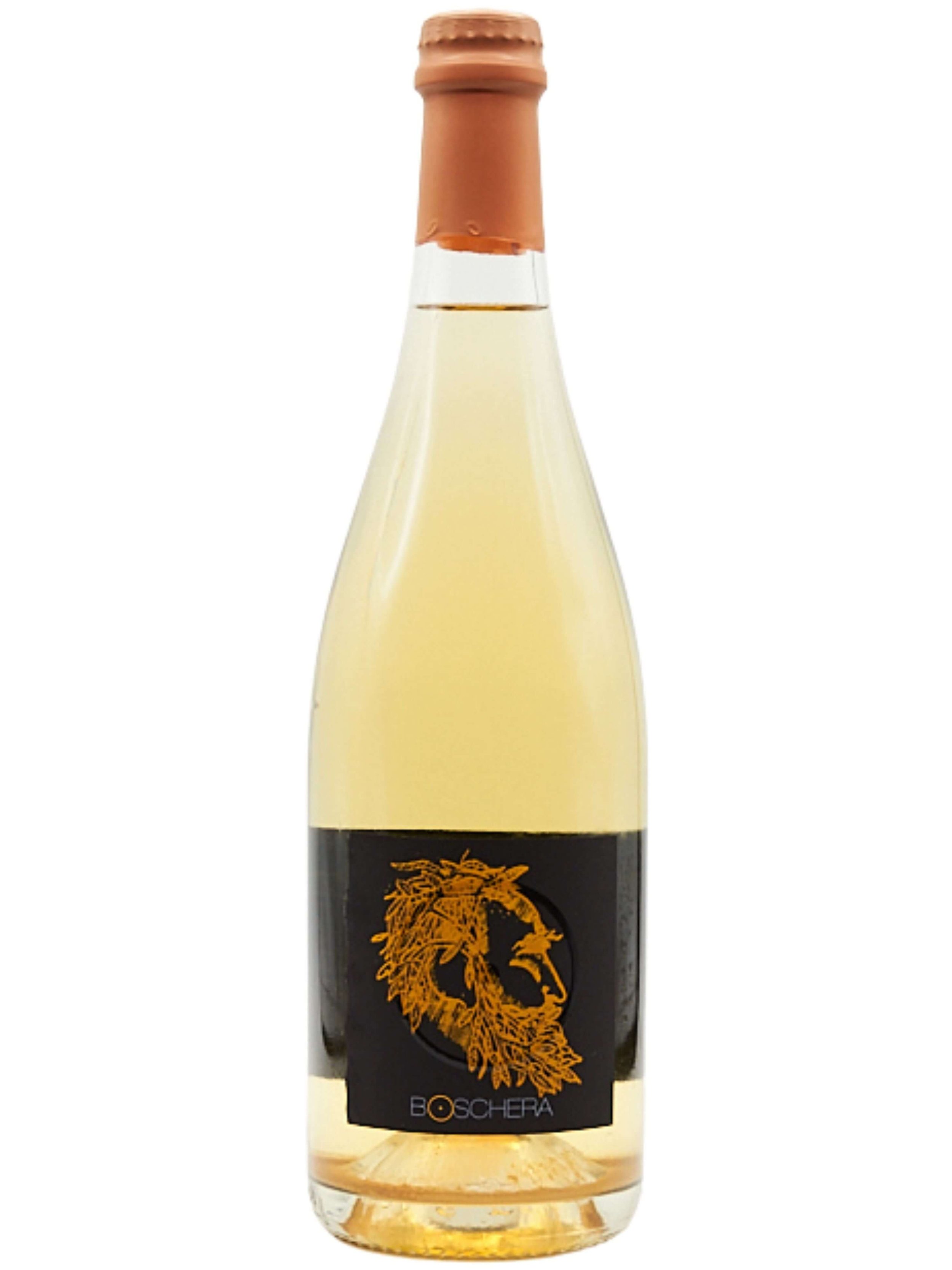
This is an unfiltered sparkling wine made similar to the champagne style from a rare grape called Boschera, native to Veneto, Italy where there is less than 20 acres in the world! We were the first to import this grape into the US!
Compared to the Prosecco grape (Glera), Boschera is more complex, and in fact this wine has been aged for over 3 years in the bottle on the lees.
With 2 days of skin contact giving it a deep yellow color, this native yeast fermented natural wine is then refermented with its native lees and then undisgorged, so it is unfiltered and continues to age on the lees too, allowing it to become more complex over time.
You can say it is a vintage & aged ancestral method, or Pet Nat style, also called Col Fondo in Italian since it is on its lees. It has herbal, nutty and yeasty aromas and savory taste with a long saline finish. Pairs with many foods & throughout the meal, from appetizers to main course.
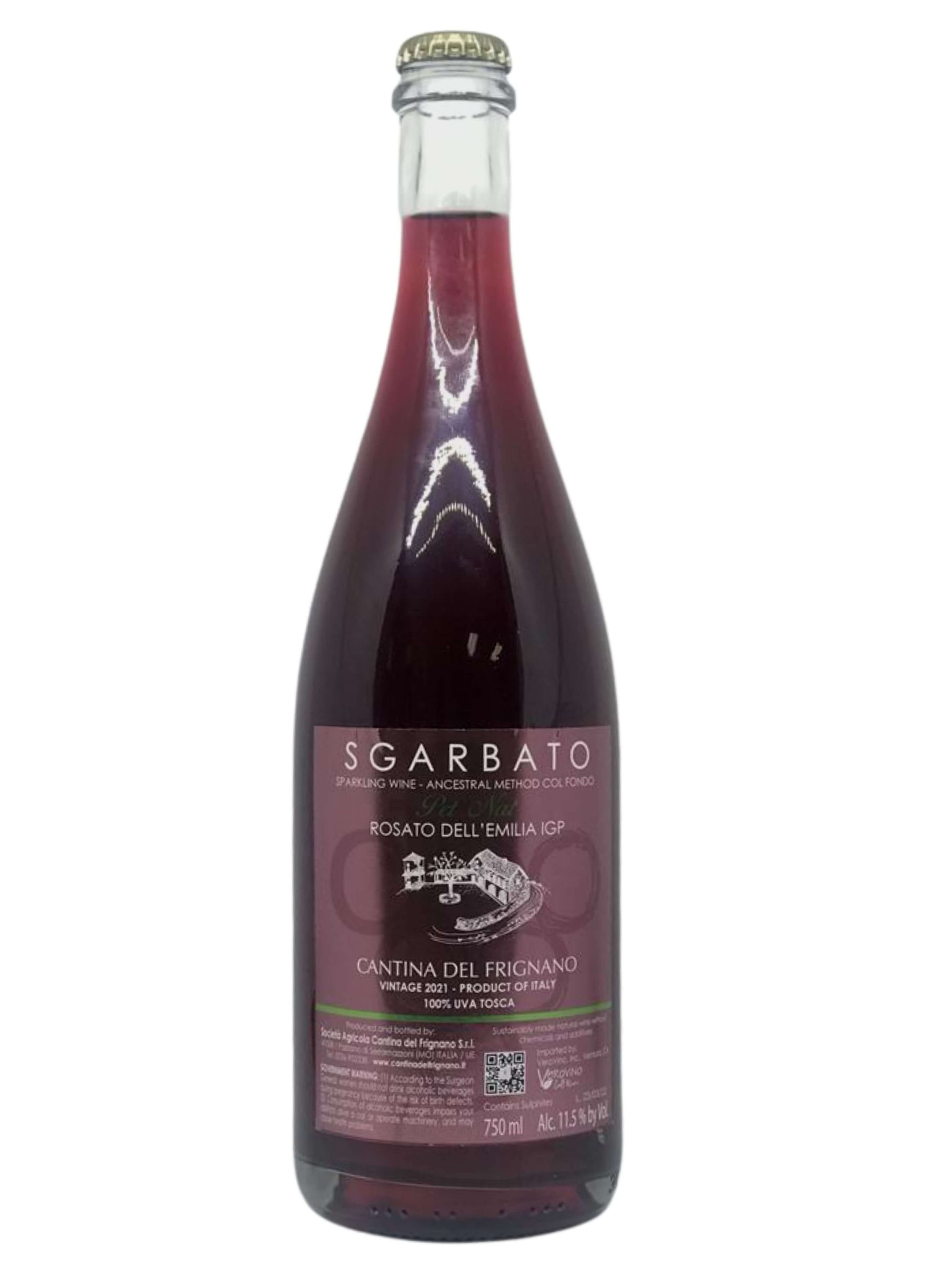
Made from the rare Uva Tosca grape, this dry Pet Nat tastes like drinking cranberry juice as a sparkling wine.
This producer, Frignano, is credited for reviving this forgotten grape which grows in higher altitudes in Emilia area of Northern Italy, and is believed to be a descendant of Schiava Grossa, the Alto Adige red grape.
Refreshing and quaffable, with strawberries on the nose and a saline finish, it is great on its own or with light fare. It is an unfiltered, bottle fermented 'col fondo' sparkling wine also known as ancestral method or Pet Nat style, and made with spontaneous fermentation like a natural wine.

Prepotto is the birthplace of the hard-to-find Schioppettino varietal. It gets its name from the Italian 'schioppare' or to burst, since the grape 'bursts' in your mouth when you eat it. Aromas and tastes of black pepper and plums. Fermented with indigenous yeasts and aged for two to two and a half years in oak barriques. Strong cheese lovers love to indulge in this wine.
Gold Medal Decanter, plus many other awards. Vigna Petrussa's oak-aged 2019 Schioppettino won the prestigious 3 Bicchieri Award by Gambero Rosso.
Vigna Petrussa is a certified sustainable and biodiverse women-owned winery.
Rolland’s deep straw yellow or rusty color likens it to an orange wine, but this color comes from the vineyard, sun, and weather. A fresh and textured mouthfeel leaves you pondering and wanting to have another sip. We recommend to let it breathe before enjoying to the fullest.
The 2023 vintage offers a drier, more savory, and complex profile. With golden raisin and saffron flavors, it evolves into deeper sensations of caramel, sage, and a pronounced orange rind on the finish. It wraps up with a long, distinctive mineral finish. The 2023 really summarizes well the age-worthiness of this wine.
Region: Italy > Abruzzo > Spoltore & Chieti
Tastes Like: Golden Raisins & Saffron
Farming & Winemaking Highlights: Regenerative Agriculture | Sustainable Winery | Biodynamic | Native Yeast Fermentation | Vegan | Single vineyard | Organic | Natural Wine
Fun Facts: This wine is named for Grandfather Febo, Rolando, who bought the concrete vessels the family ages their wines in.
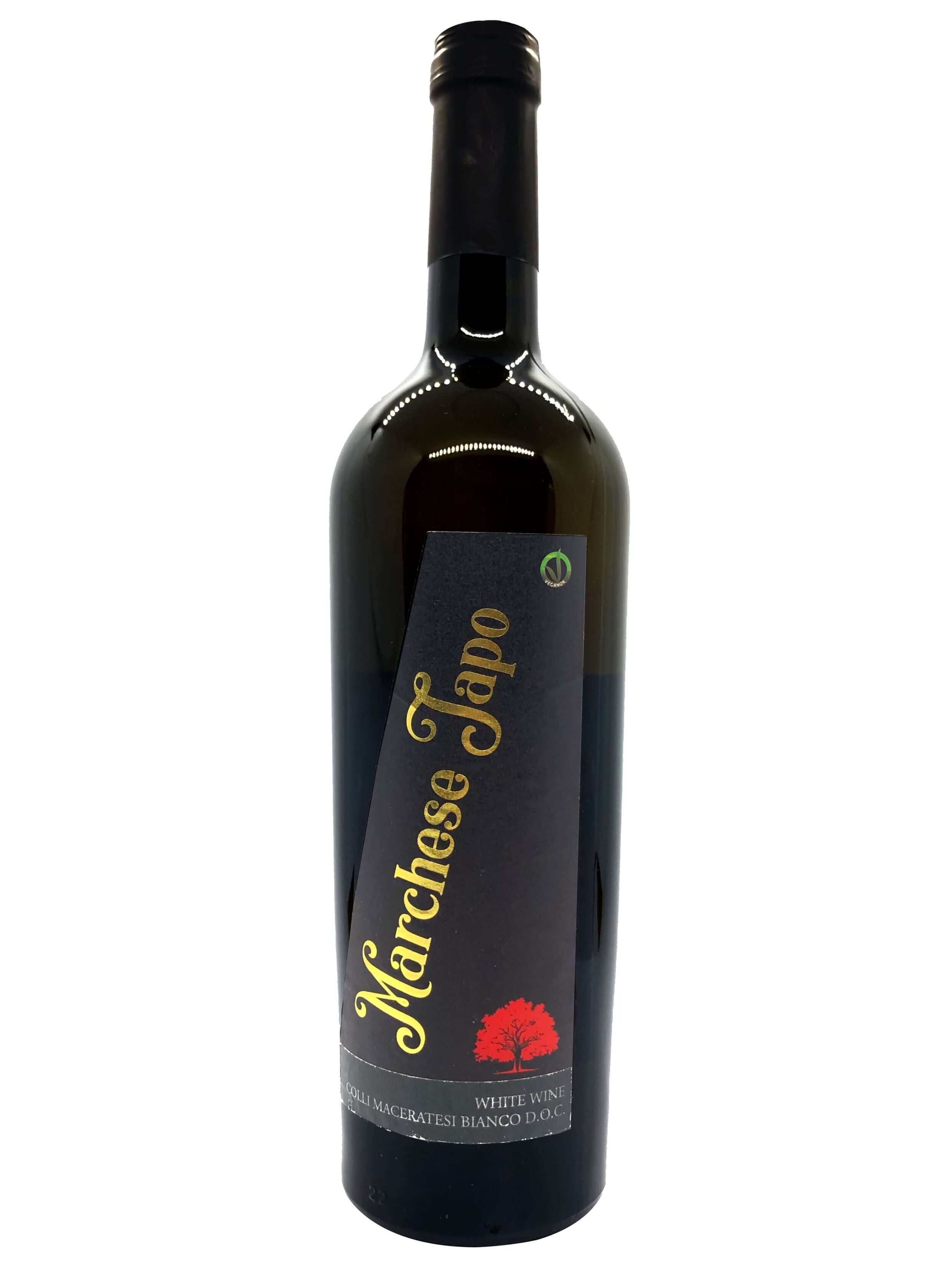
This natural wine is delicious fruit-forward organic vegan white wine, a blend of hard-to-find native varieties from the province of Macerata in Le Marche, Italy, a hilly area just to the east of Tuscany not far from the Adriatic Sea, has it all, great nose, taste, texture and structure. While it is unoaked, it was on the lees for 6 months with weekly battonage, contributing to its complexity of aromas, ranging from melon to saffron, and intensity of flavors. Made with indigenous varieties from Le Marche, Maceratino (also called Ribona) and Incrocio Bruni 54, it is a testament to Le Marche white wines.
Quercia Scarlatta follows a minimal intervention approach to vegan winemaking, using native yeast fermentation in their wines like this Marchese Japo.

A rare find, this Famoso is made with fruit from the original vineyard of the Montalti farm in Monte Sasso where the Famoso di Cesena varietal was re-discovered in 2000 when two rows of old vines were found by a local farmer.
It is semi-aromatic with has aromas of lemon and a hint of flint, it has laser-like acidity, with tangy citrus fruit flavors and herbs, great texture and a lemon mineral finish. Limited production of 5000 bottles / yr
What other sommeliers are saying about this wine:
Ruth Ryberg:
“Wow is this cool! A grape I haven’t had before called Famoso! If it was a blind tasting I would’ve called out Chablis for the searing acidity and the chalky finish. Yum! The nose is all fresh picked apricot and lemon spray, with subtle hints of honeysuckle and marzipan. A zippy zesty mineral on the finish comes right back round to apricot and lemon! Lip smacking and fresh. Just perfect.
I’ve mentioned Braschi before. It’s a small, family owned winery in Emilia Romagna, and has been under the same ownership since 1949. Everything they make is outstanding! Located along the ancient Roman road - Via Romea Germanica - just north of Tuscany, Cantina Braschi is nestled in the hills of Romagna. The wines are first class from this family owned, small producer.”
Examples of Wines From Vineyard to Cellar to Dinner Table

Woman made Saturnalia Bianco, on VinePair’s list of Top 15 Best Orange Wines, is an award winning, unfiltered and delicious skin contact orange wine made from old vine procanico & trebbiano grapes cultivated in volcanic soil.
This natural wine is made from the patented Metodo Corino, based on regenerative farming principles. Nothing is added but grapes! Made with unpressed, free run juice with native yeast fermentation. A two week maceration imparts a dark amber color. Aged only in stainless steel tanks, it has aromas of candied fruit, dried apricot and ginger.
It has pleasant acidity and tannins, and is balanced with a long finish. A pretty deep orange color, it is a great wine for difficult food pairings, it pairs with almost any dish.
Tastes Like: Apricot nectar and chamomile
Farming & Winemaking Highlights: Regenerative Agriculture | Sustainable Winery | Biodynamic | Native Yeast Fermentation | Vegan | No additives (ie non sulphites added) | Unfiltered | Organic | Metodo Corino | Natural Wine
Fun Facts: - The natural farming method that produced this wine, the metodo corino, is actually patented by La Maliosa woman winemaker Antonella Manuli after she helped to develop it with natural wine legend Lorenzo Corino of Case Corini.
- Named in honor of the Roman festival in December which took place near the winery, La Maliosa, this wine was once called Saturnia Bianco.
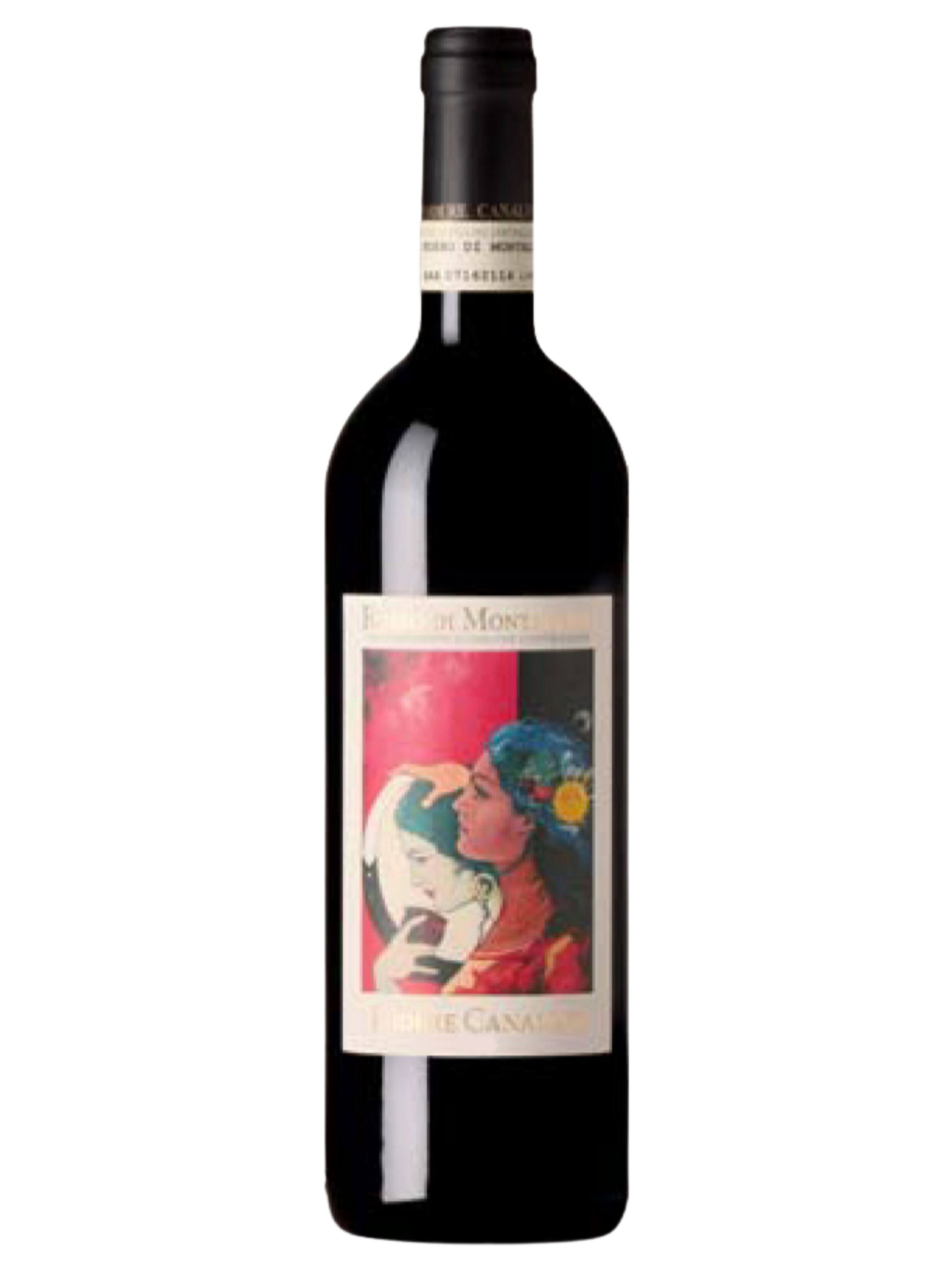
This is a complex, intense age-worthy vegan red wine; Once opened balsamic notes burst forth. We recommend to decant it or at least let it breathe a bit before tasting. When tasting, you understand that it comes from a terroir which one of the best Italian reds, Brunello, is made from; its structure is noteworthy, from acidity, to tannins to mineral structure. A delight for serious red wine lovers.
Tastes Like: Spiced Cherry Jam
Farming & Winemaking Highlights: Regnerative Agriculture | Sustainable Winery | Biodynamic | Native Yeast Fermentation | Unfiltered | Organic | Natural Wine | Vegan
Fun Facts: From 100% sangiovese vineyards right outside the historic center of Montalcino.

This Brunello di Montalcino from winery Canalino is crafted using specially selected sangiovese grapes. A gorgeous ruby color, the nose is a potpourri of intense mature fruit and spice aromas from prune to menthol to leather. The wine is structured, with freshness, minerality and age worthy tannins and a fantastic mouthfeel.
Tastes Like: Stewed Cherries or Cherry Jolly Rancher candy
Farming & Winemaking Highlights: Regnerative Agriculture | Sustainable Winery | Biodynamic | Native Yeast Fermentation | Unfiltered | Organic | Natural Wine | Vegan
Fun Facts: The name “brunello” comes from the local name used for the type of sangiovese typically used in the area.
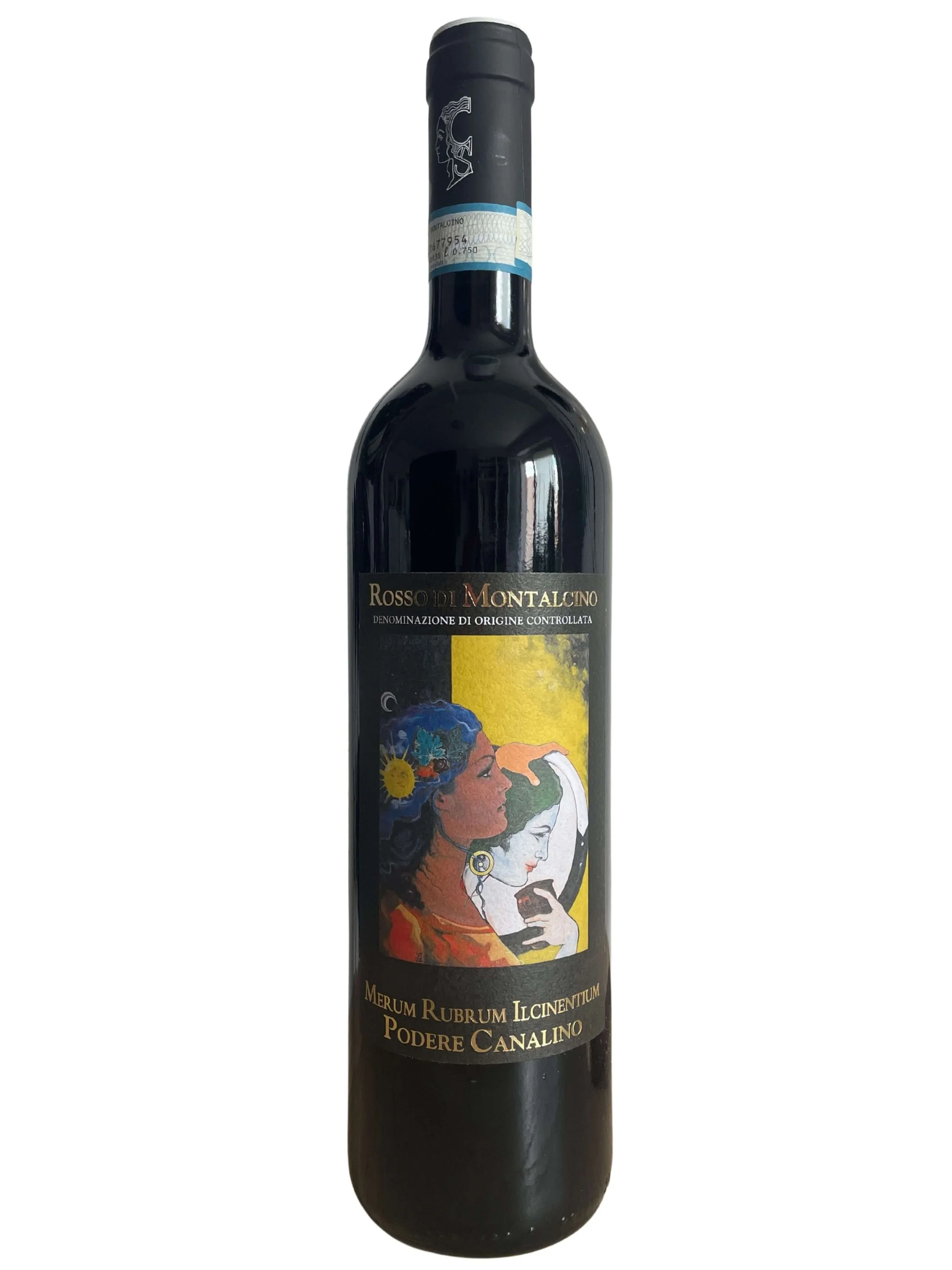
Steps from the historic center and birthplace of Brunello, this Rosso di Montalcino is expertly crafted by a winemaker who only grows on grape: Sangiovese. But this isn’t any standard Rosso di Montalcino: it’s like a Rosso di Montalcino Riserva. The vineyards are steps from the historic center of Montalcino, famed for one of the best red wines in the world. This Rosso di Montalcino is only made during the best years from the best fruit and is aged longer, minimum 14 months in neutral oak barrels, and released only when Alberto, Canalino’s winegrower and winemaker, feels it is at its best. Like a “Baby Brunello”, Merum Rubrum Ilcinentium is in fact, winemaker Alberto’s baby.
Tastes Like: Cherries with hints of spices & eucalyptus
Farming & Winemaking Highlights: Regenerative Agriculture | Sustainable Winery | Biodynamic | Native Yeast Fermentation | Unfiltered | Organic | Natural Wine
Fun Facts: The name is inspired by “Merum” meaning pure wine, or wine fit for the gods. “Rubrum” means red, Ilcententium refers to the people of Montalcino. So this is pure red wine of Montalcino.

An award winner in the Millennial Wine Competition, this all natural, fresh and earthy red is made from hard-to-find Tuscan varietal Ciliegiolo whose name derives from cherry - so guess what it tastes like! An organic, biodynamic and natural wine made from the patented Metodo Corino with nothing added but grapes. Made with free run juice, maceration continues for four weeks and then aged in neutral wooden barrels for a short period of time. A natural wine, no sulfites are added during the winemaking process. Cherry and spice aromas and taste with notable tannins and mouth feel contributing to its great structure and long finish.
Tastes Like: Cherry Jam
Farming & Winemaking Highlights: Regenerative Agriculture | Sustainable Winery | Biodynamic | Native Yeast Fermentation | Vegan | No additives (ie non sulphites added) | Unfiltered | Organic | Metodo Corino | Natural Wine
Fun Facts: The natural farming method that produced this wine, the metodo corino, is actually patented by La Maliosa woman winemaker Antonella Manuli after she helped to develop it with natural wine legend Lorenzo Corino of Case Corini.

This wine is a rare treat, being one of the very few Sangiovese red wines grown on volcanic soil. This natural wine is a complex yet approachable. Tarconte is a distinctive old world style natural red wine with a touch of new world, having been aged for 36 months in oak barrels. Notes of earth, mineral, herbs, black pepper, it is super juicy with ripe tannins, a real food wine. A good pairing is with rosemary Asiago cheese. Don't be in a rush to enjoy it: open it and see how it evolves!
Tastes Like: A Baking Spice Cabinet
Farming & Winemaking Highlights: Regenerative Agriculture | Sustainable Winery | Biodynamic | Native Yeast Fermentation | Vegan | No additives (ie non sulphites added) | Unfiltered | Organic | Metodo Corino | Natural Wine
Fun Facts: - The natural farming method that produced this wine, the metodo corino, is actually patented by La Maliosa woman winemaker Antonella Manuli after she helped to develop it with natural wine legend Lorenzo Corino of Case Corini.
- Named after an Etruscan mythological hero.