
Become an Olive Oil Connoisseur
Did you know that there are a ton of similarities to making olive oil as making wine? Olive oil is a natural complement to wine in more ways than one: so many of the fascinating aspects of wine also apply to olive oil.
It’s a whole world to explore, from understanding how olive oil is made, types of olives, choices olive oil makers have and why they are taken, learning to taste and cooking and pair with foods. There are so many places that wine lovers can see similarities in Extra Virgin Olive Oil! This is the second of a series with the first focused on how olive oil is made and what’s special about extra virgin olive oil.
Interested in learning about how to evaluate and taste olive oil? Read on.
Similarities Between Wine and Olive Oil
Olive oil and wine begin their parallel journeys far before they reach the bottle and your glass and table. In olive groves, winegrowers are agronomists, or olive farmers. Both winemakers and olive oil makers must take special care of their fruit, as what happens while olives and grapes are on the trees and vines is just as important as the actual wine and olive oil making processes. Our Vero olive oil producers (such as La Maliosa, Quercia Scarlatta, and Febo) take great pains to farm their olives in a natural and biodynamic way.
The importance of the figure of the olive oil maker carries on after harvest as well. Like in wine, once the oil has been pressed, it is then time to decide: blend or monocultivar? Olive oil, again similar to wine, can be a “single variety” and made from one cultivar of olive, or it can be a blend of different cultivars, melding expertly desired flavors for a balanced olive oil.
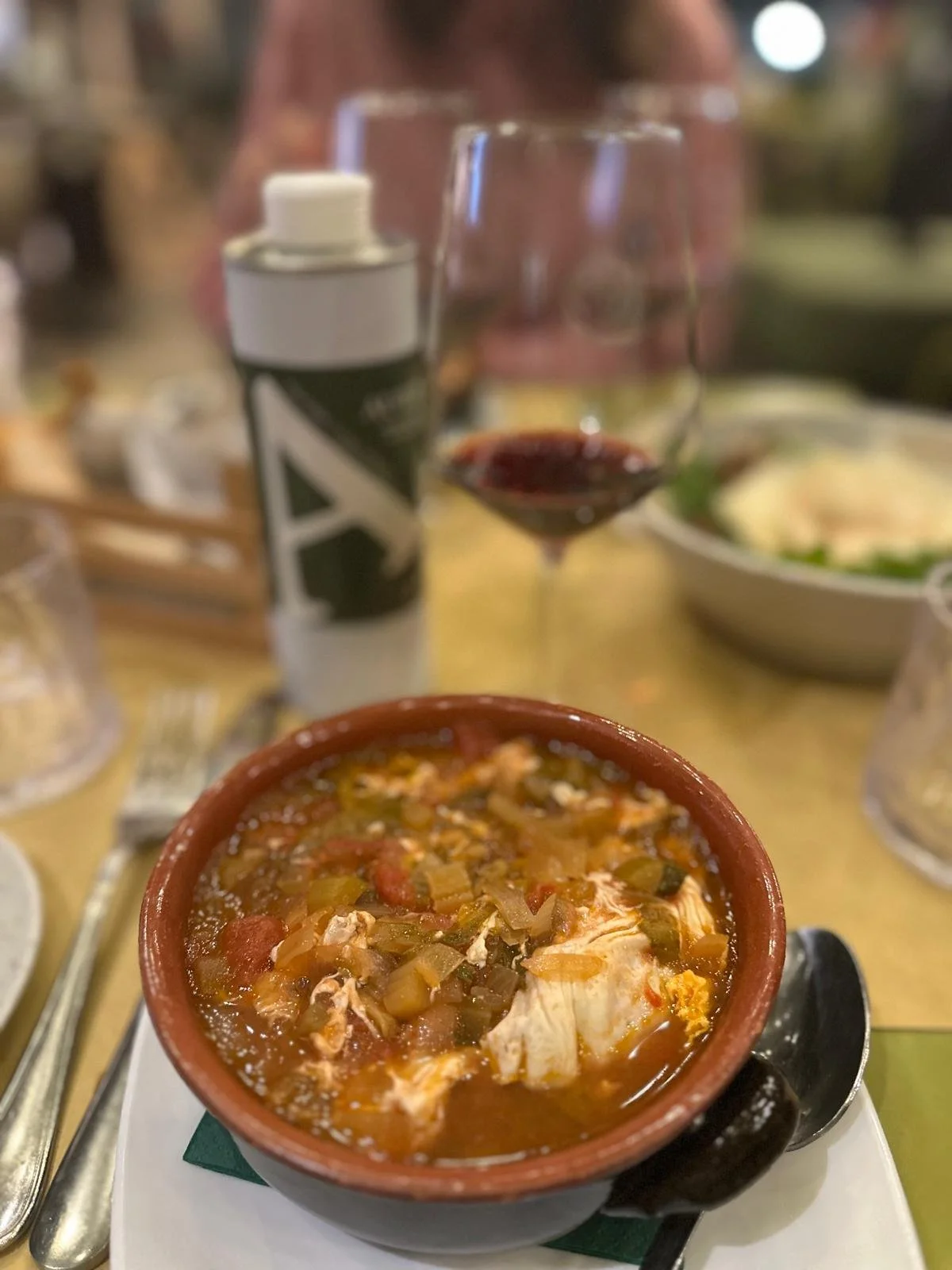
Aurinia extra virgin olive oil ready to be enjoyed with the Tuscan Soup, Acqua Cotta.
For example, at La Maliosa in Tuscany, the monocultivar Leccio del Corno is used to make the intense Caletra. A strong and resistant olive variety, it is also not used often in Tuscany, but its spicy flavor profile lends nicely to being a single-variety oil that is unique and unforgettable. In fact, it seems he made a good decision, as La Maliosa’s Caletra was awarded best organic extra virgin olive oil in Tuscany!
In other cases, such as with such as with extra virgin olive oils Quercia Scarlatta’s Il Nostro Oro, Febo’s Extra Virgin Olive Oil, La Maliosa’s Aurinia, different varieties are blended together to craft and accentuate certain features of the olives or to exalt local cultivars.
Aurinia, for example, is made with Tuscan olive varieties native to the Maremma hills, frantoio, leccino, moraiolo, and pendolino, and Il Nostro Oro and Febo’s EVOO bringing forward Le Marche and Abruzzo cultivars in their blends. Blending different olive oils, like blending different wine varieties, can be considered an art form, with olive oil producers dedicating hours sipping and mixing to create a balance and harmonious olive oil.
With all the variations available to a olive oil farmer when crafting a quality olive oil, reflecting Italy's UNESCO-recognized culinary heritage of regional diversity and craft,it may come as no surprise that there are a myriad of companies, associations and groups focused solely on how to properly taste olive oil, like sommeliers for olive oil. Even amateur cooks and enthusiasts can learn how to taste olive oil for themselves and begin to unravel the mysteries to find and appreciate a really good olive oil.
How to Taste Olive Oil
Tasting olive oil, much like wine tasting, has a method to best understand the different components of smell and flavors that can come from an olive oil, in fact the tasting methodologies for wine and olive oil are quite similar. Want to give it a shot? Here is the method to tasting olive oil like a pro (or watch on YouTube):
Carefully pick your glass. Official olive oil tasting glasses are small and dark colored, like Antonella Manuli’s glass, the owner of La Maliosa, who shows us how to taste olive oil. You want a dark glass to help hide the color. Unlike in wine tasting, olive oil’s color has little to do with the quality or tastes and is preferred to be hidden. Once you have your glass, pour in the olive oil and wrap your hands around it to gently warm the glass and oil, allowing it to fully release its aromas and flavors.
Cover the glass with your hand, locking in the aromas and allow them to build and concentrate. Slowly lift your hand and smell the oil, covering and repeating until you have a good sense of what aromas are represented in the oil. As Antonella said in an olive oil tasting VeroTalk “You need to smell the olive; it is a must! It is simple, but you MUST be able to smell the olives in a good quality olive oil.”
Sip the oil, but do not swallow yet. Instead, allow the oil to roll in your mouth as you start the strippagio, or stripping: the act of sucking in air through the mouth similar to slurping. Don’t be shy, you are supposed to make a loud slurping noise! This allows the oil to break into droplets and coat the entirety of your mouth, palate, and the back of your throat. This is crucial to feeling and tasting the full effects of the two most basic olive oil flavors: bitterness and spiciness.
Swallow and savor. Observe the taste and retronasal aromas, which contribute to the flavor of foods (or drinks) after swallowing. If it is a good quality olive oil you will cough, or at least have a bitter or spicy sensation in your throat. This bitterness and spiciness are important signs of the polyphenols, the source of olive oil’s healthy reputation. Without these important components, it means your olive oil is low in polyphenols. Stay tuned, as this is a topic for our next blog article.
Last but not least, as you go through these steps, tasting and sniffing, note everything, from flavors and aromas to the overall strength and complexity of the oil. For example, olive oil can be described as mild or fruity, peppery or spicy, or with aromas of almond or hay. The experts write down their tasting notes, so you may as well too! Your tasting notes serve to give an overall evaluation to the olive oil and to decide how best to use your olive oil when cooking and eating. By the way, we’ve had clients suggest other uses of the really good olive oil that we sell, and we have documented a lot in our VeroBlog Recipes.
You Can Taste and Pair with EVOOs Too
Just as wine has tasting flights and pairing sequences, EVOO deserves the same structured approach to unlock its nuances, like fruitiness, bitterness, pungency, and harmony. Like wine is often tasted in certain orders (white before red, or less structured before the more structured etc), at Vero, we recommend tasting our extra virgin olive oils in a special order for optimal comparisons: Quercia Scarlatta’s Il Nostro Oro → Febo’s Organic Extra Virgin Olive Oil → La Maliosa’s Aurinia → La Maliosa’s Caletra. This progression moves from lighter, versatile profiles to bolder, structured finishes, much like a wine lineup.
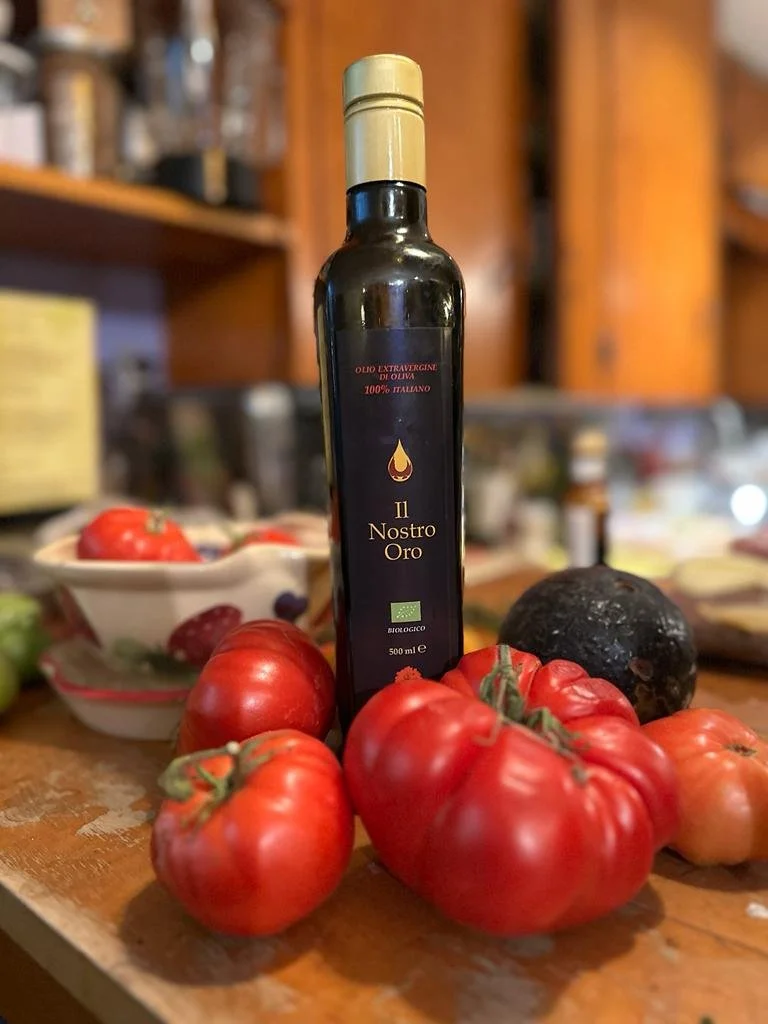
Quercia Scarlatta’s Il Nostro Oro goes great with fresh veggies and salads.
Pairing as well, finds similarities between wine and olive oil. In fact, wine and olive oil producers even say that in Italy there is a new movement of pairing olive oils with cheeses, along with other foods.
Quercia Scarlatta’s Il Nostro Oro leads with 60-80% Piantone di Mogliano, being balanced out by a mix of 40-20% Leccino, Coroncina, and Ascolana. This gives the EVOO a balanced, green beans seasoned with black pepper flavor. Ideal raw on salads, soups, or light cheeses, its mild buttery flavor elevates simple starters without being overpowering. Eventually, farmer Stefano wants to arrive at a blend of 80% Piantone di Mogliano and 20% of the other varieties; he is currently moving towards this as his plants mature, age, and become better olive producers.
Febo’s Organic Extra Virgin Olive Oil, leads mostly with Dritta, balanced by some added Leccino and other Abruzzo cultivars. Tasting it, it brings out subtle herbaceous grassiness that goes great with steamed veggies, seafood, or bruschetta; it adds earthy depth to farm-to-table dishes.
In a VeroTalk with Antonella and Burley Tuggle, they talked about how best to pair both Auriniaand Caletra with different foods, and what to consider when you are dreaming up your own pairings. With a buttery and bitter extra virgin olive oil such as La Maliosa Aurinia, Antonella recommends flavorful dishes, like grilled meats or fatty fish. Burley had prepared a simple caprese-inspired salad made from fresh tomatoes and mozzarella, seasoned with fresh herbs and dressed with a generous dose of Aurinia. Pairing warm bread dipped in Aurinia helps to release its buttery and polyphenol-rich bitter flavors, complementing nicely. We love the complementing flavors Aurinia provides when drizzled over a pizza or spaghetti with clams.
Moving onto the rare monocultivar La Maliosa Caletra EVOO made from the lecce di corno olives, Antonella prefers to pair it with vegetable dishes, such as steamed veggies or raw, as in Pinzimonio (italian-style cruditè platter), or with vegetable soups (like the Tuscan soup Acqua Cotta). Burley went simple and classic when using Caletra: a green salad, seasoned with salt pepper and fresh herbs, Caletra, and lemon juice. She also thought Caletra would be fantastic drizzled over a soft goat cheese or a boucheron style cheese. Vero founder Sheila Donohue drizzled Caletra over pasta primavera and found that Caletra gave the pasta dish another flavor dimension with a spicy kick. If you are meat minded, try Caletra over a simple steak and see for yourself how the flavor sensation is enhanced by this delicious extra virgin olive oil.
Versatile, olive oil has a myriad of uses in the kitchen; it can be used as a base to sauté meats and veggies or even fry (EVOO has a smoke point at 374–405°F). Cakes and desserts even benefit from the added flavors and texture that come from mixing some extra virgin olive oil into the batter. However, heating and cooking with olive oil does break down aroma and taste molecules, leading to a slight change in the flavors. This means, keep your very high quality extra virgin olive oils only to finish dishes; these oils shine the best when used raw, such as drizzled over salads and soups for an extra pop of flavor, or used to dress up simple vegetables. When considering an extra virgin olive oil, it is important to note that good EVOOs can be similar, yet also very different: and their uses don’t necessarily overlap. What flavors one EVOO gives you the other doesn’t. Try multiple EVOOs and experiment with different dishes. There is a world of culinary and taste experiences to explore in olive oil! In fact, it is not uncommon, especially in Italy where the UNESCO Cultural Heritage cuisine relies heavily on olive oil, for families or kitchens to have multiple extra virgin olive oils, of different qualities for different methods of cooking, of different cultivars for different flavors, of different olive oils for different uses. So be a little more Italian… and make sure you have more than one extra virgin olive oil on hand.
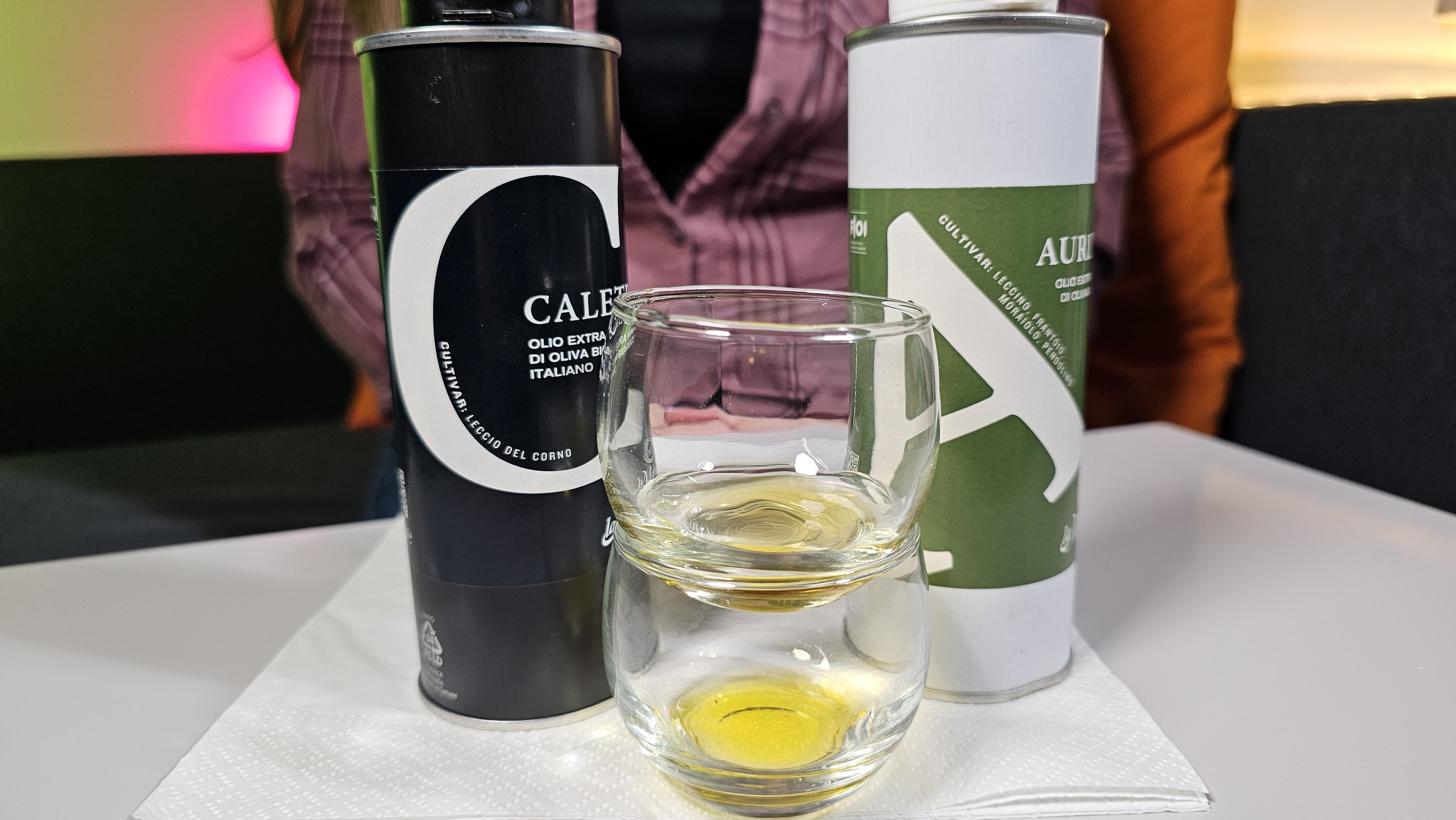
La Maliosa’s Aurinia & La Maliosa’s Caletra, ready to taste.
Try an EVOO Tasting at Home
For those of you that know our curation style, you know that we love to support small producers and bring you unique and fun extra virgin olive oils, wines, and specialty foods. And you can enjoy these curations by trying a selection of different wines, foods, and olive oils from our portfolio. We sell to both businesses and consumers across the US:
We are enlarging our network of distributors around the country. Reach out to us if you are interested in distributing our products.
We sell to wine stores and restaurants in certain states - contact us if you would like more info.
We do corporate gifts and sommelier guided wine tastings. Email us and we’ll tailor unique and sustainable corporate gift ideas.
If our farm crafted wines, specialty foods, and olive oils are not in your local shop or restaurant buy wine online hereand we’ll ship it to you, and we ship to most states.
We also have an award winning wine club for true wine explorers seeking to continually discover unique, sustainable and authentic small production wines they never had.
Start Your Olive Oil Hobby with Extra Virgin Olive Oils from Italy
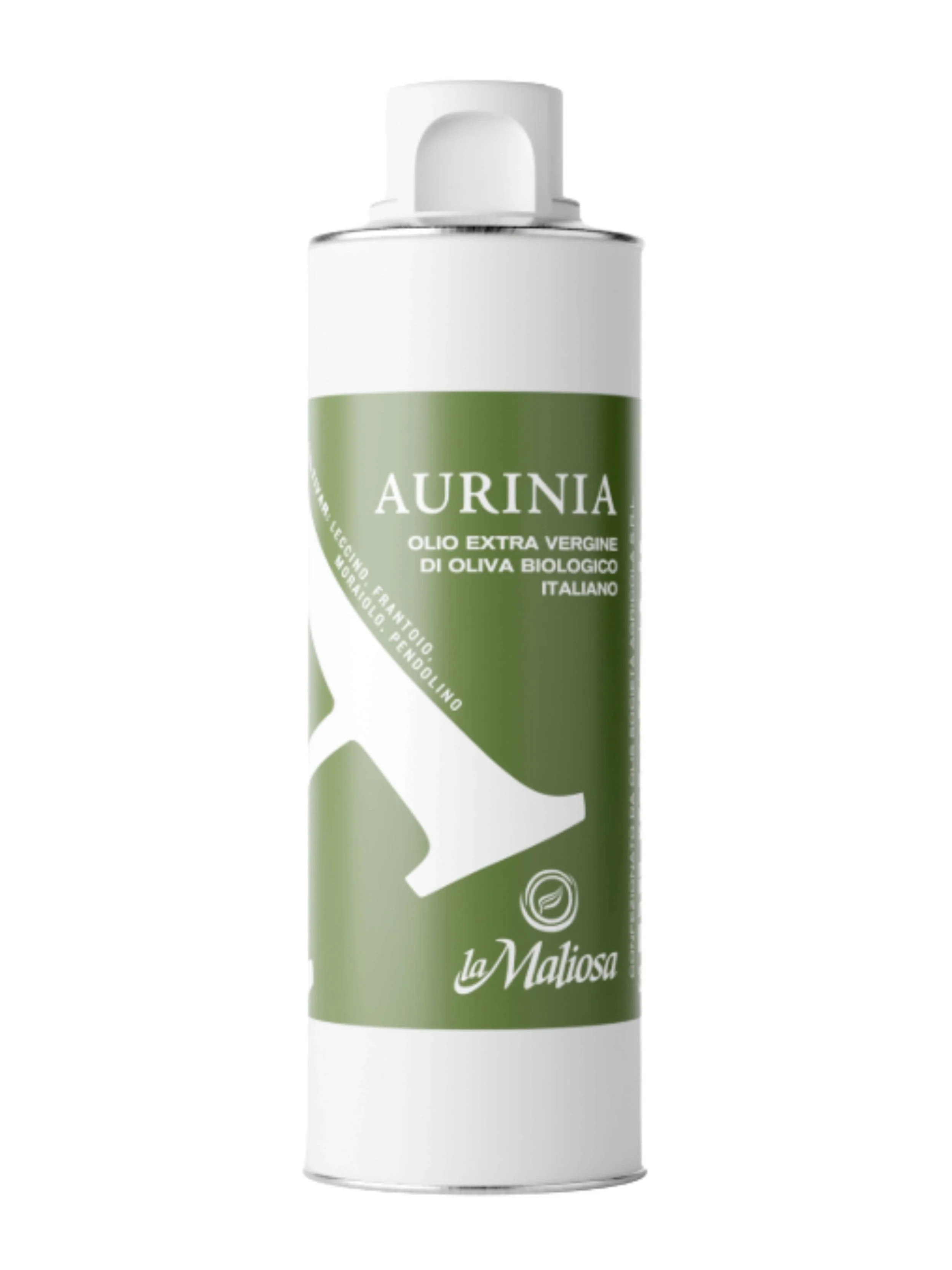
This is a woman made, limited production first cold press organic Extra Virgin Olive Oil from the Maremma hills of Tuscany made from a blend of four Tuscan cultivars. Buttery deliciousness with a bitter kick at the end, thanks to its polyphenols. It has won gold medals in a competition which judges the best extra virgin organic olive oils from around the world.
Farming & Winemaking Highlights: Regenerative Agriculture | Sustainable Farming | Biodynamic | Vegan | No additives | Unfiltered | Organic | Metodo Corino
Fun Facts: The natural farming method that produced this extra virgin olive oil, the metodo corino, is actually patented by La Maliosa woman winemaker Antonella Manuli after she helped to develop it with natural wine legend Lorenzo Corino of Case Corini.
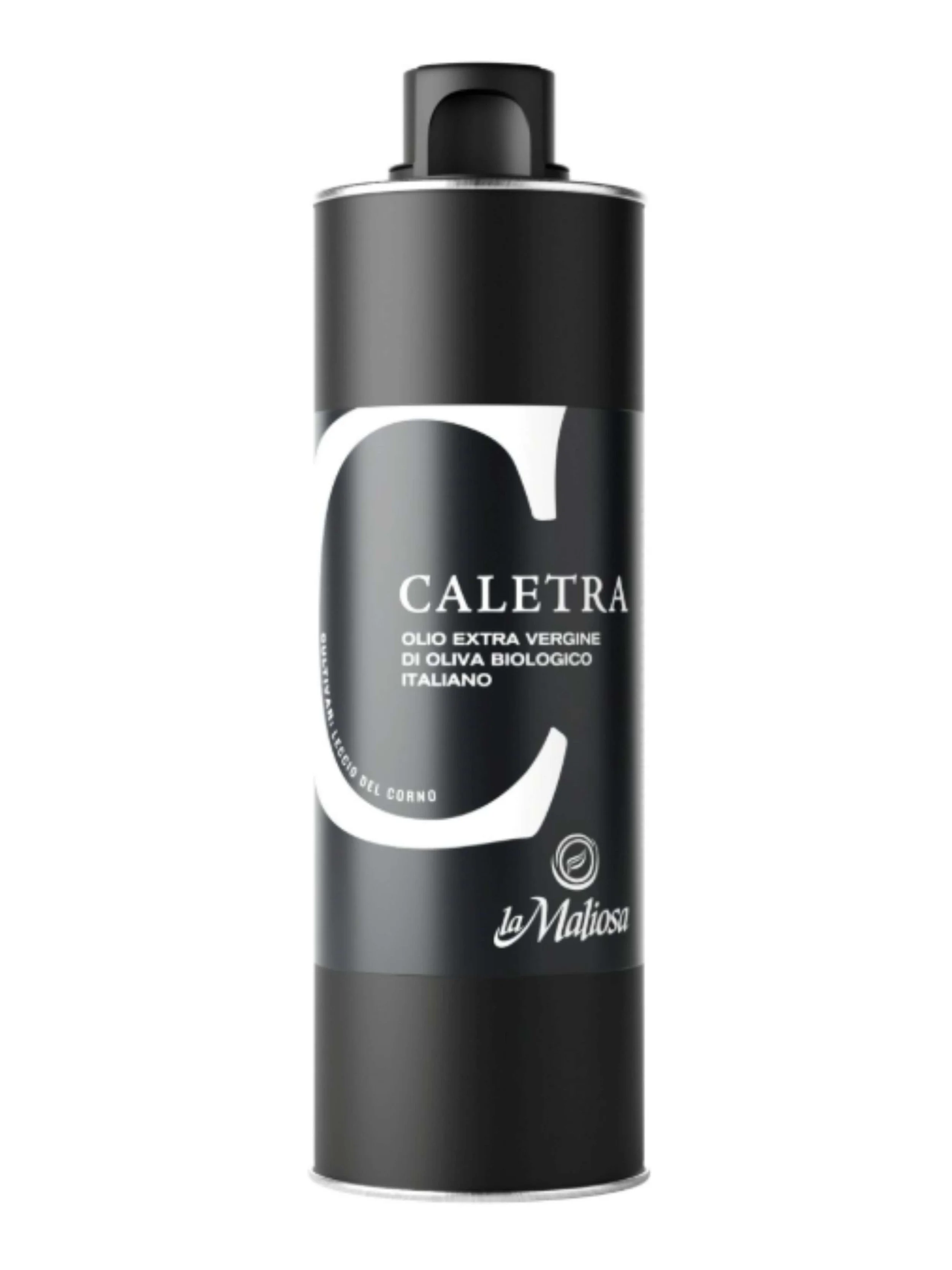
A prestigious first cold press monocultivar organic extra virgin olive oil from the Maremma hils of Tuscany which has won best organic extra virgin olive oil from Tuscany! Its polyphenols which are used to determine how good an olive oil is, are exceptionally high!
Top awards include extra gold, as best Tuscan organic EVOO by Biol Novello which evaluates the best olive oils in the world. In the past this olive oil has also won Best in Italy, as well as Gambero Rosso 3 leaves (their highest rating).
Its aromas of grass, green pepper and mint lead to an intense hot pepper taste and a long finish with black pepper lingering in your mouth. Even just a little drizzled over a simple lettuce salad will bring it to life with flavor.
Farming & Winemaking Highlights: Regenerative Agriculture | Sustainable Farming | Biodynamic | Vegan | No additives | Unfiltered | Organic | Metodo Corino
Fun Facts: The natural farming method that produced this extra virgin olive oil, the metodo corino, is actually patented by La Maliosa woman winemaker Antonella Manuli after she helped to develop it with natural wine legend Lorenzo Corino of Case Corini.
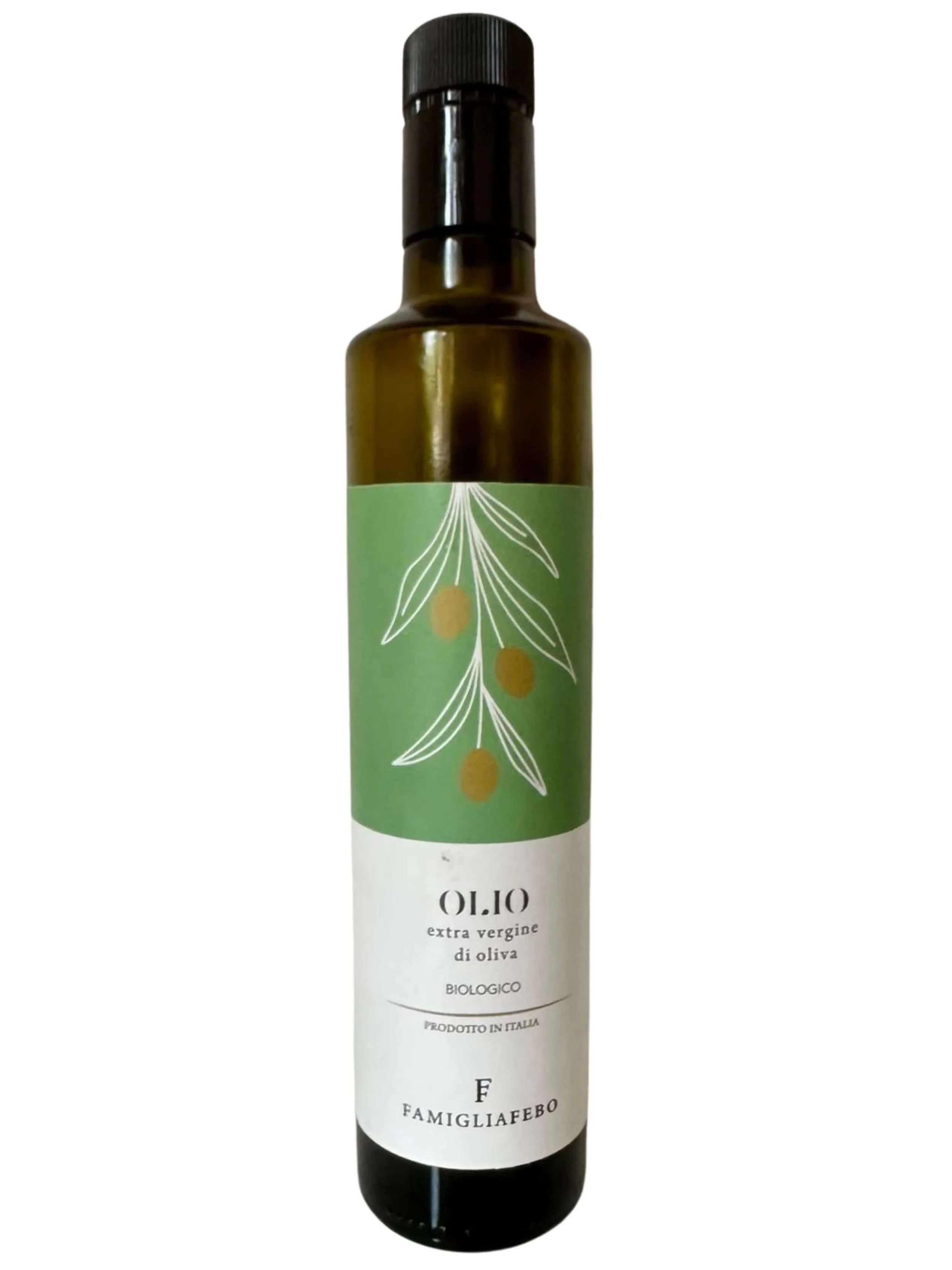
From the hills of Abruzzo near the Adriatic Coast of Italy, comes this Organic EVOO, or Extra Virgin Olive Oil, farmed and made by the Febo family. Farmed sustainably and organic, this natural extra virgin olive oil is also vegan and, like all evoos, a first run - cold press olive oil, the best kind of olive oil for you.
The 2024 harvest is still made from a blend of olives like leccino and 500 year old trees, but now it is mostly the dritta cultivar.
Farming & Winemaking Highlights: Regenerative Agriculture | Sustainable Farming | Biodynamic | Vegan | No additives | Unfiltered | Organic
Fun Facts: The dritta cultivar is a rare one being saved by Davide Febo who is trying to save and rehabilitate it.

This is an olive oil, super food for super foodies. This is small production organic & vegan extra virgin olive oil made primarily from a rare local cultivar from the area of Macerata Italy called Piantone de Mogliano. The buttery flavors and taste of this organic EVOO so inspired the family behind Quercia Scarlatta farm and winery in Le Marche Italy to name it ‘our gold’, or Il Nostro Oro.
Hand harvested and milled at the family’s farm, a first run, cold press evoo, this olive oil’s aromas remind you of stepping into a garden full of fresh green beans with a whiff of black pepper. Likewise, tasting it is like having fresh green beans with black pepper and butter, thanks to its buttery texture. Black pepper continues on the finish.
This organic extra virgin olive oil comes in a 3 liter container, made for following the Mediterranean diet to a tee!
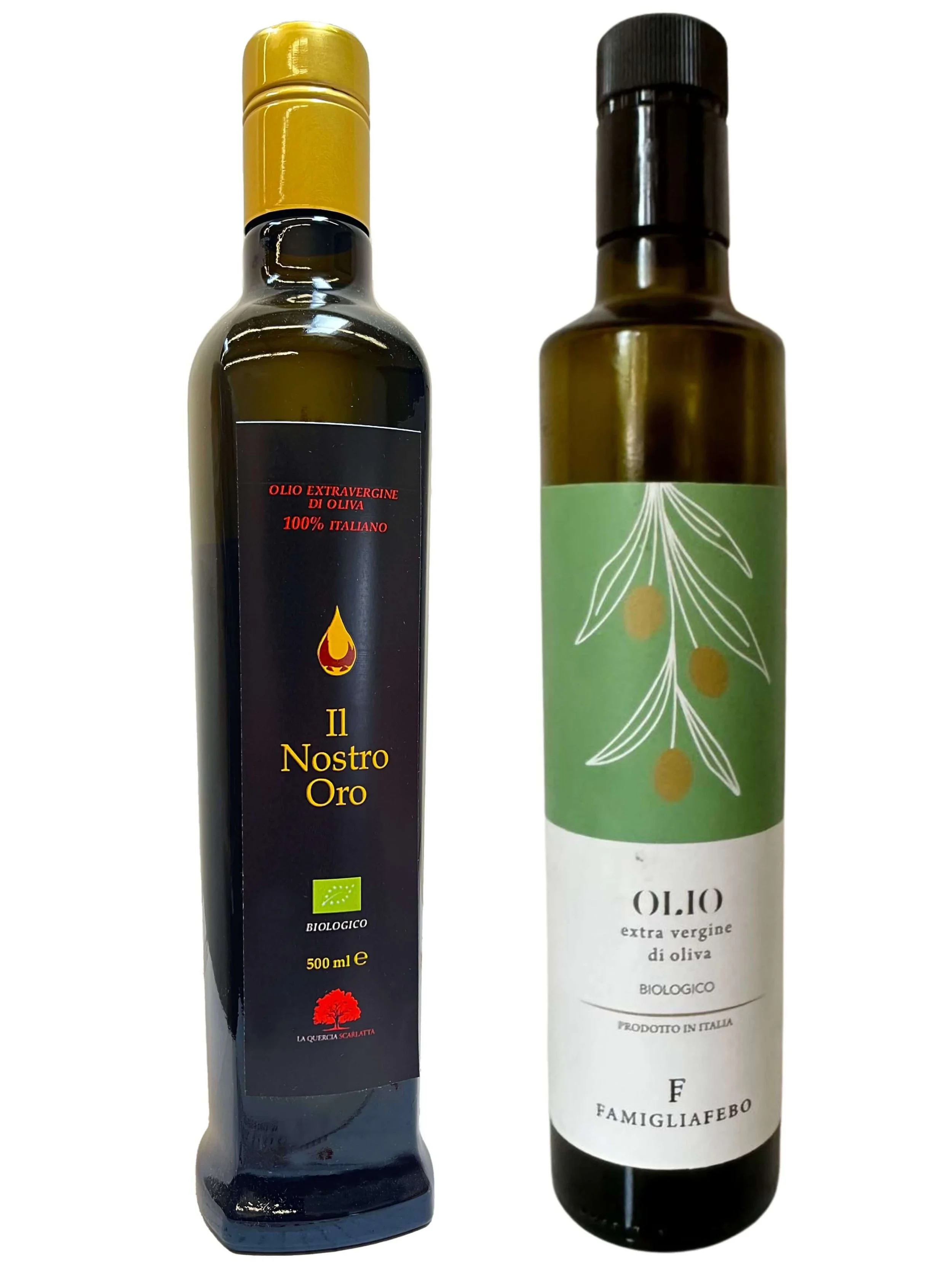
Up your culinary game with delicious & hard-to-find organic extra virgin olive oils from small family run biodynamic farms in Italy. Made with local cultivars and sustainably farmed, these evoos are packed with flavor. This set comes with two 500 ml bottles, one from Abruzzo and one from Le Marche, Italy, great for stocking your pantry or to give as an olive oil gift for that special foodie in your life and for keeping really good olive oil always on hand!
Any add-on to your order has free shipping within the Continental US. If you’re a real foodie, try our other organic EVOOs from a woman-owned small Italian farm La Maliosa, both award winning and high in polyphenols, Aurinia and Caletra.
Included in this box are:
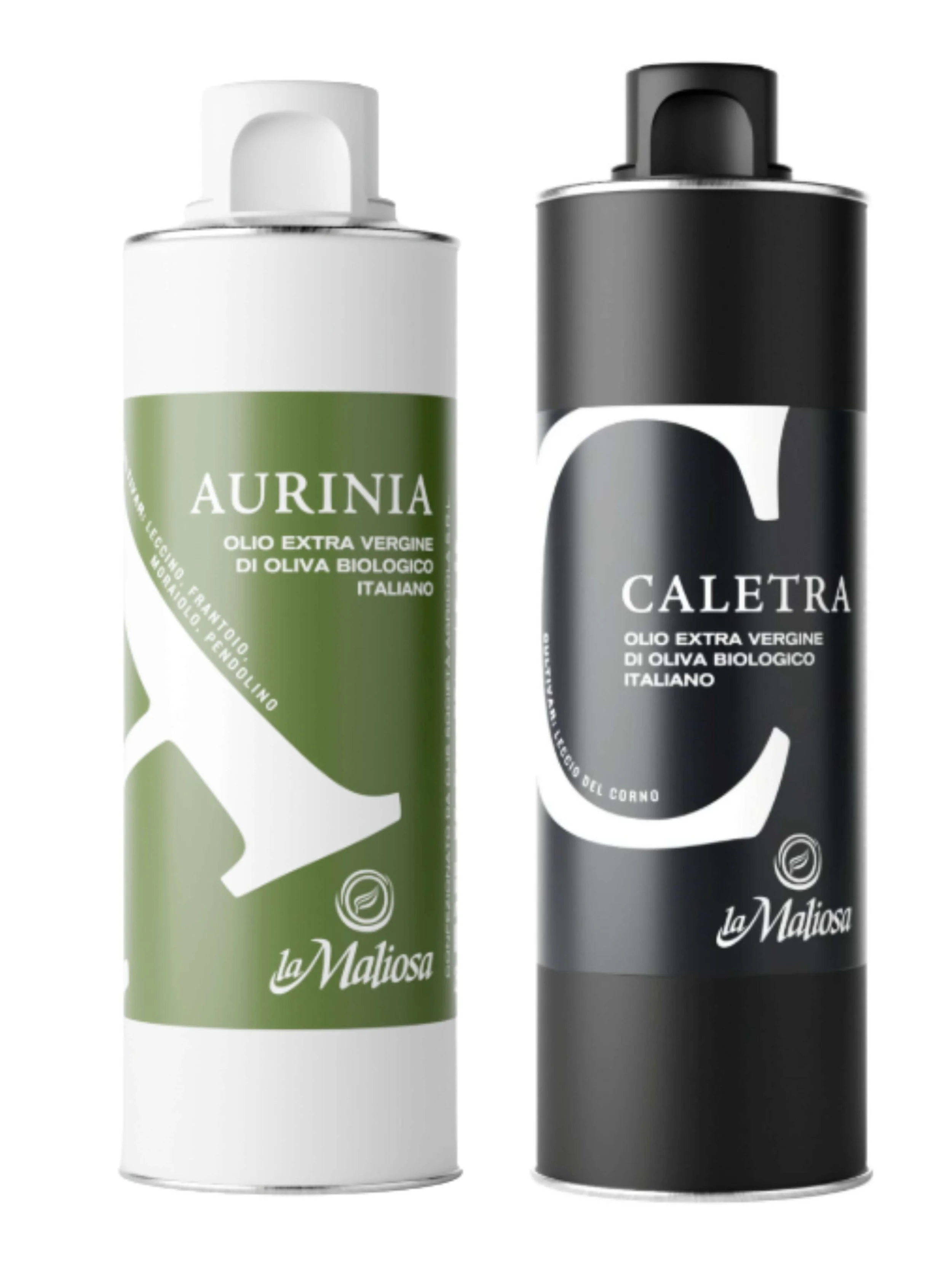
This gift set has the best olive oil around! It is farmed and made by woman owned La Maliosawho farms and crafts organic extra virgin olive oils (and natural wines too) in the wild area of Tuscany, Maremma.
This gift box comes with 2 organic EVOOs:
Aurinia, a buttery and vegetable garden tasting blend of Tuscan cultivars,
and the Monocultivar Caletra organic EVOO which has won best in Tuscan and best in Italy, and is amazing drizzled on veggies, salads and meats.
Use both Italian olive oils to up your cooking game with an added drizzle of flavor.
This set is available with evoos coming in a 250ml size or a larger 500ml size. Great for stocking your pantry or to give as an olive oil gift for that special foodie in your life!
Any add-on to your order has free shipping within the Continental US. If you’re a real foodie, try our other organic EVOOs from other small Italian farms, like this one from Abruzzoand this one from from Le Marche.
Included in this box are:
La Maliosa Aurinia Tuscan Blend Organic Extra Virgin Olive Oil
La Maliosa Caletra Tuscan Monocultivar Organic Extra Virgin Olive Oil
Farming & Winemaking Highlights: Regenerative Agriculture | Sustainable Farming | Biodynamic | Vegan | No additives | Unfiltered | Organic | Metodo Corino
Fun Facts: The natural farming method that produced this extra virgin olive oil, the metodo corino, is actually patented by La Maliosa woman winemaker Antonella Manuli after she helped to develop it with natural wine legend Lorenzo Corino of Case Corini.