UnCorking the Humble Cork
June 25th 2022 was a busy day for cork farmer Ricardo Cecilio. “Welcome to Montado!” greets Ricardo Cecilio. After a 9 years wait, it was finally time to harvest cork from the cork trees on his farm in in Alentejo, Portugal. That morning, he and cork harvest specialists were at his farm busy harvesting. Then, that evening, he gathered, along with some friends, live from his cork farm at our “Uncorked” VeroTalk to tell us everything we ever wanted to learn about cork and cork farming. Here are the highlights from our exploratory chat with him.
Joys & Challenges of Cork Farming
Surrounded by “naked” trees, Ricardo stood in his cork forest, known as the Montado or “where the cork oaks grow” during the harvest which happens only every nine years, or so. Vero founder Sheila Donohue met cork farmer Ricardo Cecilio many years ago when they were both living in Bologna, Italy. Ricardo lived in Italy for over 30 years, and that’s where he attained his biology degree. Then, 20 years ago, Ricardo and his family had the opportunity to convert agricultural land to cork forests, which they did, while continuing to grow rice, tomatoes, pine nuts and other agricultural crops. During the period of cork oak growth, Ricardo lived in Italy returning to Portugal to tend to his trees; now he lives there with his extended family, his six brothers and sisters each taking care of a grove of cork oak trees which are harvested in rotation.
Ricardo talked about the joys and challenges of being a cork farmer in the Alentejo region. “I have a passion about forests in general and animals more than agriculture crops,” Ricardo explained. And, “it's been a love story” but not without its ups and downs. The cork forest is remote, and he misses all the activities of Bologna, but “it's beautiful.. and it's a never-ending story because you keep learning every day, every year, every nine years you learn something more.” Yet “it takes a long time” to yield cork from a cork farm, says Ricardo, so patience and long-term planning is a must.
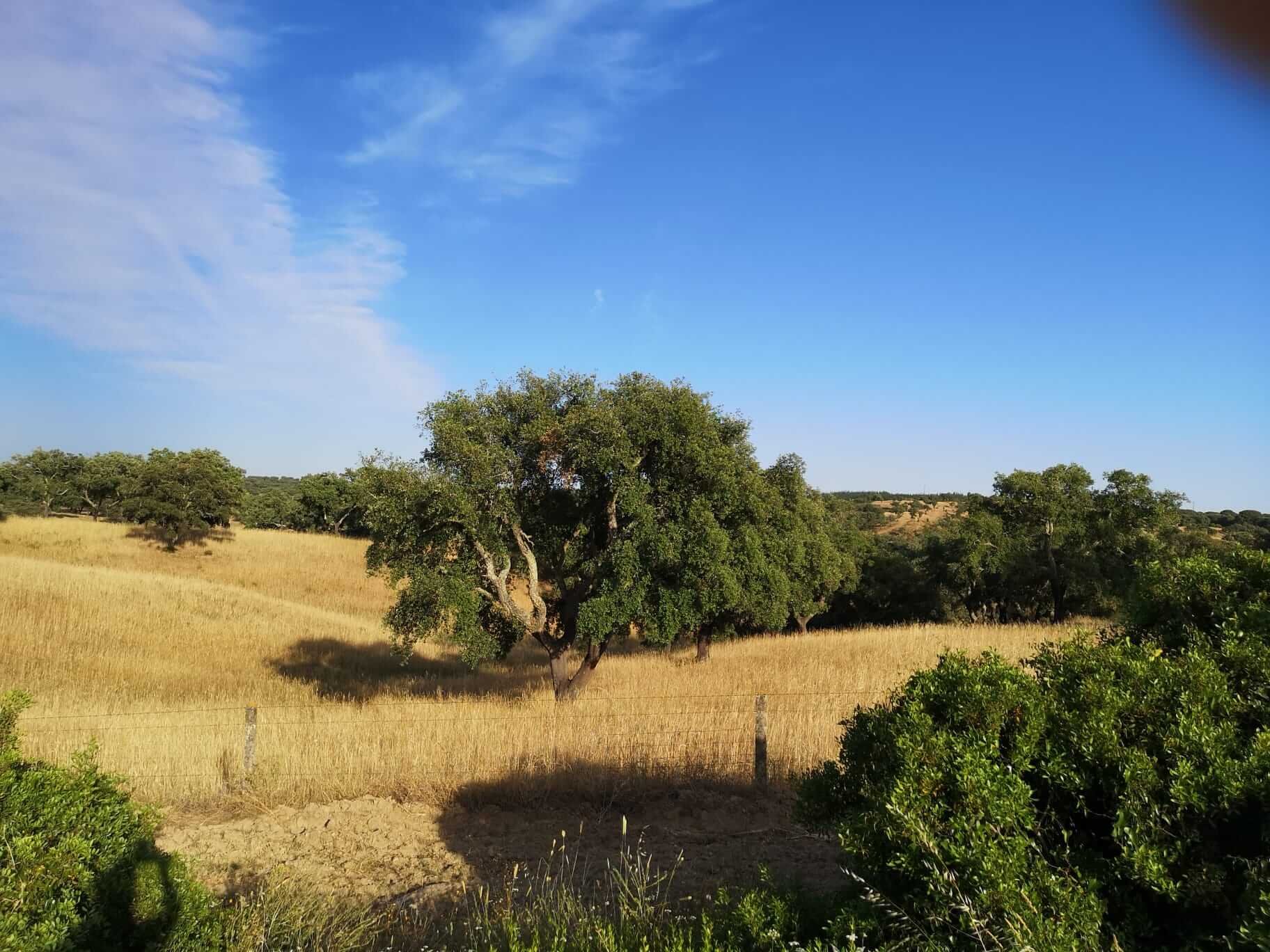
Montado landscape on Ricardo’s cork farm in Alentejo, Portugal.
The Montado
The Montado, Ricardo said, is what they call this natural looking landscape of cork forests, which has been shaped for thousands of years because of human interaction. Without human intervention, the cork forests would be replaced by other species, and the ones that depend on this ecosystem, including foxes and migrating birds, would lack resources for their survival. Ricardo grows his cork oak trees in Alentejo, an up-and-coming wine region in Portugal which has the largest production area of cork in the world (almost 50%) and with 33% of the world’s cork oak forests. Located in the hilly south eastern edge of Portugal near Spain but only a few hours east from Lisbon and the Atlantic Ocean, Alentejo is lush in some areas with these beautiful large cork trees which harbor an important and diverse ecosystem. The landscape has rolling hills of grass, vineyards of grapes, orchards with olives, lavender growing everywhere, and in the oak forests, animals abound, and flocks of birds flit and sing in the trees.
The Cork Tree, Symbol of Portugal
The cork oak tree (Quercus Sitbe) features prominently in the native landscape around the Mediterranean Sea not only in Portugal, but also Spain, Italy, North Africa, Greece and islands in the Mediterranean. Trees have large sturdy trunks, with heavy spreading branches and rounded crowns of dense, holly-like foliage, similar to that of the coast live oak of California. The outer bark of cork oak, known commercially as "Corkwood," can be harvested for many years without injury to the trees as long as the harvest occurs during warm, dry weather of late spring and summer, completing harvest before the rain and cold comes in fall. Depending on conditions, about every 9 years the bark is carefully stripped from the trees and this harvest can continue sustainably for 100 years or more. Seedlings require shade, and possibly irrigation, which is challenging due to the remote nature of the cork oak forests. Rodents, rabbits, cattle, and deer also threaten the young trees. Cork oak trees co-evolve with fire, thankfully, acting as a barrier to wild fire. Yet, ongoing drought conditions challenge the cork oak forests and make fires more fierce. “You'll take three acorns and you'll plant them and then do some hand watering maybe to see how they go but it's so remote that they're dry farmed. Essentially you're not irrigating them or watering them,” Ricardo said. “Hopefully you get several little saplings. You have to protect them from the cattle and the other deer and other animals that might want to eat the baby oaks. Only the best thrive and make it.”

One of Ricardo’s ‘naked’ cork trees, right after harvest
By seven years old, most of the trees are about “as big as you, there are some smaller than me, and some are three times my size.” About every 7-10 years, they fertilize the soil. But that’s not all: “You have to prune the tree when they are five years then when they are 20 years so you'll have a trunk that’s straight until two or three meters so you can actually have good pieces of cork when you strip the trees.” That first harvest at about 20 years is not the best quality, however. During the growing process, the trees are pruned – a nice straight trunk is most desirable to ensure a good harvest; some cork is taken at 15 and 20 years.
Finally, Harvest Time
Once the trees have matured at 30 years, Ricardo can harvest the cork, starting early in the morning and quitting before the day gets too hot. While waiting another nine years to sustainably harvest the cork again, Ricardo cares for his trees, and in caring for the trees, he takes care of an entire, important ecosystem that also provides renewable closures for wine. After nine years, it’s time once again to sustainably harvest the cork. It takes about 40 years of time and money before any return on investment in cork oak.
It is from the bark of the cork oaks that wine bottle stoppers are made, with the highest grade corks coming from the third to sixth harvest from trees 50 to 80 years old because this bark is the least porous and the most uniform in quality with about one ton coming from every 17 acres of cork forest, or about 200 pounds per acre of a well managed forest on good soil. When the cork is stripped leaving the tree naked, Ricardo and his team are careful not to damage the shockingly bright pink cambium layer which circles the tree and carries nutrients like a super highway from one part of the tree to other parts. After the bark is removed, the once actively growing and moist cambium layer dries quickly to a depth of about one- eighth of an inch, changes color from pinkish-tan to dark brown, and a new cambium layer is established below this protective new layer of cork bark. The production of new cork is rapid and the act of stripping the bark appears to stimulate activity to rapidly replace the protective layers of cork, with any wounds to the cambium quickly healing. The inner cambium bark layer shrinks, and the tree’s energy goes into growing cork producing about 1.5” every six years.

Harvesting cork ‘in-action’ on Ricardo’s cork farm.
Cork: An Anchor of Sustainability
When you purchase wine with a real cork, you are preserving a traditional way of life – and an entire ecosystem. “Natural corks are 100 percent biodegradable and compostable”, as mentioned in a recent VinePair article about sustainability in wine. In the big picture, cork oak forests help against climate change because it preserves an ecosystem and the trees sequester carbon. Yet, unfortunately, climate change is having a huge impact, reported Ricardo, especially on the young trees which are not thriving as well. After harvest, “they're dying a lot…because in winter it doesn't rain enough and in summer the heat waves are more and more frequent. We had three heat waves during spring this year and we were touching 42 degrees celsius. It's really a lot…it's getting more and more serious.”
Corked Wine: Cause & Prevention
No substantial conversation about cork can avoid addressing “cork taint” – when a wine is muted or disappointing at one end of the spectrum, often musty, with smells like unpleasant wet socks or moldy cardboard. This is caused by TCA, or 2,4,6-trichloroanisole (TCA) which is formed “in tree bark when fungi, mold or certain bacteria come into contact with a group of fungicides and insecticides, collectively referred to as halophenols. These were widely used during the 1950–1980s and remain in the soil. Fungi have a defense mechanism that chemically alters these compounds, rendering them harmless to the organism but creating TCA in the process,” writes Sean P. Sullivan in Wine Enthusiast. The solution is simple, according to Ricardo’s solution to avoid TCA is to not harvest from the bottom of the tree where there is risk of fungi and where there is soil. “Now we are more informed and pay more attention to the quality of cork”, says Ricardo. In a recent Wine Scholar Guild webinar given by Jane Masters, she echoed Ricardo’s sentiment indicating that the cork industry has learned a lot and improved on avoiding TCA, thanks also to testing and steaming of the cork bark and other processes that have pretty much eliminated cork taint from modern corks.
Taste Wines with Natural Corks
Try what wine sealed under a natural cork tastes like! We sell these curated small production, farm to glass wines to both businesses and consumers across the US:
If you are a distributor reach out to us introduce our highly curated portfolio of one of a kind small production wines to your state.
We sell to wine stores and restaurants in certain states - contact us to learn more.
If our farm crafted natural wines and olive oils are not in your local shop or restaurant, buy wine online here, and we’ll ship it to you, including wine gifts.
We also have an award winning wine club for true wine explorers that are seeking to continually discover unique, sustainable and authentic small production wines they never had. These are wines selected by our sommeliers and curated for each box.
We do corporate gifts and sommelier guided wine tastings. Email us and we’ll tailor unique and sustainable corporate gift ideas.
Canalino
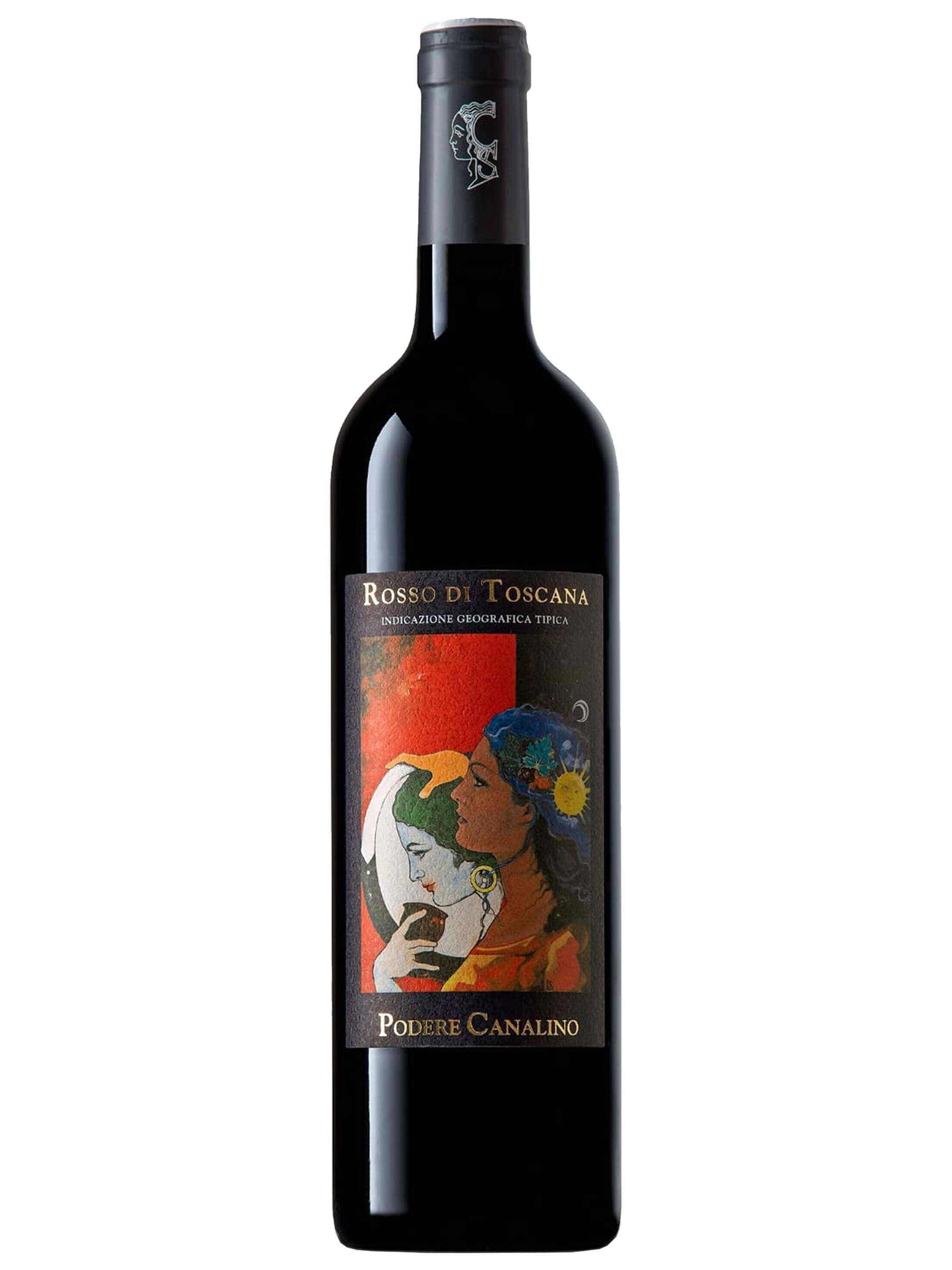
Made from sangiovese vineyards in Montalcino, this is an approachable, people pleaser for red wine lovers, the unoaked offering from the Brunello producer Canalino. It has notes of cherry, with hints of black pepper and toast. This wine is fresh, fruity and balanced with soft tannins and a pleasant clean finish.
Tastes Like: Crunchy, fresh cherries
Farming & Winemaking Highlights: Regnerative Agriculture | Sustainable Winery | Biodynamic | Native Yeast Fermentation | Unfiltered | Organic | Natural Wine | Vegan
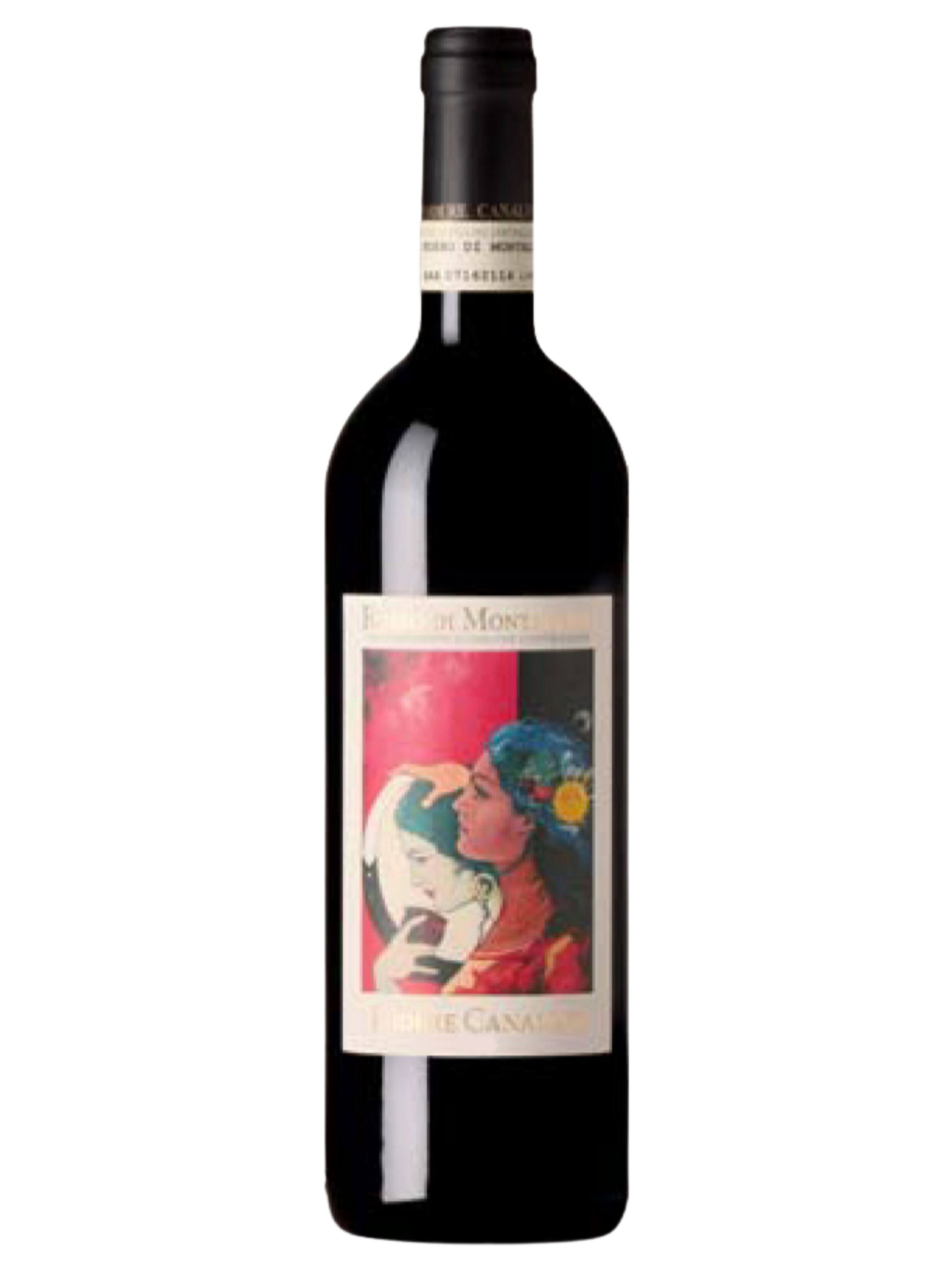
This is a complex, intense age-worthy vegan red wine; Once opened balsamic notes burst forth. We recommend to decant it or at least let it breathe a bit before tasting. When tasting, you understand that it comes from a terroir which one of the best Italian reds, Brunello, is made from; its structure is noteworthy, from acidity, to tannins to mineral structure. A delight for serious red wine lovers.
Tastes Like: Spiced Cherry Jam
Farming & Winemaking Highlights: Regnerative Agriculture | Sustainable Winery | Biodynamic | Native Yeast Fermentation | Unfiltered | Organic | Natural Wine | Vegan
Fun Facts: From 100% sangiovese vineyards right outside the historic center of Montalcino.

This Brunello di Montalcino from winery Canalino is crafted using specially selected sangiovese grapes. A gorgeous ruby color, the nose is a potpourri of intense mature fruit and spice aromas from prune to menthol to leather. The wine is structured, with freshness, minerality and age worthy tannins and a fantastic mouthfeel.
Tastes Like: Stewed Cherries or Cherry Jolly Rancher candy
Farming & Winemaking Highlights: Regnerative Agriculture | Sustainable Winery | Biodynamic | Native Yeast Fermentation | Unfiltered | Organic | Natural Wine | Vegan
Fun Facts: The name “brunello” comes from the local name used for the type of sangiovese typically used in the area.

All natural, old vine nebbiolo and barbera blend with no added sulfites and yeast. Aromas of milk chocolate covered cherries, it has a fresh and rich fruity taste with notable tannins and a has a long piquant finish. Name comes from the former owner of the 70 year old vineyard which has a mix of Nebbiolo and Barbera and is down the hill from the childhood home of Lorenzo Corino. After a gentle crushing, fermentation starts with native yeast fermentation and wines are left with skin contact for 6-7 weeks, followed by about 30 months of aging in wooden barrels. As with all of Case Corini wines, this is a 00 wine, nothing added, nothing removed, no yeast, no sulphites added, organic, biodynamic, vegan. In other words, all natural wine.
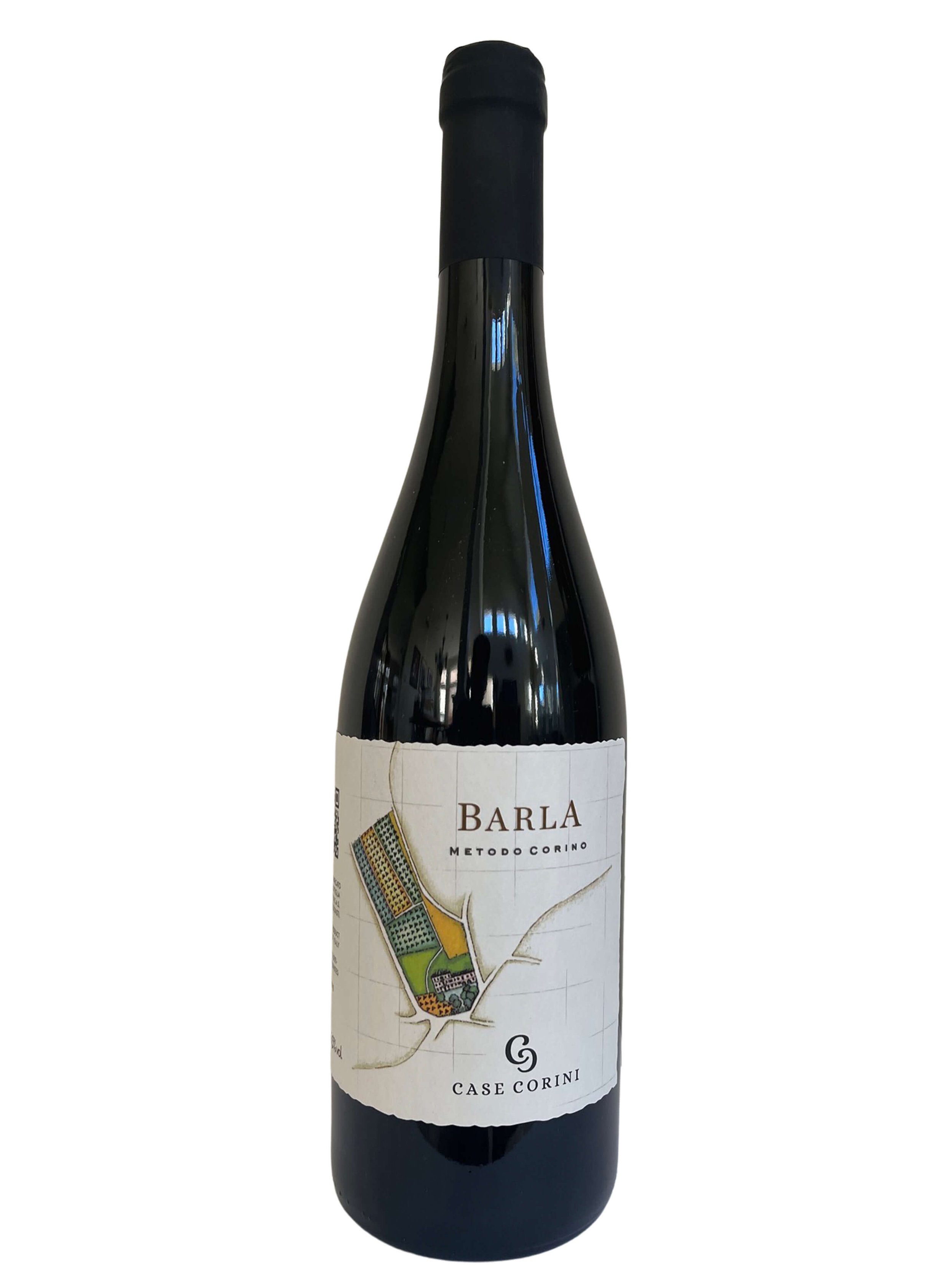
You never had a Barbera like this! Made from 95 year old Barbera vineyard, with some small percentage of other varieties planted over the years in the vineyard. This all natural wine has intense aromas of brandied cherries and a richly textured, delicious dark fruit taste with right balance of fruit, acidity and tannins. Barla is the antique name of the vineyard which used to be the land of an old convent. After a gentle crushing, fermentation starts with native yeast fermentation and wines are left with skin contact for 6-7 weeks, followed by about 36 months of aging in wooden barrels, housed under Lorenzo Corino's family home.
As with all of Case Corini wines, this is a 00 wine, nothing added, nothing removed, no yeast, no sulphites added, organic, biodynamic, vegan. In other words, all natural wine.
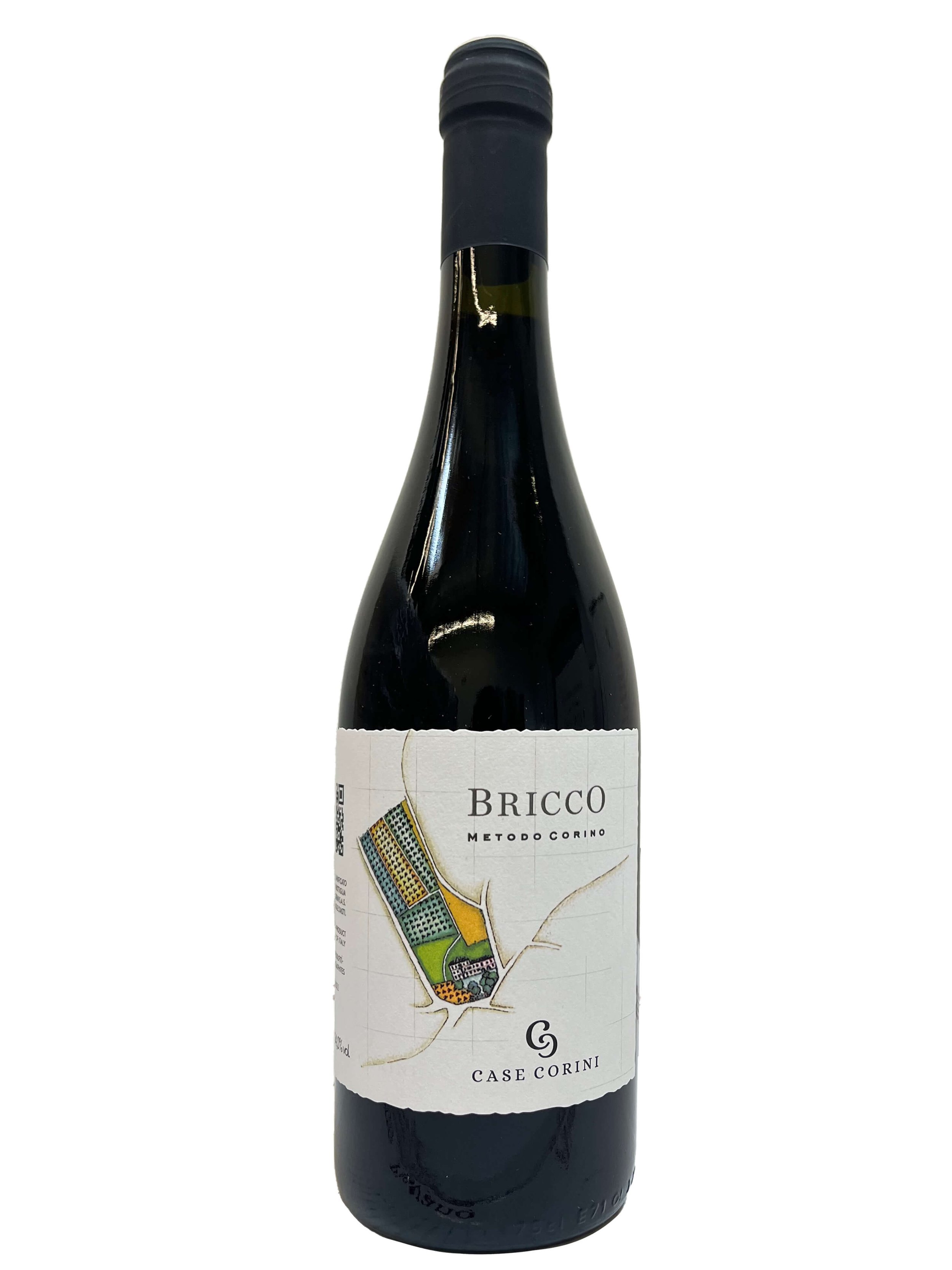
From the old historic field blend vineyard in the Corino's family's 'backyard', this is a fresh, delicious, and complex natural red wine, nicely balanced with fresh raspberry taste along with chocolate shavings.
The Bricco vineyard, an old single vineyard made up of 60% barbera, then freisa along with other red native varieties, is right behind the family ‘villa.’ It has been used as a sort of experimental vineyard by Lorenzo Corino, and is harvested as a field blend.
As with all Case Corini wines, this wine is made with minimal intervention, no added sulfites, native yeast fermentation, vegan, and following the principles of regenerative agriculture, biodynamic and organic farming.

Earthy, age-worthy nebbiolo made from 70 year old naturally cultivated vines. Named for the dearly beloved grandfather of Lorenzo Corino. Having a garnet color with orange hues it has a complex, spicy nose with notes of cardamom and cinnamon. When tasting, it is fruit forward, cherry & forest fruits, followed by spices, and chalky tannins envelope the mouth and finishes elegantly. After a gentle crushing, fermentation starts with native yeast fermentation and wines are left with skin contact for 6-7 weeks, followed by about 36 mos of aging in wooden barrels.
As with all of Case Corini wines, this is a 00 wine, nothing added, nothing removed, no yeast, no sulphites added, organic, biodynamic, vegan. In other words, all natural wine.
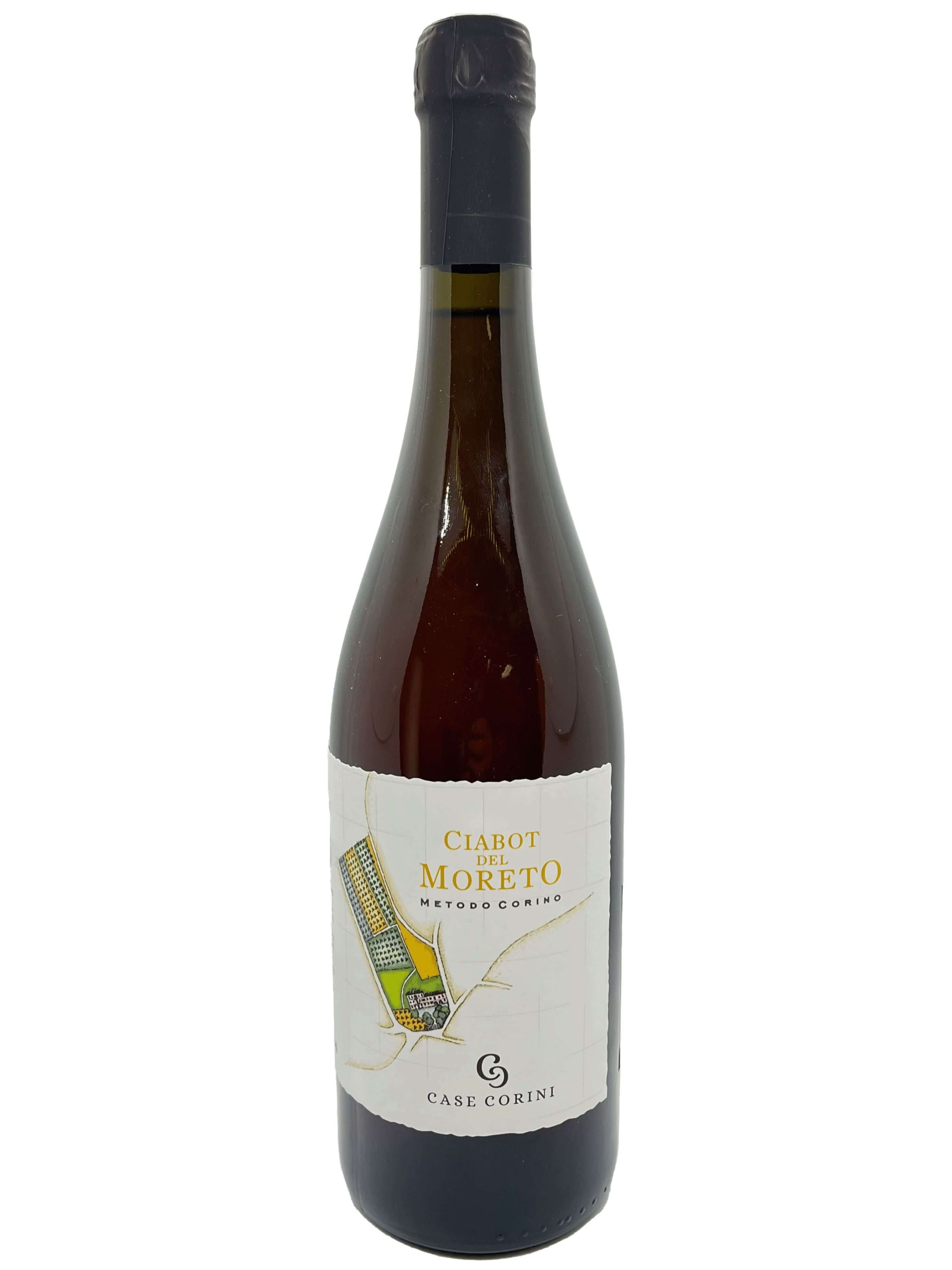
This is an aromatic late harvest skin contact Orange wine from the natural wine 'legend' Lorenzo Corino and his son Guido. The color of rust orange opens to a complex bouquet of orange blossom, candied fruits, caramel and pine leading to a fresh taste of apricots with some mineral savory-ness, pleasant tannins, lovely texture. It is balanced with a long finish. This vegan wine is made naturally, with no intervention of any kind made and no sulfites added. It is a super interesting wine for those who enjoy muscat natives and orange wines. The name Ciabot del Moreno refers to the small wine hut (part of the Piedmontese wine 'ways and culture) in the area where the single vineyard is (Moreto). A lot of local stories are born around these "ciabot". The 70 year old vineyard with different Moscato biotypes is 230m high in Santo Stefano Belbo, 15 min south of Costigliole d'Asti and a half hour east of Alba. After a gentle crushing, fermentation starts with native yeast fermentation and wines are left with skin contact for 2-3 weeks, followed by 6 months of aging in wooden barrels.
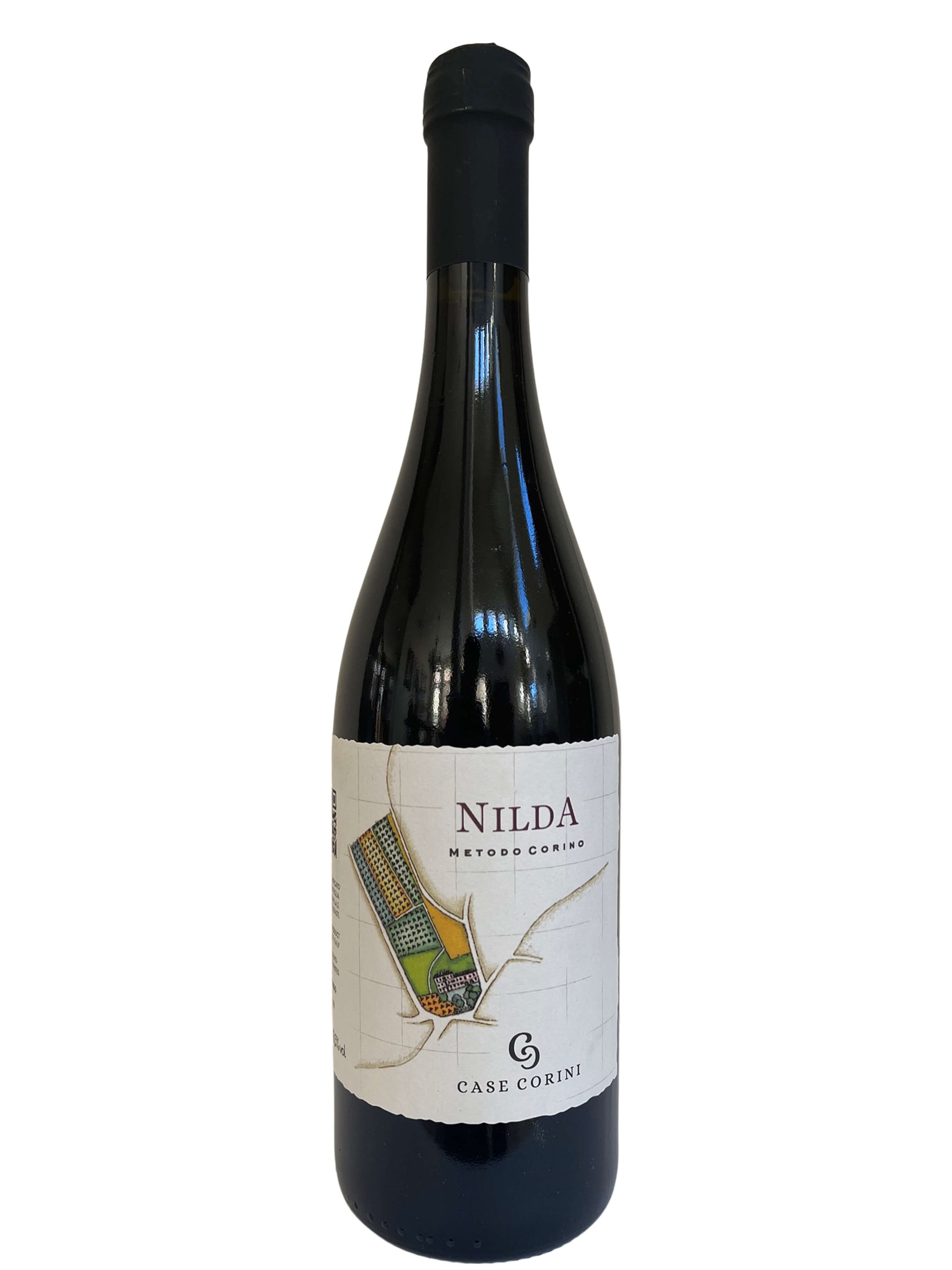
Named after Lorenzo Corino's grandmother, Nilda is Lorenzo & Guido Corino's new red wine from 20 year old vineyards in their hometown of Costigliole d'Asti. It is a field blend mainly of Barbera, along with a mix of other old varieties native to the area. It has aromas of spiced milk chocolate cookies and has a fresh, ripe dark fruit taste with an earthy funkiness and great texture. This vegan wine is made naturally, with no intervention of any kind made and no sulfites added. After a gentle crushing, fermentation starts with native yeast fermentation and wines are left with skin contact for 3-4 weeks, followed by about 12 mos of aging in wooden barrels.

An organic & vegan natural wine made from 100% trebbiano abruzzese, a white wine grape which the New York Times cites a grape “worth knowing better”. It has an inviting straw yellow color and an exotic nose (look for the saffron!) and an intriguing fruity and herbal taste.
This white wine is age-worthy too! Fermented and refined in grandfather Febo’s concrete vessels.
Region: Italy > Abruzzo > Chieti
Tastes Like: Peaches and Saffron
Farming & Winemaking Highlights: Regenerative Agriculture | Sustainable Winery | Biodynamic | Native Yeast Fermentation | Vegan | Single vineyard | Old Vine | Organic | Natural Wine
Fun Facts: This wine is named from the single vineyard from which it comes, Parella in Chieti.
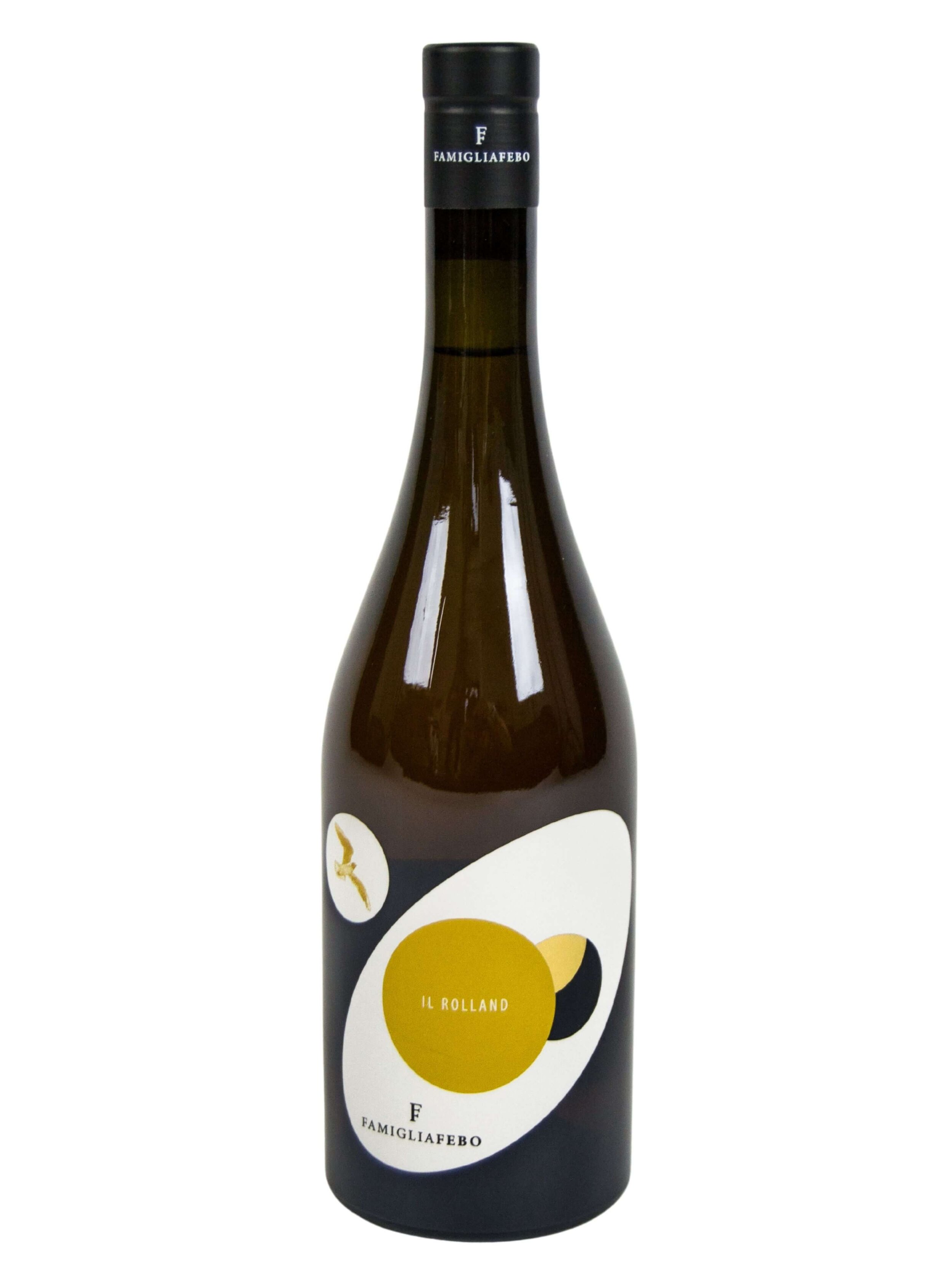
Rolland’s deep straw yellow or rusty color likens it to an orange wine, but this color comes from the vineyard, sun, and weather. A fresh and textured mouthfeel leaves you pondering and wanting to have another sip. We recommend to let it breathe before enjoying to the fullest.
The 2023 vintage offers a drier, more savory, and complex profile. With golden raisin and saffron flavors, it evolves into deeper sensations of caramel, sage, and a pronounced orange rind on the finish. It wraps up with a long, distinctive mineral finish. The 2023 really summarizes well the age-worthiness of this wine.
Region: Italy > Abruzzo > Spoltore & Chieti
Tastes Like: Golden Raisins & Saffron
Farming & Winemaking Highlights: Regenerative Agriculture | Sustainable Winery | Biodynamic | Native Yeast Fermentation | Vegan | Single vineyard | Organic | Natural Wine
Fun Facts: This wine is named for Grandfather Febo, Rolando, who bought the concrete vessels the family ages their wines in.
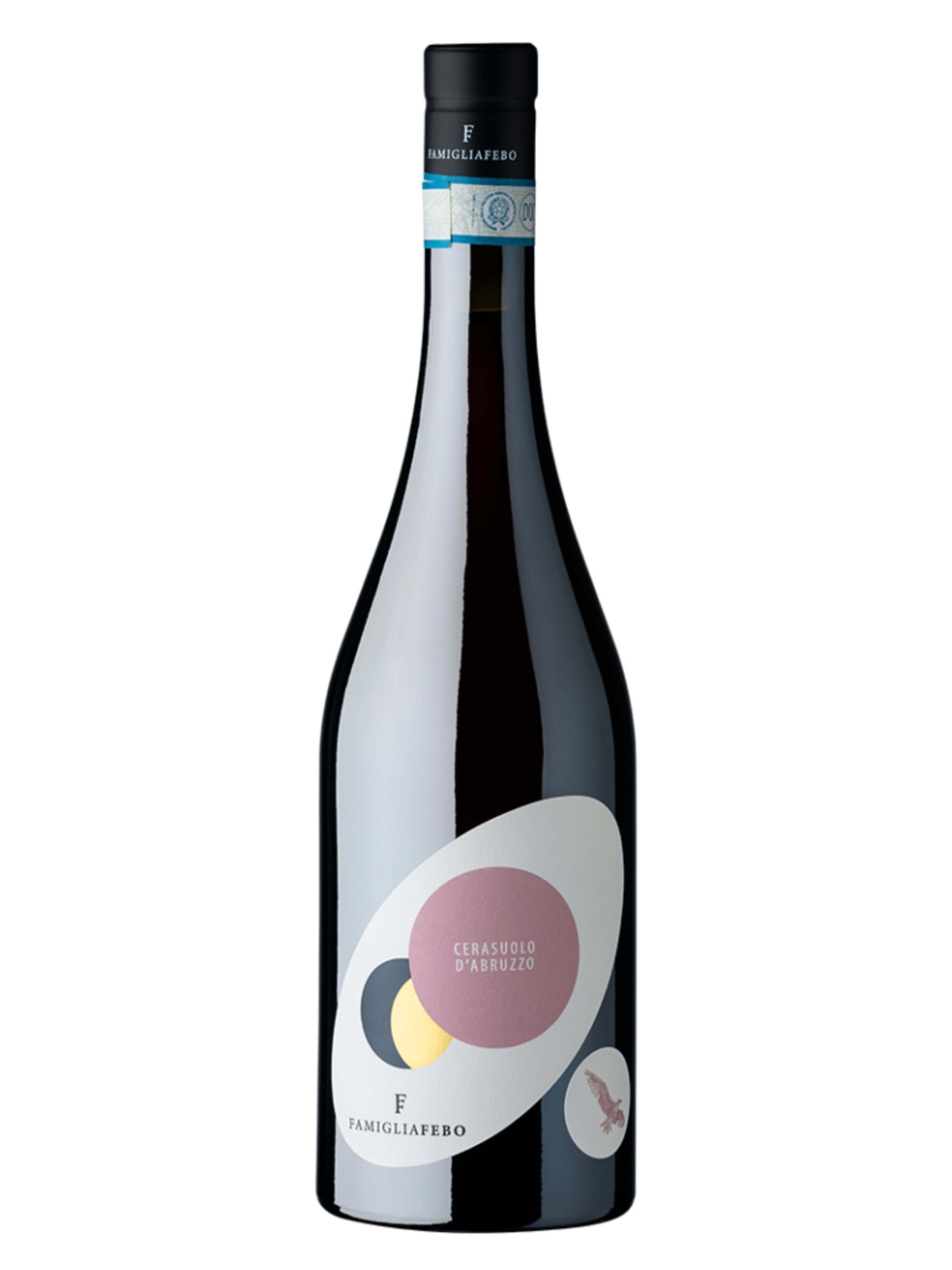
While made as a rosé wine, this Cerasuolo d’Abruzzo is actually more like a light red wine thanks to the dark pigments of the Montepulciano grapes used, farmed on Febo family’s estate vineyards in Abruzzo.
The minimal intervention approach of this natural wine producer results in a lot of vintage variation year after year. For example, the 2021 Cerasuolo d’Abruzzo has a cherry taste with a salty finish, and is considered a “serious” rosé wine while the 2024 is a Rosorange color that bursts with blood orange flavors mixed with cherry.
Region: Italy > Abruzzo > Spoltore & Chieti
Tastes Like: 2021 - Cherries | 2024 - Tart cherries and blood orange
Farming & Winemaking Highlights: Regenerative Agriculture | Sustainable Winery | Biodynamic | Native Yeast Fermentation | Vegan | Organic | Natural Wine
Fun Facts: Both vintages are fermented with native yeast and refined in the winegrower's grandparents' concrete vessels. Great chilled and a good pairing is eggplant parmesan.
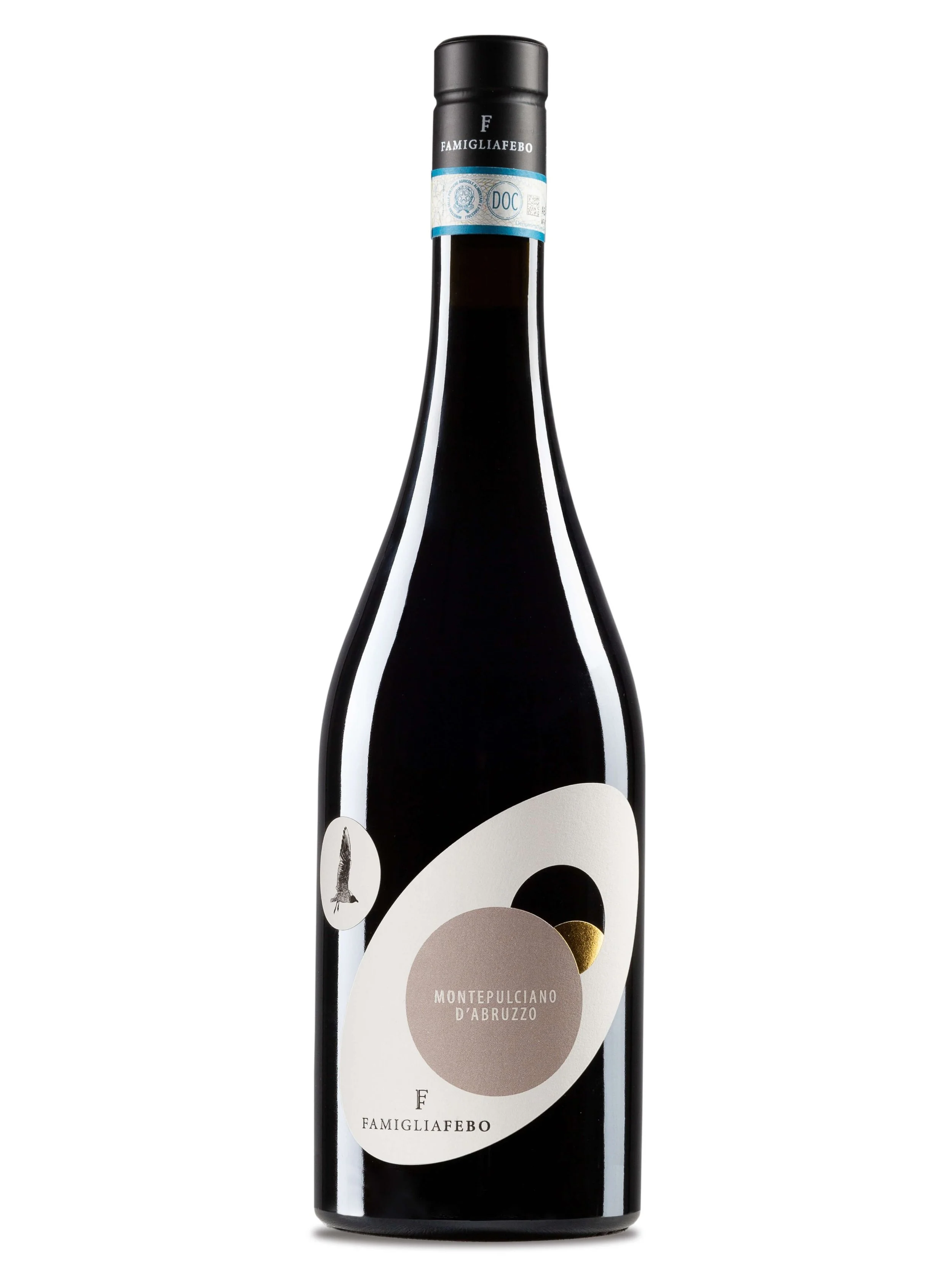
Made with 100% Montepulciano grapes spanning family vineyards in Spoltore and Chieti in Abruzzo, it has aromas of amarena cherries and licorice and a slight funkiness thanks to its 100% natural production. It tastes of dark fruit, with a rich texture and slightly bitter finish, with the funky vibe continuing while tasting. Fermented and refined in the winegrower's grandparents' concrete vessels.
Region: Italy > Abruzzo > Spoltore & Chieti
Tastes Like: Dark fruits
Farming & Winemaking Highlights: Regenerative Agriculture | Sustainable Winery | Biodynamic | Native Yeast Fermentation | Vegan | Organic | Natural Wine
Fun Facts: Pairs nicely with chicken parmesan. | While there is a famous wine “Vino Nobile di Montepulciano” from Tuscany, this grape has no connection to it; the “montepulciano name” there comes from the town noame, where as here in Abruzzo “montepulciano” actually refers to the grape used to make the wine.

Woman made Saturnalia Bianco, on VinePair’s list of Top 15 Best Orange Wines, is an award winning, unfiltered and delicious skin contact orange wine made from old vine procanico & trebbiano grapes cultivated in volcanic soil.
This natural wine is made from the patented Metodo Corino, based on regenerative farming principles. Nothing is added but grapes! Made with unpressed, free run juice with native yeast fermentation. A two week maceration imparts a dark amber color. Aged only in stainless steel tanks, it has aromas of candied fruit, dried apricot and ginger.
It has pleasant acidity and tannins, and is balanced with a long finish. A pretty deep orange color, it is a great wine for difficult food pairings, it pairs with almost any dish.
Tastes Like: Candied Orange Peels
Farming & Winemaking Highlights: Regenerative Agriculture | Sustainable Winery | Biodynamic | Native Yeast Fermentation | Vegan | No additives (ie non sulphites added) | Unfiltered | Organic | Metodo Corino | Natural Wine
Fun Facts: - The natural farming method that produced this wine, the metodo corino, is actually patented by La Maliosa woman winemaker Antonella Manuli after she helped to develop it with natural wine legend Lorenzo Corino of Case Corini.
- Named in honor of the Roman festival in December which took place near the winery, La Maliosa, this wine was once called Saturnia Bianco.
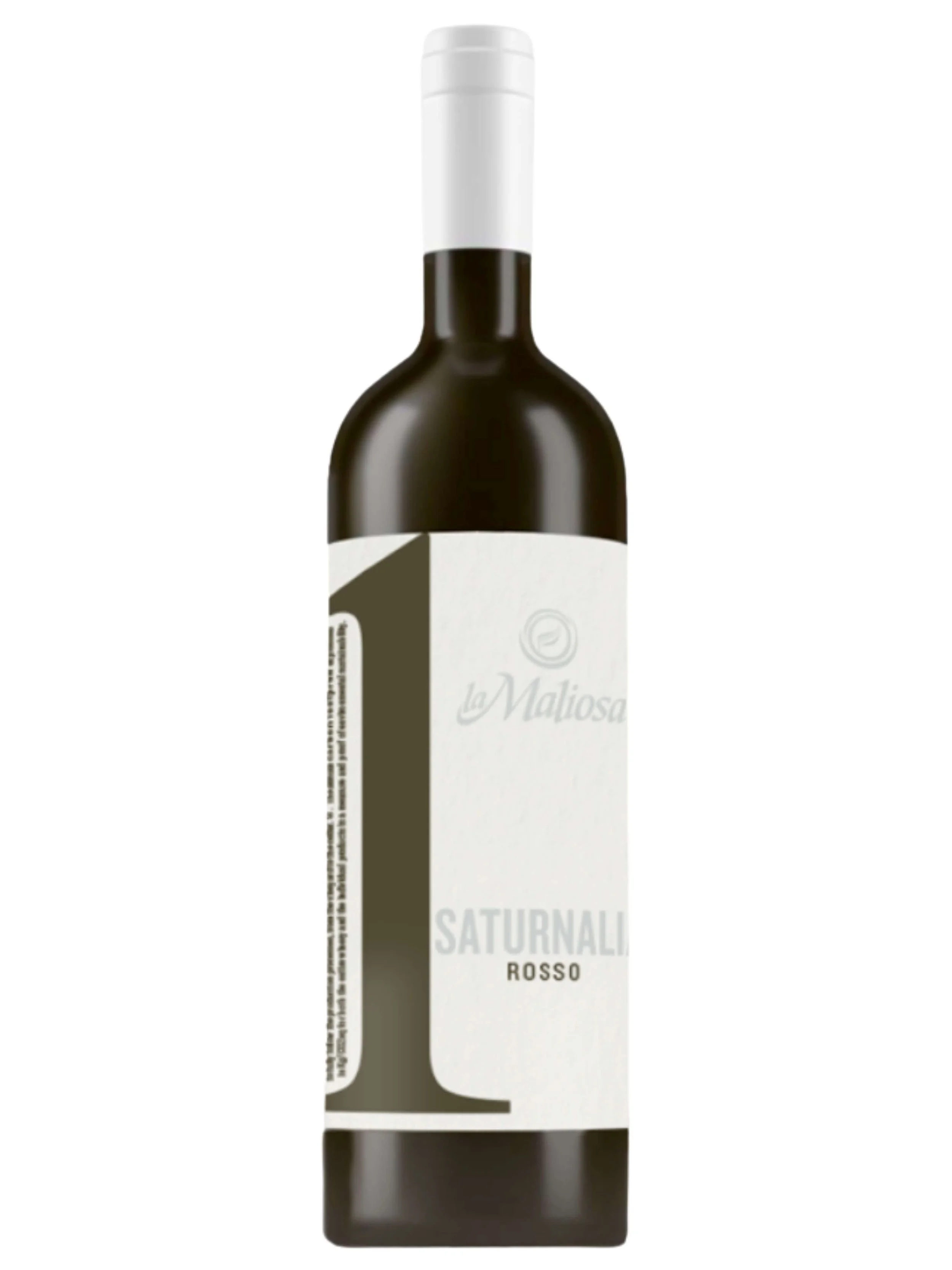
Saturnalia Rosso, once called Saturnia Rosso, is an approachable, balanced red wine with great texture and expressive finish made from a blend of native varieties from central Italy. A four week maceration on the skins is followed by aging in large wooden casks for 20 months. A pretty ruby color is accompanied by cherry and vanilla spice aromas. Pairs great with pork kebabs and cheese burgers. A woman-made organic, biodynamic and vegan natural wine using the patented Metodo Corino which is based on regenerative agriculture farming methods.
Tastes Like: Cherry and Strawberry Fruit Leathers
Farming & Winemaking Highlights: Regenerative Agriculture | Sustainable Winery | Biodynamic | Native Yeast Fermentation | Vegan | No additives (ie non sulphites added) | Unfiltered | Organic | Metodo Corino | Natural Wine
Fun Facts: The natural farming method that produced this wine, the metodo corino, is actually patented by La Maliosa woman winemaker Antonella Manuli after she helped to develop it with natural wine legend Lorenzo Corino of Case Corini.

An award winner in the Millennial Wine Competition, this all natural, fresh and earthy red is made from hard-to-find Tuscan varietal Ciliegiolo whose name derives from cherry - so guess what it tastes like! An organic, biodynamic and natural wine made from the patented Metodo Corino with nothing added but grapes. Made with free run juice, maceration continues for four weeks and then aged in neutral wooden barrels for a short period of time. A natural wine, no sulfites are added during the winemaking process. Cherry and spice aromas and taste with notable tannins and mouth feel contributing to its great structure and long finish.
Tastes Like: Cherry Jam
Farming & Winemaking Highlights: Regenerative Agriculture | Sustainable Winery | Biodynamic | Native Yeast Fermentation | Vegan | No additives (ie non sulphites added) | Unfiltered | Organic | Metodo Corino | Natural Wine
Fun Facts: The natural farming method that produced this wine, the metodo corino, is actually patented by La Maliosa woman winemaker Antonella Manuli after she helped to develop it with natural wine legend Lorenzo Corino of Case Corini.

This wine is a rare treat, being one of the very few Sangiovese red wines grown on volcanic soil. This natural wine is a complex yet approachable. Tarconte is a distinctive old world style natural red wine with a touch of new world, having been aged for 36 months in oak barrels. Notes of earth, mineral, herbs, black pepper, it is super juicy with ripe tannins, a real food wine. A good pairing is with rosemary Asiago cheese. Don't be in a rush to enjoy it: open it and see how it evolves!
Tastes Like: A Baking Spice Cabinet
Farming & Winemaking Highlights: Regenerative Agriculture | Sustainable Winery | Biodynamic | Native Yeast Fermentation | Vegan | No additives (ie non sulphites added) | Unfiltered | Organic | Metodo Corino | Natural Wine
Fun Facts: - The natural farming method that produced this wine, the metodo corino, is actually patented by La Maliosa woman winemaker Antonella Manuli after she helped to develop it with natural wine legend Lorenzo Corino of Case Corini.
- Named after an Etruscan mythological hero.