Yeast: the Invisible Winemaker
Yeast is a fascinating microorganism, a true workhorse in the culinary world.
Yeast is fundamental to a vast array of our favorite foods and drinks, as evidenced by the burgeoning popularity of fermented beverages, lauded for their potential probiotic and gut-healthy benefits. From bread to kombucha, beer, pizza, and of course, wine, yeast plays a pivotal role in a process called fermentation.
In making wine, plus beer, spirits, and all alcohol beverages for that matter, fermentation is the process where yeast consumes sugars and carbohydrates to produce alcohol, carbon dioxide and heat as byproducts. In winemaking, the yeasts are simply converting the sugar in the fruit to create alcohol and CO2, the latter of which creates bubbles in sparkling wine.
While yeast’s influence extends far beyond the vineyard, it is undeniably on of the most important parts of winemaking. Without it, the grapes and their juice would remain just that: unfermented juice.
Let’s get our hands dirty with yeast and its use in winemaking.
What Exactly is Yeast?

Yeast cells close-up (courtesy of Wikipedia).
Yeasts are single-celled, microscopic organisms which are all around us, yet invisible to our naked eye. They are crucial for the fermentation processes that produce many of our favorite foods and beverages.
There are thousands of yeast species with saccharomyces cerevisiae being the main primary force force winemaking. Think of yeast as tiny workers within foods, fruit, grains, etc., that allow a transformation to then create another food and beverage. Think of them like nature’s miracle workers.
In winemaking, yeast consume sugars in grape juice to create alcohol, and then release a range of compounds that contribute to a wine's aromas and flavors, such as fruity esters, which enhance the complexity, and appeal, of a wine. In short, yeast is a living microorganism and an essential and active participant in winemaking that can fundamentally shape the final product’s characteristics like flavors and aromas.
Where Do We Find Yeasts?

“Bloom” as seen on a red grape cluster. The dusty look to the grapes are actually partially yeasts.
Native Yeast
There are actually a lot of native yeasts that reside naturally in the vineyard, in its surrounding environment outside, as well inside winemaking facilities, like wine cellars.
In the vineyard, yeasts live on the skins of the grapes, forming a powdery film known as the bloom, and are also present in the air, meaning they can hitch a ride on equipment and people to also spread all over the winery itself.
As grapes are harvested and crushed, these wild yeasts will come into contact with the juice and, under the right conditions, spontaneously initiate fermentation in what is called, understandingly, spontaneous fermentation.
All of the above are known native, or indigenous, yeasts.
Yeast Additives
Most wines you find “around” in supermarkets, etc, are made with the addition of yeast. Think of it like a yeast starter for when you make bread. As we discussed in this mother dough recipe article, you could actually create your own natural yeast starter to make bread dough, or you can buy a packet of yeast to allow for the bread to ferment, i.e., rise.
Winemaking has become such a standardized process, especially for wines made for a mass market audience which are the large majority of wines you find around the USA. As a result, it has become commonplace for most wines to be made through the use of yeast additives. In this case, winemakers add commercially cultivated strains of yeast to the freshly pressed grape juice so to allow for more control both over the winemaking process and the final outcome of the wine itself, e.g., its taste and appearance.
Commercially produced wine yeasts are specific strains of saccharomyces cerevisiae and other species that have been carefully selected and cultivated in laboratory settings for their predictable characteristics and their ability to impart specific flavor and aroma profiles to the wine. This means by using selected yeasts, winemakers can be much more in control of the end product and ensure it is the same year after year.
The Pros and Cons of Adding or Not Adding Yeast
Winemakers have a critical decision to make when grapes arrive in the winery after harvest: rely on spontaneous fermentation, in other words, using only native yeasts which are naturally present in their vineyards and winery for spontaneous fermentation, versus inoculation, meaning to add yeast, like a commercially available yeast strain to inoculate their grapes, thus allowing for fermentation.
Which approach chosen often reflects a fundamental philosophy to a winemaker’s style and beliefs.
The No Additives Approach
Those who champion spontaneous fermentation are typically those who are not making wine “in an office”, and instead make wines relying solely on what nature provides: they prefer their wines to have its terroir shine through, and by relying only on native yeasts is major contribution to this winemaking style.
They believe that these local yeasts, having evolved in the specific environment of the vineyard, can imbue the wine with distinctive aromas, flavors, and a textural integration that commercially produced yeasts may not replicate; aromas, flavors, and textures that are designed by the local environment. Think of the subtle herbal notes or the distinctive minerality that can sometimes characterize wines made with native yeasts. Proponents of native yeast fermentation think that these are expressions of the vineyard's unique microbial fingerprint.
Furthermore, there's a tactile element often associated with native yeast fermentations, a sense of the wine being more harmoniously integrated, leading to a more seamless and nuanced wine and food pairing experience.
Then there’s the practical advantage that you don't necessarily have to buy yeast; the vineyard provides its own. As winemaker Andrea Ivaldi says, “Why incur extra costs buying something that my vineyard and winery naturally produce on their own?”
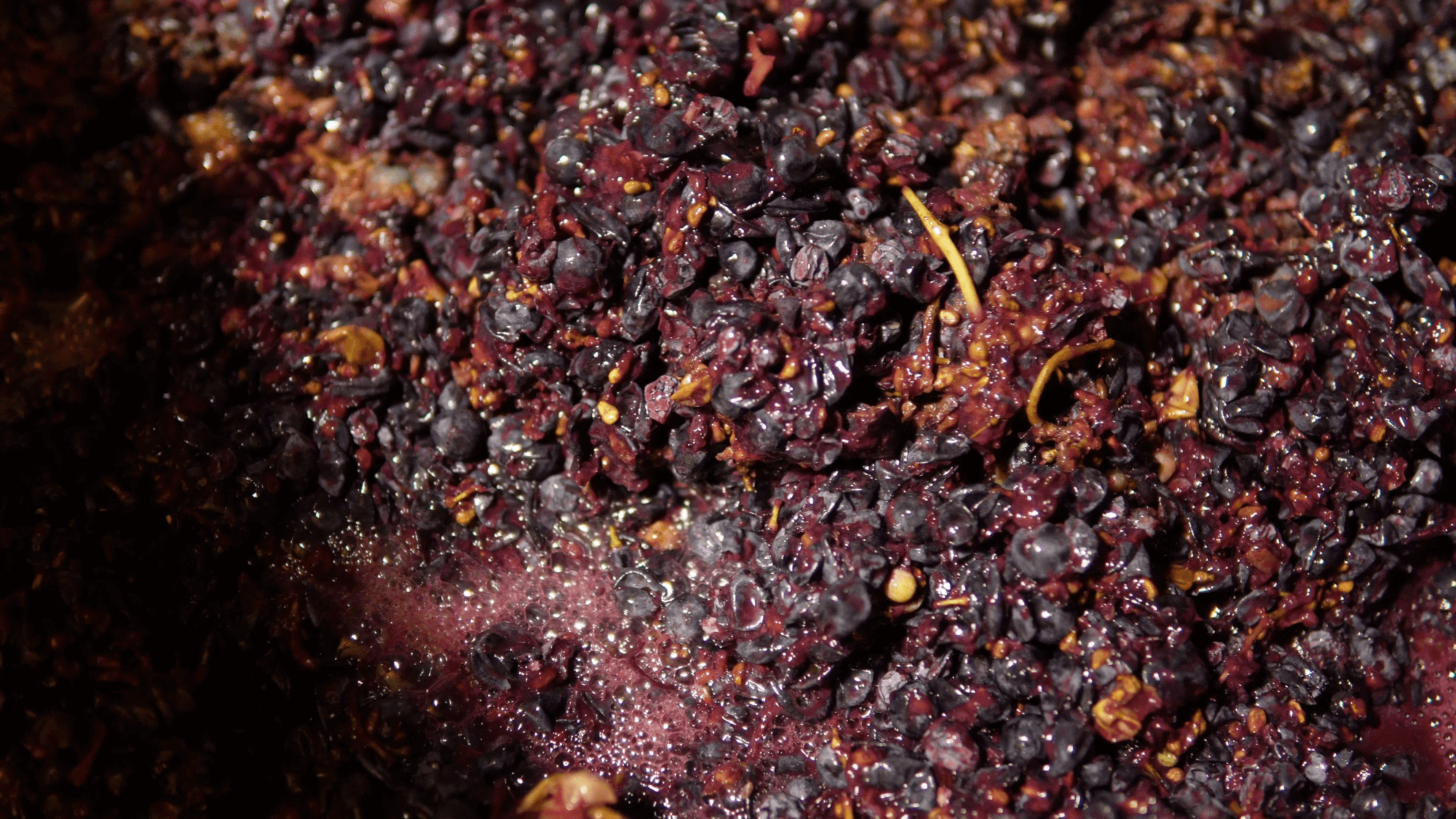
Fermenting red grapes with native yeast at the Case Corini natural winery.
Why Add Yeast to Wine?
Conversely, winemakers who opt for inoculation with commercial yeasts often prioritize control, consistency, and predictability. These carefully selected strains are known for their reliable fermentations, and their capacity to enhance specific aromatic or structural components in the wine. There are certain strains marketed for certain wines, such as “pinot noir yeast”, that actually give boosts to certain aromatic and flavor compounds to make the wine “more” like a certain expected stereotype.
This is a "hands-on" approach to winemaking, molding a final product, rather than crafting it. These yeasts will indeed provide a winemaker with a greater degree of certainty of the outcome in the winemaking process, ensuring a consistent product from vintage to vintage. This is particularly crucial for wineries aiming for a specific style or for those operating on a larger scale where uniformity (and conformity) is paramount. But it will eliminate all the native yeasts and local flavor from a wine.
It’s Not Always Sunny with Native Yeasts
Now, the connection between native yeasts and terroir is a compelling one. Research suggests that individual vineyards can indeed harbor distinct populations of yeasts, creating unique ecosystems based on their individual biodiversities. These yeast biomes can vary not only between distant regions like Piedmont and Burgundy but also within smaller geographical areas and vineyards themselves. However, while the allure of expressing terroir through native yeasts is strong, relying on spontaneous fermentation is not without potential pitfalls.
If fermentation is not carefully monitored, the very diversity of wild yeasts can sometimes lead to unpredictable outcomes. In certain instances, less desirable yeast strains might dominate in the early stages of fermentation, potentially producing malodorous compounds that will necessitate intervention and course correction by the winemaker. However, with established wineries that have practiced spontaneous fermentation for years, a form of natural selection often occurs, favoring beneficial yeast populations and making such negative outcomes less likely over time.

Winemaker Guido Corino of natural winery Case Corini checking on his fermentation tanks making sure the yeasts are behaving as they should.
As well, remember how we mentioned that spontaneous fermentation is sparked partially by yeasts already present in the winery and cellar. This poses a different type of issue for newly established wineries. Unlike older estates where years of harvests have introduced and cultivated a resident population of vineyard-derived yeasts throughout the winery, these nascent operations may lack the necessary microbial biodiversity to initiate a successful spontaneous fermentation. The "hitchhiking" yeasts simply aren't present in sufficient numbers. In such cases, relying solely on native yeasts might lead to a stalled or incomplete fermentation, compelling the winemaker to introduce commercial strains to ensure the wine is properly produced. So, sometimes, a winemaker doesn’t have a choice, at least in the beginning, but to use commercial yeasts.
Sometimes winemakers must also be forced to add extra yeasts because what is present in the vineyard is not strong enough to eat all the sugars present. This is a problem in grapes that can have a tendency to produce lots of sugar, but is becoming more an issue with climate change. In fact, Aldo Clerico, a renowned Barolo producer whose usual approach is to rely solely on native yeast to ferment his red wines, has experienced firsthand the impact of climate change on his Barbera d’Alba. The warming temperatures has led, on occasion, to stalled fermentation of his Barbera wine because native yeasts struggled to complete the fermentation process. Aldo would like his Barbera to be a dry red wine, so he has decided in this case to add yeasts to ensure the wine ferments fully to dryness, with no residual sugar.
All of this ties into the fact that while we may really love the concept of terroir that native yeasts gives us, there are practical limitations to relying solely on Mother Nature (she takes as she gives away). Sometimes things like vineyard location can even play a part. Maybe a hillside vineyard with better drainage and airflow might foster a different spectrum of yeast species compared to the more humid conditions of the flatlands, potentially influencing the resulting wine's aromatic complexity and overall character.
Sometimes a winemaker who wants to only use native yeasts might try with all their power to spontaneously spark a fermentation. But thanks to the uniquely complicated world of winemaking:
the wrong strain could take off and then they must correct it;
or fermentation may stop too soon and there is residual sugar that shouldn’t be there;
or maybe they can’t get fermentation to start at all.
Yet, as we said earlier, the choice to use or not use native yeasts reveals a philosophical winemaking divide:
does the winemaker just blast their wine with commercial yeast to head problems off at the pass;
or do they try to work with their vineyard, grapes and winery, course correcting and adjusting their techniques as only necessary by the vintage?
Do they work with their wine and grapes;
or do they try to force their grapes into a cookie cutter mold?
It really comes down to you, the wine buyer and the wine drinker, to decide on which is the preferred approach.
Lees and a Post-Fermentation Legacy of Yeast
There is one last curiosity that can come from yeast, and that is once fermentation is actually complete. The yeast cells, having fulfilled their role, begin to die and settle at the bottom of the fermentation container. A sediment is formed which is known as the lees. Far from being waste, lees are actually really important and can significantly impact the final characteristics of the wine.

Fermenting white wine grapes at Case Corini natural winery.
A winemaker can choose to allow a wine to remain in contact with its lees, in a process known as "lees aging" or "sur lie”. This can create several results; as the yeast cells break down (a process called autolysis), they will release various compounds into the wine that will contribute to a richer, more complex mouthfeel, adding body and texture. Flavors and aromas will also be “created” so to speak, and contact with the lees can introduce intriguing notes of bread dough, pastry, or even a subtle nuttiness to a wine. Think of the characteristic brioche notes often found in traditional method sparkling wines, which can gain much of their complexity from extended lees aging.
Winemakers who follow this approach, may decide:
to do lees aging in the wine vessel for a certain amout of time as it is maturing, as Quercia Scarlatta does with their white wine blend, Marchese Japo;
to bottle ferment & age with the lees and then disgorge, as they do with champagne style wines, like Sandro de Bruno with their Durello classic method sparkling wine and Ivaldi Dario and their Alta Langa Chardonnay traditional method sparkling wine;
or they may bottle ferment and leave the wine on its lees in the bottle to age until opened and poured, becoming essentially an unfiltered champagne style wine; these wines are known as Pet Nat, Ancestral Method or Col Fondo sparkling wines. A wine producer who makes wines exclusively using this method is Eros Zanon.
The Art and Science of Yeast in Winemaking
Ultimately, the choice between spontaneous fermentation and inoculation with commercial yeasts is a complex one, often influenced by the winemaker's philosophy, the specific goals for the wine, the characteristics of the vineyard, and even the vintage conditions. In reality, there is no single "right" way, and both approaches can yield exceptional wines.
Winemakers who embrace native yeasts often see themselves as stewards of their land, allowing their unique terroir to express itself authentically in their wines. Consequently, they must accept a degree of vintage variation as an inherent part of this natural process (many, like us, view this as a good thing). On the other hand, winemakers who opt for commercial yeasts generally prioritize control and consistency, aiming for a predictable and reliable outcomes year after year.
Regardless of the chosen path, the humble yeast remains an indispensable partner in the journey from grape to glass. These microscopic fungi are the unsung heroes of winemaking, silently working their magic to transform simple sugars into the complex tapestry of flavors, aromas, and textures that we so appreciate in a well-crafted wine. Just as yeast is essential in the airy structure of pizza dough and the tangy profile of naturally leavened bread, it is the very lifeblood of wine, a testament to the power of nature's smallest yet most impactful players.

“Bloom” as seen on a white grapes.
Now it’s time to experience the pleasures of wines made from native yeasts, like our curated small production, farm to glass wines which we sell across the US, to both businesses and consumers.
How can you get your hands on these hidden gems we forage for?
If you are a distributor reach out to us introduce our highly curated portfolio of one of a kind small production wines to your state.
We sell to wine stores and restaurants in certain states - contact us to learn more.
If our farm crafted natural wines and olive oils are not in your local shop or restaurant, buy wine online here, and we’ll ship it to you, including wine gifts.
We also have an award winning wine club for true wine explorers that are seeking to continually discover unique, sustainable and authentic small production wines they never had. These are wines selected by our sommeliers and curated for each box.
We do corporate gifts and sommelier guided wine tastings. Email us and we’ll tailor unique and sustainable corporate gift ideas.
Who Are Some Winemakers Working with Native Yeasts?


This is one of the best Barolo wines from the Langhe in Piedmont Italy as well as a great value from one of the storied families of Barolo wineries. This Barolo red wine is the maximum expression of the nebbiolo grape from Aldo Clerico. With vineyards right next to those of Domenico Clerico Barolo vineyards, this Barolo is a good substitute for Burgundy wine.
This garnet colored artisan Barolo has red fruit, rose and spicy leather and tea leaf aromas with elegant structure, long finish leaving a silky mouthfeel. On the nose it is very intense while floral notes mix with typical vineyard scents of violets and red berries. On the palate, the violets blend with licorice flavors and noticeable tannins. A creamy texture from the oak barrels creates a pleasant mix of fresh yet complex flavors.
Tastes Like: Cherries and licorice
Farming & Winemaking Highlights: Biodynamic | Native Yeast Fermentation | Single Vineyard
Fun Facts: This is Aldo's first wine made from 5 different Barolo designated vineyards surrounding his home in Monforte d'Alba, all within the Bricco San Pietro MGA. He vinifies each vineyard and then does an assemblage, creating each vintage a unique expression of his nebbiolo vineyards. It is also made with native yeast fermentation, so can be called a natural wine.

Made with native yeast fermentation, this Barolo Serralunga is a special natural wine. Rich on the nose with dried violets typical of the nebbiolo grape, the bouquet is austere and profound with balsamic notes. Once sipped, the earthy texture is out of this world, which marries pleasantly with the structure, fruit and spice of this elegant red. Well accented tannins are soft and decanting is strongly recommended.
Tastes Like: Earthy Spices
Farming & Winemaking Highlights: Biodynamic | Native Yeast Fermentation | Single Vineyard
Fun Facts: This is a single vineyard Barolo from the Serralunga d'Alba village, known to produce the most age worthy Barolos.

Made from the sought-after Ginestra Barolo Cru, this single vineyard wine epitomizes the greatness of the nebbiolo grape from the Barolo wine region, in terms of structure, age-worthiness and fruit expression. The native yeast fermentation used in making this natural wine also helps bring out the special and sought after terroir of the Ginestra cru.
An intense garnet color, on the nose this Barolo tends towards red fruits, with a touch of balsamic notes. As it opens on the palate the elegant tannins harmonize with the acidity for an overall richness that creates a pleasant and enjoyable experience while sipping alone or with food.
Tastes Like: Balsamic Tabacco leaves
Farming & Winemaking Highlights: Biodynamic | Native Yeast Fermentation | Single Vineyard
Fun Facts: The Ginestra cru is very limited and only a few wineries have access to harvest from there. Aldo can thanks to his wife’s, Valentina’s, Conterno family vineyards.
Fun Facts: The hands on the bottle represent Aldo’s two daughters; for this reason he often says this is the wine closest to his heart.


This Brunello di Montalcino from winery Canalino is crafted using specially selected sangiovese grapes. A gorgeous ruby color, the nose is a potpourri of intense mature fruit and spice aromas from prune to menthol to leather. The wine is structured, with freshness, minerality and age worthy tannins and a fantastic mouthfeel.
Tastes Like: Stewed Cherries or Cherry Jolly Rancher candy
Farming & Winemaking Highlights: Regnerative Agriculture | Sustainable Winery | Biodynamic | Native Yeast Fermentation | Unfiltered | Organic | Natural Wine | Vegan
Fun Facts: The name “brunello” comes from the local name used for the type of sangiovese typically used in the area.


All natural, old vine nebbiolo and barbera blend with no added sulfites and yeast. Aromas of milk chocolate covered cherries, it has a fresh and rich fruity taste with notable tannins and a has a long piquant finish. Name comes from the former owner of the 70 year old vineyard which has a mix of Nebbiolo and Barbera and is down the hill from the childhood home of Lorenzo Corino. After a gentle crushing, fermentation starts with native yeast fermentation and wines are left with skin contact for 6-7 weeks, followed by about 30 months of aging in wooden barrels. As with all of Case Corini wines, this is a 00 wine, nothing added, nothing removed, no yeast, no sulphites added, organic, biodynamic, vegan. In other words, all natural wine.
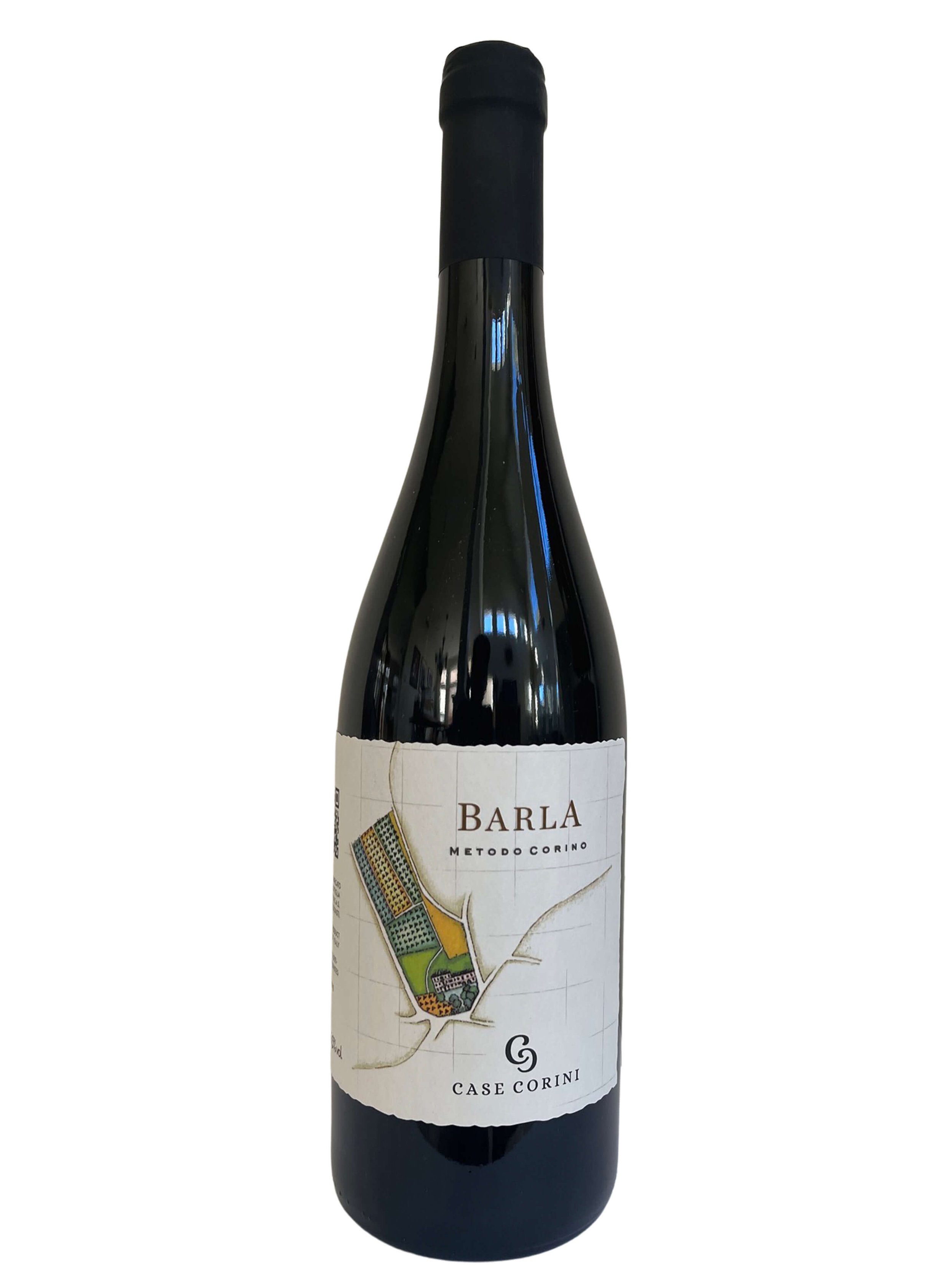
You never had a Barbera like this! Made from 95 year old Barbera vineyard, with some small percentage of other varieties planted over the years in the vineyard. This all natural wine has intense aromas of brandied cherries and a richly textured, delicious dark fruit taste with right balance of fruit, acidity and tannins. Barla is the antique name of the vineyard which used to be the land of an old convent. After a gentle crushing, fermentation starts with native yeast fermentation and wines are left with skin contact for 6-7 weeks, followed by about 36 months of aging in wooden barrels, housed under Lorenzo Corino's family home.
As with all of Case Corini wines, this is a 00 wine, nothing added, nothing removed, no yeast, no sulphites added, organic, biodynamic, vegan. In other words, all natural wine.

Earthy, age-worthy nebbiolo made from 70 year old naturally cultivated vines. Named for the dearly beloved grandfather of Lorenzo Corino. Having a garnet color with orange hues it has a complex, spicy nose with notes of cardamom and cinnamon. When tasting, it is fruit forward, cherry & forest fruits, followed by spices, and chalky tannins envelope the mouth and finishes elegantly. After a gentle crushing, fermentation starts with native yeast fermentation and wines are left with skin contact for 6-7 weeks, followed by about 36 mos of aging in wooden barrels.
As with all of Case Corini wines, this is a 00 wine, nothing added, nothing removed, no yeast, no sulphites added, organic, biodynamic, vegan. In other words, all natural wine.


An organic & vegan natural wine made from 100% trebbiano abruzzese, a white wine grape which the New York Times cites a grape “worth knowing better”. It has an inviting straw yellow color and an exotic nose (look for the saffron!) and an intriguing fruity and herbal taste.
This white wine is age-worthy too! Fermented and refined in grandfather Febo’s concrete vessels.
Region: Italy > Abruzzo > Chieti
Tastes Like: Peaches and Saffron
Farming & Winemaking Highlights: Regenerative Agriculture | Sustainable Winery | Biodynamic | Native Yeast Fermentation | Vegan | Single vineyard | Old Vine | Organic | Natural Wine
Fun Facts: This wine is named from the single vineyard from which it comes, Parella in Chieti.
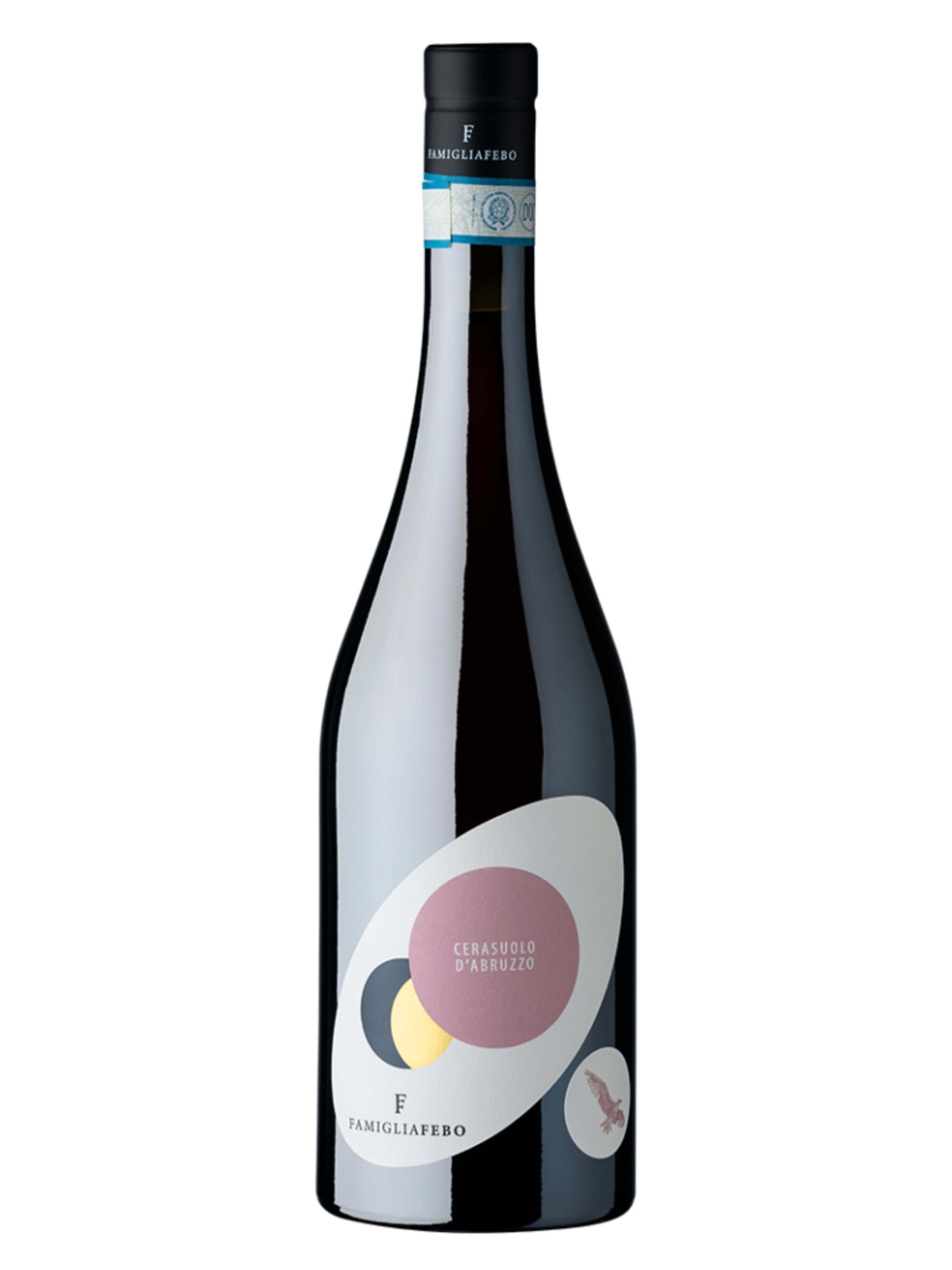
While made as a rosé wine, this Cerasuolo d’Abruzzo is actually more like a light red wine thanks to the dark pigments of the Montepulciano grapes used, farmed on Febo family’s estate vineyards in Abruzzo.
The minimal intervention approach of this natural wine producer results in a lot of vintage variation year after year. For example, the 2021 Cerasuolo d’Abruzzo has a cherry taste with a salty finish, and is considered a “serious” rosé wine while the 2024 is a Rosorange color that bursts with blood orange flavors mixed with cherry.
Region: Italy > Abruzzo > Spoltore & Chieti
Tastes Like: 2021 - Cherries | 2024 - Tart cherries and blood orange
Farming & Winemaking Highlights: Regenerative Agriculture | Sustainable Winery | Biodynamic | Native Yeast Fermentation | Vegan | Organic | Natural Wine
Fun Facts: Both vintages are fermented with native yeast and refined in the winegrower's grandparents' concrete vessels. Great chilled and a good pairing is eggplant parmesan.
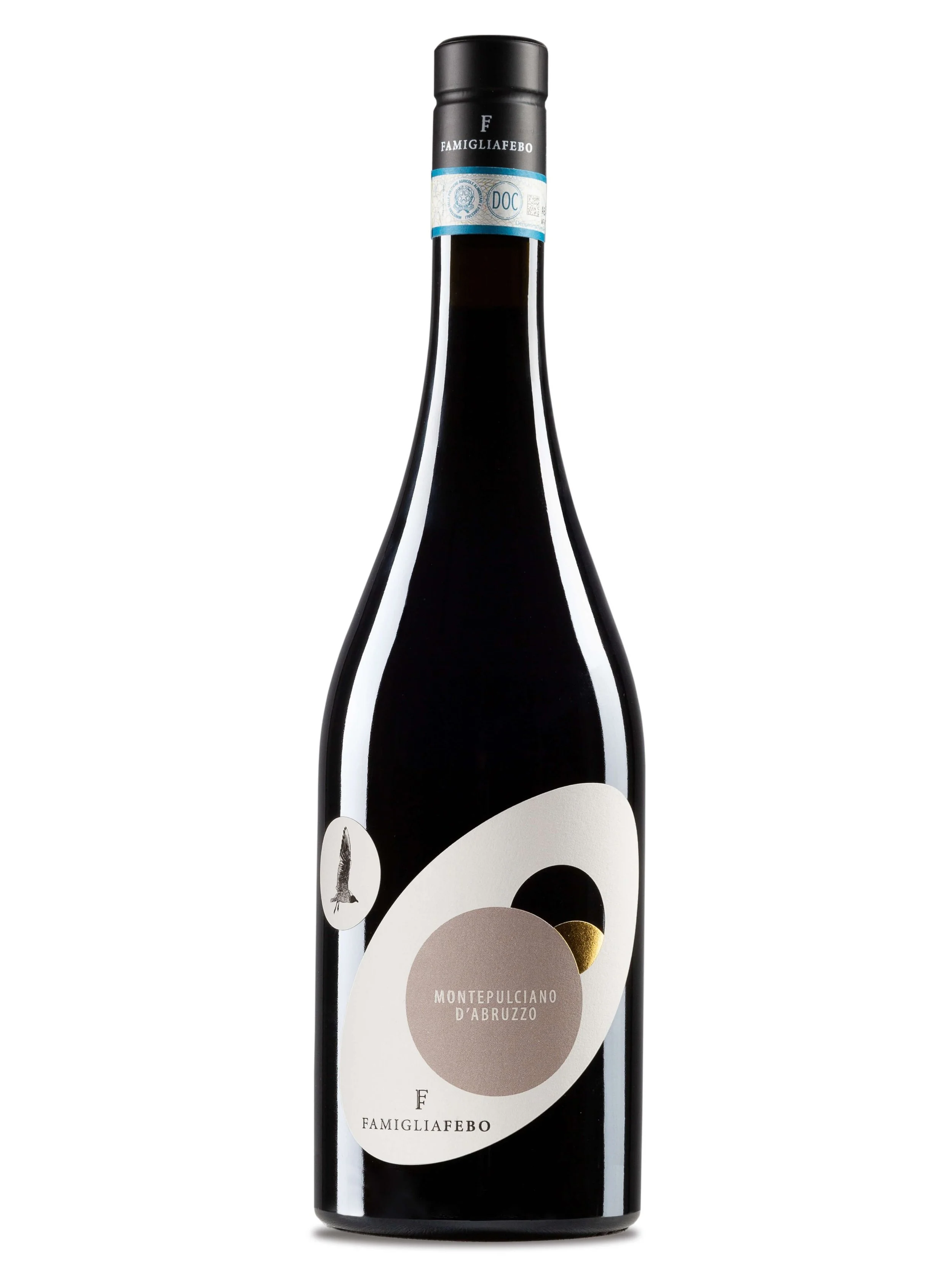
Made with 100% Montepulciano grapes spanning family vineyards in Spoltore and Chieti in Abruzzo, it has aromas of amarena cherries and licorice and a slight funkiness thanks to its 100% natural production. It tastes of dark fruit, with a rich texture and slightly bitter finish, with the funky vibe continuing while tasting. Fermented and refined in the winegrower's grandparents' concrete vessels.
Region: Italy > Abruzzo > Spoltore & Chieti
Tastes Like: Dark fruits
Farming & Winemaking Highlights: Regenerative Agriculture | Sustainable Winery | Biodynamic | Native Yeast Fermentation | Vegan | Organic | Natural Wine
Fun Facts: Pairs nicely with chicken parmesan. | While there is a famous wine “Vino Nobile di Montepulciano” from Tuscany, this grape has no connection to it; the “montepulciano name” there comes from the town noame, where as here in Abruzzo “montepulciano” actually refers to the grape used to make the wine.

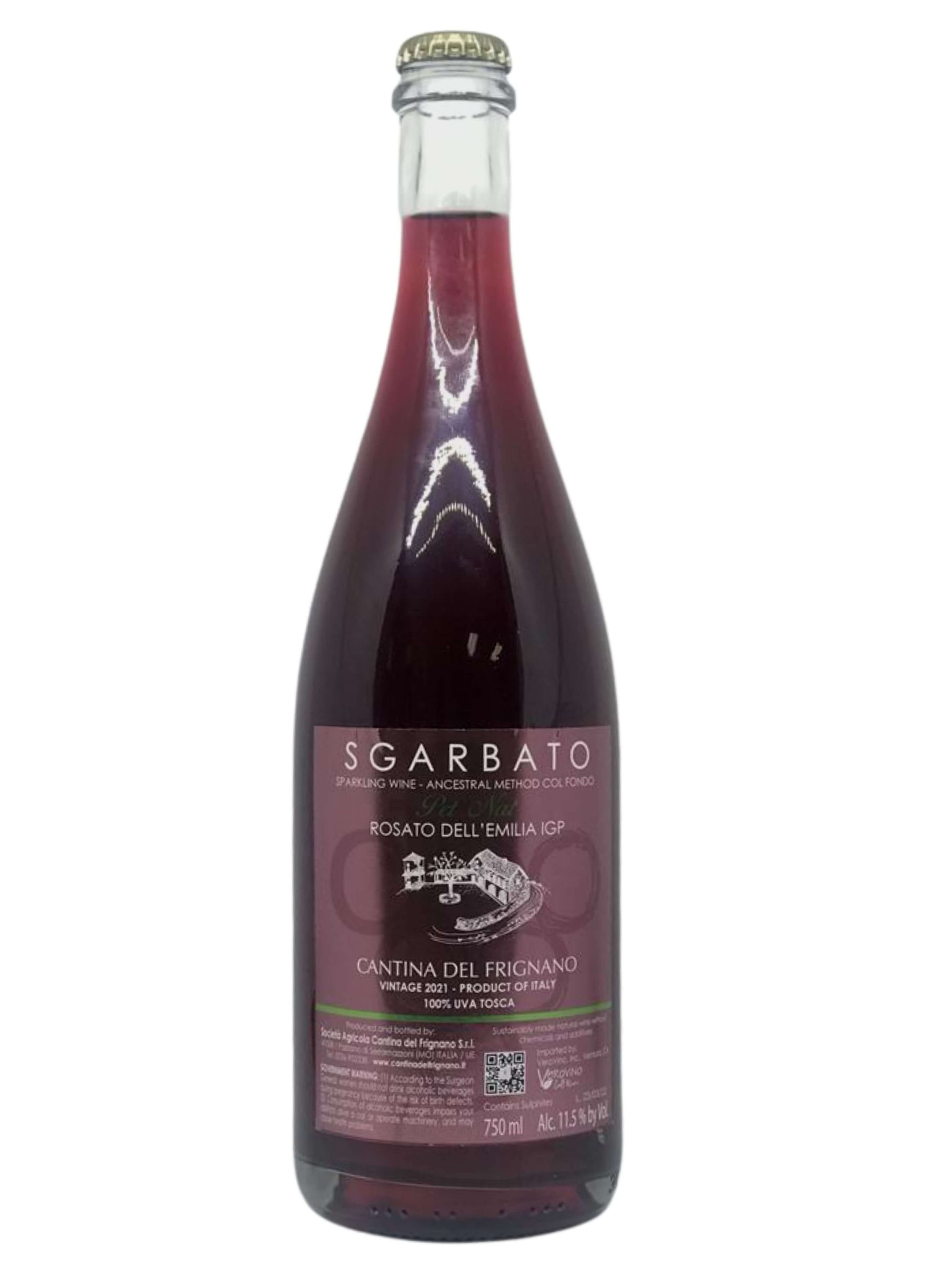
Made from the rare Uva Tosca grape, which grows in higher altitudes in Emilia and is believed to be a descendant of Schiava Grossa, the Alto Adige red grape. Technically a rose wine, it is more like a light red, which looks and tastes like drinking cranberry juice as a sparkling wine. Refreshing and quaffable, with strawberries on the nose and a saline finish, it is great on its own or with light fare. While this grape does not impart much color, 2021 was a dry year, producing more concentrated fruit and color. It is naturally fermented and sparkling 'col fondo' ancestral, or pet nat, style wine.
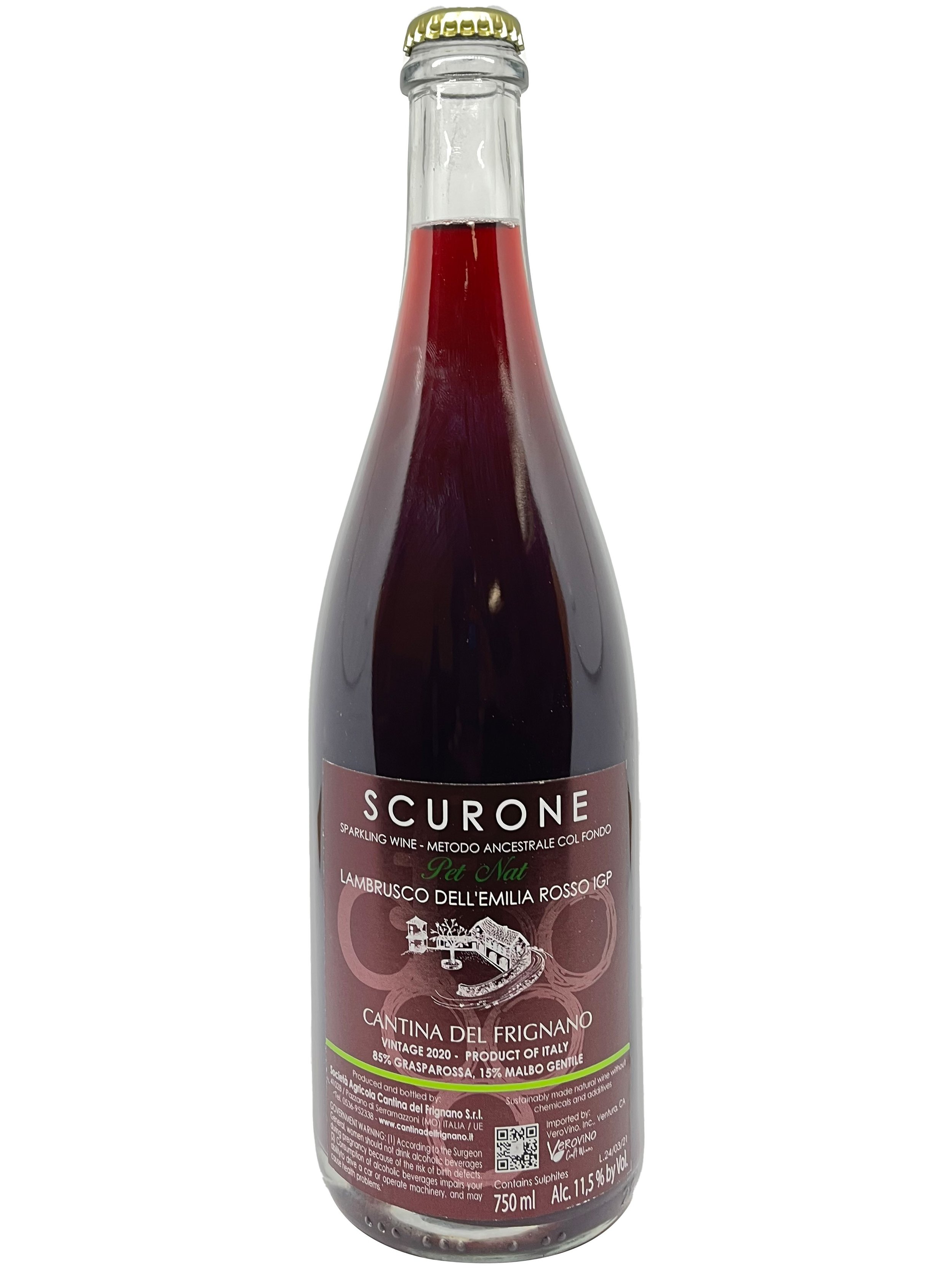
This is an ancestral method Lambrusco made primarily with the Lambrusco Grasparossa grape, and with some Malbo Gentile grape, which is local to the area of Frignano in Modena. It is a lighter red ruby color, light effervescence, a nose that has red fruit with hint of orange peel. It is fresh and fruity, with plum taste, and grippy tannins and noticeable texture.

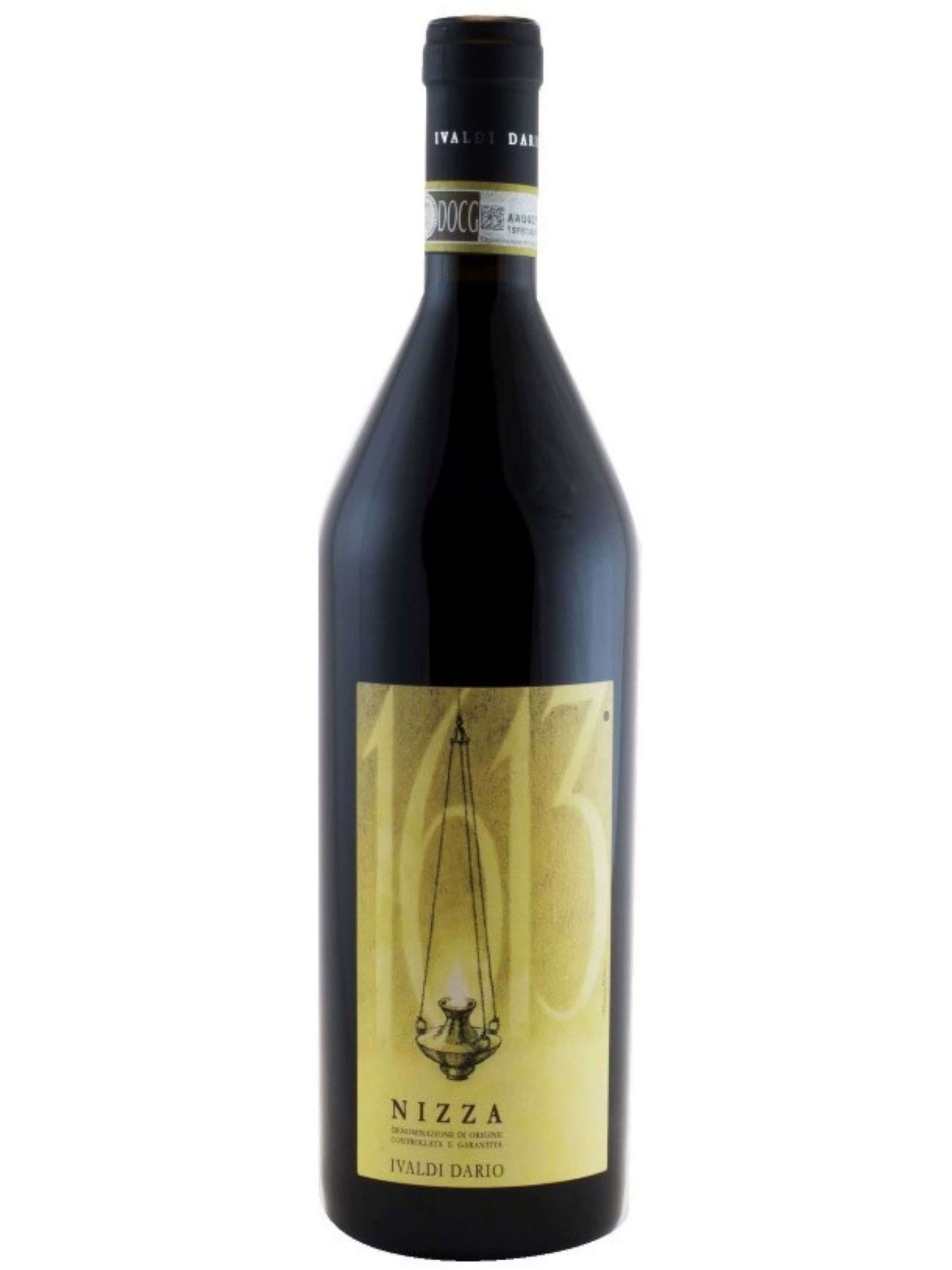
Nizza is the Barolo of Barbera, made from the birthplace of Barbera, Nizza Monferrato, the home of the 4th generation winemaking family, Ivaldi, and place where this wine is grown and made. This Nizza Barbera is a delicious old world style red wine with a rich cherry taste and an incredible mouthfeel.
This Nizza DOCG is made only in the best years, always made with 100% Barbera grapes, but only the best of the best of the Barbera clusters goes into this wine, before it spends 12 months in Slavonian oak barrels then 2 years resting in the bottle.
Made with native yeast fermentation, on the skins for 15 days. it has a pretty ruby red color with garnet reflections. A fruity bouquet transforms into spicy notes as it opens, and on the palate this wine has nice tannins and acidity balanced by a robust body.
The name of this red wine, 1613, is a homage to the siege of Nizza Monferrato in 1613 by the Mantovan army, showing the strong roots the Ivaldi family has to their home town. The women gathered to pray all night, and after the siege was lifted and won by Nizza Monferrato, an oil lamp in the church spontaneously burst into flames, despite the lack of spark and oil. Known as the ‘Miracle of the Lamp’, this wine pays homage to that evening, bearing not only the year as a name, but the image of the oil lamp on the label.
A certified sustainable winery, Ivaldi Dario practices regenerative farming.


This wine is a rare treat, being one of the very few Sangiovese red wines grown on volcanic soil. This natural wine is a complex yet approachable. Tarconte is a distinctive old world style natural red wine with a touch of new world, having been aged for 36 months in oak barrels. Notes of earth, mineral, herbs, black pepper, it is super juicy with ripe tannins, a real food wine. A good pairing is with rosemary Asiago cheese. Don't be in a rush to enjoy it: open it and see how it evolves!
Tastes Like: A Baking Spice Cabinet
Farming & Winemaking Highlights: Regenerative Agriculture | Sustainable Winery | Biodynamic | Native Yeast Fermentation | Vegan | No additives (ie non sulphites added) | Unfiltered | Organic | Metodo Corino | Natural Wine
Fun Facts: - The natural farming method that produced this wine, the metodo corino, is actually patented by La Maliosa woman winemaker Antonella Manuli after she helped to develop it with natural wine legend Lorenzo Corino of Case Corini.
- Named after an Etruscan mythological hero.


Coming from an area known for some of the best Sauvignon Blancs in the world, in the Südsteiermark subzone of in the South Styria of Austria, at 400m altitude with hand picked harvesting, this lemon yellow color sauvignon blanc has an intense bouquet of lemon, lemongrass and flint. It has citrus and apple flavors with a hint of lemongrass. It has great acidity and a long, sapid finish. Soils are red schist and loam. After 24 hours of skin maceration, the fruit was fermented with native yeast and aged in stainless steel. Minimal sulfur additions.

Cloudy mandarin orange color late harvest Sauvignon Blanc natural wine from one the best places in the world for Sauvignon Blanc leads to a saline and yeasty nose with a bit of lemongrass notes. It has laser-like, linear acidity and is super tasty, with great fruit and salinity. It is a 'meaty' orange wine with nice mouthfeel and slight tannins. This Sauvignon Blanc is from the Sudsteiermark region of Austria in South Styria.
This skin-contact orange wine is crafted with native yeast fermentation by certified organic and biodynamic Austrian winery Michi Lorenz.

This unfiltered sauvignon blanc natural wine is playfully named after the limestone, mineral-rich soil where it was cultivated. It’s from the Sudsteiermark, or South Styria, Austria, known for some of the best sauvignon blanc in the world. It has a bright lemon yellow color with an intense reductive nose that has curious complex aromas that develop more once it breaths, such as tropical fruit aromas. The taste has a 'wow' factor with racy, prickly acidity, really nice texture a VERY long mineral finish. Think of what it’s like to lick a rock - this is it! This is your ‘atypical’ Sauvignon blanc, made from a mix of 9 different Michi Lorenz’s estate vineyards, some early, mid and late harvests, and across 4 different vintages using the complex solaris method. A real one-of-a-kind sauvignon blanc.
A natural, and certified organic and biodynamic wine made with native yeast fermentation.

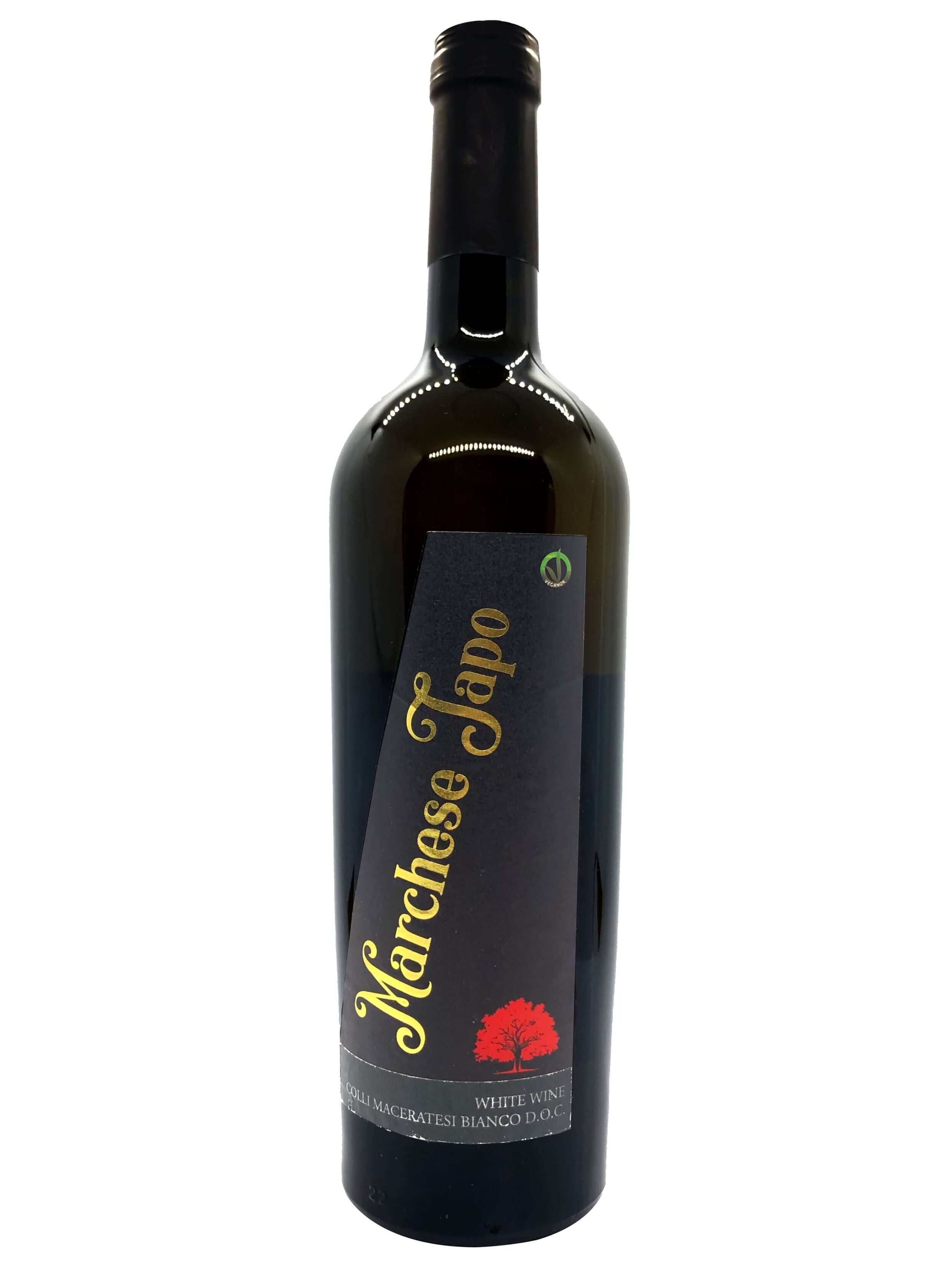
This natural wine is delicious fruit-forward organic vegan white wine, a blend of hard-to-find native varieties from the province of Macerata in Le Marche, Italy, a hilly area just to the east of Tuscany not far from the Adriatic Sea, has it all, great nose, taste, texture and structure. While it is unoaked, it was on the lees for 6 months with weekly battonage, contributing to its complexity of aromas, ranging from melon to saffron, and intensity of flavors. Made with indigenous varieties from Le Marche, Maceratino (also called Ribona) and Incrocio Bruni 54, it is a testament to Le Marche white wines.
Quercia Scarlatta follows a minimal intervention approach to vegan winemaking, using native yeast fermentation in their wines like this Marchese Japo.
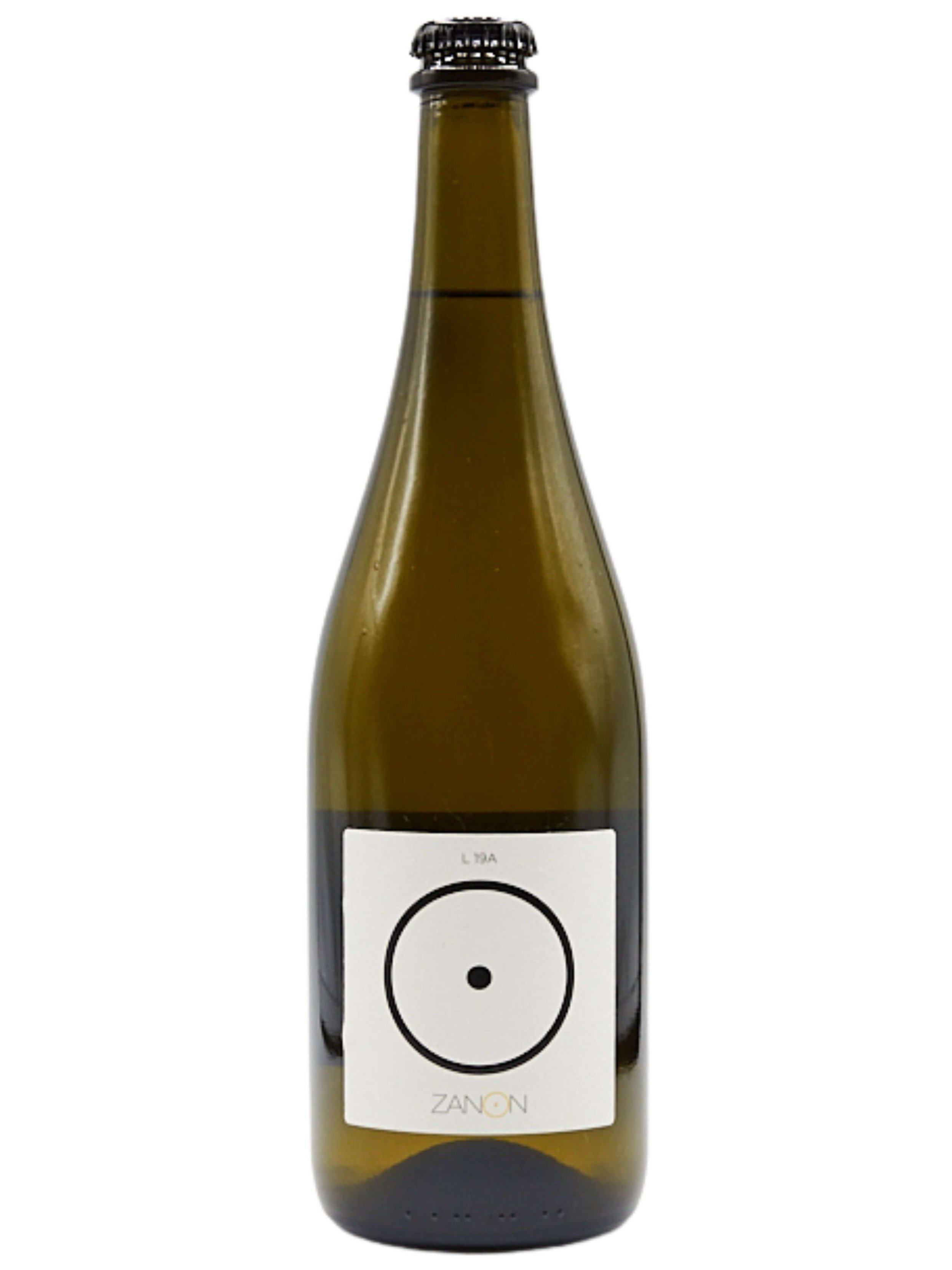
A 100% glera grape white sparkling wine made with native yeast fermentation, this natural wine vintage “prosecco” is from vineyards in the old part of Valdobbiadene, made also in the historic tradition of the ancestral style, or Pet Nat, as it is bottle fermented on the lees. A light color, giving an early hint to its bright acidity, the bouquet of citrus and lemon flowers bursts forth in the glass once it opens. When tasting this ancestral method natural wine, apricots and persistent bubbles create a sparkling wine that is enjoyable with brunch, aperitivos , get-togethers, you name it.
The circle and dot logo represents both the human existence and evolution, as well as winemaker Eros Zanon’s personal view of his vineyards, a dot of small-production boutique quality in the larger circle of large-production Proseccos.
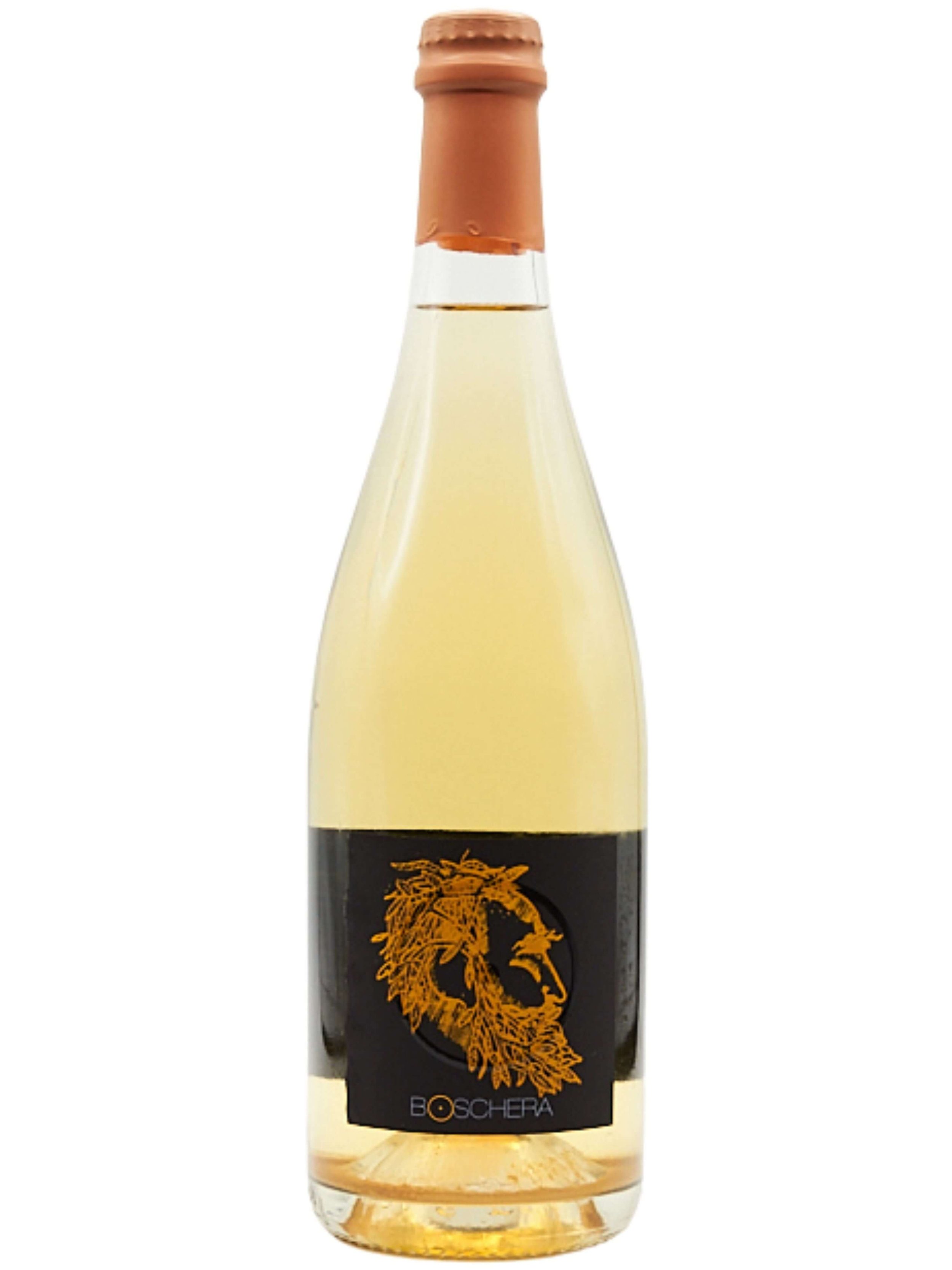
This is an unfiltered sparkling wine made similar to the champagne style from a rare grape called Boschera, native to Veneto, Italy where there is less than 20 acres in the world! We were the first to import this grape into the US!
Compared to the Prosecco grape (Glera), Boschera is more complex, and in fact this wine has been aged for over 3 years in the bottle on the lees.
With 2 days of skin contact giving it a deep yellow color, this native yeast fermented natural wine is then refermented with its native lees and then undisgorged, so it is unfiltered and continues to age on the lees too, allowing it to become more complex over time.
You can say it is a vintage & aged ancestral method, or Pet Nat style, also called Col Fondo in Italian since it is on its lees. It has herbal, nutty and yeasty aromas and savory taste with a long saline finish. Pairs with many foods & throughout the meal, from appetizers to main course.