You can’t avoid spicy foods in America. Just walk down the supermarket aisle and you find new fangled flavors of spicy potato chips, peanuts and all sorts of snacks. Spice has creeped into our cuisine - just notice at the next party you go to and see the snacks and appetizers being served.
Without even knowing, American palates have been trained to like, even crave, bold flavors, and spice heightens even more so the intensity of flavor. When eating, even drinking, we’ve come to expect an extra oomph of taste that spice gives to a food or dish.
However, in the wine world, spicy foods create a bit of a challenge when it comes to wine pairing. The Culinary Institute of America describes spicy food as a “difficult” wine pairing.
Why is that so?
Many of the wines we instinctively reach for actually make spicy food taste worse. Your favorite bold red, that rich oaky white you adore and sometimes the most beloved bottles and favorite wine styles are the worst offenders at a spicy table.
Being both food and wine lovers, we love exploring all the different places food, wine, and the combination of the two can take us. We've matched:
wine with junk and snack foods,
found great pairings for candy and chocolate,
gone deep on BBQ pairings,
and even tackled the wonderfully complex world of cheese and wine.
And through all of it, one truth keeps coming up: the most surprising pairings are often the most rewarding ones.
Spicy food is no different.
It is just that pairing wine with heat requires you to set aside your instincts and think a little differently about what's in your glass. The wines that shine here are often the ones you'd least expect. The good news? Once you understand why certain wines clash with spice, and what to look for instead, it all clicks into place.
By the end of this article, you'll feel confident picking a wine to serve the next time the heat is on. We are not only going to talk about what spice is and how it affects wine, but also talk tips and strategies, and even some real-world examples to try for yourself.
The Basics Wine & Food Pairing
Before we dive into the spicy stuff, let's quickly recap the fundamentals of pairing wine with food, because these principles are going to guide us throughout our discussion today.
At its core, wine and food pairing comes down to two theories: complementing and contrasting. Complementing means matching characteristics in the food and wine. So we should find a wine that echoes the intensity, weight, and/or flavor character of the food. Contrasting means using opposites to create balance. Think of a rich, fatty dish paired with a bright, high-acid wine that cuts right through it and cleanses the palate.
The golden rule and key principle in wine and food pairing is balance… you want the food and wine to create a clean experience; you want both to harmonize.
With spicy food, these principles matter more than ever because the stakes are higher. Get a pairing wrong, and the wine doesn't just fall flat, it actively makes the food less enjoyable. But, get it right, and the pairing becomes something genuinely memorable.
For a much deeper dive into the art and science of food and wine pairing, check out our full wine and food pairing guide, it's a great foundation to the concepts we will talk about in this article.
Spicy Food + Wine = Tricky
Before we can talk about what wines to reach for, we need to talk about spice itself, because not all spice is the same, and that distinction is going to change how we approach different pairings.
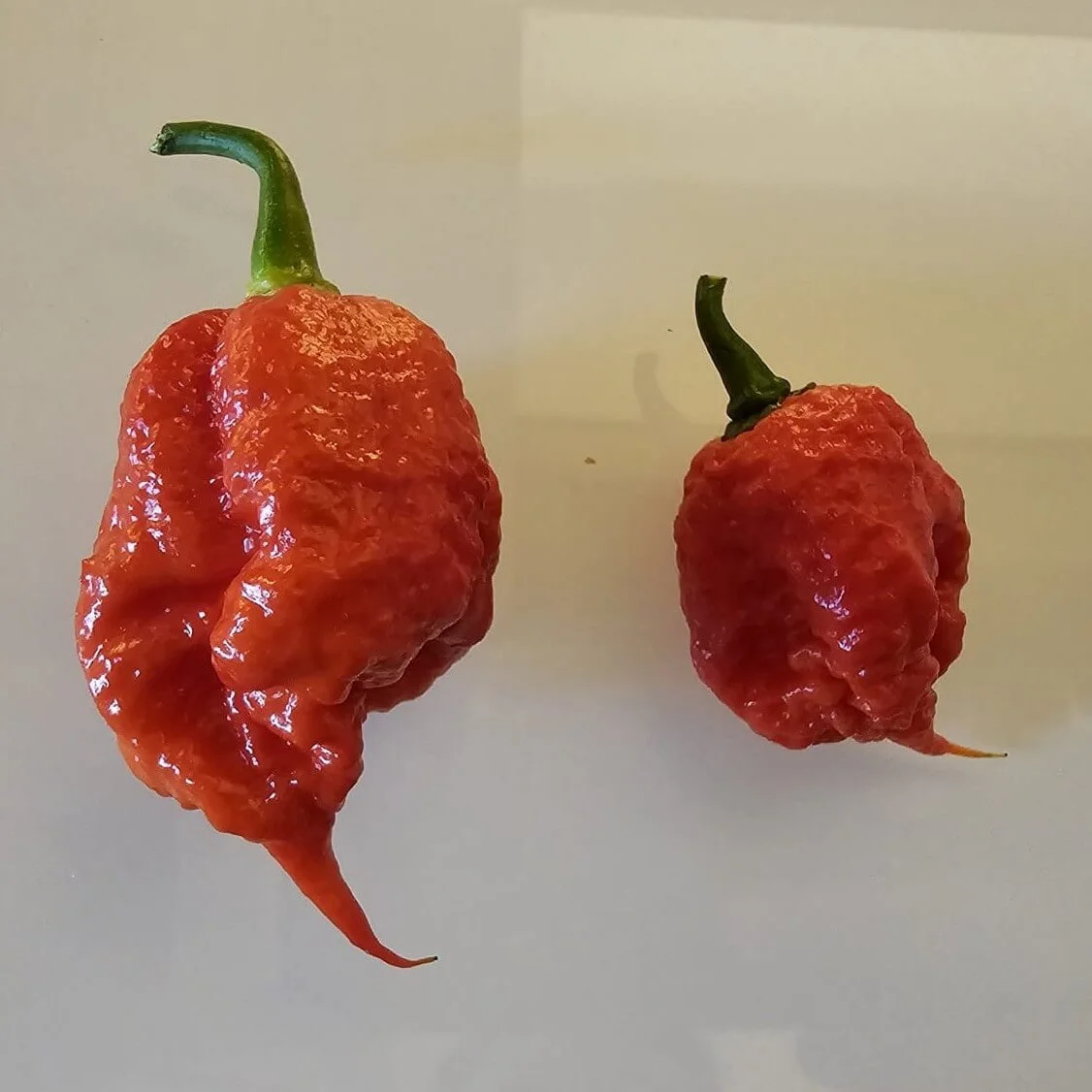
Carolina Reaper chili peppers, until recently, the hottest pepper in the world. These are chock full of “spicy” capsaicin, a one-dimensional spice.
There are really two types of spice at play that we are goin to talk about today. The first is capsaicin-based heat: the direct, sharp burn you get from jalapenos, cayenne, habanero peppers, carolina reapers, and hot sauces. Capsaicin is the chemical compound found in chili peppers that triggers that burning sensation on your palate. It hits fast, it's relatively one-dimensional, and it's what most of us think of when we say "spicy."
The second type is complex spice blends: think curry blends, gochujang, or Sichuan peppercorns. These aren't necessarily just "hot", but rather they are layered, aromatic, sometimes even numbing. They build slowly with a whole world of flavor behind them, not just heat. While many of these blends have a capsaicin element adding “heat”, the unique pairing challenge is actually that they create such an intense, complex combination of flavors and aromas.
To make this more practical, let's think in terms of cuisines. On the simpler, more direct end of the spice spectrum:
Spicy Snacks: simple, one-note capsaicin heat, usually jalapeno or cayenne based; burns hot but leaves no lingering complexity.
Mexican: bright, bold, and relatively straightforward; jalapeno, habanero, cumin, and paprika-based spice blends that hit hard and fast. A lot of spices as well used in the meats, long cooking for juicy textures, and delicious spicy salsas.
American - Southern: paprika and cayenne heat with added smoke and vinegar notes; think Buffalo wings, hot sauce, jambalaya, and spicy BBQ rubs.
Then on the more complex, multi-dimensional end we have:
Indian: complex, multi-dimensional curry and turmeric-based blends; deep, aromatic, slow-building heat that layers on the palate over time. While there can be considerable bur, it’s more about the depth.
Thai: seemingly similar to Indian cuisine, but brighter and fresher, with a beautiful sweet-spicy balance and intense small chilis. Think fragrant basil, lemongrass, and coconut alongside the heat. But there are also tomato based curries too, packing their own style of spice.
Korean: fermented, umami-forward heat built around gochujang, with the added complexity of fermented foods like kimchi bringing acidity and funk to the table.
Sichuan: while it might be considered under a broader “Chinese” umbrella, Sichuan cuisine really sits in a category entirely of its own; it is numbing, bold, and intensely complex thanks to Sichuan peppercorns and small but fierce chilis.
Why does all of this matter for wine? Because a bottle that works beautifully alongside jalapeno chips may completely fall apart next to a bowl of mapo tofu. The type, intensity, and complexity of the spice changes everything about what you need in the glass.
Now, here's where it gets really tricky. Most of our favorite wines, the ones we instinctively reach for, are not the best at pairing with spicy or capsaicin laden foods. High-tannin wines like Cabernet Sauvignon, Malbec, or Amarone can actually amplify capsaicin heat. The tannins interact with the spice compounds and intensify the burn, making what might have been a pleasant warmth feel almost aggressive and overwhelming. High alcohol does the same thing: it fans the flames and makes the heat linger long after the bite, compounding the burn rather than soothing it. And heavily oaked, rich whites? They are too heavy and overwhelming, bulldozing the beautiful complexity of the spice rather than complementing it. It is a little counterintuitive as we tend to reach for bold, structured wines with bold, flavorful food. But with spicy food, bold and structured can be a recipe for disaster.
Now, let's add in another element: sweetness. While tannins and alcohol are the enemies of spicy food, a touch of sugar in your wine can actually be your friend. Sweetness on the palate acts as a buffer against capsaicin heat: it soothes the burn rather than amplifying it, creating a cooling, balancing effect that lets you actually taste and enjoy the food. Think of it like adding a drizzle of honey to a spicy dish; it doesn't eliminate the heat, it tames it and brings everything into balance. This is why off-dry and even sweet wines can be surprisingly powerful partners at a spicy table, and why dismissing them in favor of a big dry red is often a mistake. This was something we touched on discussing Cajun and Creole pairings in our Mardi Gras and Carnevale article.
So, with all of that in mind, put the Cab Sauv aside, put the Malbec down, and let's talk about what actually works.
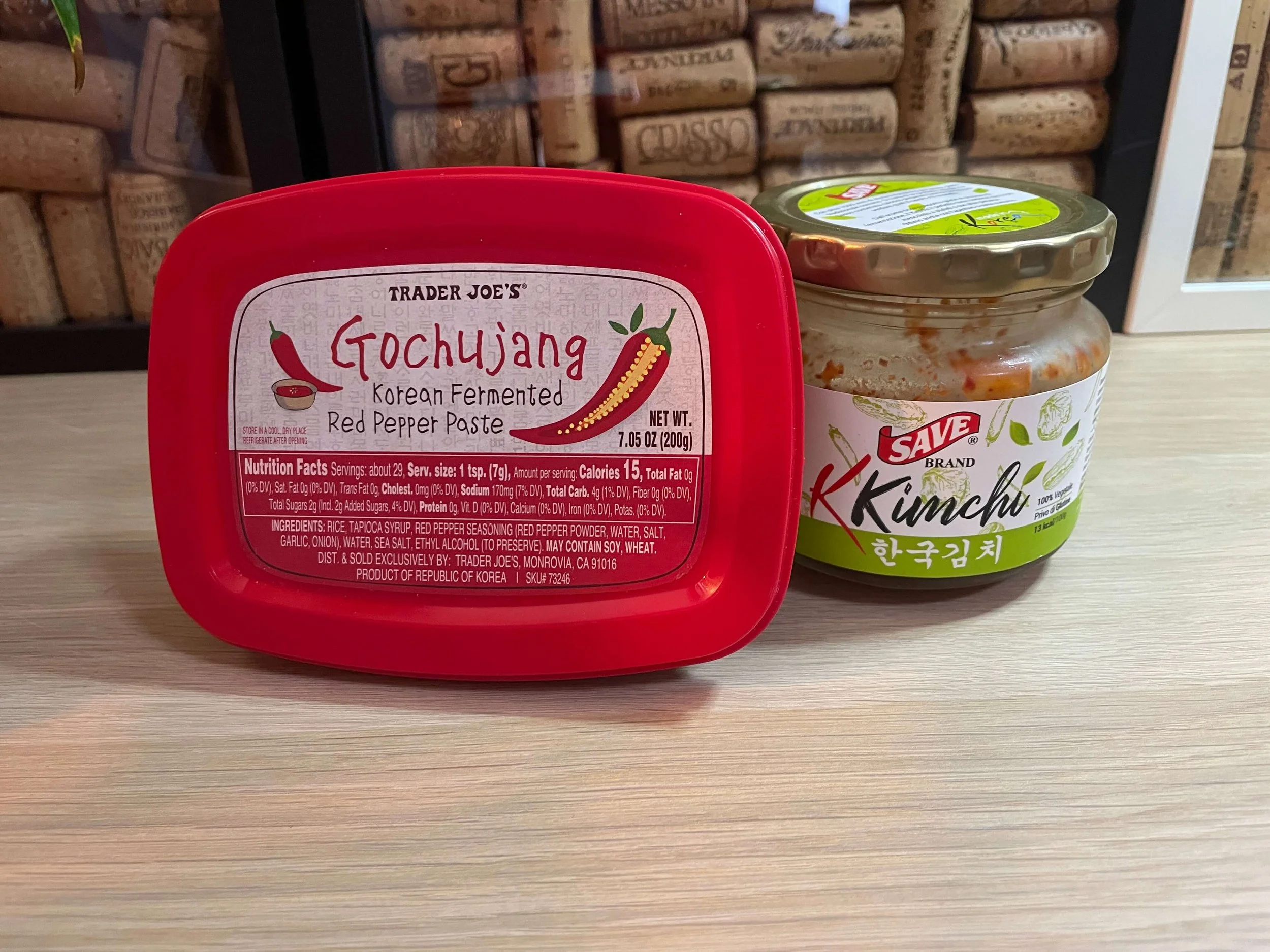
Korean Gochujang spice blend and Kimchi are great examples of "multidimensional spice” blends. Often still with lots of capsaicin, but more aromatic elements for a complex type of spicy.
5 Tips for Pairing Wine with Spicy Food
Tip 1: Avoid high tannins.
Tannins and capsaicin are not friends. As we touched on above, high-tannin wines amplify heat rather than soothing it. Instead, look for low-tannin reds with lots of fruit and personality. Think Barbera, Lambrusco, Schioppettino, St. Laurent, or Zweigelt. All the pleasure, none of the burn amplification.
Tip 2: Avoid high alcohol.
In the same vein, high alcohol will also make spice worse. Stick to wines on the lighter, more moderate and elegant end of the alcohol spectrum. This one change alone will make a bigger difference than you might expect.
Tip 3: Embrace acidity.
A bright, high-acid wine acts like a squeeze of lemon over a dish: it refreshes and cleanses the palate between bites, keeping each mouthful as enjoyable as the first. This is one of the most powerful tools you have in your spicy pairing toolkit.
Tip 4: Don't shy away from a little sweetness.
Off-dry and sweet wines are some of the most powerful partners for spicy food. A touch of residual sugar soothes the heat rather than fighting it. Think an off-dry Gewurztraminer, Moravian Muscat, or Riesling, or fully sweet wines like a Moscato d'Asti or a Brachetto d’Acqui for your fiery dishes. And don't overlook fruity whites either; a fresh, fruit-forward white with natural sweetness and good acidity can be just as effective at taming the heat while keeping the pairing light and lively. Sugar and spice, as it turns out, really do go well together.
Tip 5: Try an orange wine.
Our wildcard tip, and one of our favorites. Orange wines are made with extended skin contact, which gives them a texture, grip, and complexity that makes them surprisingly versatile with difficult food pairings. They can handle spice, funk, and layers of flavor in a way that many conventional wines simply cannot. Consider them a secret weapon at a spicy table.
A Spicy Springboard: Real World Pairings
Now that we have the theory and the tips under our belt, let's put them into practice. The best way to build confidence in pairing wine with spicy food, or any food for that matter, is to start experimenting. The examples below are meant to do exactly that: give you a starting point, a framework you can build from, and the confidence to start making your own calls. We've organized these by cuisine, each with a representative dish and a handful of wine styles that check the boxes we just talked about. Think of this less as a rigid rulebook and more as an invitation to explore. Find a pairing that intrigues you, try it, and see where it takes you. All of the wines are available for purchase in the VeroShop, to help get you started!
Spicy Snack Pairings
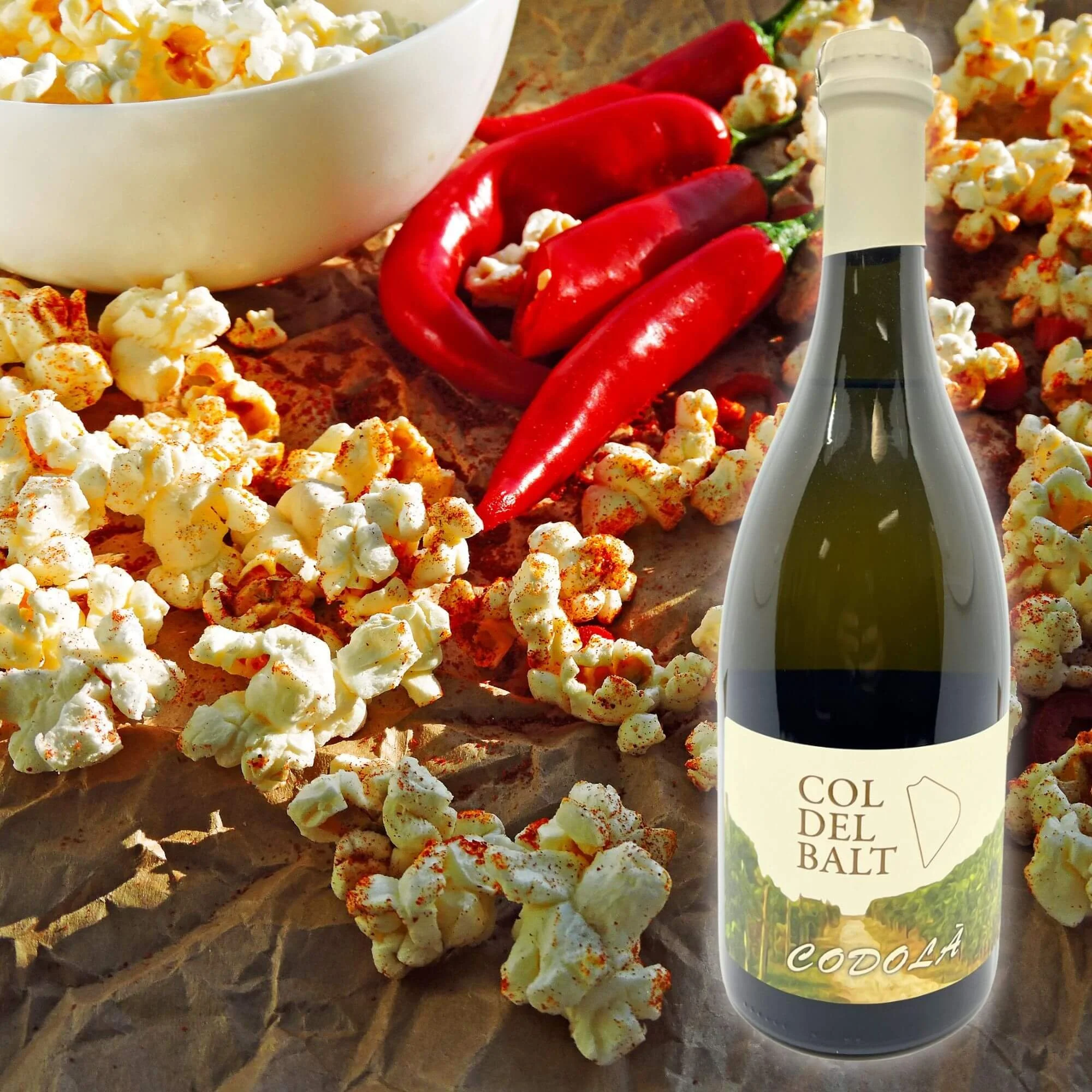
Spicy Popcorn + Codolà Col Fondo Prosecco: The lively bubbles of this unfiltered Col Fondo Prosecco work overtime here: cleansing the palate between bites while the natural acidity cuts right through the salt and heat of the popcorn.
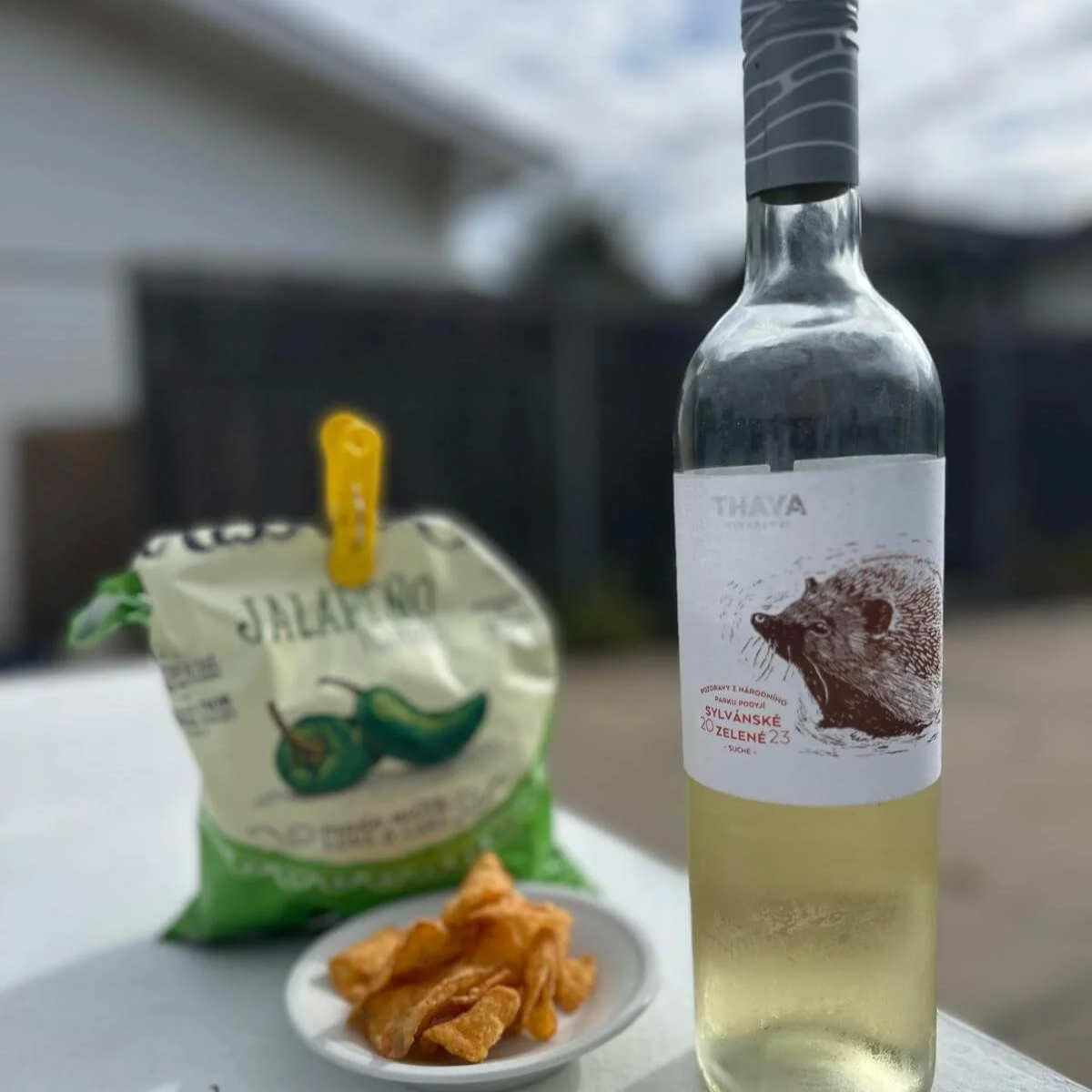
Spicy Chips + Silvaner: A touch of residual sugar in these fresh, fruit-forward whites gently tames the heat without overwhelming a simple snack; proof that great pairings don't have to be complicated.
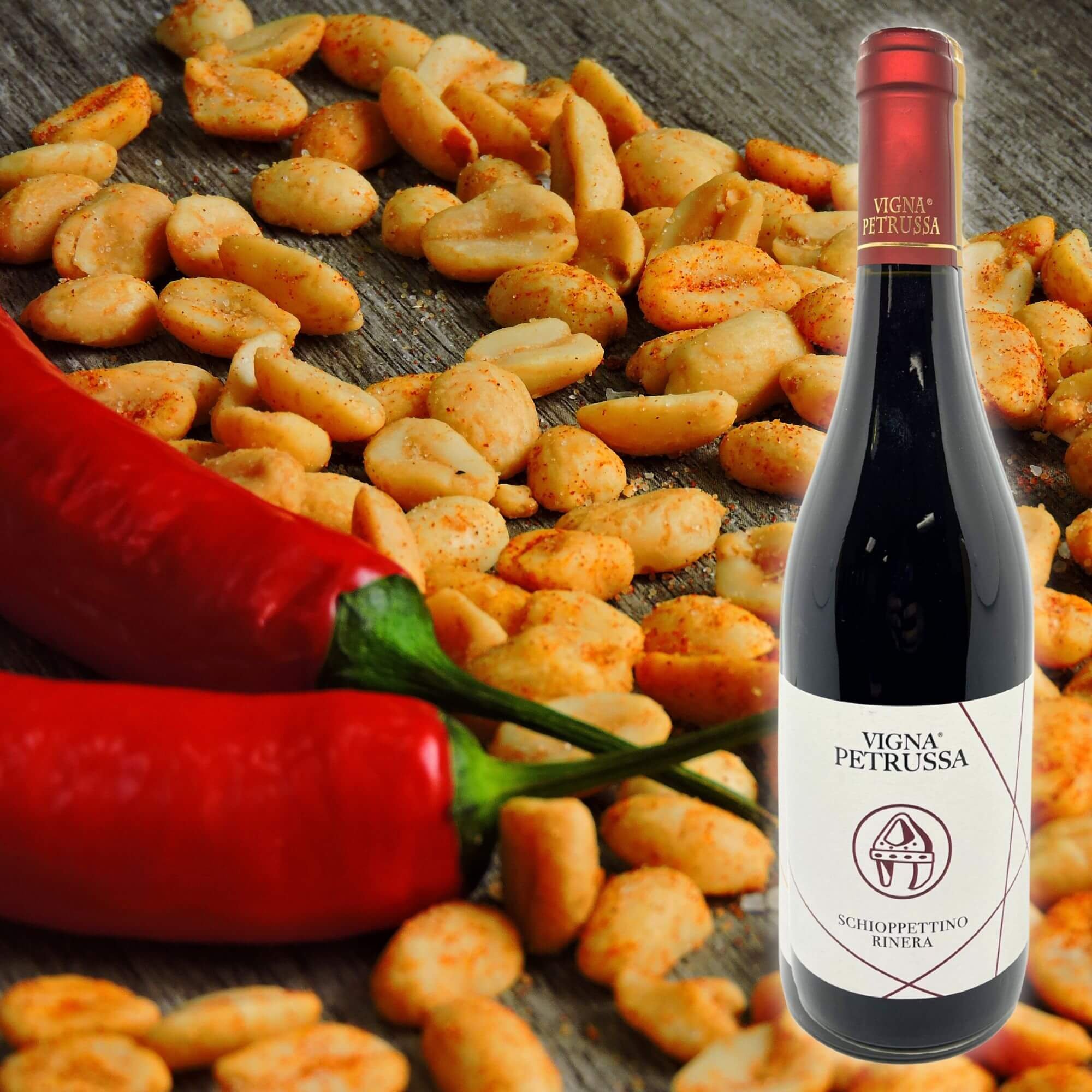
Spicy Nuts + Rinera Unoaked Schioppettino: This light, low-tannin red has just enough fruity character and spice of its own to stand up to a bold pub mix, without the grippy tannins that would turn the heat up even further.
Mexican Cuisine Pairings
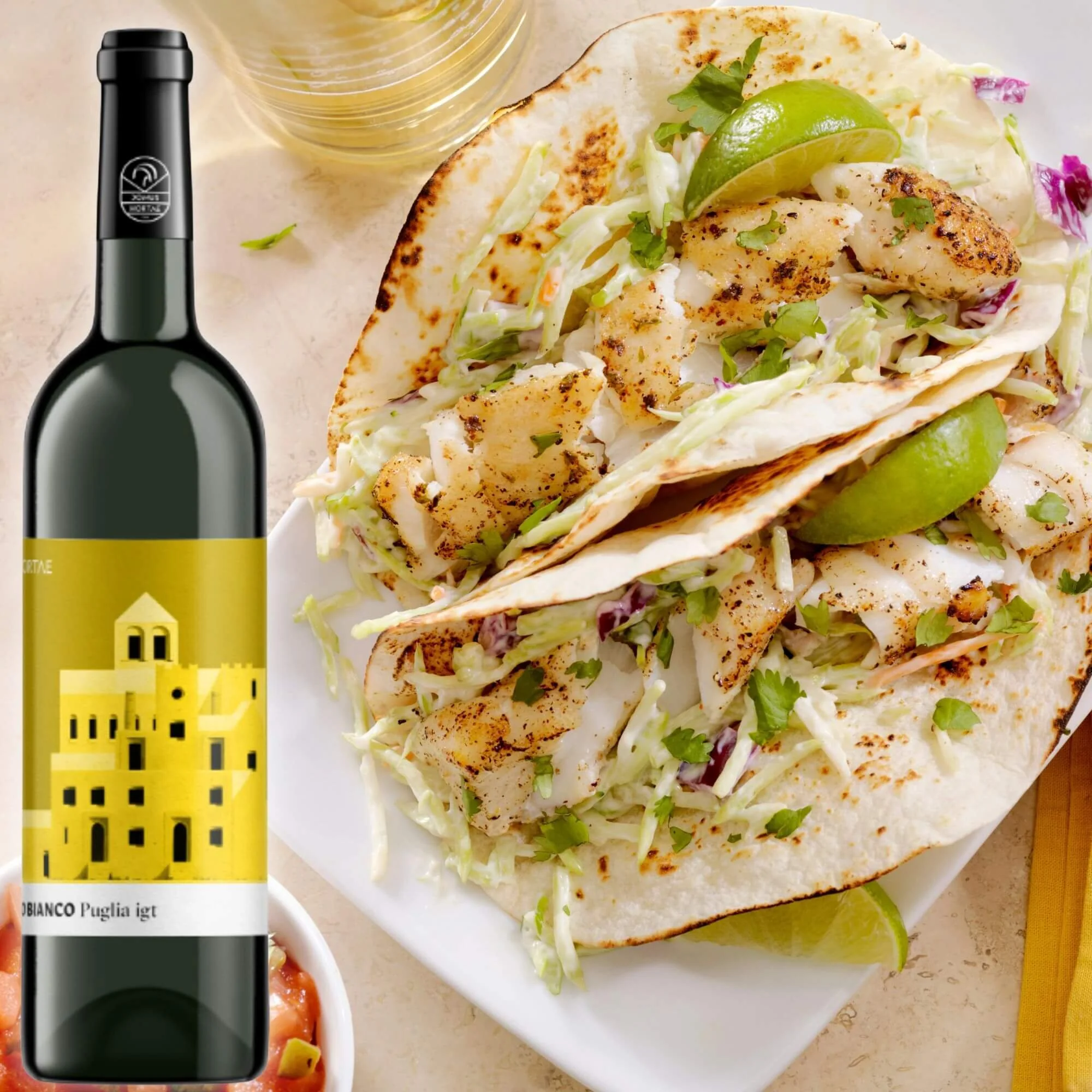
Tacos + Kimere Bombino Bianco: The bright acidity and fresh fruit of this southern Italian white wine cut cleanly through the richness of taco fillings (especially fish tacos), while its lively character holds its own against bold seasoning, salsas, and a squeeze of lime.
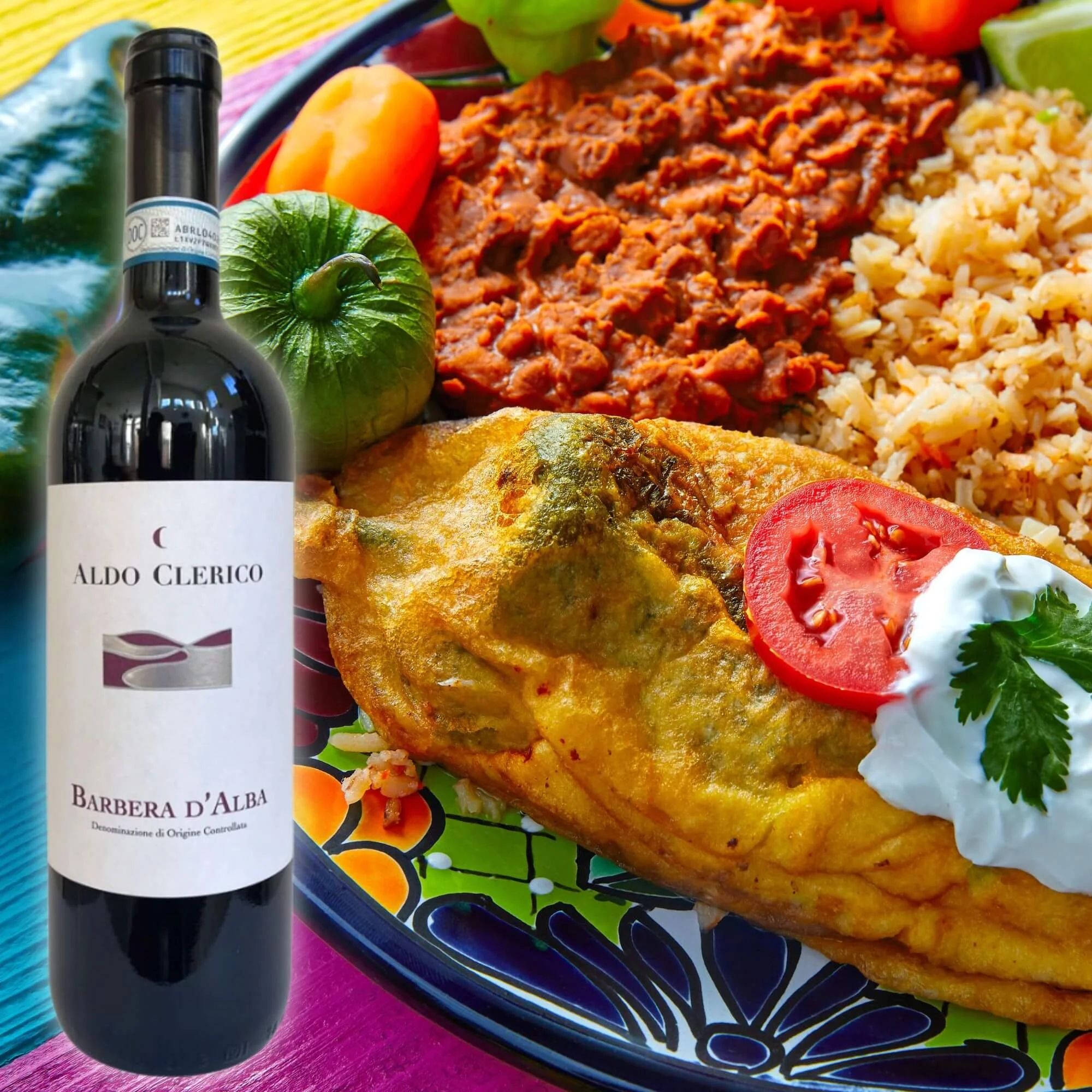
Chiles Rellenos + Barbera d'Alba: The naturally high acidity and juicy red fruit of Barbera make it a natural match for the smoky depth of chiles rellenos. It has enough intensity to meet the dish, but with good acidity and without the tannins that would clash with the heat.
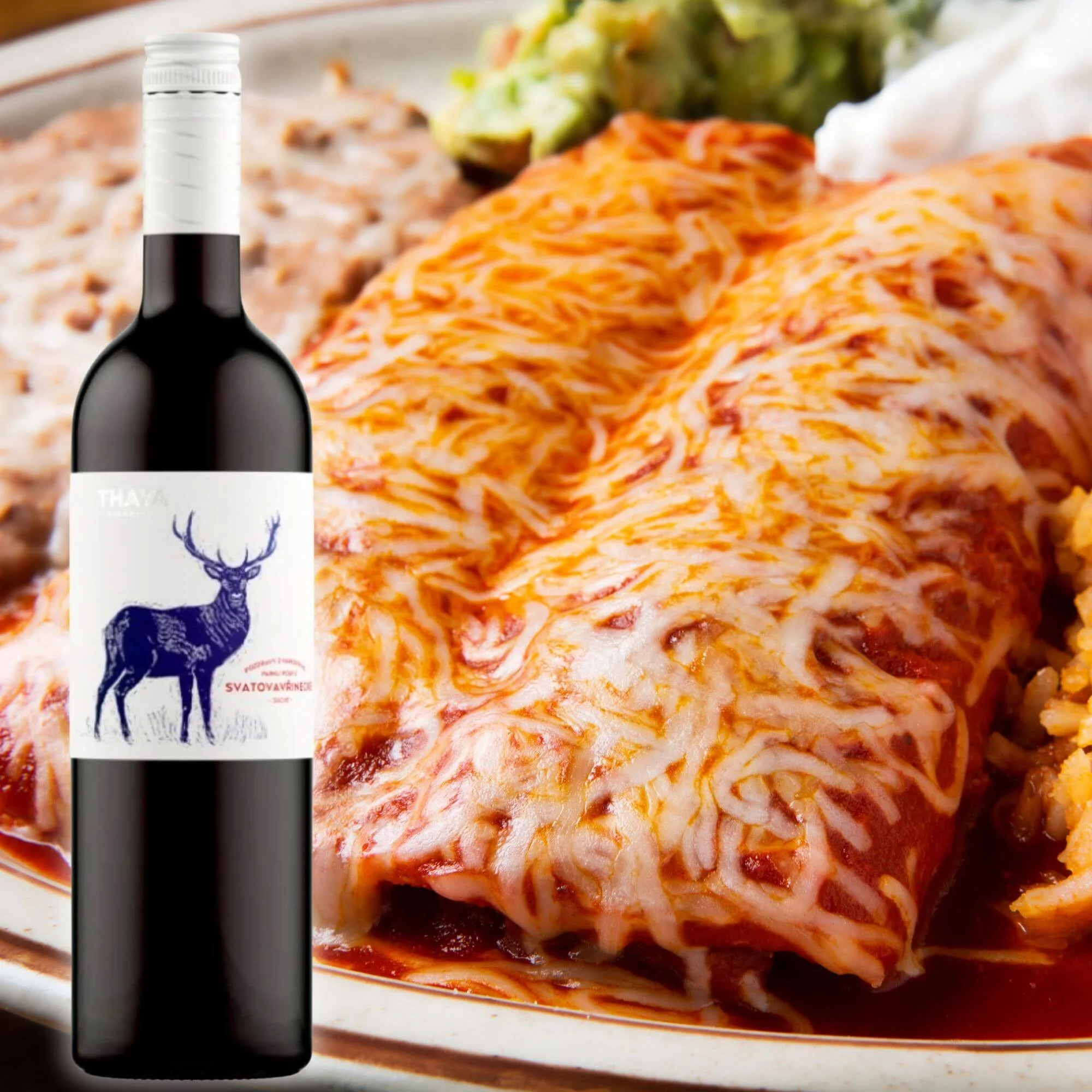
Enchiladas + Unoaked St. Laurent: Silky and fruit-driven, an unoaked St. Laurent brings a gentle earthiness that echoes the layered spice of enchilada sauce, it is juicy and light enough not to overpower, but with enough presence to keep up.
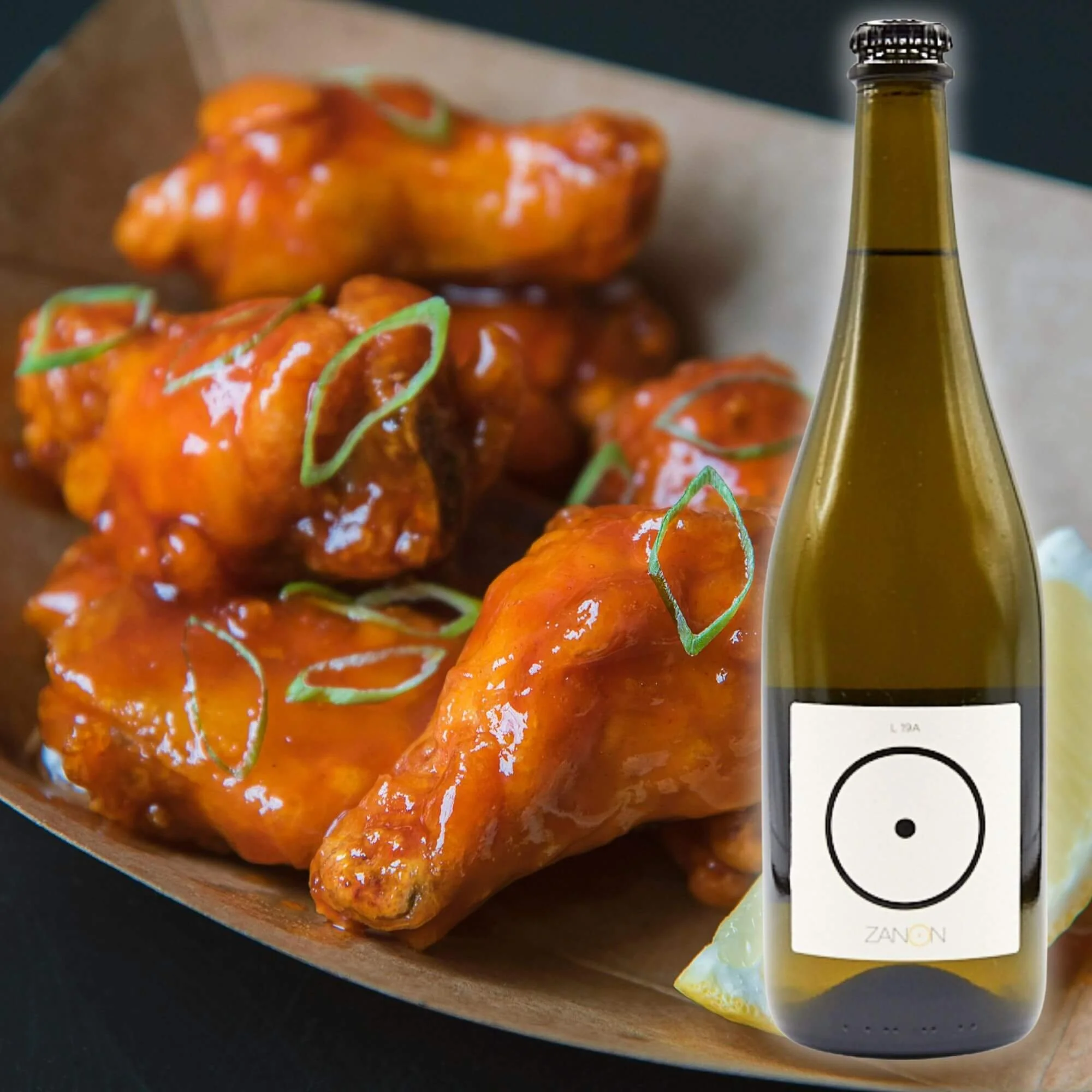
Buffalo Wings + Zanon Col Fondo Prosecco: Fried, fatty, fiery, buffalo wings need something with serious bubble power. This rustic, unfiltered Col Fondo delivers exactly that, cutting through the richness while cooling down the hot sauce with every sip.
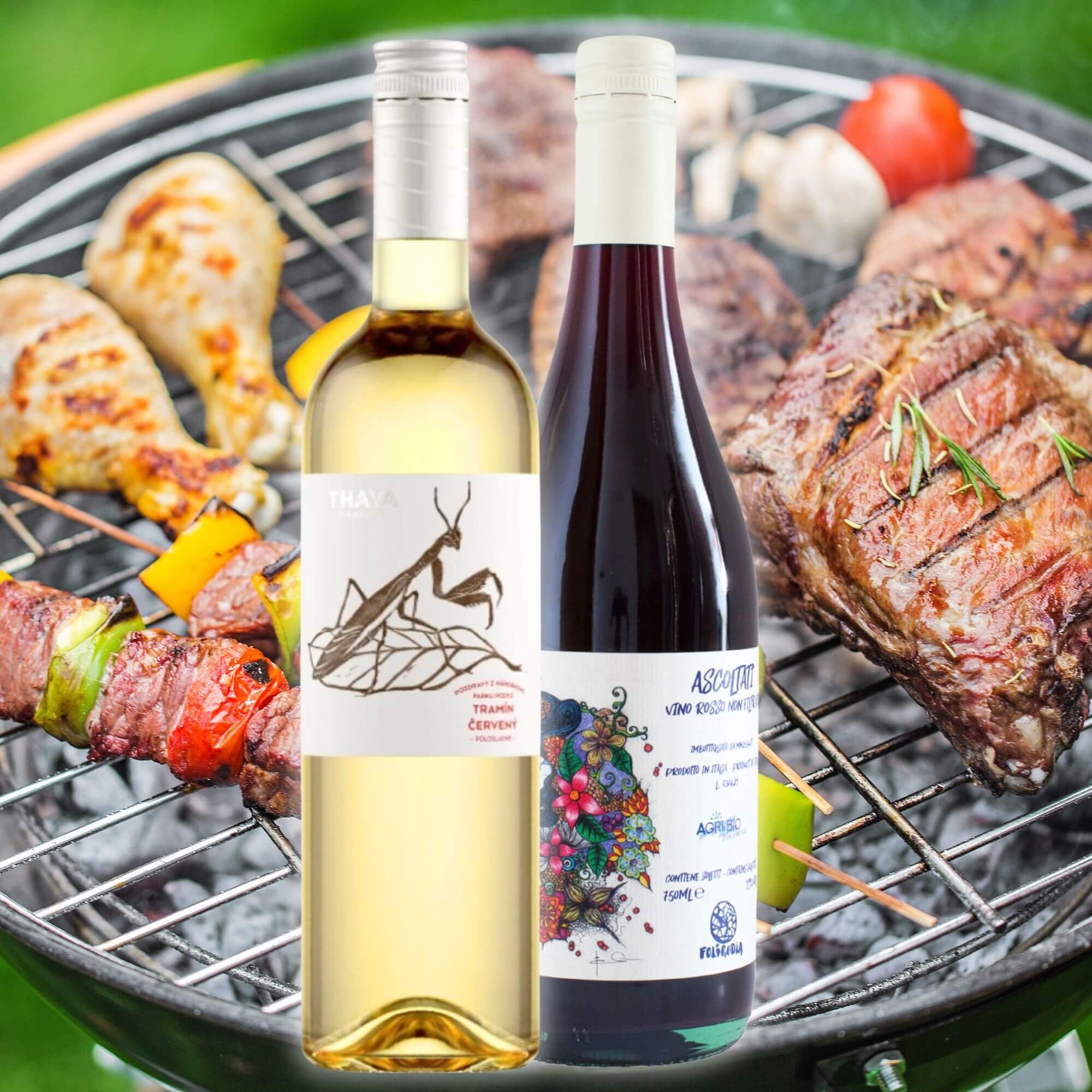
BBQ Ribs + Gewurztraminer or Ascoltati: The gentle sweetness and aromatic intensity of an off-dry white like Gewurztraminer do something clever here… the residual sugar softens the vinegar bite of the sauce while standing up to the smoke, keeping every bite balanced. Or go for a juicy red blend like Ascoltati for red meats.
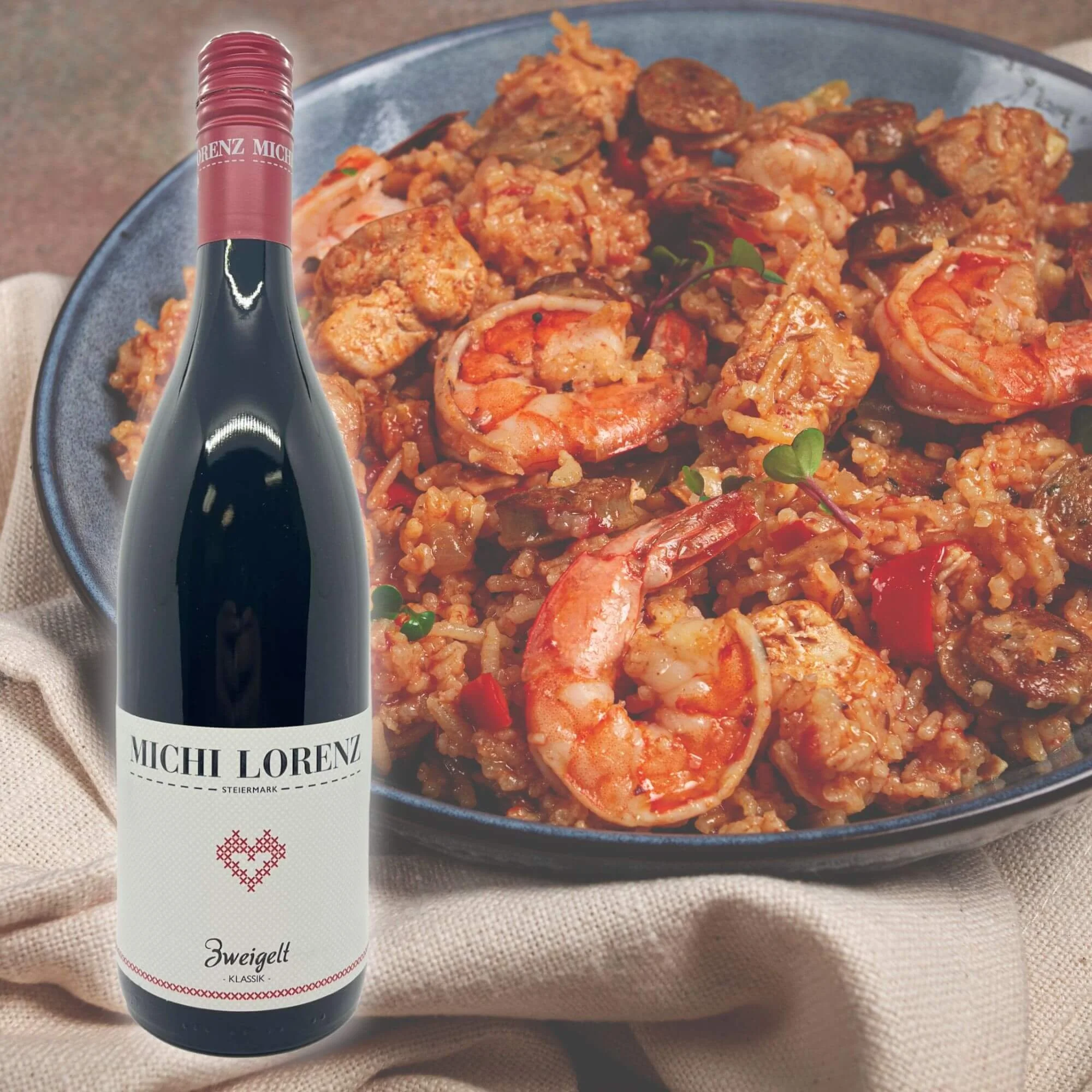
Jambalaya + Michi Lorenz Zweigelt: The bright acidity and peppery red fruit of this Austrian Zweigelt cut through the richness of a deeply spiced Creole dish. It’s a pairing that proves Old World wines and New World comfort food are better suited than one might think!
Indian Cuisine Pairings
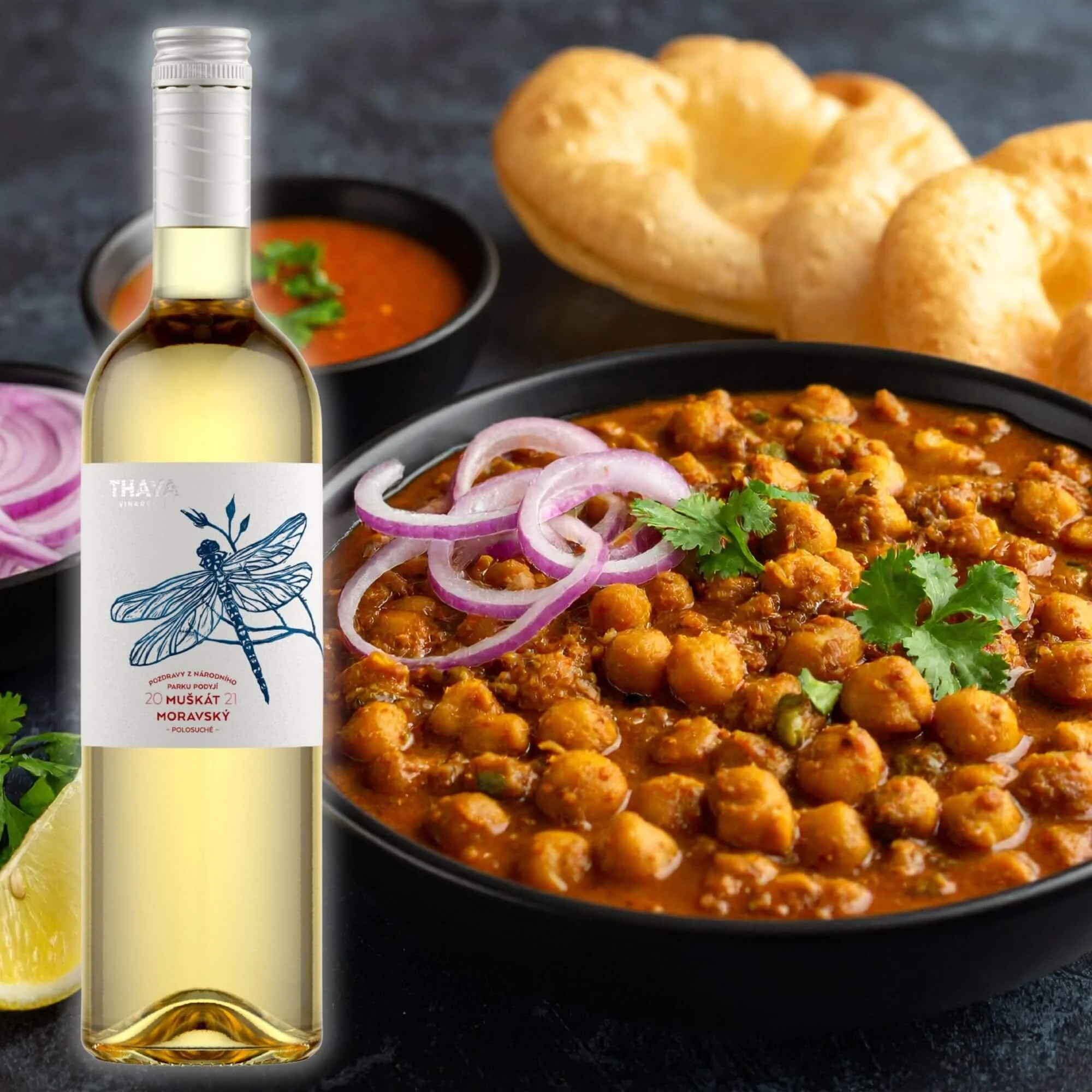
Chana Masala + Moravian Muscat: The aromatic richness of this Czech indigenous grape is floral, exotic, and gently sweet. It mirrors the complex spice blend of chana masala in a way that feels almost too natural. The touch of residual sugar soothes the heat while the wine's intensity isn’t lost in the sauce.
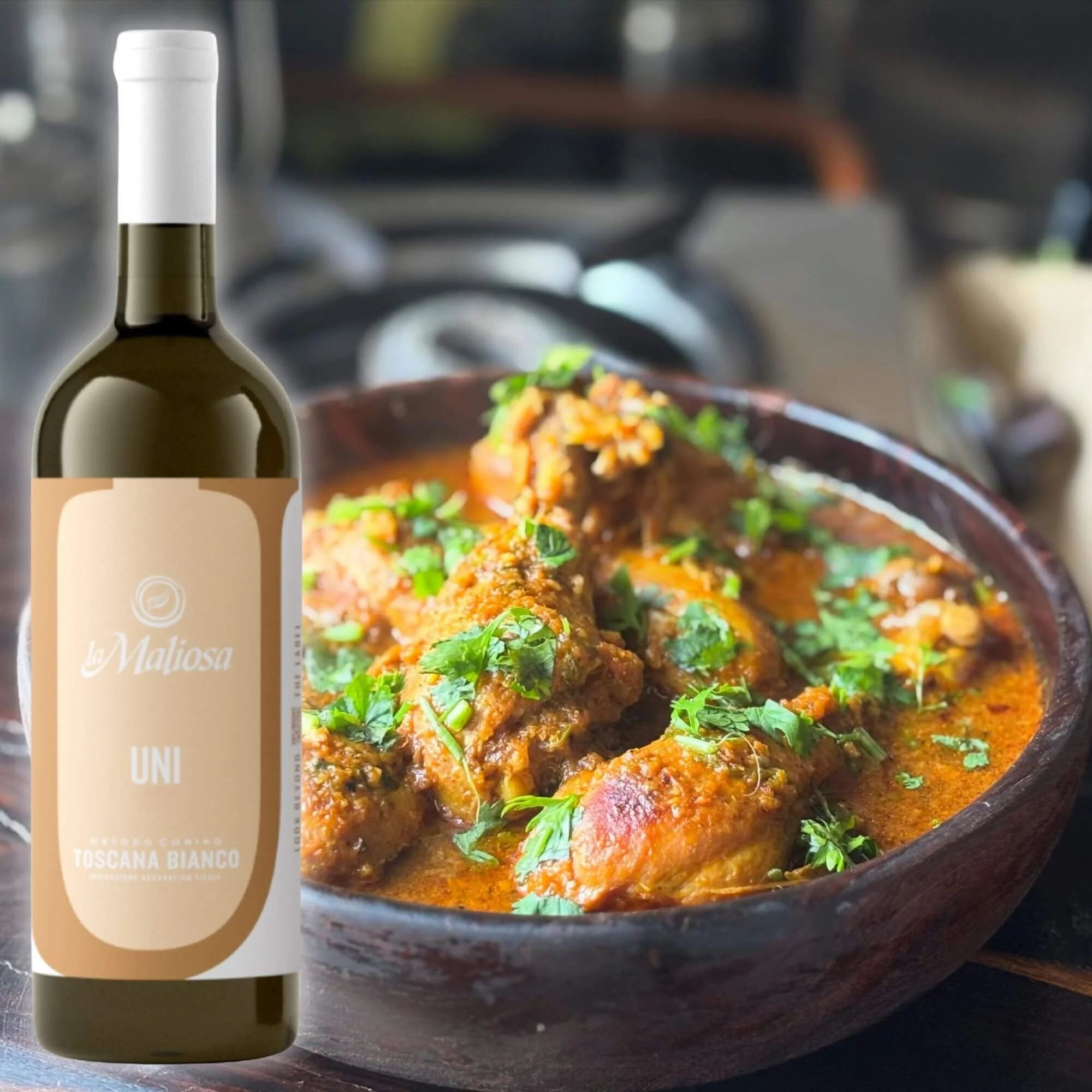
Chicken Chettinad + Uni (Tuscan Orange Wine): This funky, skin-contact orange wine brings texture, grip, and a wild aromatic character that matches the bold, peppery complexity of the dish; one of those pairings that surprises you the first time and makes complete sense the second.
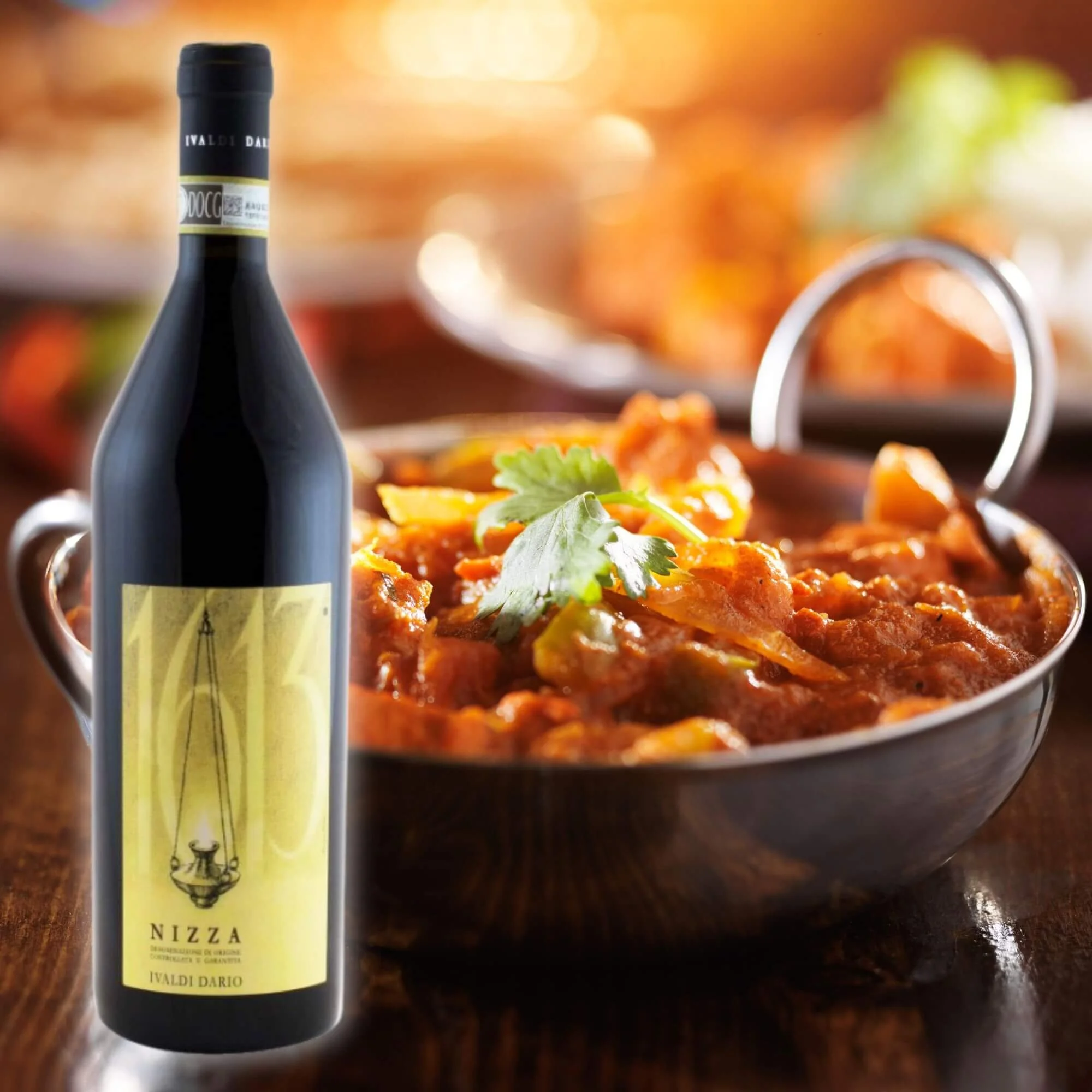
Pork Vindaloo + 1613 Nizza DOCG: Vindaloo demands a wine with backbone, the high acidity and deep, concentrated fruit of a Nizza Barbera rise to the challenge, matching the dish's intensity while keeping tannins low enough not to fan the flames.
Thai Cuisine Pairings
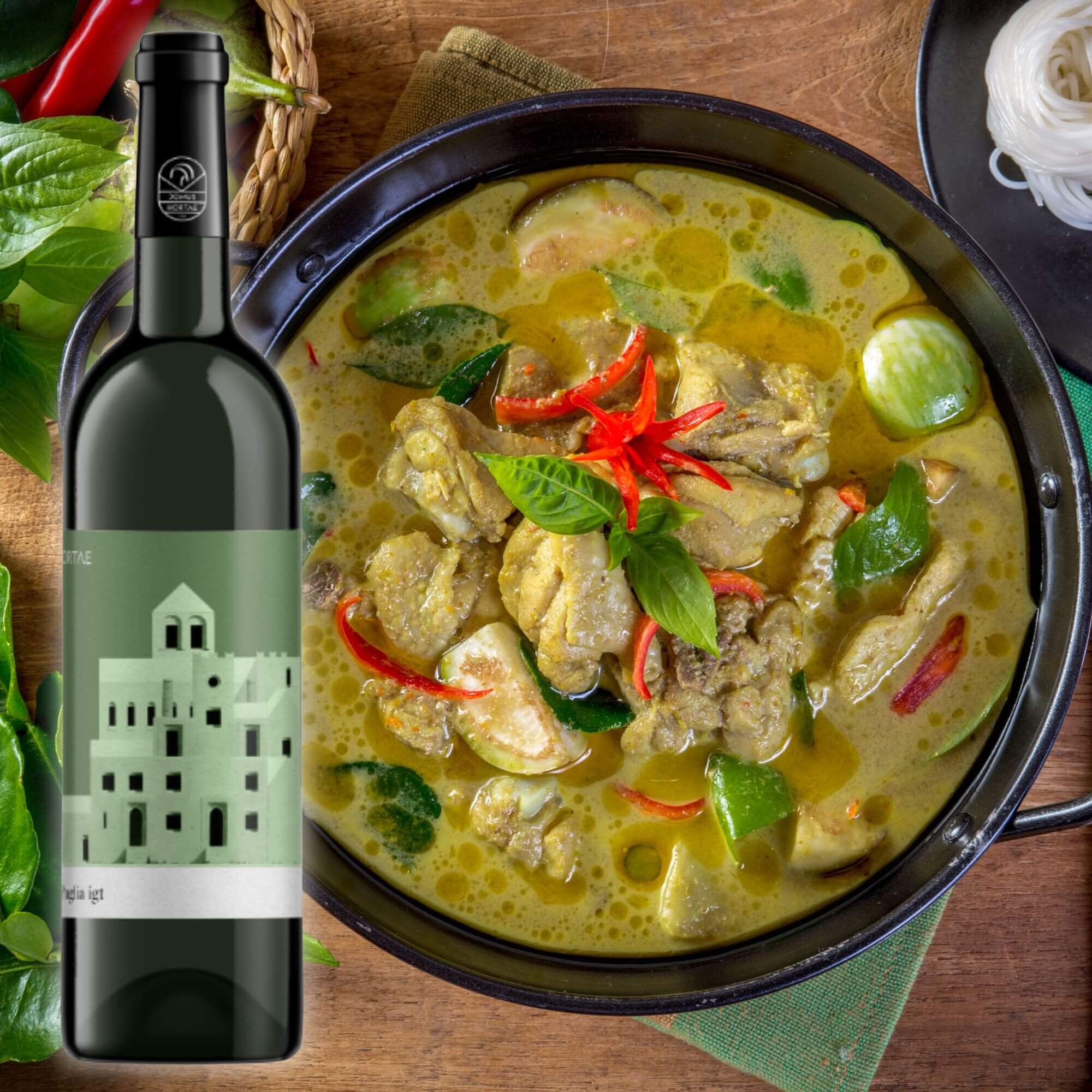
Green Curry + Ti Esti Minutolo: Few pairings feel as destined as an aromatic, spice-laced white with a fragrant green curry, and the floral intensity and gentle sweetness of the minutolo grape from Puglia echo the lemongrass and lime while cooling the coconut-carried heat.
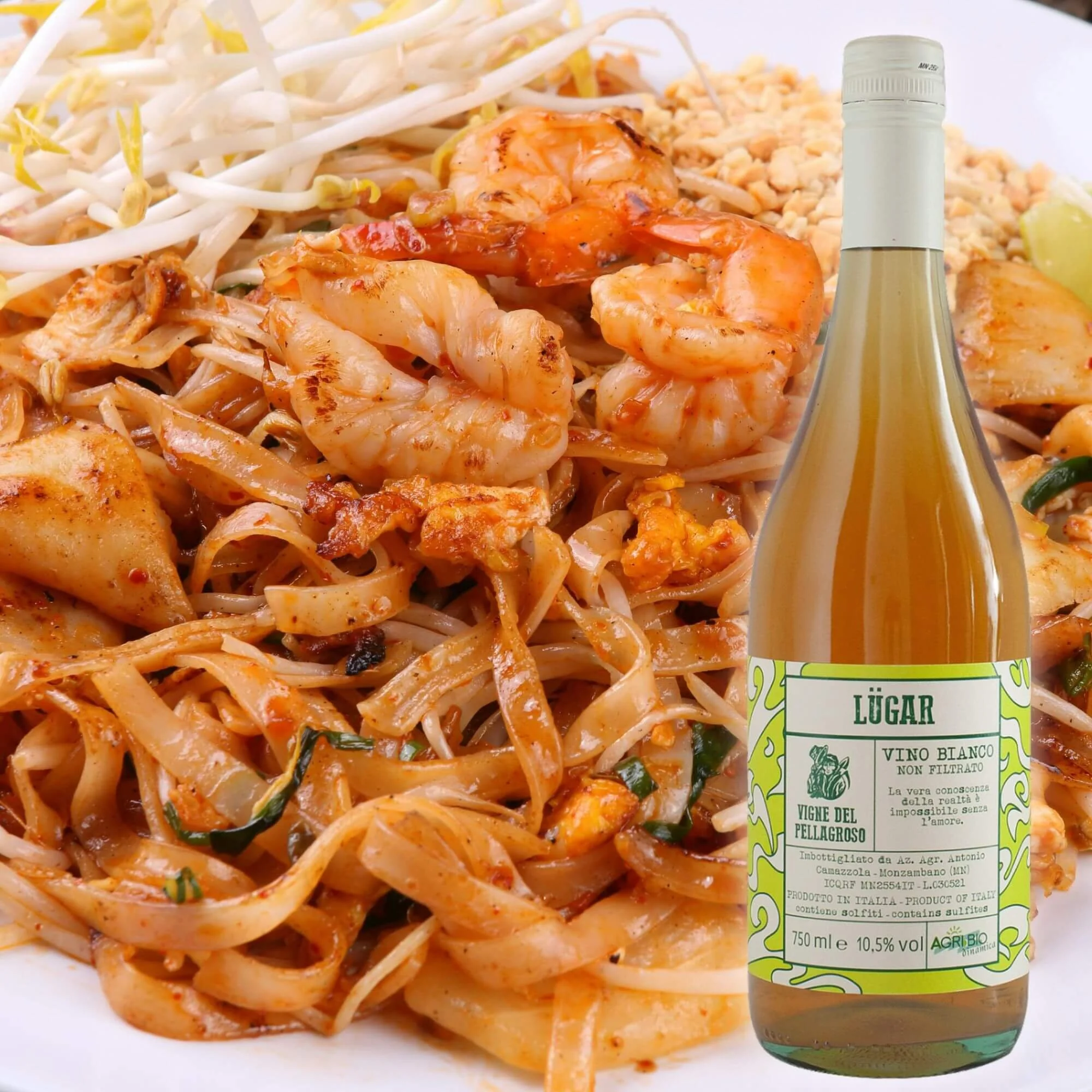
Pad Thai + Lugar Orange Wine: Pad Thai walks a line between savory, sweet, and tangy, and really can be with or without chili. This funky, textured orange wine has the complexity and grip to follow it every step of the way without missing a beat, yet the aromatic grapes used give quite a bit of intensity.
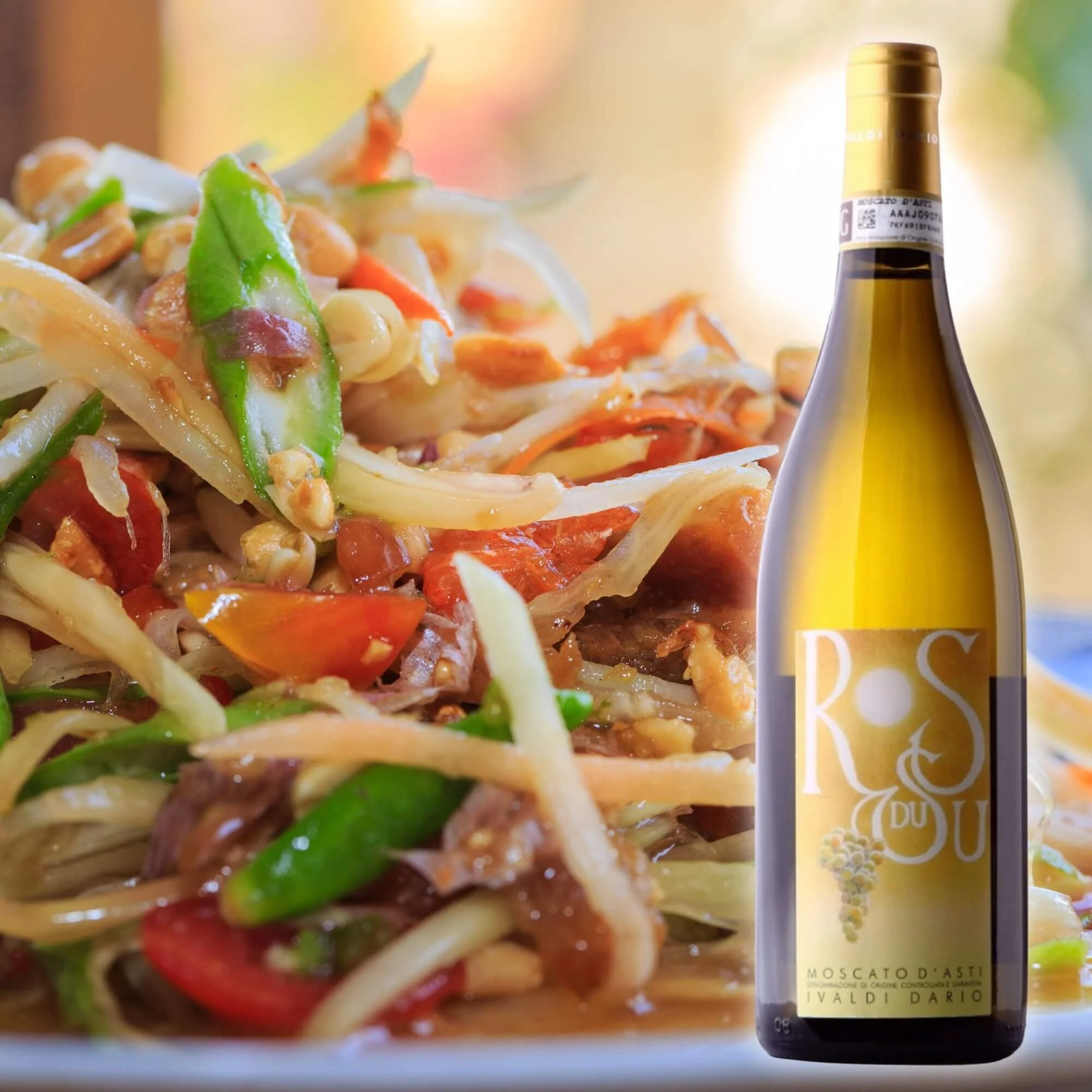
Som Tam + Moscato d’Asti: The bright, papaya-forward freshness of som tam finds a perfect counterpart in the delicate sweetness and effervescence of Moscato d’Asti. It is light enough not to overwhelm the dish, sweet enough to take the edge off the chili and lime.
Korean Cuisine
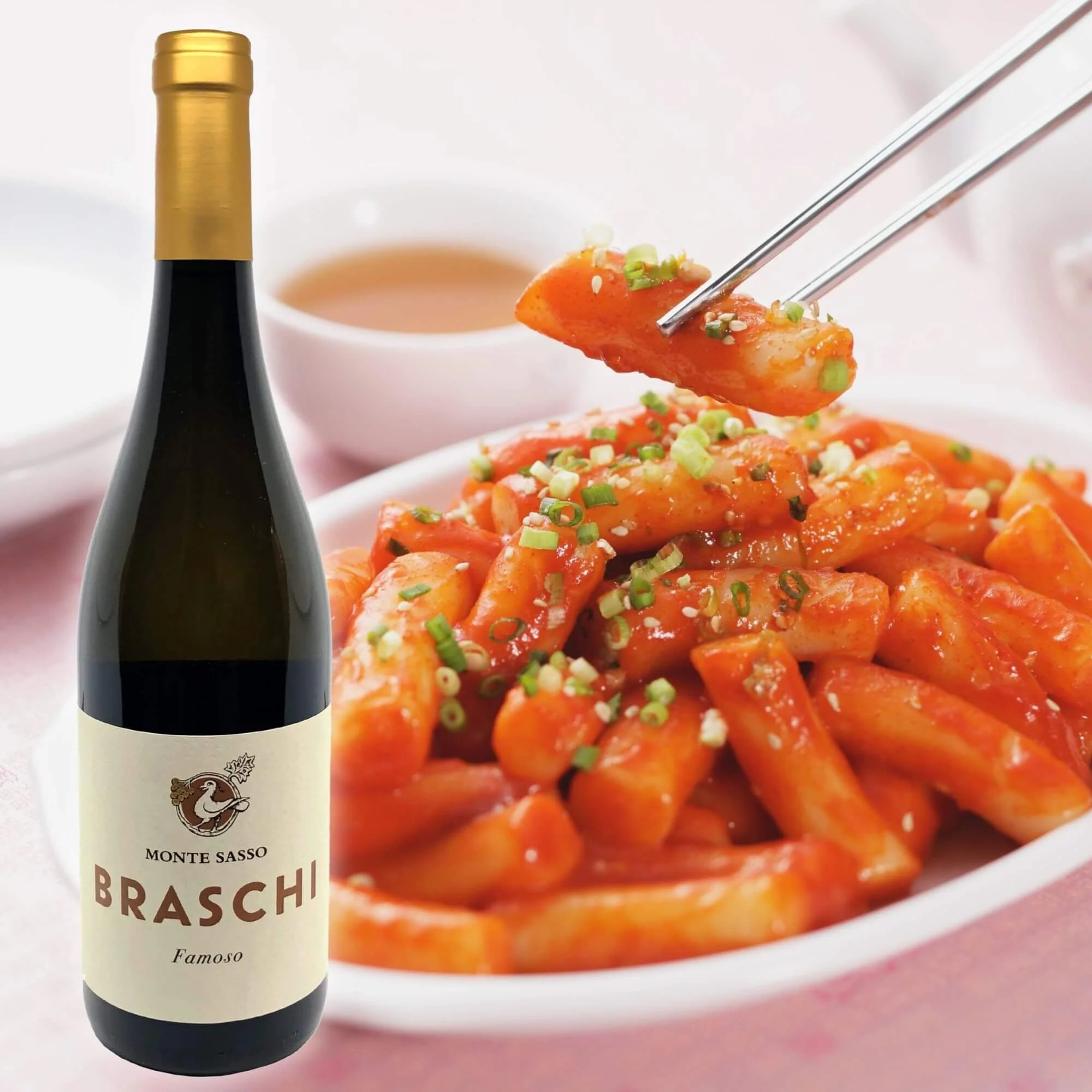
Tteokbokki + Famoso: The sticky, sweet-spicy gochujang glaze of tteokbokki can easily overwhelm a timid wine, but the crisp, focused acidity of Famoso steps in to reset the palate and bring balance to every fiery, chewy bite.
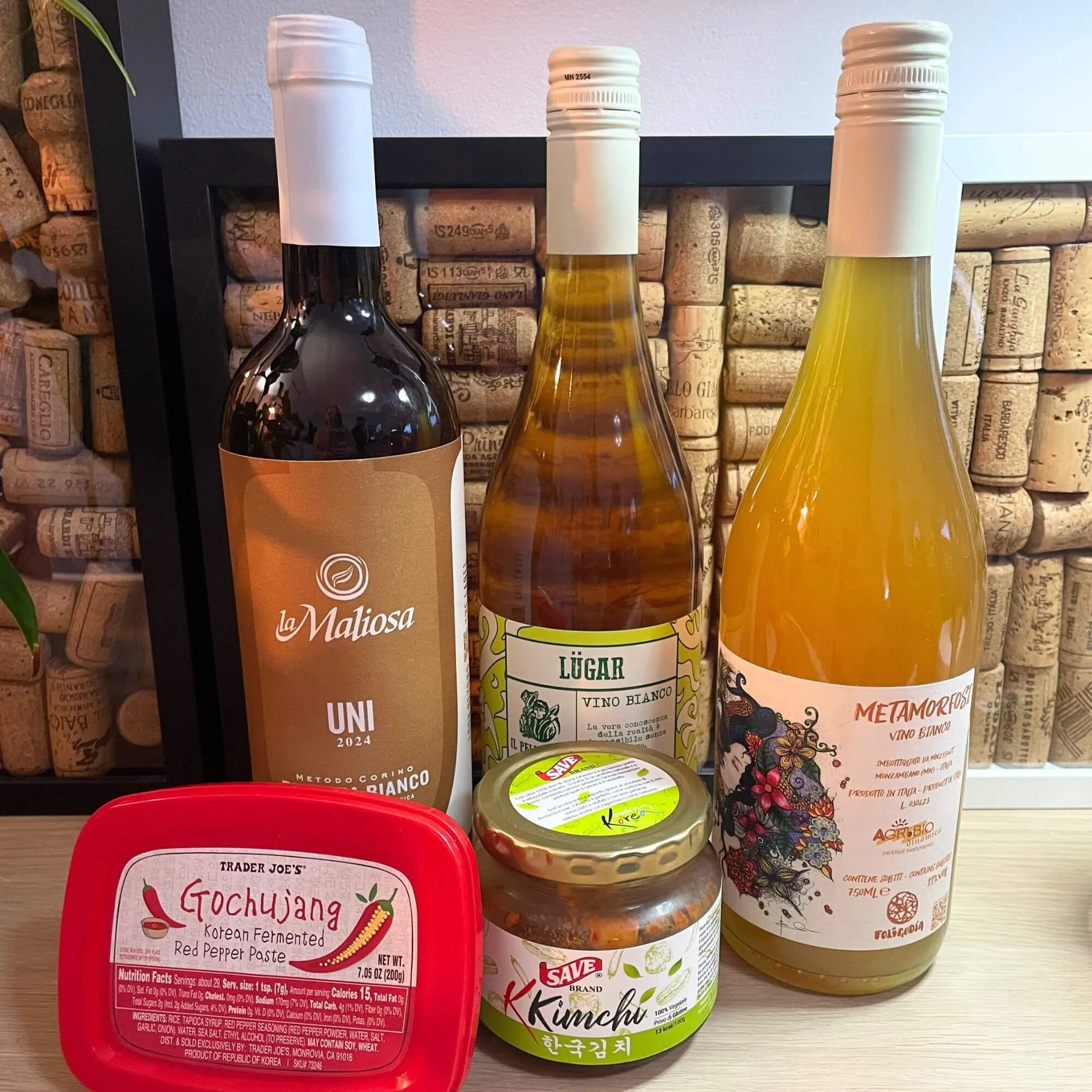
Kimchi + Metamorfosi Orange Wine: Fermented, funky, and fiercely flavored, kimchi needs a wine that isn't afraid to match its energy. This skin-contact orange wine brings its own wild, oxidative character to the table, meeting the ferment head-on in the best possible way.
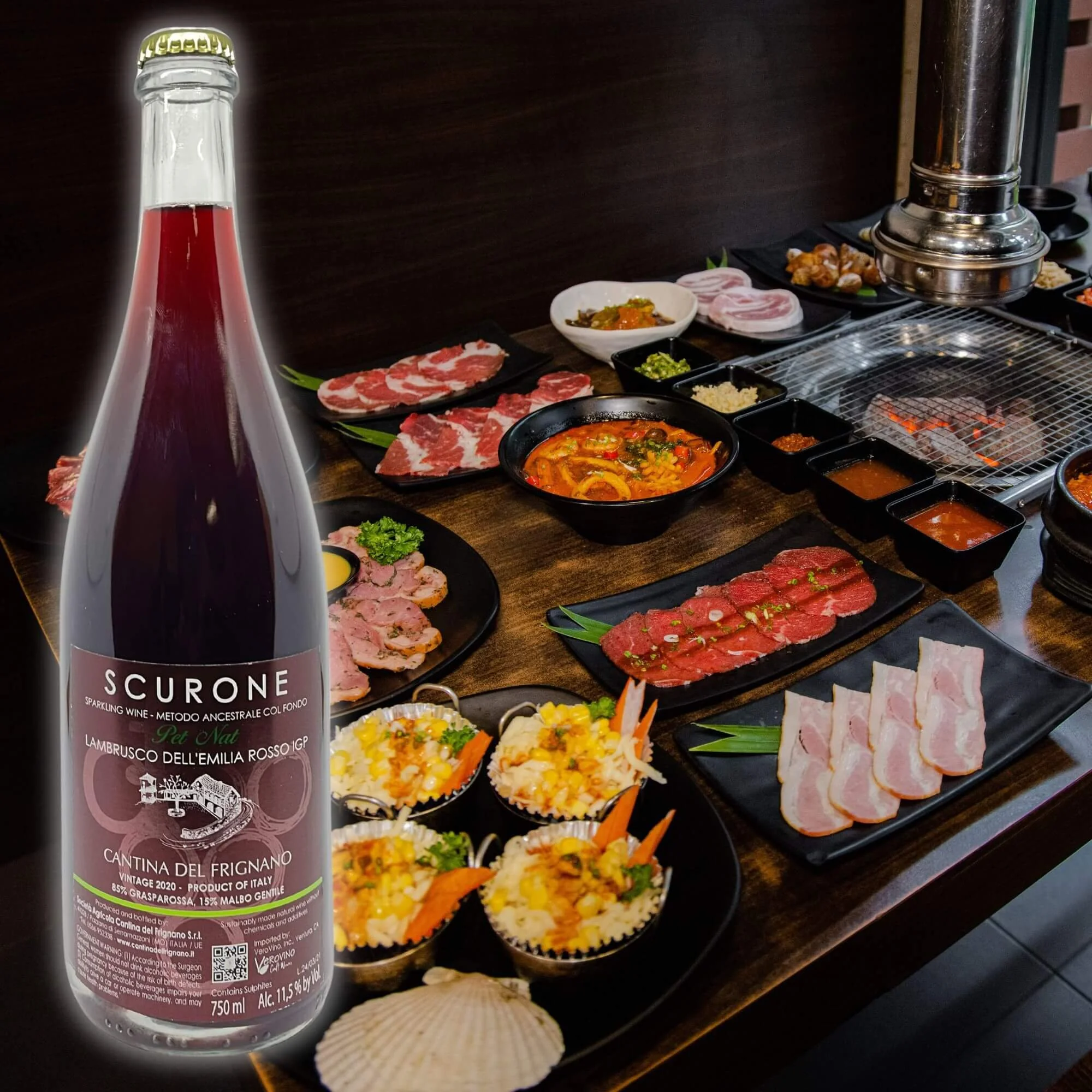
Korean BBQ + Scurone Pet Nat Lambrusco: The fatty richness of grilled Korean BBQ calls for something with bubbles, just like a low-tannin Lambrusco. Its lively acidity and red fruit cutting cleanly through the char and fat with every pour.
Sichuan Cuisine
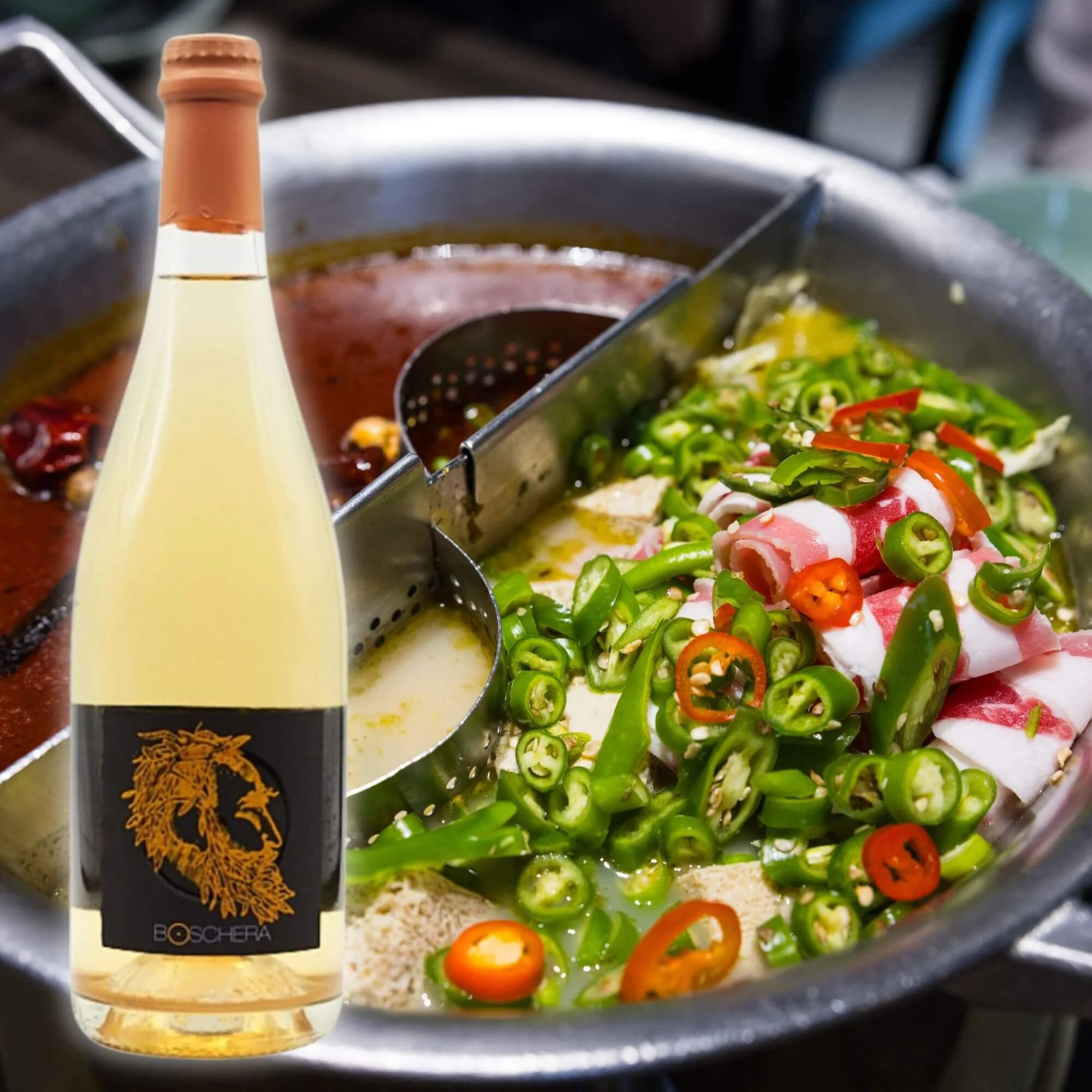
Hot Pot + Boschera Pét-Nat: Hot pot is an event as much as a meal, and a lively, natural pét-nat keeps pace with the whole experience, its bubbles and freshness cleansing the palate through round after round of dipping. The slight savory depth of a good pét-nat also has a natural affinity for the intense umami that builds in the broth as the meal goes on.
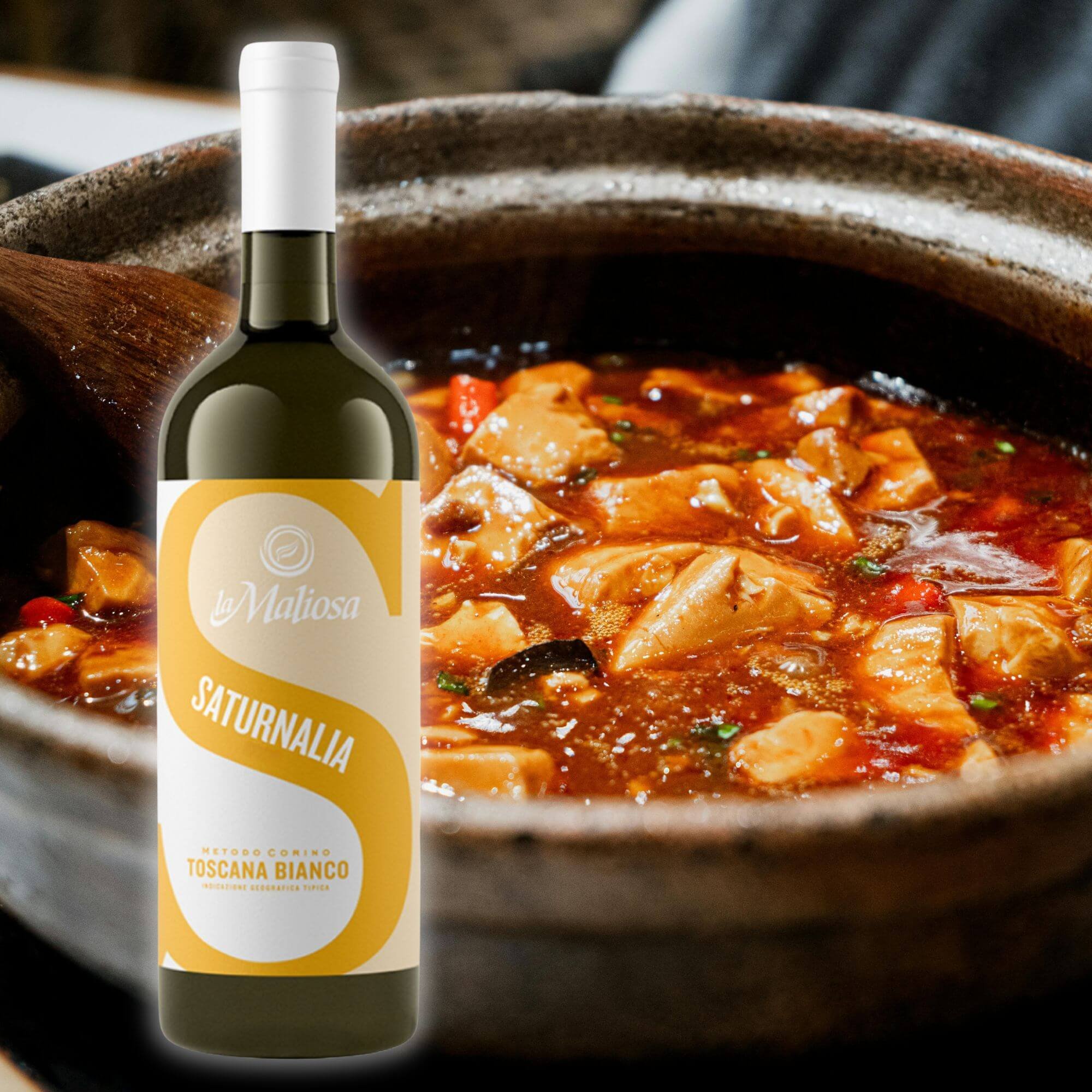
Mapo Tofu + Saturnalia Bianco Orange Wine: The silky richness of tofu soaked in a fiery, numbing Sichuan sauce demands something with texture and depth, and this Tuscan skin-contact blend brings both, its grip and complexity cutting through the fat while standing up to one of the boldest dishes in the world.
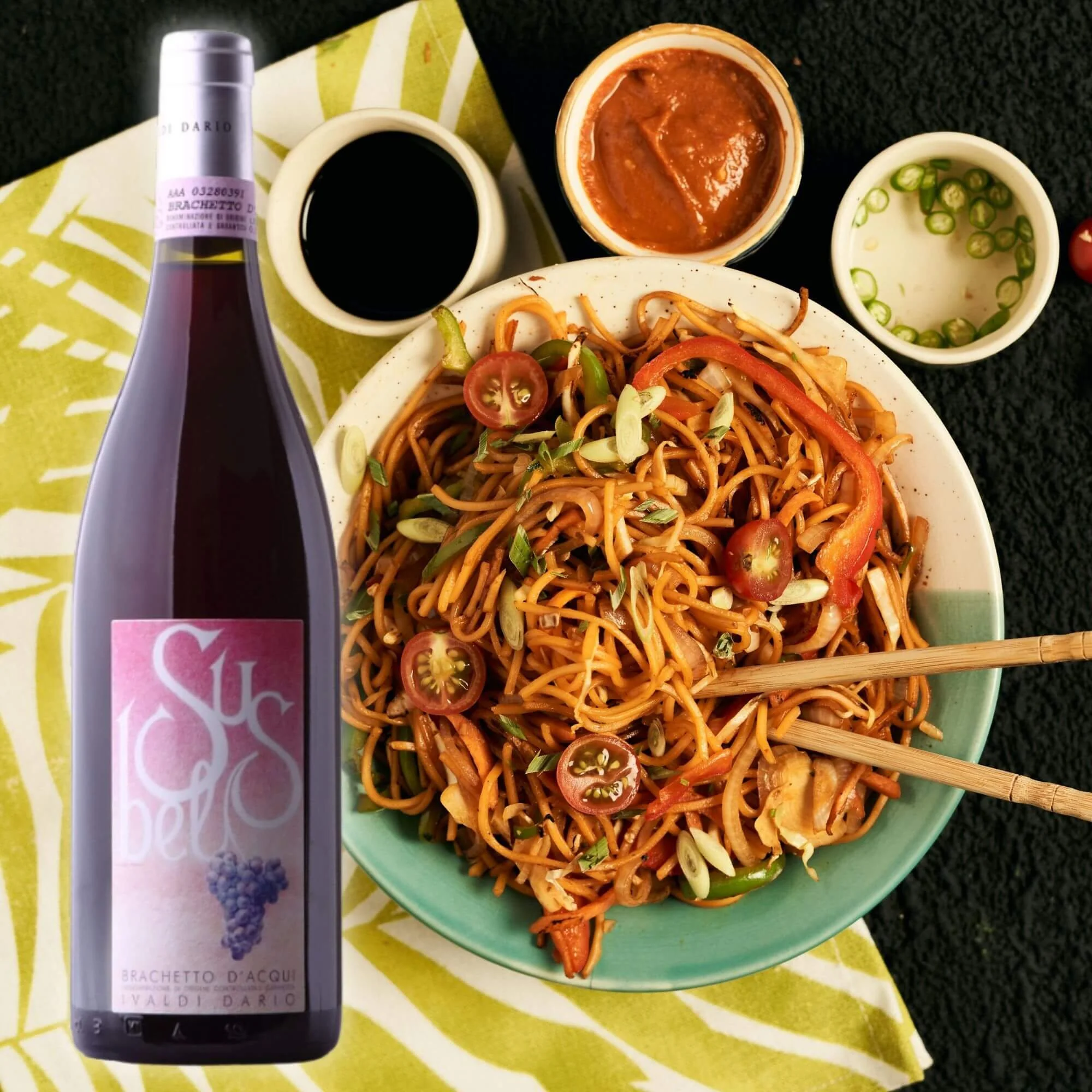
Dan Dan Noodles + Brachetto d’Acqui: The numbing, building heat of Sichuan peppercorns in dan dan noodles is no joke, and the gentle sweetness and soft red fruit of a bubbly Brachetto d’Acqui offer real relief here, sugar acting as a natural fire extinguisher without dulling the excitement of the dish.
Create Your Own Pairings
Spicy food doesn't have to be wine's enemy; it just asks you to be a little more adventurous in what you pour. And as it turns out, some of the most exciting, unexpected bottles are exactly the ones that shine brightest on a spicy table. For those of you that know our curation style, you know that we love to support small producers and bring you unique and fun wines, and specialty foods. And you can enjoy these curations by trying a selection of different wines, foods, and olive oils from our portfolio. We sell to both businesses and consumers across the US:
We are enlarging our network of distributors around the country. Reach out to us if you are interested in distributing our products.
We sell to wine stores and restaurants in certain states - contact us if you would like more info.
We do corporate gifts and sommelier guided wine tastings. Email us and we’ll tailor unique and sustainable corporate gift ideas.
If our farm crafted wines, specialty foods, and olive oils are not in your local shop or restaurant buy wine online here and we’ll ship it to you, and we ship to most states.
We also have an award winning wine club for true wine explorers seeking to continually discover unique, sustainable and authentic small production wines they never had.
Wines for Spicy Snacks

Before this 'modern era' of Proseccos made with the Charmat method, Prosecco was made with the ancestral method, like this wine, Codolà, where fermentation takes place in the bottle, and it is not disgorged. This means that the wine is unfiltered since it is on its lees. In Italy it is also called a Col Fondo sparkling wine and in the US, we use the French term ‘Pet Nat’ to describe this wine. This results in a white sparkling wine whose aromas and flavors continue to evolve while they are in the bottle. This Col del Balt white sparkling wine made by the Sanzovo brothers has a straw yellow color with lots of fine bubbles and green herb and pear aromas with a hint of lemon zest. It has 0 residual sugar and it tastes dry and clean, with a slightly bitter, lemon rind tasting, finish.

This unoaked white wine made from the silvaner grape has just the right balance of peachy fruit, refreshing acidity and bright minerality which create a delicious sensation on the palate that keeps you wanting to sip. The nose is invigorated by a fresh burst of citrus peel, beautifully interwoven with subtle hints of grassiness.
From a winery called “Best in the Czech Republic” for multiple years in a row, this wine is farmed organically in a local national park.
Tastes Like: Citrus Zest
Farming & Winemaking Highlights: Regenerative Agriculture | Sustainable Winery | Organic
Fun Facts: The grape is spelled two ways, sylvaner and silvaner. The hedgehog on the label represents an animal found naturally in the national park where these grapes are farmed.
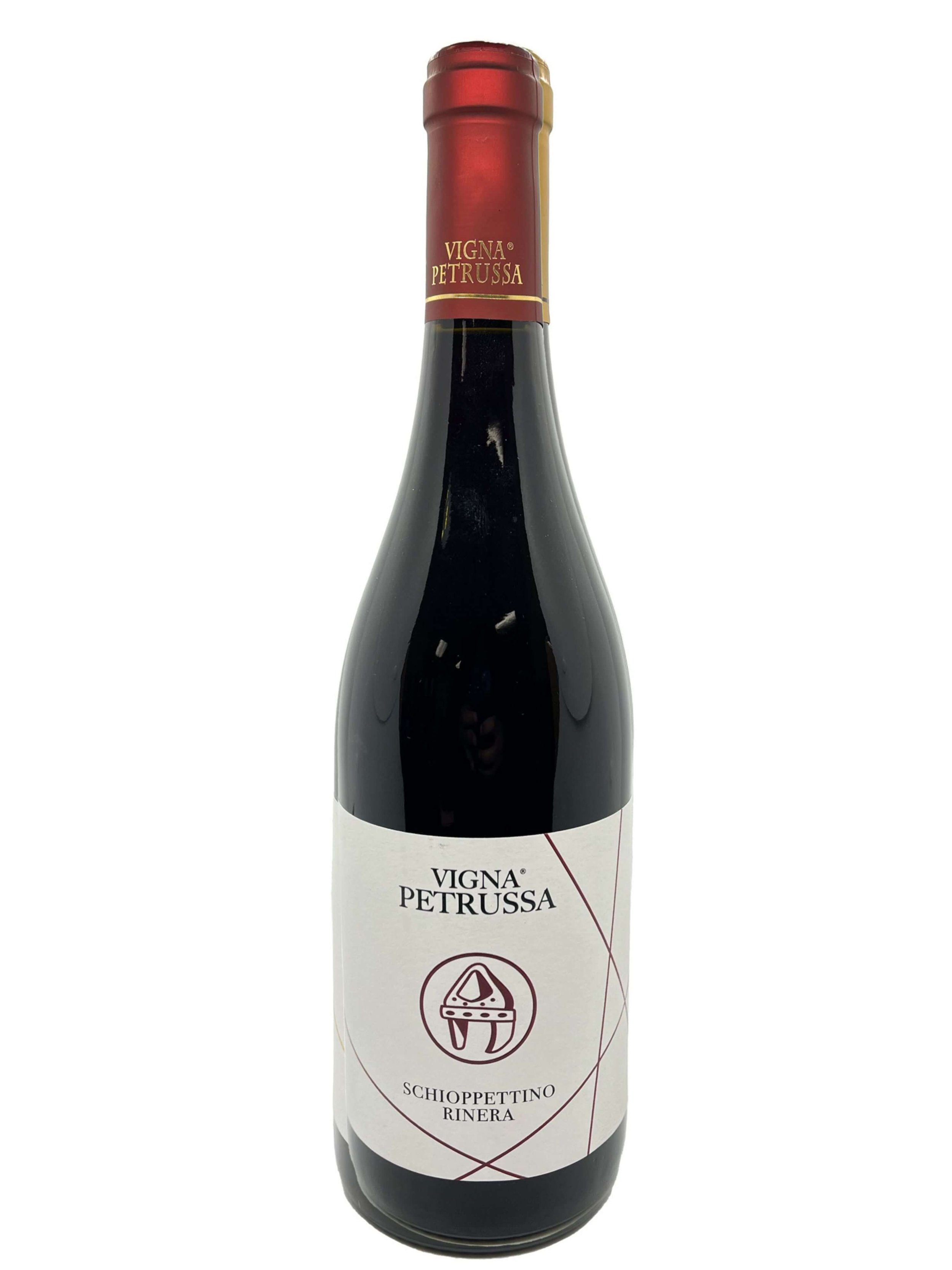
This is an unoaked Schioppettino from a women owned winery who spearheaded the rebirth of Schioppettino in the 'birthplace' of the grape which is Prepotto, Fruili. Having a deep purple-garnet color, it has notes of black pepper and dark fruit. Its taste is tangy, fresh and juicy with a long clean finish. Pairs with many dishes from hamburgers to roast pork. World renowned wine critic, Ian D’Agata calls this Schioppettino a ‘very pretty wine’ and named it a 'Best Buy Italian Wine'.
Some fun facts about this wine:
Vigna Petrussa also calls this wine ‘RiNera’, or a nickname for ‘Ribolla Nera’, local term given to the wine.
The grapes actually come from Prepotto but since it is not aged in oak the winery is not 'allowed' to put Prepotto on the label.
Vigna Petrussa is a certified sustainable and biodiverse women-owned winery.
Wines for Mexican Cuisine

Meaning dream, 'Kimere' is a monovarietal made from Bombino Bianco having a pale yellow color, delicate aromas of white flowers and peach. On the palette it is fresh, fruity, with saline texture and finish. It could be an alternative to recommend to a Pinot Grigio lover. Fermented and aged in stainless steel. From a small family estate in Northern Puglia in Southern Italy.
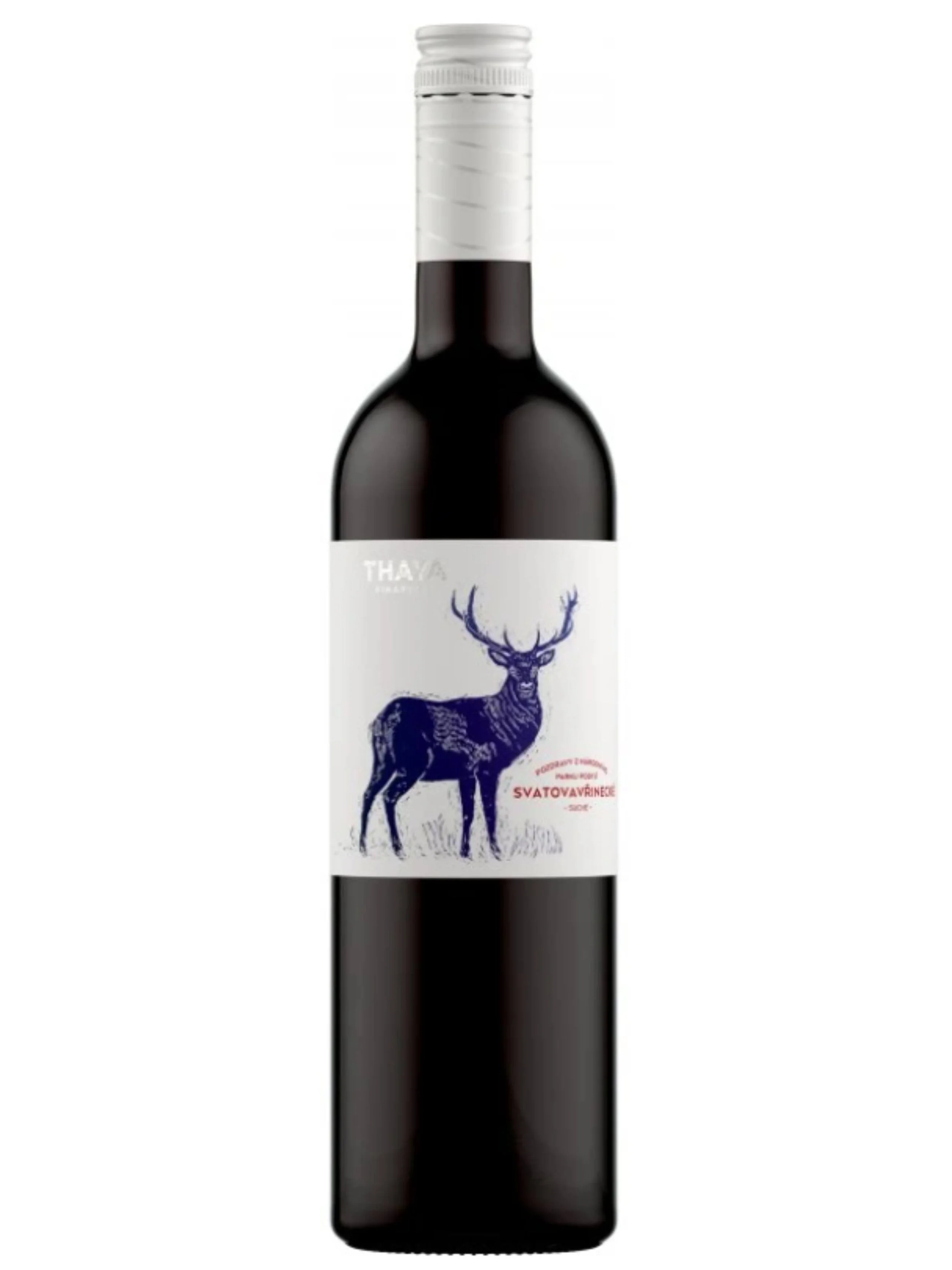
Wonderfully juicy dark fruits are melded in this wine with bright acidity for a delightful sipper. Serve it slightly chilled for an even more refreshing version than the oaked version of Saint Laurent.
From a winery called “Best in the Czech Republic” for multiple years in a row, this wine is farmed organically in a local national park.
Tastes Like: Concord grape juice
Farming & Winemaking Highlights: Regenerative Agriculture | Sustainable Winery | Organic
Fun Facts: The deer on the label represents an animal found naturally in the national park where these grapes are farmed.
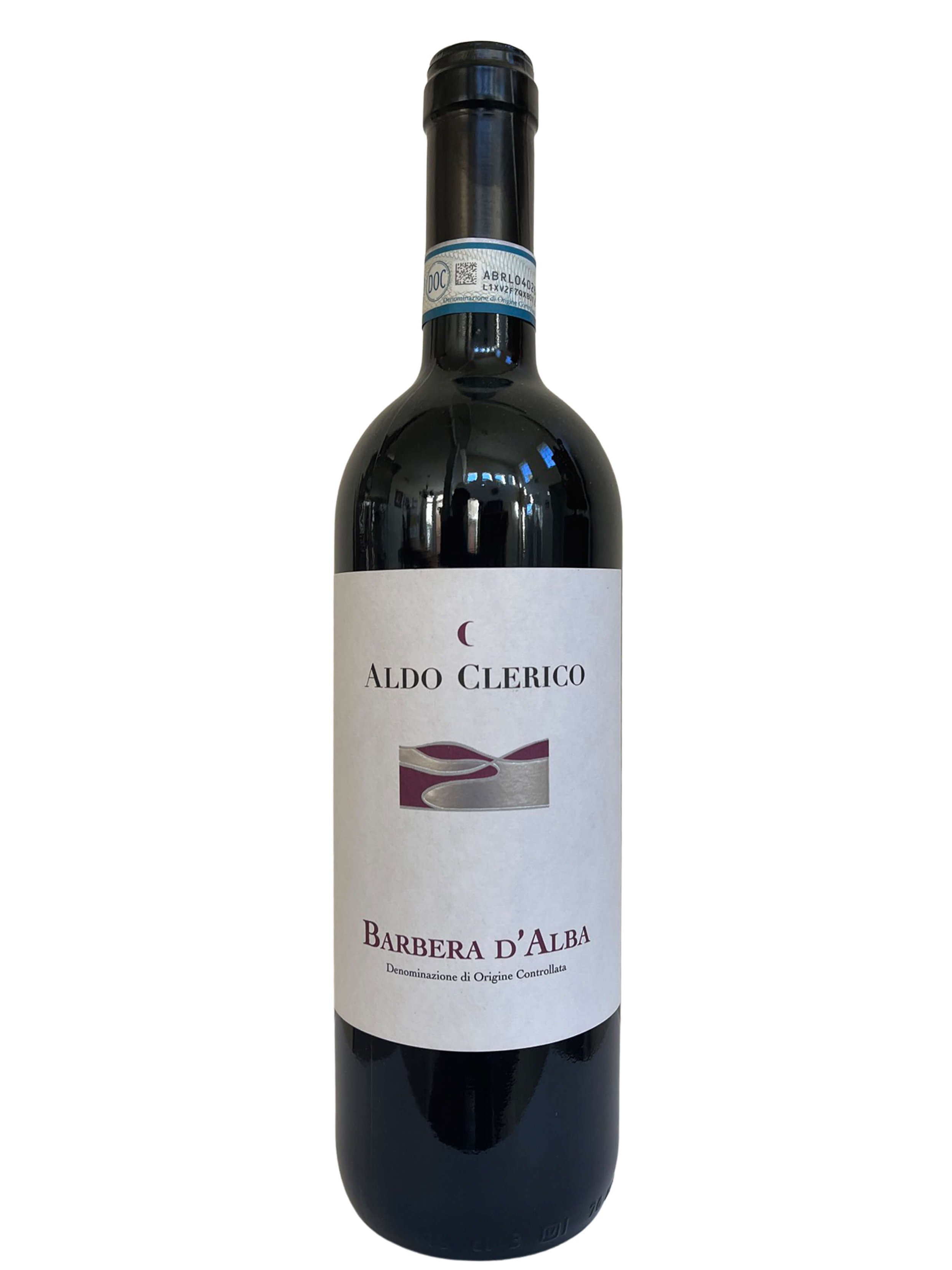
A really good, soft and fleshy Barbera from Alba, from a single vineyard located in the Barolo designated wine region, one of the best areas for Barbera. Nice acidity and fruitiness with some spice, thanks to 14-16 month aging in new and used oak.
A very balanced and elegant wine on the nose, and a good body and structure on the palate with a pleasant and vibrant acidity. A rounded wine with fresh yet fruity notes that finish with a creamy texture thanks to the oak barrel aging.
Do you want to regularly purchase this wine? Check out the Subscribe and Save option available HERE!
Tastes Like: Pretty, ripe, dark cherries
Farming & Winemaking Highlights: Biodynamic | Native Yeast Fermentation | Single Vineyard
Fun Facts: With its aging, this Barbera d’Alba technically follows guidelines for a Barbera d’Alba Superiore, but winemaker Aldo Clerico decides to declassify it.
Wines for Southern Cuisine and BBQ
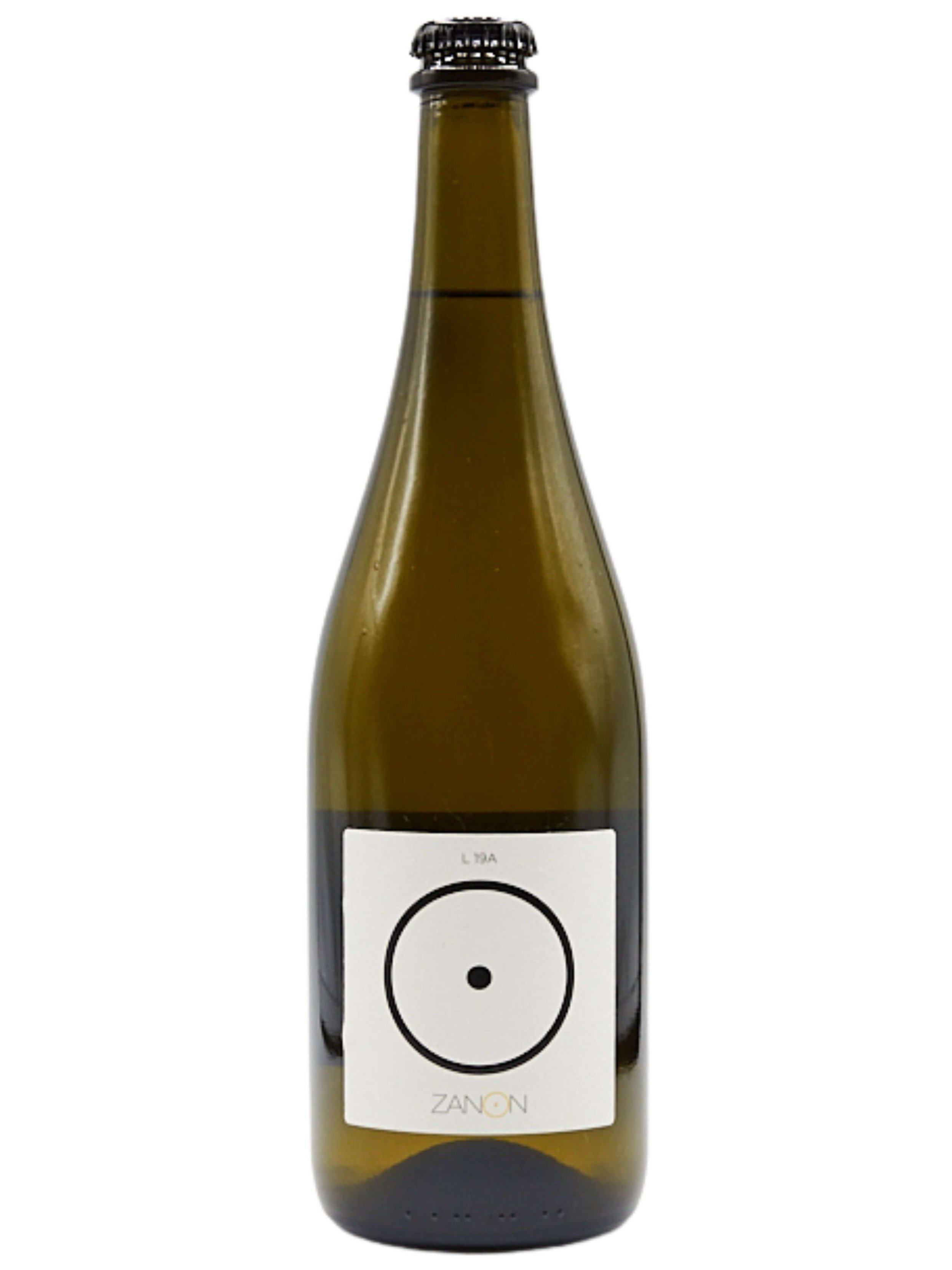
A 100% glera grape white sparkling wine made with native yeast fermentation, this natural wine vintage “prosecco” is from vineyards in the old part of Valdobbiadene, made also in the historic tradition of the ancestral style, or Pet Nat, as it is bottle fermented on the lees. A light color, giving an early hint to its bright acidity, the bouquet of citrus and lemon flowers bursts forth in the glass once it opens. When tasting this ancestral method natural wine, apricots and persistent bubbles create a sparkling wine that is enjoyable with brunch, aperitivos , get-togethers, you name it.
The circle and dot logo represents both the human existence and evolution, as well as winemaker Eros Zanon’s personal view of his vineyards, a dot of small-production boutique quality in the larger circle of large-production Proseccos.

The flavors that take center stage in this unoaked Gewurztraminer will remind you of a tropical fruit drink: think pineapples, ripe peach, nectarine, honey, and dried raisins.
The expressive yet balanced aroma hints at this sweetness with notes of candied lychee and rose hips, with the warmth of cloves and cinnamon. Made from the gewurztraminer grape, in the Czech Republic it can sometimes be called “red traminer”, and is characterized by its more pronounced residual sugar and vibrant character.
From a winery called “Best in the Czech Republic” for multiple years in a row, this wine is farmed organically in a local national park.
Tastes Like: Honey coated peaches
Farming & Winemaking Highlights: Regenerative Agriculture | Sustainable Winery | Organic
Fun Facts: On this label is a praying mantis, an insect that is found in the national park, where these grapes are grown.

A fun and fruit-forward red wine, Ascoltati offers an immediate burst of juicy strawberry and floral notes, reminiscent of fresh strawberry juice and a hint of lavender. With a medium acidity and very low tannins, this "glou glou" style wine is deliciously drinkable but still finishes clean with a distinct mineral character. Crafted by Foligodia, this low-alcohol blend of Merlot, Rondinella, and other grapes is a perfect wine for any occasion and is particularly refreshing when served chilled.
Region: Italy > Lombardy > Mantova
Tastes Like: Strawberry Juice
Farming & Winemaking Highlights:Regenerative Agriculture | Sustainable Winery | Biodynamic | Native Yeast Fermentation | No additives | No Sulfites added | Unfiltered | Organic | Natural Wine
Fun Facts: The name ascoltati means “listen” in Italian.
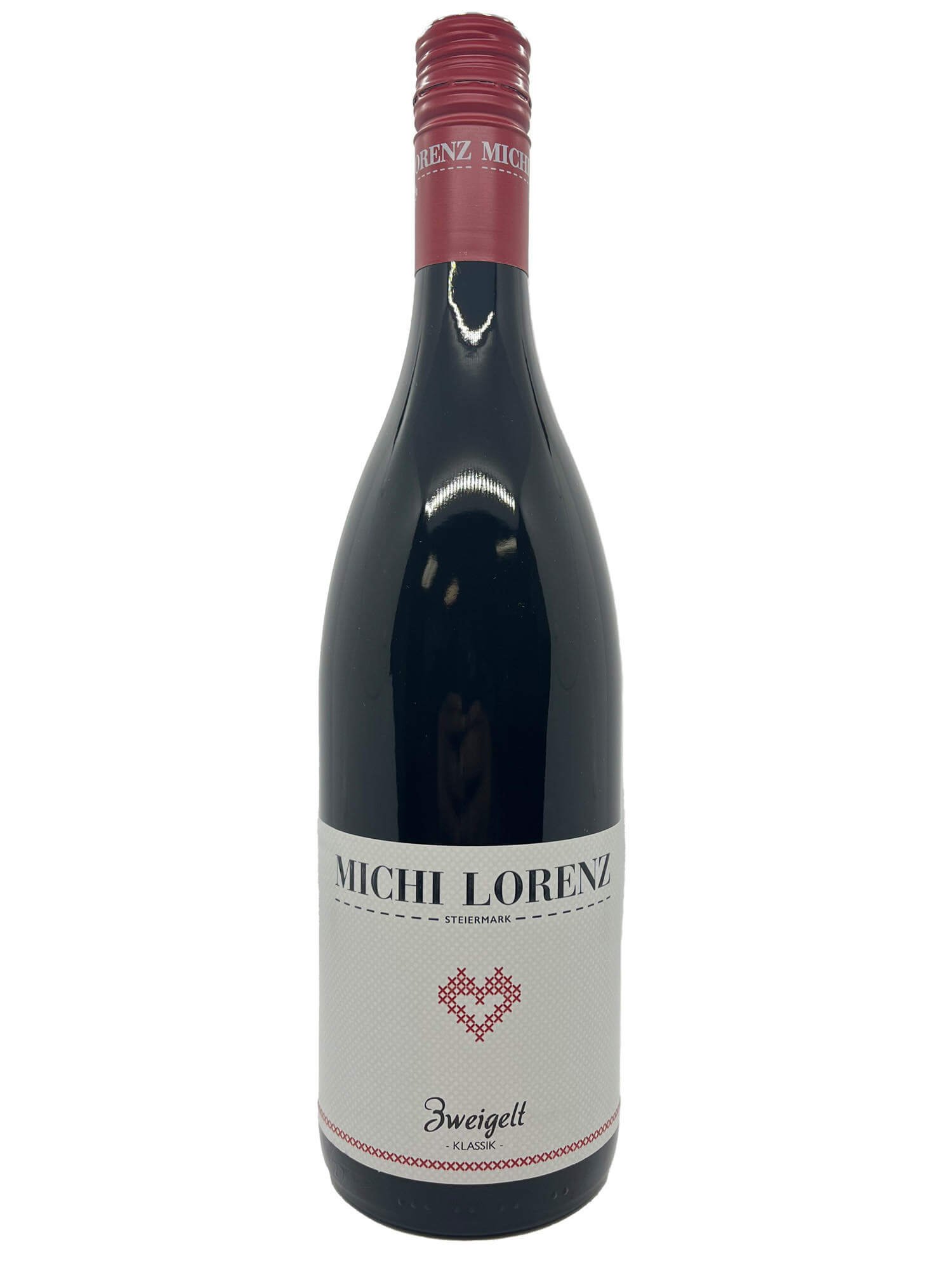
The organic and biodynamically farmed fruit was handpicked from estate hillside vineyards 400 meters above sea level in Sausal. Soils are red schist and loam. The wine underwent native yeast fermentation. After 25 days of maceration on the skins, the wine aged in a combination of stainless-steel tanks and oak barrels with very minimal sulfites added.
The first sniff of this quaffable Zweigelt natural wine is amarena cherries which then leads to vanilla and spice. In the mouth it is fresh with fruit that hides behind the structure and chalky tannins. It has nice texture and a medium slightly bitter finish. It is easy drinking and pairs great with hamburgers.
Wines for Indian Cuisine

Do you remember loving fruit cocktail as a kid? If so, then this wine is for you!
From the Thaya estate winery in the Czech Republic, aromatic, white wine is made from moravian muscat, and a cross between muscat ottonel and a rare Czech grape, prachtraube. Its lively acidity matches so well with 5 grams/liter of residual sugar, that it practically hides the extra natural fruit sugars, making it a white wine that both dry and sweet wine drinkers would enjoy as it is well balanced between the sweetness and acidity. It has intriguing aromas of lavander, honeysuckle and chamomile and a citrus/grapefruit taste reminiscent of a Sauvignon Blanc. If you like Moscato and Sauvignon Blanc, try this!
Stainless steel fermentation and aged for 6 months in stainless steel before bottling.

Uni is a stately, rich, complex yet easy drinking apricot & umami essence of a wine that is super small production.
Coming from the wild part of Tuscany, Maremma, the La Maliosa farm carefully crafts their 00 wines (nothing added, nothing removed: only fruit) prioritizing local traditional grapes , like procanico, the hyper local grape used to make this orange wine. Macerated for three weeks on the skins, Uni then ages for seven months in stainless steel tanks.
This natural wine comes from 100% volcanic, old vine procanico, the ancient grape native to Maremma Tuscany, a relative of trebbiano. The rare Tuscan volcanic soils of Pitigliano, where the old vineyard is, give depth and minerality to this wine that naturally expresses fantastic floral, herbal and spice flavors, like lavander and sage and turmeric.
Tastes Like: Apricot nectar with umami mixed in
Farming & Winemaking Highlights: Regenerative Agriculture | Sustainable Winery | Biodynamic | Native Yeast Fermentation | Vegan | No additives | No sulfites added | Unfiltered | Organic | Metodo Corino | Natural Wine| Single vineyard | Old Vine | Volcanic
Fun Facts: If you were to ask La Maliosa's founder and visionaire, Antonella Manuli, which is her favorite wine, Uni wins hands down. Why? You have to taste it and then you'll get it.
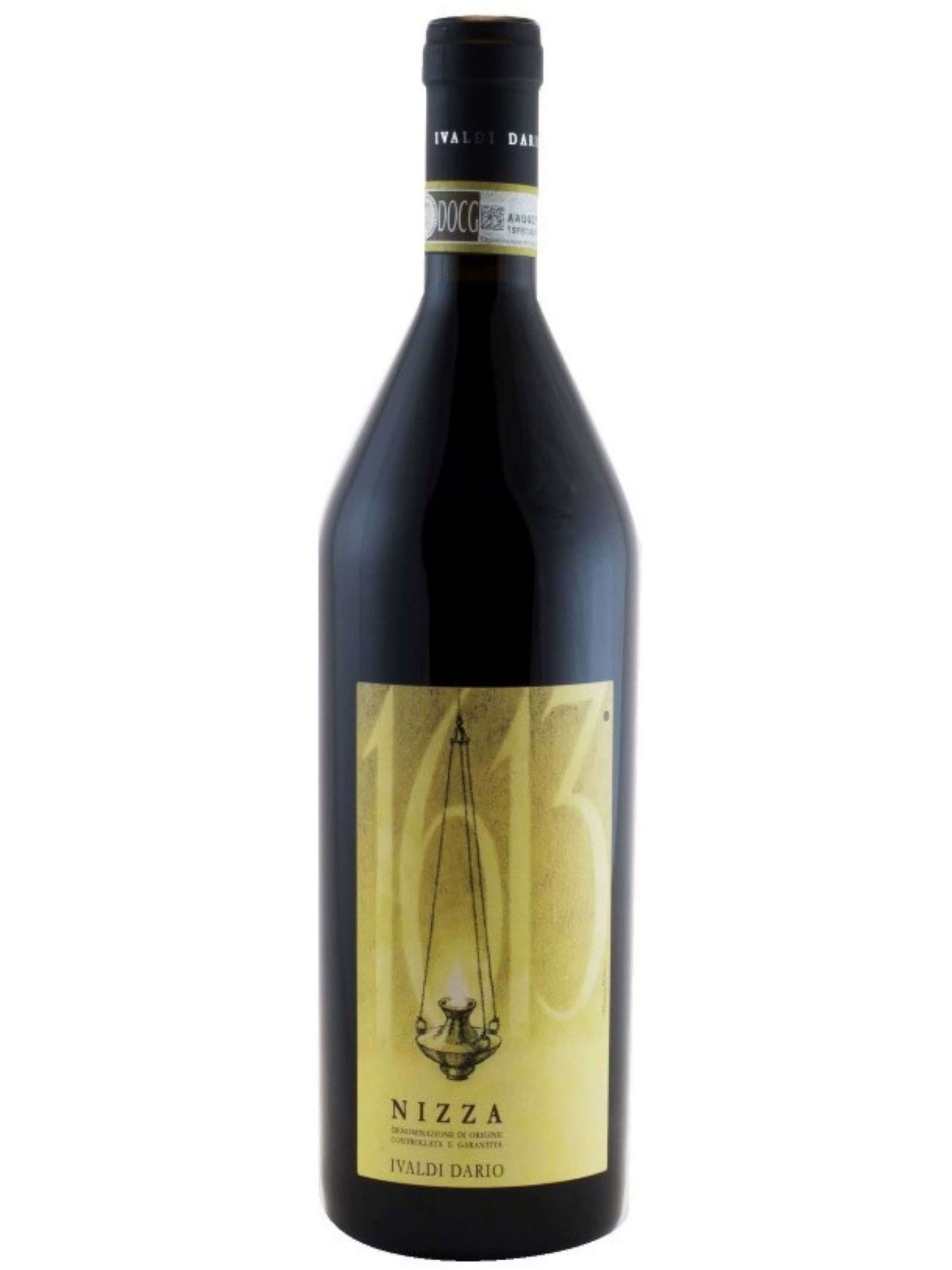
Nizza is the Barolo of Barbera, made from the birthplace of Barbera, Nizza Monferrato, the home of the 4th generation winemaking family, Ivaldi, and place where this wine is grown and made. This Nizza Barbera is a delicious old world style red wine with a rich cherry taste and an incredible mouthfeel.
This Nizza DOCG is made only in the best years, always made with 100% Barbera grapes, but only the best of the best of the Barbera clusters goes into this wine, before it spends 12 months in Slavonian oak barrels then 2 years resting in the bottle.
Made with native yeast fermentation, on the skins for 15 days. it has a pretty ruby red color with garnet reflections. A fruity bouquet transforms into spicy notes as it opens, and on the palate this wine has nice tannins and acidity balanced by a robust body.
The name of this red wine, 1613, is a homage to the siege of Nizza Monferrato in 1613 by the Mantovan army, showing the strong roots the Ivaldi family has to their home town. The women gathered to pray all night, and after the siege was lifted and won by Nizza Monferrato, an oil lamp in the church spontaneously burst into flames, despite the lack of spark and oil. Known as the ‘Miracle of the Lamp’, this wine pays homage to that evening, bearing not only the year as a name, but the image of the oil lamp on the label.
A certified sustainable winery, Ivaldi Dario practices regenerative farming.
Wines for Thai Cuisine
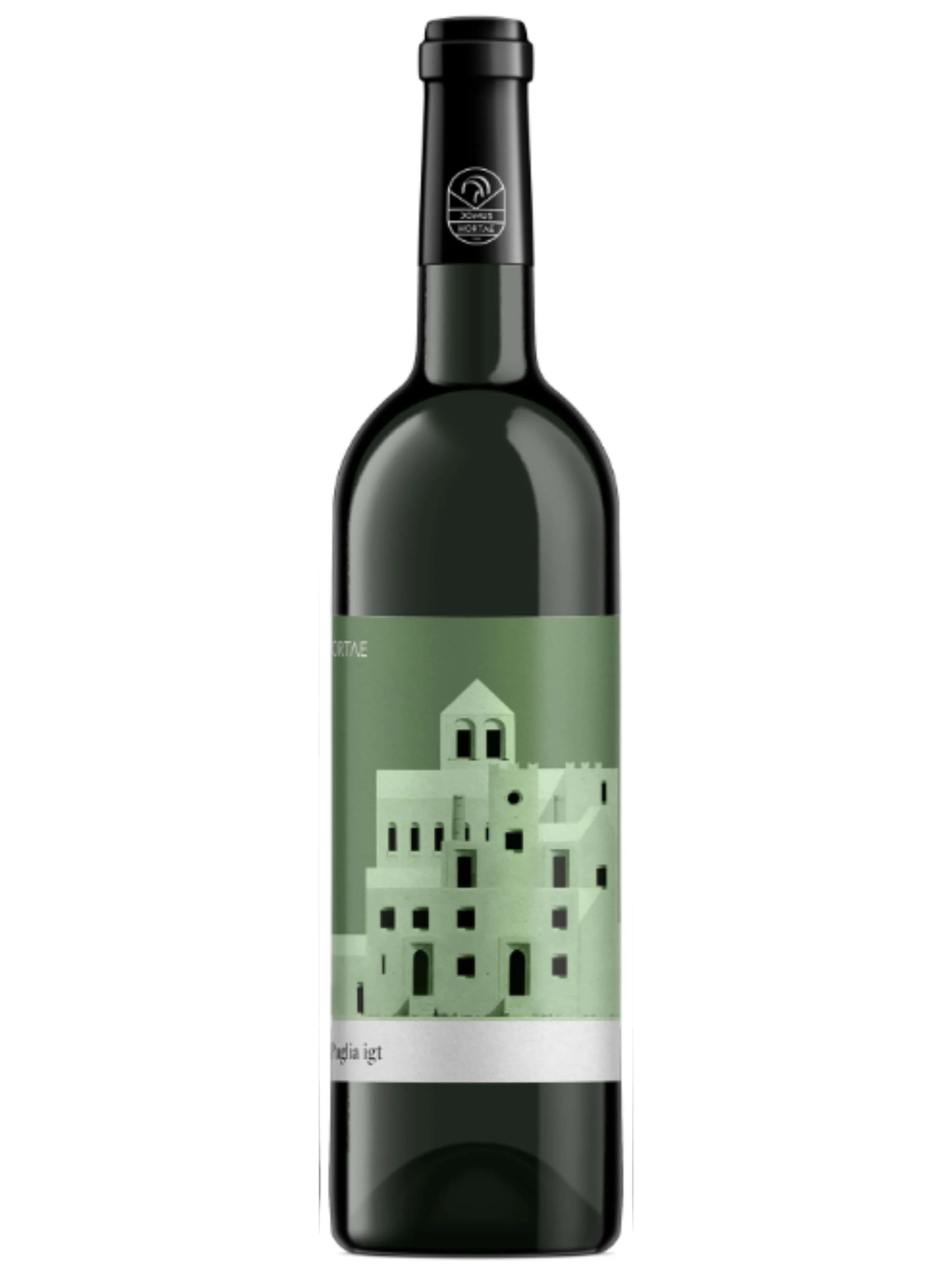
Ti estì means in the local Greek dialect 'what is this?' which gives you a clue about this wine. It is a monovarietal made by the Minutolo grape, which is an aromatic white grape grown in Puglia, Southern Italy, since 1200. Despite it being made in stainless steel, 'spicy' is a word to describe this white wine. The bouquet is intriguing, with white flowers, lemon and citrus candy and a hint of herbs. On the palette, tropical fruit flavors stand out, like lychee and banana.
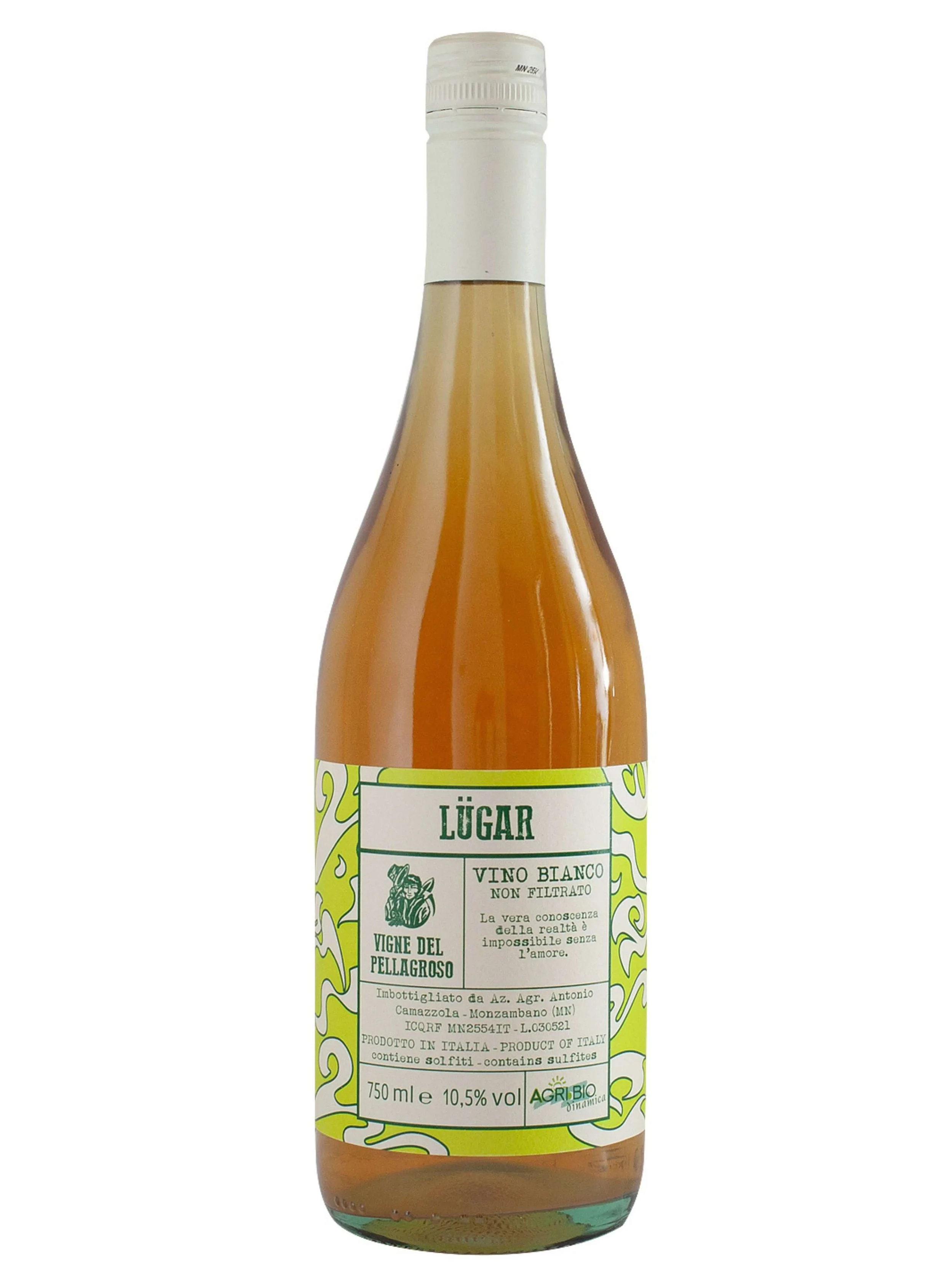
A fruit-forward and complex orange wine, Lugar immediately delights with flavors of tart peaches and a nose rich with exotic citrus and satisfyingly complex notes. This thirst-quenching character comes from a unique blend of Riesling, Garganega, and Moscato grapes grown in three different vineyards. Aged in cement with five days of skin contact, this serious orange wine achieves a notable acidity that is in full harmony with its flavors, leading to a long, clean, and saline finish. The wine presents an intense yellow color with striking green reflections.
Region: Italy > Lombardy > Mantova
Tastes Like: Tart peaches
Farming & Winemaking Highlights: Regenerative Agriculture | Sustainable Winery | Biodynamic | Native Yeast Fermentation | No additives | No Sulfites added | Unfiltered | Organic | Skin Contact Orange Wine | Natural Wine
Fun Facts: The name “lugar” refers to a type of small green lizard that lives in the vineyard.
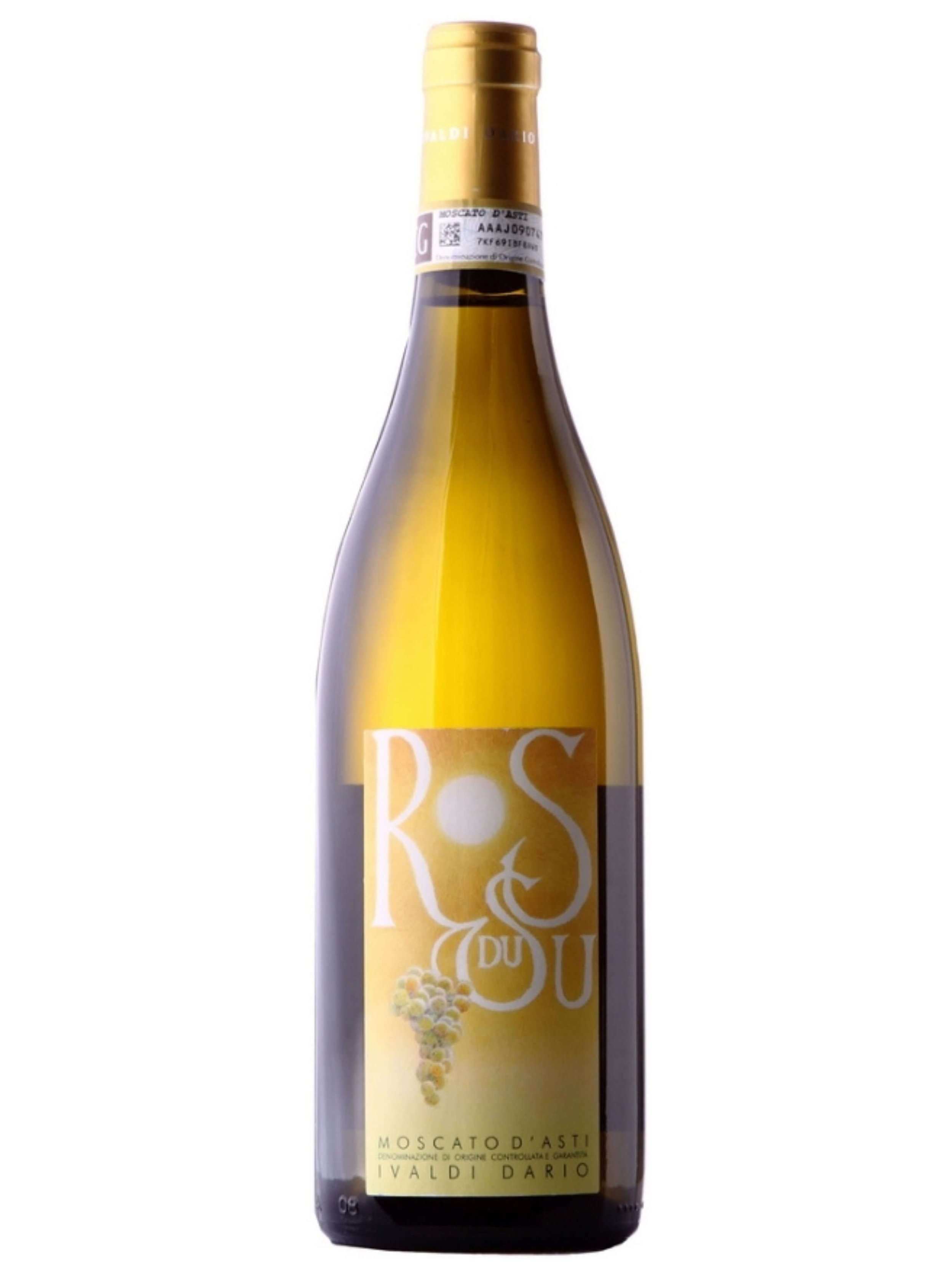
Who doesn’t like chamomile and honey? That’s what this wine reminds you of! It’s a Moscato d’Asti that appeals both to sweet wine lovers and dry wine drinkers wanting a moment with a touch of sweetness.
The name of this wine, Ros du Su, means ‘Rays of Sunlight’ in Piemontese dialect where this Moscato d’Asti comes from. Looking at its bright, golden-yellow color, it is easy to understand the inspiration for this name.
In the glass, the aromatic qualities of moscato are the first noticeable aromas, but underneath subtle and persistent notes of honey and acacia and chamomile flowers come forth creating a complex bouquet. Tasting, the sweetness of the residual sugars are well balanced with freshness and sapidity. A pleasant wine that keeps you sipping, it pairs well with desserts, but is every bit as enjoyable alone in contemplation.
A certified sustainable winery, Ivaldi practices regenerative farming.
Wines for Korean Cuisine

A rare find, this Famoso is made with fruit from the original vineyard of the Montalti farm in Monte Sasso where the Famoso di Cesena varietal was re-discovered in 2000 when two rows of old vines were found by a local farmer.
It is semi-aromatic with has aromas of lemon and a hint of flint, it has laser-like acidity, with tangy citrus fruit flavors and herbs, great texture and a lemon mineral finish. Limited production of 5000 bottles / yr
What other sommeliers are saying about this wine:
Ruth Ryberg:
“Wow is this cool! A grape I haven’t had before called Famoso! If it was a blind tasting I would’ve called out Chablis for the searing acidity and the chalky finish. Yum! The nose is all fresh picked apricot and lemon spray, with subtle hints of honeysuckle and marzipan. A zippy zesty mineral on the finish comes right back round to apricot and lemon! Lip smacking and fresh. Just perfect.
I’ve mentioned Braschi before. It’s a small, family owned winery in Emilia Romagna, and has been under the same ownership since 1949. Everything they make is outstanding! Located along the ancient Roman road - Via Romea Germanica - just north of Tuscany, Cantina Braschi is nestled in the hills of Romagna. The wines are first class from this family owned, small producer.”

From the woman owned natural winery Foligodia, Metamorfosi is a complex orange wine that tastes like biting into a tart apricot. This fruit-forward wine gets its distinctive character from skin contact, and it's crafted from a blend of Chardonnay and Malvasia di Candia grapes.
Region: Italy > Lombardy > Mantova
Tastes Like: Like biting into a tart apricot.
Farming & Winemaking Highlights: Regenerative Agriculture | Sustainable Winery | Biodynamic | Native Yeast Fermentation | No additives | No Sulfites added | Unfiltered | Organic | Skin Contact | Natural Wine
Fun Facts: The name metamorfosi means “metamorphisis” in Italian.
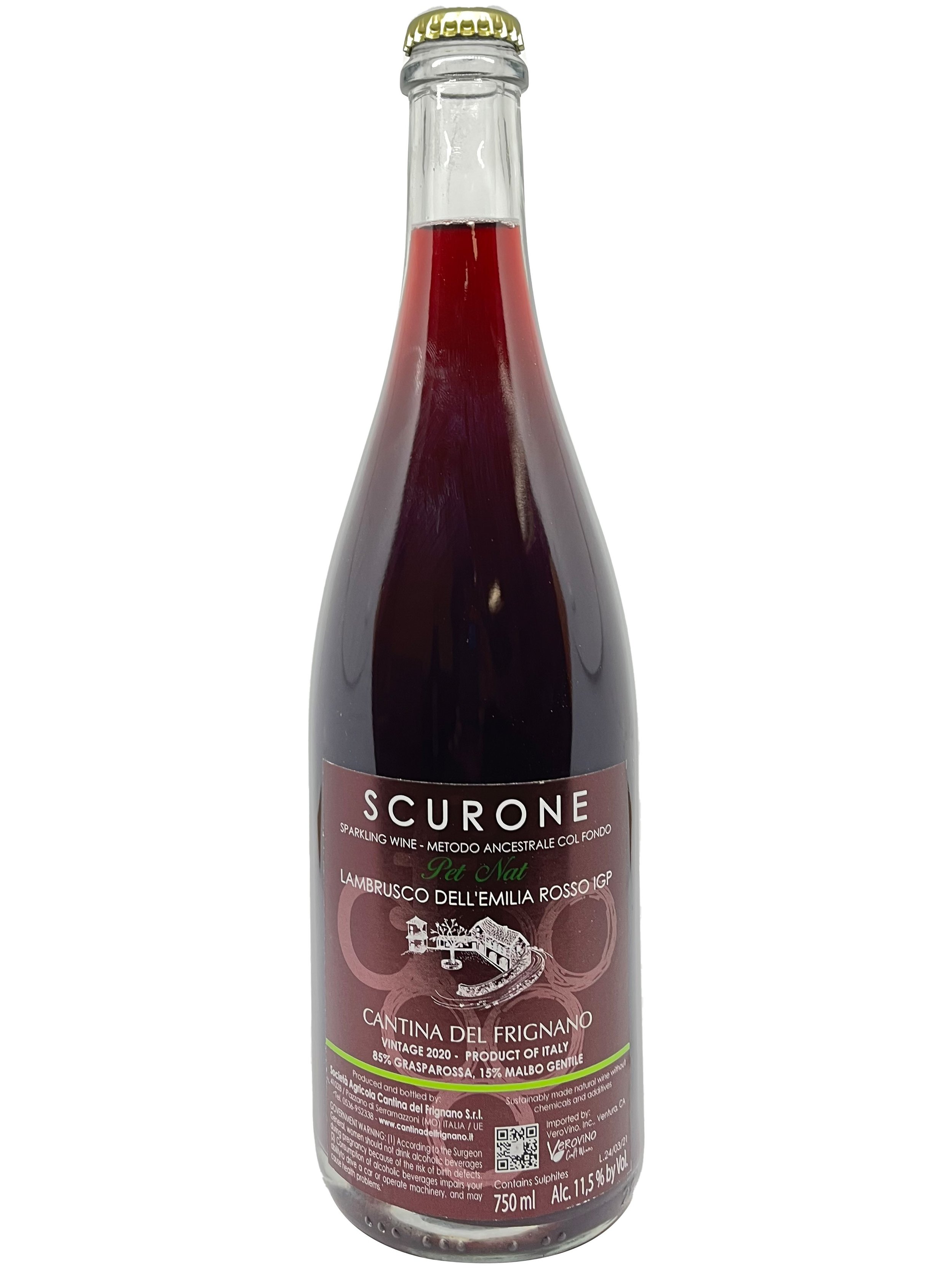
This is an ancestral method Lambrusco made primarily with the Lambrusco Grasparossa grape, and with some Malbo Gentile grape, which is local to the area of Frignano in Modena. It is a lighter red ruby color, light effervescence, a nose that has red fruit with hint of orange peel. It is fresh and fruity, with plum taste, and grippy tannins and noticeable texture.
Wines for Sichuan Cuisine
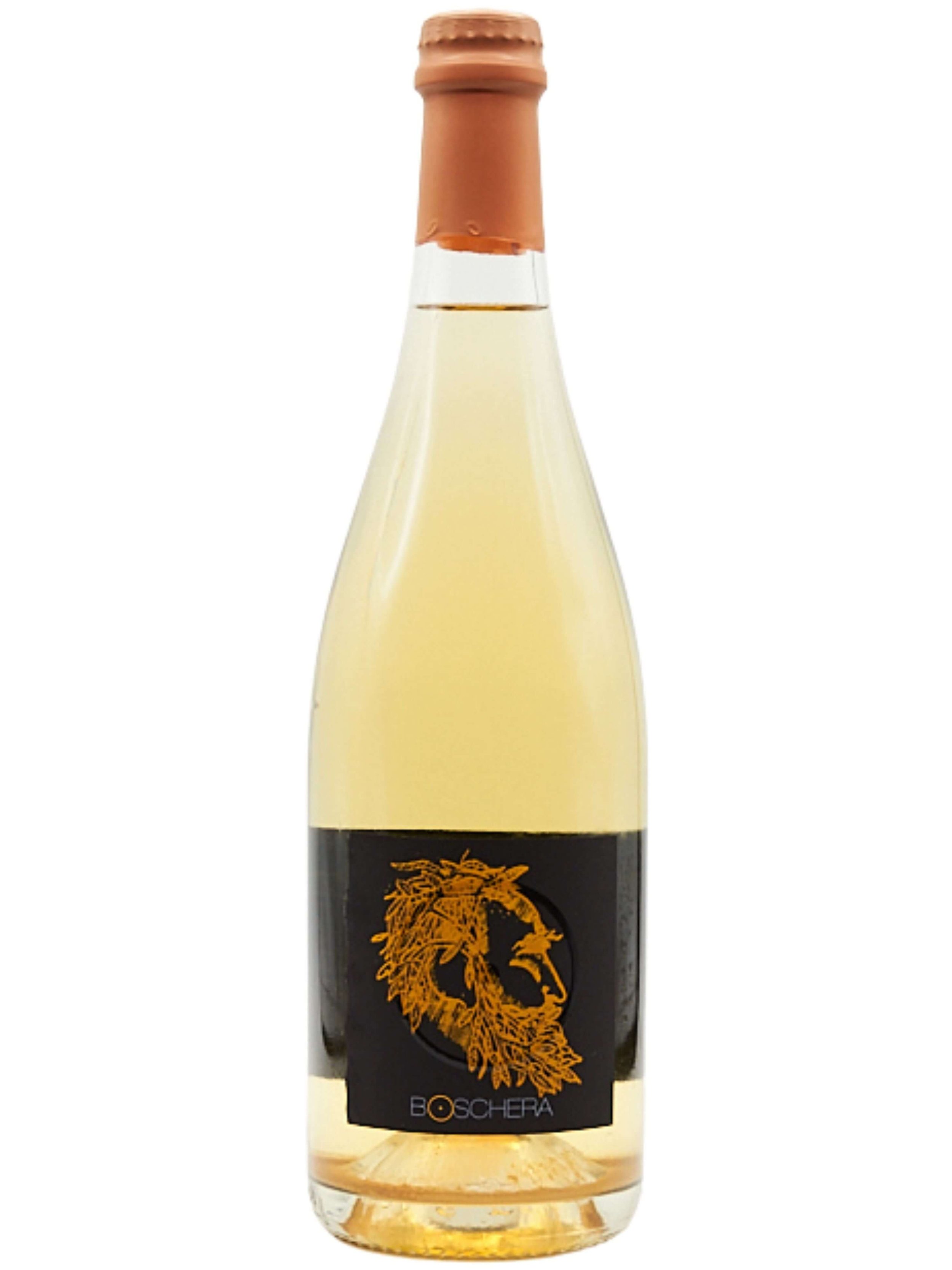
This is an unfiltered sparkling wine made similar to the champagne style from a rare grape called Boschera, native to Veneto, Italy where there is less than 20 acres in the world! We were the first to import this grape into the US!
Compared to the Prosecco grape (Glera), Boschera is more complex, and in fact this wine has been aged for over 3 years in the bottle on the lees.
With 2 days of skin contact giving it a deep yellow color, this native yeast fermented natural wine is then refermented with its native lees and then undisgorged, so it is unfiltered and continues to age on the lees too, allowing it to become more complex over time.
You can say it is a vintage & aged ancestral method, or Pet Nat style, also called Col Fondo in Italian since it is on its lees. It has herbal, nutty and yeasty aromas and savory taste with a long saline finish. Pairs with many foods & throughout the meal, from appetizers to main course.

Woman made Saturnalia Bianco, on VinePair’s list of Top 15 Best Orange Wines, is an award winning, unfiltered and delicious skin contact orange wine made from old vine procanico & trebbiano grapes cultivated in volcanic soil.
This natural wine is made from the patented Metodo Corino, based on regenerative farming principles. Nothing is added but grapes! Made with unpressed, free run juice with native yeast fermentation. A two week maceration imparts a dark amber color. Aged only in stainless steel tanks, it has aromas of candied fruit, dried apricot and ginger.
It has pleasant acidity and tannins, and is balanced with a long finish. A pretty deep orange color, it is a great wine for difficult food pairings, it pairs with almost any dish.
Tastes Like: Apricot nectar and chamomile
Farming & Winemaking Highlights: Regenerative Agriculture | Sustainable Winery | Biodynamic | Native Yeast Fermentation | Vegan | No additives (ie non sulphites added) | Unfiltered | Organic | Metodo Corino | Natural Wine
Fun Facts: - The natural farming method that produced this wine, the metodo corino, is actually patented by La Maliosa woman winemaker Antonella Manuli after she helped to develop it with natural wine legend Lorenzo Corino of Case Corini.
- Named in honor of the Roman festival in December which took place near the winery, La Maliosa, this wine was once called Saturnia Bianco.
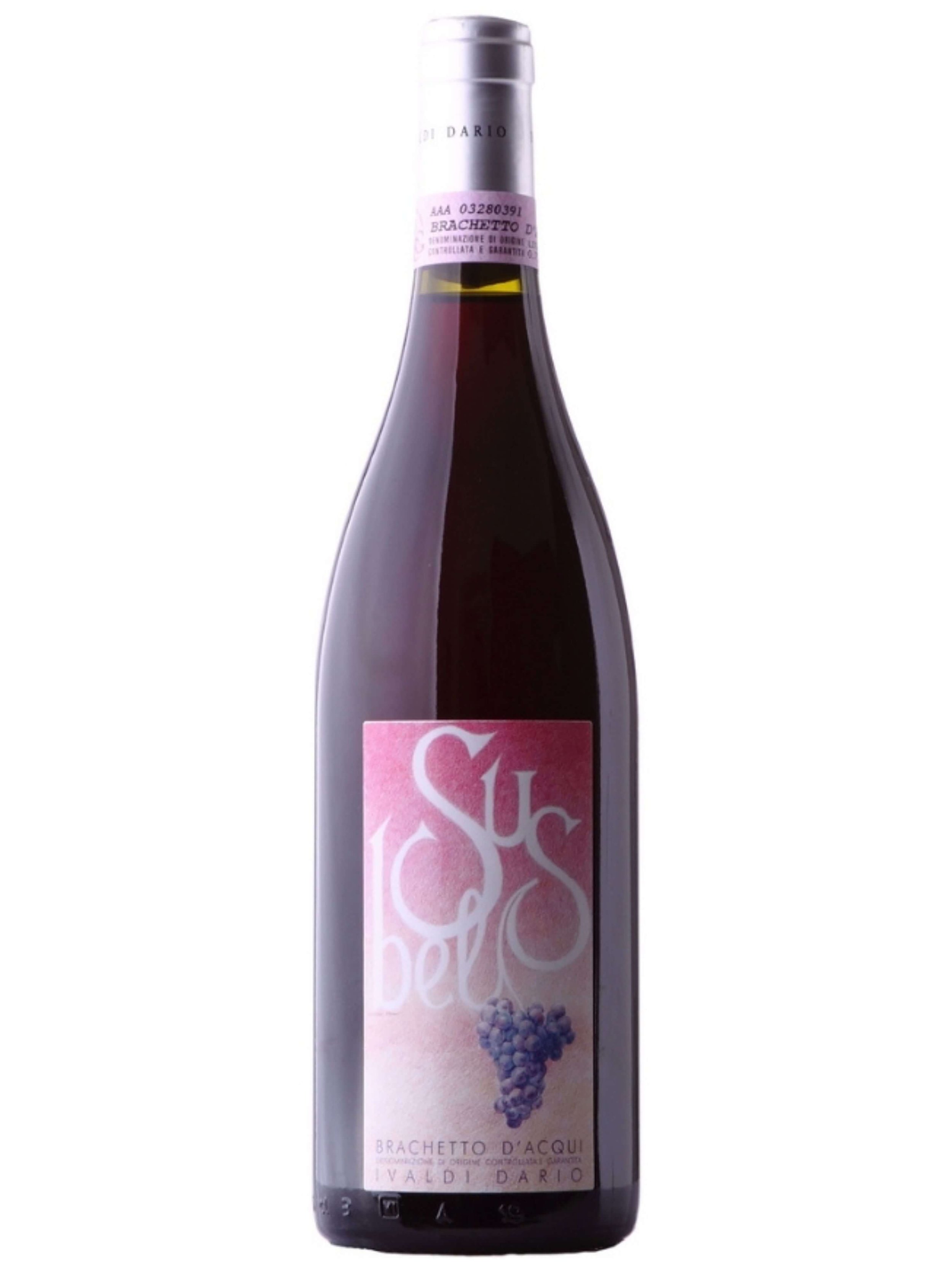
“Can we make Brachetto popular, please?” is how VinePair headlines why this artisanal, aromatic red sweet sparkling wine, just recently imported by us first time to the USA, made it to VinePair’s list of 13 Best Sweet Wines.
An aromatic grape, brachetto, creates a pleasantly slightly sparkling sweet red wine, with delicate rose flower and strawberry notes and strawberry and hibiscus taste. ‘Susbel’, in the local Piemontese dialect of Ivaldi in the Monferrato, refers to the location of the vineyard of this Brachetto d’Acqui, where the sun is bright and well exposed.
Left four days in contact with the skins and fermented with native yeast, this natural wine has a bright and clear light red color, dotted with fine effervescent bubbles. Sipping, the immediate impact is indeed sweet, yet with enough acidity and a hint of tannins to create a harmonious and balanced wine that keeps you coming back for more.
Wonderful to serve slightly chilled to sip with friends in the backyard on a hot summer day, or to serve with fruity desserts. Try pairing it with white or milk chocolate or a savory cheese, like with Humboldt Fog goat cheese - it goes incredibly well. It can also pair with charcuterie. Made with native yeast fermentation and has a residual sugar of 120 g/l.
A certified sustainable winery, Ivaldi Dario practices regenerative farming.