The Palate of a Winemaker
In the first part of this winemaker interview series, we talked to several winemakers about the deep-seated traditions and familial legacies that form the bedrock of their wineries. Now, we shift our focus to the individual artisans behind the bottle. After all, what happens when a winemaker goes out to a restaurant, and they want to try something other than their own wine? We mean, winemakers have an intimate view and understanding of what it takes to make a good wine, so that means they should be excellent judges of what actually is a good wine. So we went back to the producers, asking them about how they taste wines, and what some of their favorites are, and their answers were surprising! After all, when surrounded by some of the world’s finest wines, what bottles can pique one’s interest?
Following are answers we received from seven Vero Producers: Aldo Clerico from the Langhe, Alberto Pagliantini from Canalino in Montalcino Tuscany, Bruce and Gretel from Clos des Amis in California, Davide Febo from Abruzzo, Andrea Ivaldi from the Monferrato, Guido Corino from Case Corini, and Hilde Petrussa from Vigna Petrussa in Friuli Venezia Giulia.
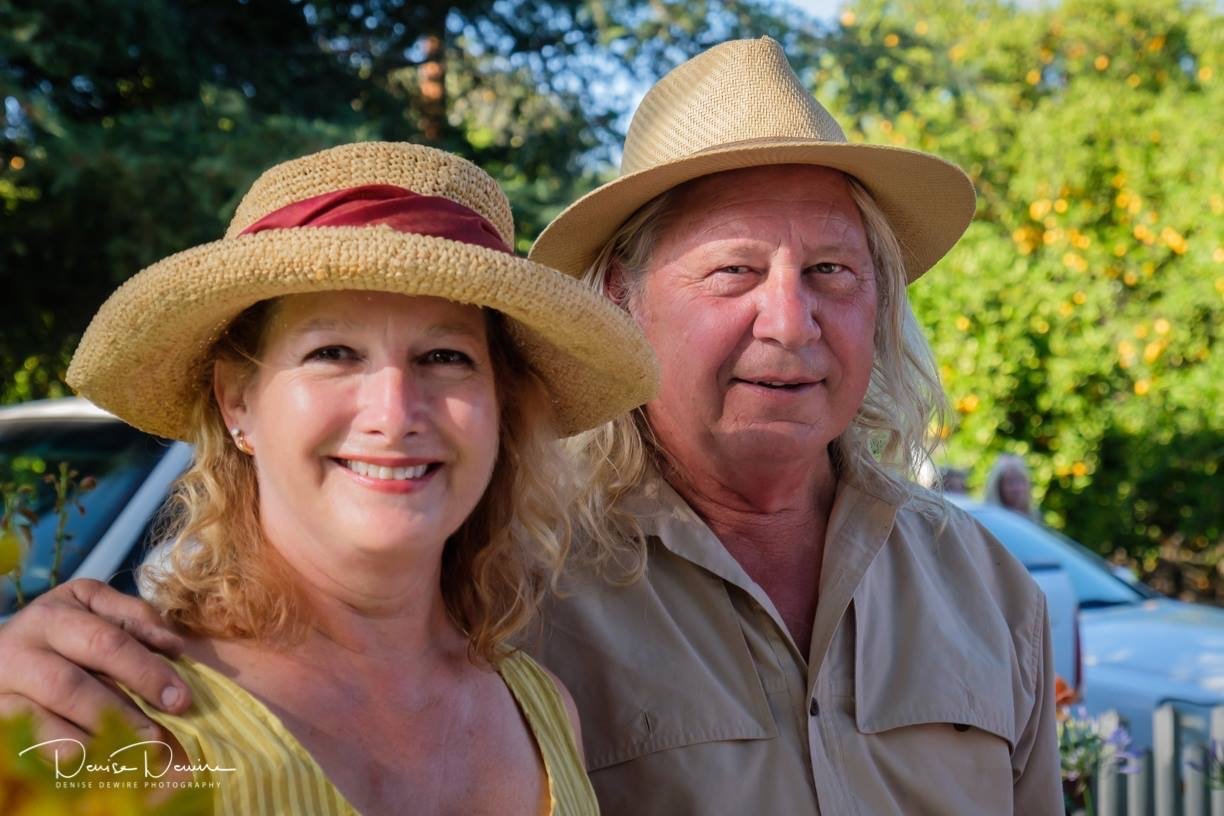
Gretel and Bruce of Clos des Amis
Evaluating Wine
There are fewer wine professionals more experienced in wine tasting in the world than the producers themselves. However, when they taste, it is often to analyze their product, to figure out how the wine is evolving, aging, or drinking. So how do they do that? How do they judge, evaluate, and critique a wine?
How do you evaluate a wine when you taste it? For example, do you use a certain technique, do you give a “rating” etc.?
Aldo Clerico: I have no specific technique to winetasting. I believe that you either like the wine or not, to put it very simply. When I taste a wine, I think: Do I like it? Does it have defects? Would I want to enjoy another bottle? Would I recommend it to a friend? Very simple questions; in the end, wine can be made in any way, but it must be a pleasure to enjoy.
Alberto (Canalino): When winetasting, I adopt a technique that I have acquired over the years. I don’t score or rate the wine, rather I observe the color and its intensity, then I determine the density by observing the internal drips of the glass, and lastly I evaluate the bouquet and taste, thinking about the aftertaste and finish.
Bruce (Clos des Amis): I look for balance and interest.
Gretel (Clos des Amis): I definitely don’t give it a rating. I want a wine to elevate the moment so I can be in that moment.
Davide (Febo): I believe that there is nothing more wrong than giving a score to wine. You can not reduce everything to a number. There are too many things to consider, human work, experience, vintage, soil, type of processing in the cellar, aging container, and I could go on. How do you reduce everything to a number or to pre-established evaluation rules?

Guido Corino of Case Corini tasting wine with us at the family winery.
Andrea (Ivaldi): I do not use numerical scores. I prefer to express my judgement with statements, such as “it was very good, but it lacks tannin”. So, I do not assign votes, but I prefer a more descriptive and open approach to wine evaluation.
Guido (Case Corini): I am not a big fan of tasting techniques and even less of evaluations. I think appreciation is very personal, and I respect the "tastes" of each of us.
Hilde (Vigna Petrussa): I do not like to give scores. I use visual, olfactory and gustatory parameters to give a an overall evaluation.
What do you look for in a wine to make it stand out? For example, what are the typical characteristics or standards you use to evaluate a wine you taste?
Aldo Clerico: If the previously mentioned criteria are all answered yes and I am satisfied, for me that means it is a good wine.
Alberto (Canalino): I want to see good color, taste and pleasantness during a meal.
Bruce (Clos des Amis): Something that makes me wonder what is going on in this wine, what faults does it have or why is it so wonderful.
Gretel (Clos des Amis): I want fruit, interest, balance.
Davide (Febo): I try to contextualize every wine with the territory. I try to evaluate how it expresses itself, its balance while tasting, and over time I realized that it is really all relative. The aspects that matter most to me are consistency with the vintage, with the identity of the territory of origin, the wine must tell a territory, this for me is fundamental.

Davide Febo and his family enjoying a glass of wine in the vineyards.
Andrea (Ivaldi): I do not know why, but I feel like when you taste a wine, it seems that everyone – oenologists, consumers, journalists, sommeliers – try to find a defect. “This is missing”, maybe “it's too sweet with too little acidity”... it’s as if we have to make perfect wines at all costs. Often, we do not consider the vintage or the climatic conditions in which the grapes were grown, and pass unreasonable negative judgments. Instead, I feel we should be more open and consider the context. Sometimes, I have tasted wines that I did not know and judged them badly, but then I discovered that the year there had hail or was very cold, and therefore, for that vintage, that wine was actually excellent. In general, in white and red wines, I look for liveliness, a little acidity, and balanced tannins. I do not like flat or too tannic wines, nor those that taste too much of oak or wood. I mean, everyone has their own tastes, and evaluating a wine is difficult. Yet, if I know the DOC and the grape well, like a Barbera or a Nebbiolo, I feel I can be more or less objective. However, if I taste an unknown wine, I can only say if I like it or not subjectively.
Guido (Case Corini): For me wine is something unique, linked to the territory, to the people who produce it and to the moment in which it is tasted. The most important condition is that it is good, authentic and that it is remembered beyond the simple tasting.
Hilde (Vigna Petrussa): I evaluate multiple characteristics together: starting with the aromas, then the mouthfeel, the elegance, and finally the overall drinkability.
What characteristics and situations do you strive to avoid in tasting your wine?
Aldo Clerico: When tasting, I strive to not be biased.
Bruce (Clos des Amis): I like to avoid in my wines any commercial blandness.
Gretel (Clos des Amis): I don’t want anything that keeps me from tasting the honest grape.
Davide (Febo): Tasting, I try to keep calm. I'm kidding of course, but I believe that every producer, with their own wines, has a significant emotional connection. With my minds, I know everything about the wine I taste, how it was aging in the tank, how it improves, how maybe right after bottling I find it less expressive yet a year later I find it at the peak of expression. Every time I make and I taste one of my wines I try to contextualize it with its past and its journey, but above all I try to respect it.
Andrea (Ivaldi): I avoid tasting my wines in the cellar because the smells of the environment can confuse all the aromas. I prefer to take it to a friend's house or to a laboratory, where repeated tasting in the same room will not alter my perception of it. In the cellar, there is a risk of not sensing aromas that in a neutral environment would be more evident. So, I prefer a neutral place, where the aromas and potential defects emerge more clearly.

Alberto of Canalino, tasting his wines in the cellar.
Guido (Case Corini): Perhaps I would avoid being alone.
Hilde (Vigna Petrussa): I try to avoid subjectivity. I taste it as if it were a wine made by others, analyzing it objectively.
Playing Favorites
Ok, so now we have an idea how a winemaker tastes their wine, and how the evaluate (or don’t evaluate) what they are tasting. But what about their true subjective preferences? What is a winemaker’s favorite… and more importantly, when they have a choice to sip… what do they choose?
What is your favorite wine to make, and why? What is your least favorite wine to make and why?
Aldo Clerico: Nebbiolo-based wines are my favorites to make because I like the characteristic tannins typical of this grape variety. However, I cannot say which is my least favorite to make as all of my wines are like children for me producer and I like them all.
Alberto (Canalino): My favorite wine to produce is Merum (a Rosso di Montalcino Riserva) because it always very pleasant to drink and a fabulous wine. My least favorite is the Rosso di Toscana just because it is too simple to produce.
Bruce (Clos des Amis): I prefer to make clean terroir-driven wines; reds that capture power and whites that display elegance. I don’t know about least favorite wines, as even making an unsuccessful wine is a learning experience, a challenge to understand the grape.
Gretel (Clos des Amis): White wines are a lot of work, but I’m a white wine fan so I find the extra work of filtering and dialing in acidity to the exact balance is worth it. For Reds, I’m a Rhône girl and I love grenache. In winemaking, I love sitting with cylinders and creating the perfect blend. Least favorite wines, well so far I haven’t made a Zin that has the nuance I am looking for, but hoping to work with some grapes in a small local vineyard to make that happen.
Davide (Febo): Let's say that it is easier for me to answer which wine I have more or less difficulty with in the harvest, rather than “favorites”. There are a thousand considerations to make. The most difficult wine to produce is probably the Cerasuolo: it is not easy to find the right balance between freshness and structure, body and depth of the sip, not to mention the color. Instead, the wine where I struggle less is the Motepulciano, perhaps because it is harvested towards the end of the season, so I am pushing through on a last wind and know that this is the last effort, or perhaps because I am convinced that the fact that the juice has contact with the skins can help from a certain point of view. Rather, it means that I have a few more cards to play so to speak.
Andrea (Ivaldi): The wine that gives me more satisfaction is the Barbera, both during production and after. I like to follow every stage closely, especially during the daily pump-overs. With white wines, once fermentation has started, the work is less visible and less frequent. Instead, with Barbera, the daily pump-overs allow me to observe and feel the evolution of the wine. It is gratifying to see how it transforms during aging and in wooden barrels. Barbera gives me more satisfaction because it is a wine that is lived intensely, from the vineyard to the bottle.
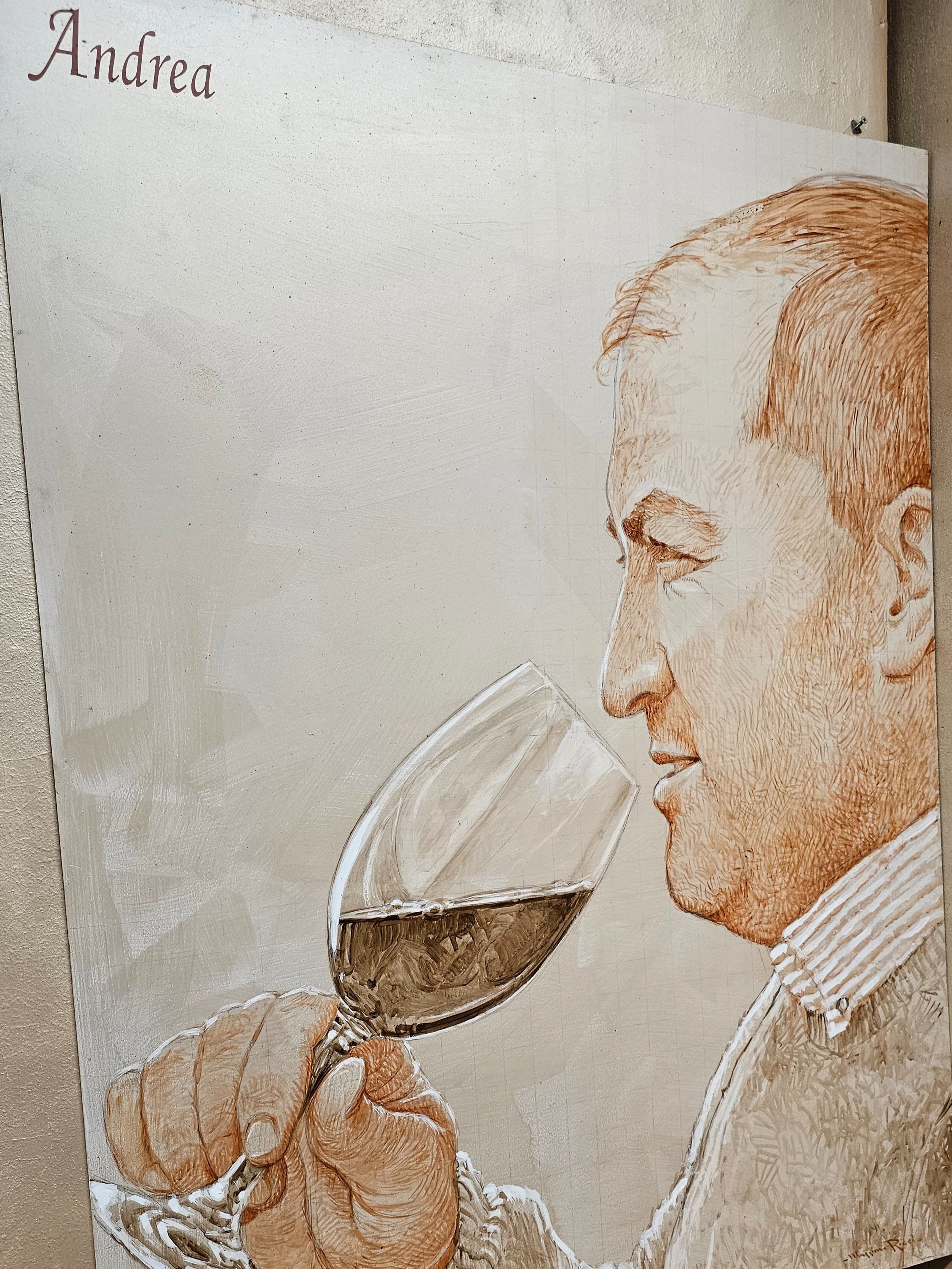
Artwork of winemaker Andrea Ivaldi, found in the winery.
My least favorite wine to produce is Brachetto. Every year, it has peculiarities that make it unstable, both in color, which varies from too dark to too light, and in ripening. It is a difficult vine, difficult to ripen fully the grapes. In some vintages it is fragrant and intense, in others less so. Winemaking also presents difficulties. Leaving it to macerate for 3-4 days, there is a risk that alcoholic fermentation will continue too long with too high of an alcohol. I have to rack it halfway, when it reaches 4 degrees of alcohol, in order to then block it at 6 percent alcohol, all while maintaining the sugars. Sometimes, however, fermentation goes out of control and it will reach 6.5 percent, if we are not careful to rack it in time. Furthermore, it is difficult to filter, because it is rich in colloids that clog the filters. In short, Brachetto is always the most problematic wine to produce.
Guido (Case Corini): I love making Bricco, as it was a challenge started with my father and in which I believe a lot. I don’t really have a least favorite wine in particular, I find every vintage has its best and its damned.
Hilde (Vigna Petrussa): My favorite is the Schioppettino in all its forms. What I like is to interpret this territorial vine in different ways, retracing its history, its tradition, and bringing it to new future evolutions. The Schioppettino is the vine of my land, it is the protagonist of the Prepotto subzone and of my family. These grapes were my father's favorites, who used to produce it sweet and in limited quantities only for friends or for festive moments. Over the years the Schioppettino wine has been opposed, prohibited, rehabilitated and today it is the great protagonist of Prepotto. I produce it in four different versions and the Perla Nera is the one that most closely remembers the way my father made it: a tribute to the history of my family and a link to the most beautiful memories. My least favorite is the Ribolla Gialla. Although it derives from an indigenous vine that I esteem very much, I consider it a wine that is too vertical and limited in its drinking period (because I find it more suitable for summer than for other seasons).
Is there a particular wine or grape that you have on your radar to try and make?
Aldo Clerico: Honestly no, because I already make wines with the typical grape varieties of my area (dolcetto, barbera, and nebbiolo) and I do not see the need to produce international grape varieties.
Alberto (Canalino): I would like to try to make Ansonaco, but I would have to move to the Maremma coast to do that.
Bruce (Clos des Amis): Sure, there are plenty.
Gretel (Clos des Amis): My pet project right now is Albariño. We have diatomaceous soil on South Mountain and I want to see how it affects that particular grape.
Davide (Febo): I have a particular interest in North Piedmont wines like Boca, Gattinara, and Ghemme.
Andrea (Ivaldi): I would like to vinify Pinot Noir as a red wine. Currently, I vinify it in rosé to produce an Alta Langa, but the vineyard is not ideal for a red wine. It is located in a relatively low vineyard, where the sun arrives only late in the afternoon. These conditions are optimal for an Alta Langa or a white wine, but not for a classic Pinot Noir. So, yes, I would like to vinify Pinot Noir in red, but only once I have access to a more suitable vineyard.

Aldo Clerico tasting some of own Barolos.
Guido (Case Corini): In the future I would like to experiment with new places and vines, especially in areas in coastal areas with ancient vines, perhaps on a small Mediterranean island.
Hilde (Vigna Petrussa): Certainly, acutally it is a desire that has recently become reality. I wanted to try my hand at growing malvasia istriana, so I planted the cuttings a few years ago and waited. The 2023 vintage was the first, and it is only the beginning of new experiments and interpretations.
Aside from your own wine, what kind of wine do you look for when you are “out and about” at restaurants, etc?
Aldo Clerico: At restaurants, I like to taste Chardonnays made in France. I also adore the wines of South Tyrol and Collio area. For reds, I really like the Tuscan and Veronese area wines.
Alberto (Canalino): I like to try a little of everything, but I prefer Italian white wines of all kinds.
Bruce (Clos des Amis): I search for wine varietals I haven’t tried yet, or that I may be interested in pursuing.
Gretel (Clos des Amis): If it is a special occasion, bubbles for sure, otherwise a pairing with the food I am eating. At this point, I am still a young winemaker, so I am open to experiencing wines from different regions.
Davide (Febo): Normally when I have to choose a bottle I prefer wines or wineries that share a production philosophy similar to mine. I get excited for wineries that work with real wines like me. I will more often choose white wines, but of course it depends on the context and the food I'm eating. To mention a specific wine that I love, lately I was recently enchanted by the Riesling Falkestein 2015.
Andrea (Ivaldi): At a restaurant, as for white wines, in addition to Champagne, I really appreciate a Chablis. I also liked the volcanic Malvasia from Lanzarote, even if it is difficult to find in my area. Among Italian white wines, I love Etna Bianco, Inzolia and Catarratto, the various whites from the Marche, and sometimes I treat myself to a Gewürztraminer or a Nosiola from Trentino. Vermentino from Sardinia is also among my favorites. I am always looking for particular wines from small DOCs, such as the Campanian Coda di Volpe, and from small wineries. For red wines, in addition to the Barbera from my region, I adore Nebbiolo in all its nuances: Gattinara, Barolo, Barbaresco, Sassella. I also appreciate Morellino di Scansano, Sangiovese, Sardinian Cannonau and Etna Rosso. As for foreign wines, I actually do not particularly like Syrah, Merlot and Cabernet. Instead, I really like the wines of Macedonia, Montenegro and Serbia. However, in general, for reds, I prefer Piedmontese wines.
Guido (Case Corini): I am always very inspired by my fellow diners, by the place where I am, by the advice of the host and by the atmosphere of the moment.
Hilde (Vigna Petrussa): I love Pinot Noir, but also Amarone, basically for a red wine I like the most structured wines. For white wines, I prefer those of Alto Adige.

Winemaker Hilde Petrussa (right) enjoying a glass of wine at a restaurant with her daughter Francesca (left) and Vero founder Sheila Donohue (center).
What is the most memorable wine that you ever had, and why?
Bruce (Clos des Amis): There is not one but many surrounding the opening of the bottle. - A spontaneous enjoyment of a 1976 Petrus. - An Ojai Vineyard Pinot Noir Fe Ciega Vineyard. - A Gold Medal/Best of Class Clos des Amis 2014 Grenache, South Mountain Vineyard
Gretel (Clos des Amis): I have three, all in France. When we went to Bourgogne, I tried a Volnay, the “lady’s Pinot” and fell in love. Then when we were traveling in Dordogne and had a Bandol Rose of Mourvèdre that was in a little cafe stop. Cheap and incredible. Last was a trip to Alsace. The Riesling wines of Ostertag were laser focused and perfectly balanced. A lesson in winemaking for sure.
Taste Like a Winemaker
We exist to allow all Americans, across the US, from businesses to consumers, to experience the pleasures of small production, farm to glass wines from producers such as the seven we sat down and talked with. But how can you get your hands on these hidden gems we forage for?
If you are a distributor reach out to us introduce our highly curated portfolio of one of a kind small production wines to your state.
We sell to wine stores and restaurants in certain states - contact us to learn more.
If our farm crafted natural wines and olive oils are not in your local shop or restaurant, buy wine online here, and we’ll ship it to you, including wine gifts.
We also have an award winning wine club for true wine explorers that are seeking to continually discover unique, sustainable and authentic small production wines they never had. These are wines selected by our sommeliers and curated for each box.
We do corporate gifts and sommelier guided wine tastings. Email us and we’ll tailor unique and sustainable corporate gift ideas.

Aldo Clerico
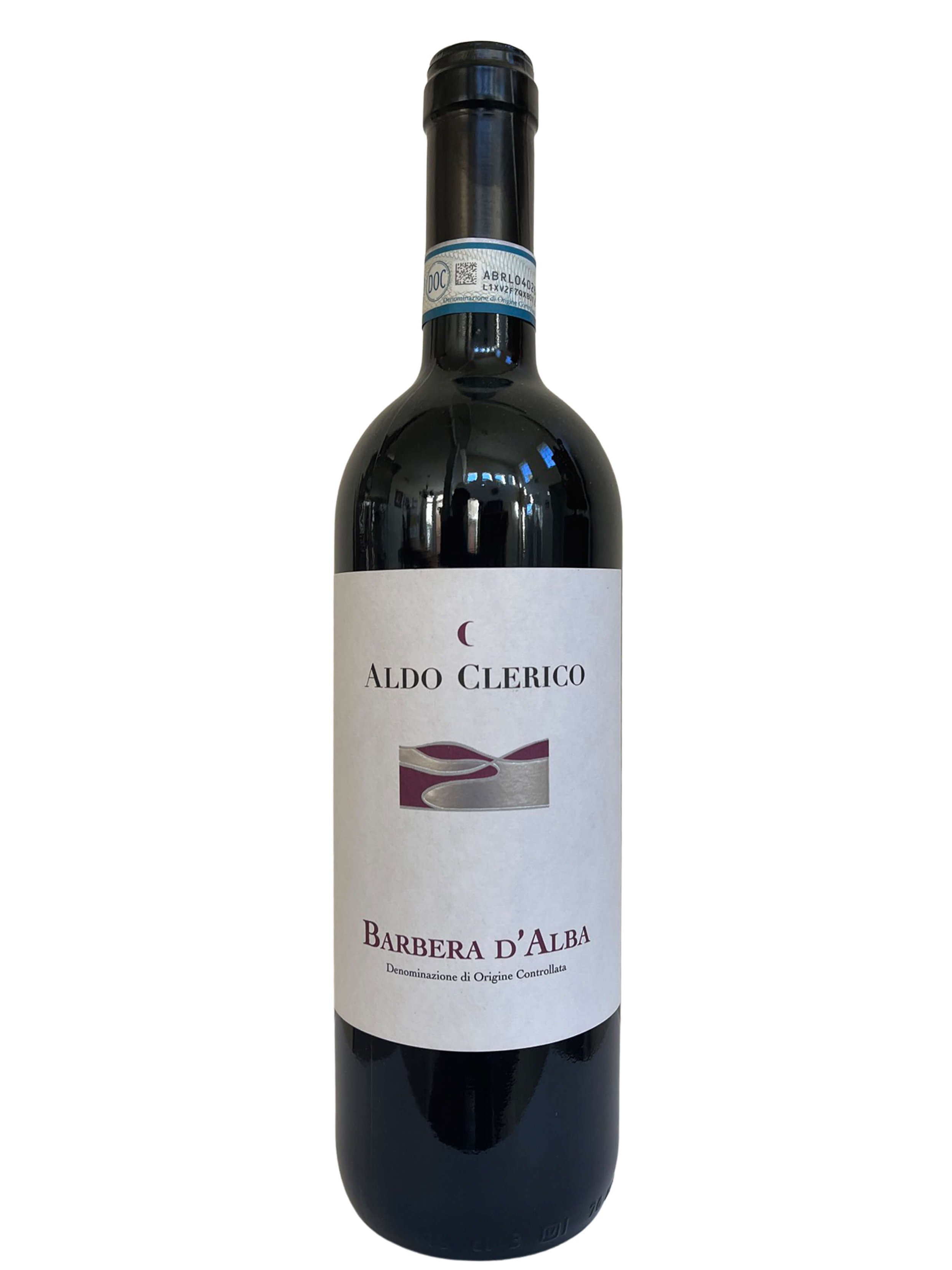
A really good, soft and fleshy Barbera from Alba, from a single vineyard located in the Barolo designated wine region, one of the best areas for Barbera. Nice acidity and fruitiness with some spice, thanks to 14-16 month aging in new and used oak.
A very balanced and elegant wine on the nose, and a good body and structure on the palate with a pleasant and vibrant acidity. A rounded wine with fresh yet fruity notes that finish with a creamy texture thanks to the oak barrel aging.
Do you want to regularly purchase this wine? Check out the Subscribe and Save option available HERE!
Tastes Like: Pretty, ripe, dark cherries
Farming & Winemaking Highlights: Biodynamic | Native Yeast Fermentation | Single Vineyard
Fun Facts: With its aging, this Barbera d’Alba technically follows guidelines for a Barbera d’Alba Superiore, but winemaker Aldo Clerico decides to declassify it.

This is one of the best Barolo wines from the Langhe in Piedmont Italy as well as a great value from one of the storied families of Barolo wineries. This Barolo red wine is the maximum expression of the nebbiolo grape from Aldo Clerico. With vineyards right next to those of Domenico Clerico Barolo vineyards, this Barolo is a good substitute for Burgundy wine.
This garnet colored artisan Barolo has red fruit, rose and spicy leather and tea leaf aromas with elegant structure, long finish leaving a silky mouthfeel. On the nose it is very intense while floral notes mix with typical vineyard scents of violets and red berries. On the palate, the violets blend with licorice flavors and noticeable tannins. A creamy texture from the oak barrels creates a pleasant mix of fresh yet complex flavors.
Tastes Like: Cherries and licorice
Farming & Winemaking Highlights: Biodynamic | Native Yeast Fermentation | Single Vineyard
Fun Facts: This is Aldo's first wine made from 5 different Barolo designated vineyards surrounding his home in Monforte d'Alba, all within the Bricco San Pietro MGA. He vinifies each vineyard and then does an assemblage, creating each vintage a unique expression of his nebbiolo vineyards. It is also made with native yeast fermentation, so can be called a natural wine.

Made with native yeast fermentation, this Barolo Serralunga is a special natural wine. Rich on the nose with dried violets typical of the nebbiolo grape, the bouquet is austere and profound with balsamic notes. Once sipped, the earthy texture is out of this world, which marries pleasantly with the structure, fruit and spice of this elegant red. Well accented tannins are soft and decanting is strongly recommended.
Tastes Like: Earthy Spices
Farming & Winemaking Highlights: Biodynamic | Native Yeast Fermentation | Single Vineyard
Fun Facts: This is a single vineyard Barolo from the Serralunga d'Alba village, known to produce the most age worthy Barolos.

Made from the sought-after Ginestra Barolo Cru, this single vineyard wine epitomizes the greatness of the nebbiolo grape from the Barolo wine region, in terms of structure, age-worthiness and fruit expression. The native yeast fermentation used in making this natural wine also helps bring out the special and sought after terroir of the Ginestra cru.
An intense garnet color, on the nose this Barolo tends towards red fruits, with a touch of balsamic notes. As it opens on the palate the elegant tannins harmonize with the acidity for an overall richness that creates a pleasant and enjoyable experience while sipping alone or with food.
Tastes Like: Balsamic Tabacco leaves
Farming & Winemaking Highlights: Biodynamic | Native Yeast Fermentation | Single Vineyard
Fun Facts: The Ginestra cru is very limited and only a few wineries have access to harvest from there. Aldo can thanks to his wife’s, Valentina’s, Conterno family vineyards.
Fun Facts: The hands on the bottle represent Aldo’s two daughters; for this reason he often says this is the wine closest to his heart.
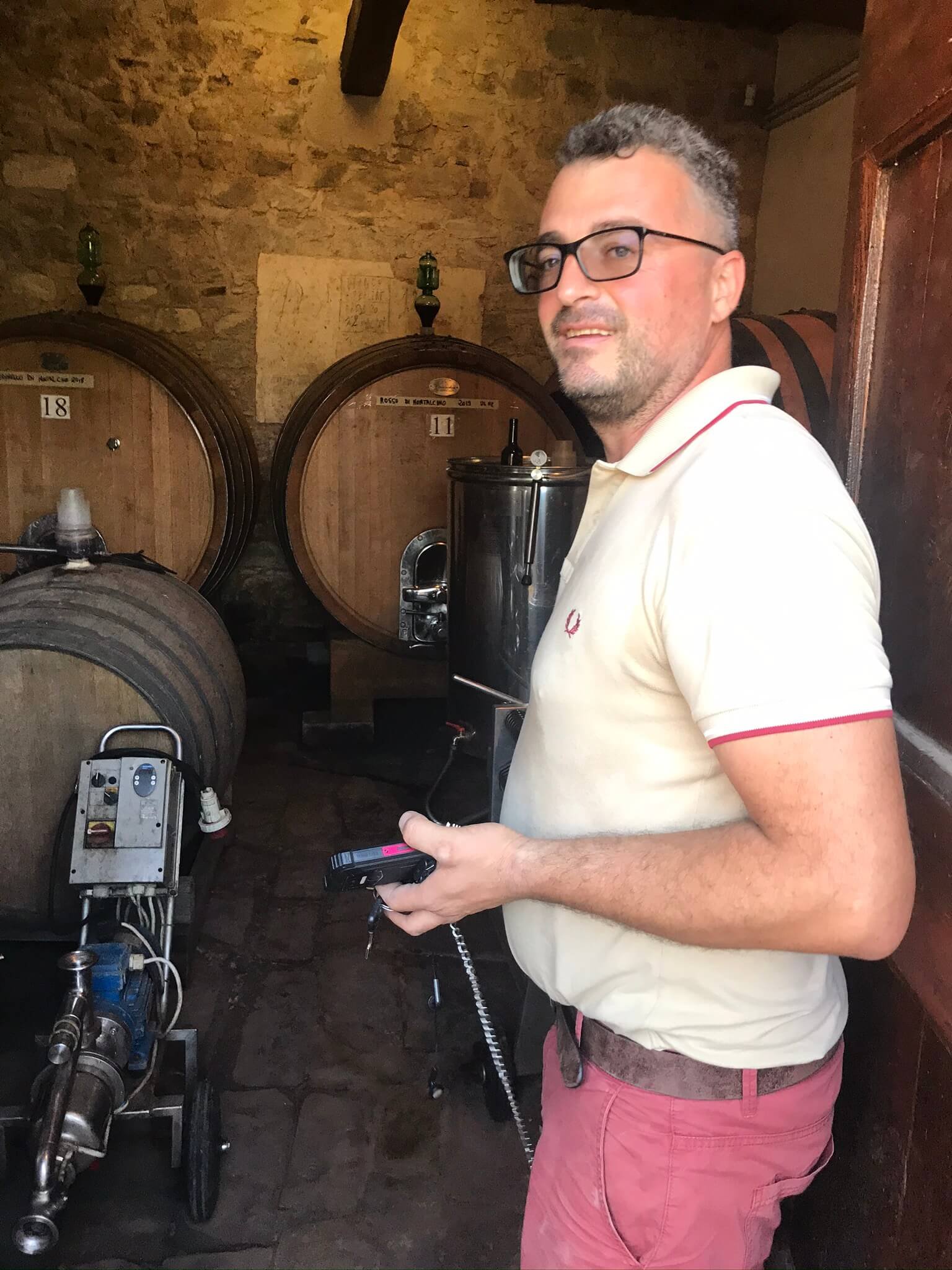

This Brunello di Montalcino from winery Canalino is crafted using specially selected sangiovese grapes. A gorgeous ruby color, the nose is a potpourri of intense mature fruit and spice aromas from prune to menthol to leather. The wine is structured, with freshness, minerality and age worthy tannins and a fantastic mouthfeel.
Tastes Like: Stewed Cherries or Cherry Jolly Rancher candy
Farming & Winemaking Highlights: Regnerative Agriculture | Sustainable Winery | Biodynamic | Native Yeast Fermentation | Unfiltered | Organic | Natural Wine | Vegan
Fun Facts: The name “brunello” comes from the local name used for the type of sangiovese typically used in the area.

Gretel and Bruce
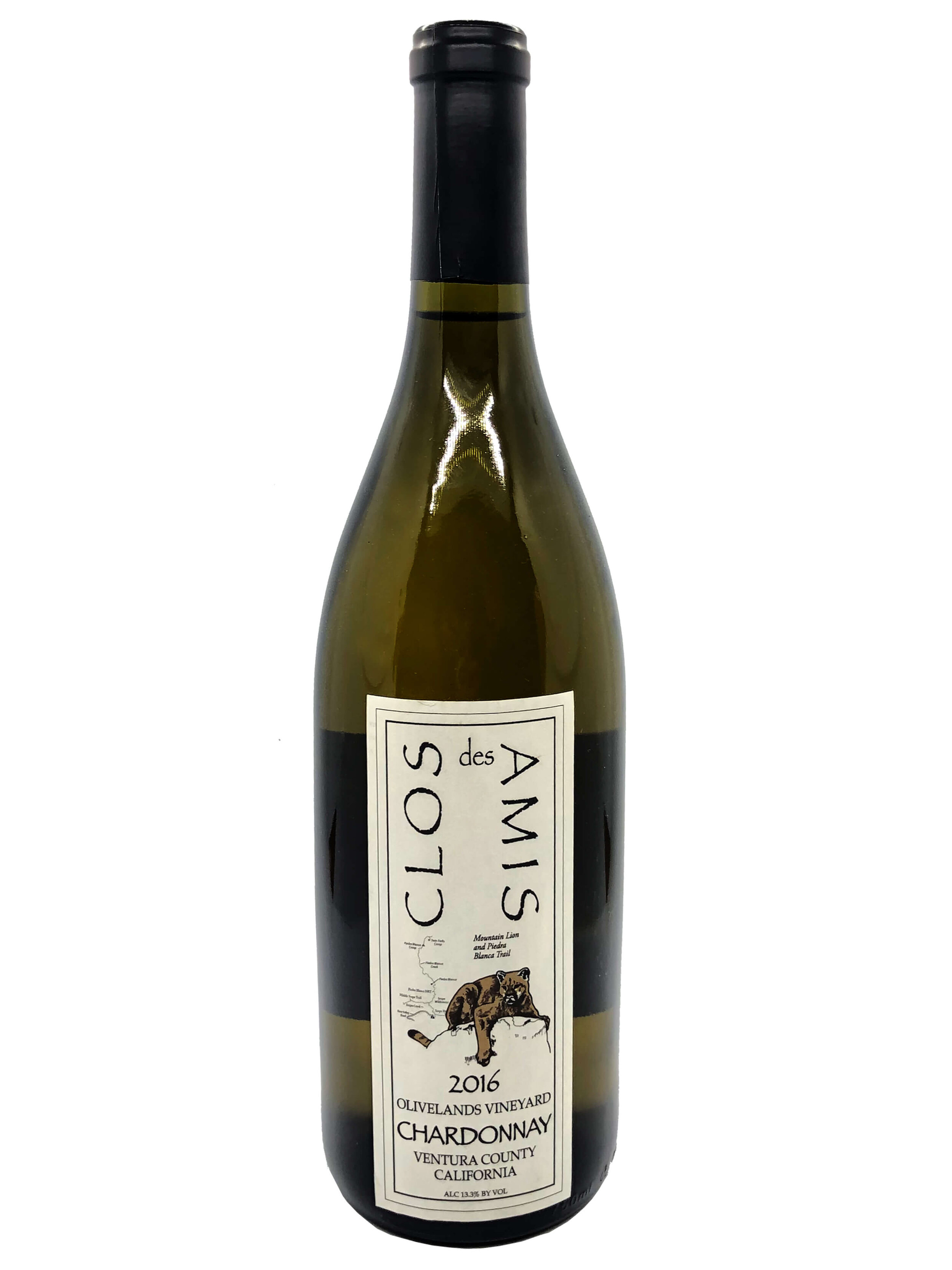
Bruit, juicy fruit on this un-oaked chardonnay from Ventura County in Southern California.
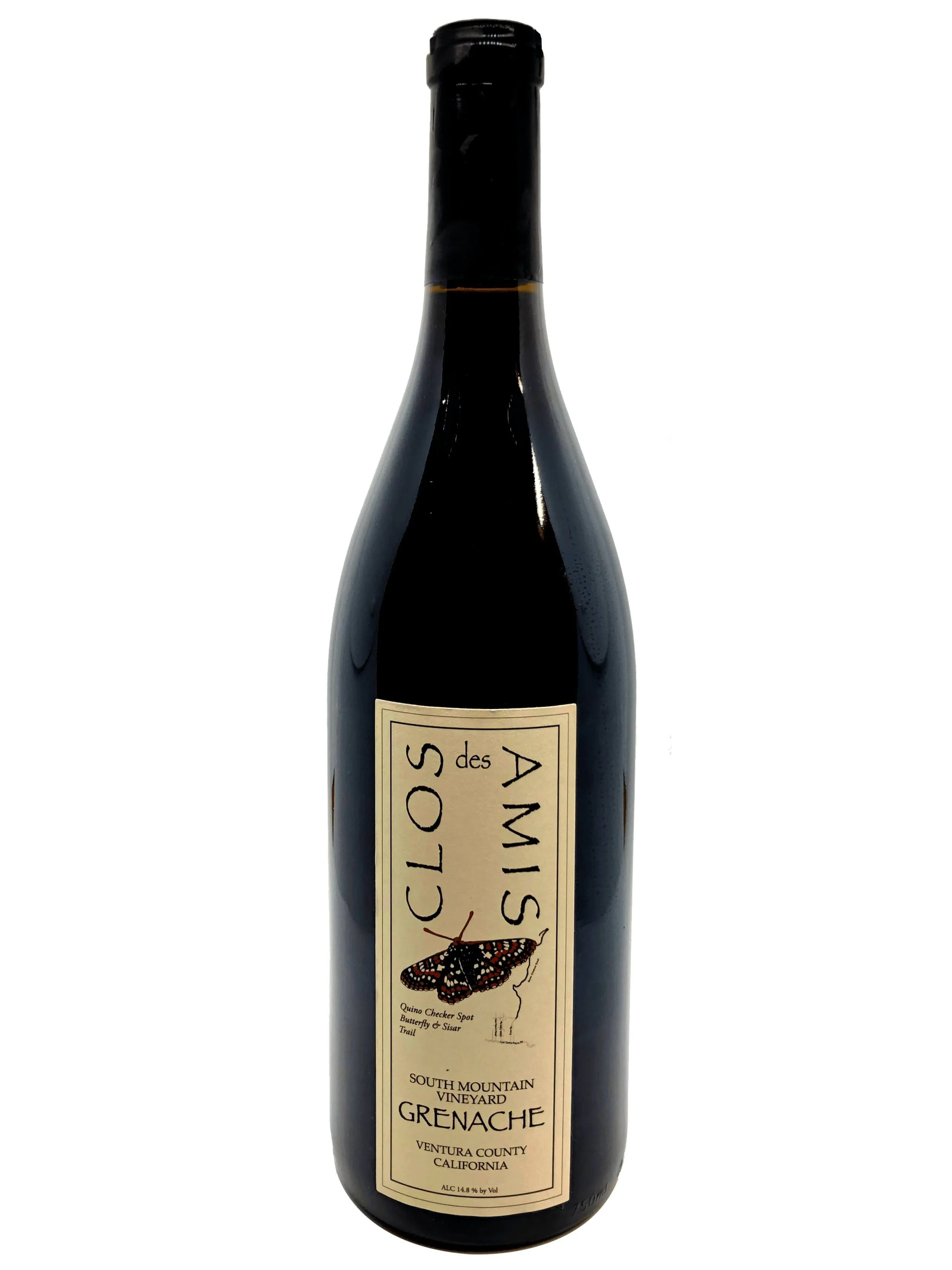
From Clos des Amis’ South Mountain vineyard in Santa Paula, Ventura County, California, this is Grenache has just the right blend of fruit, earth and spice, tasting like plum & raspberry fruit with a bit of white pepper. The acidity and subtle tannins give it a pleasant structure resulting in an a nicely balanced wine.

This wine from Clos des Amis in Southern California is a Rhone style blend in the old world style, but made by a new world winery. Winemaker Bruce Freeman is of French origin, and his inspiration for this GSM red wine blend comes just from those roots.
This blend of Grenache, Syrah, and Mourvèdre is a bold red wine, and great for people that search for those flavors. Grown in the Ventura County area of Southern California, the vineyards have a large diurnal influence with a big temperature range. This, along with cooling winds from the nearby Pacific Ocean create balanced grapes that lend well to this structured red wine.
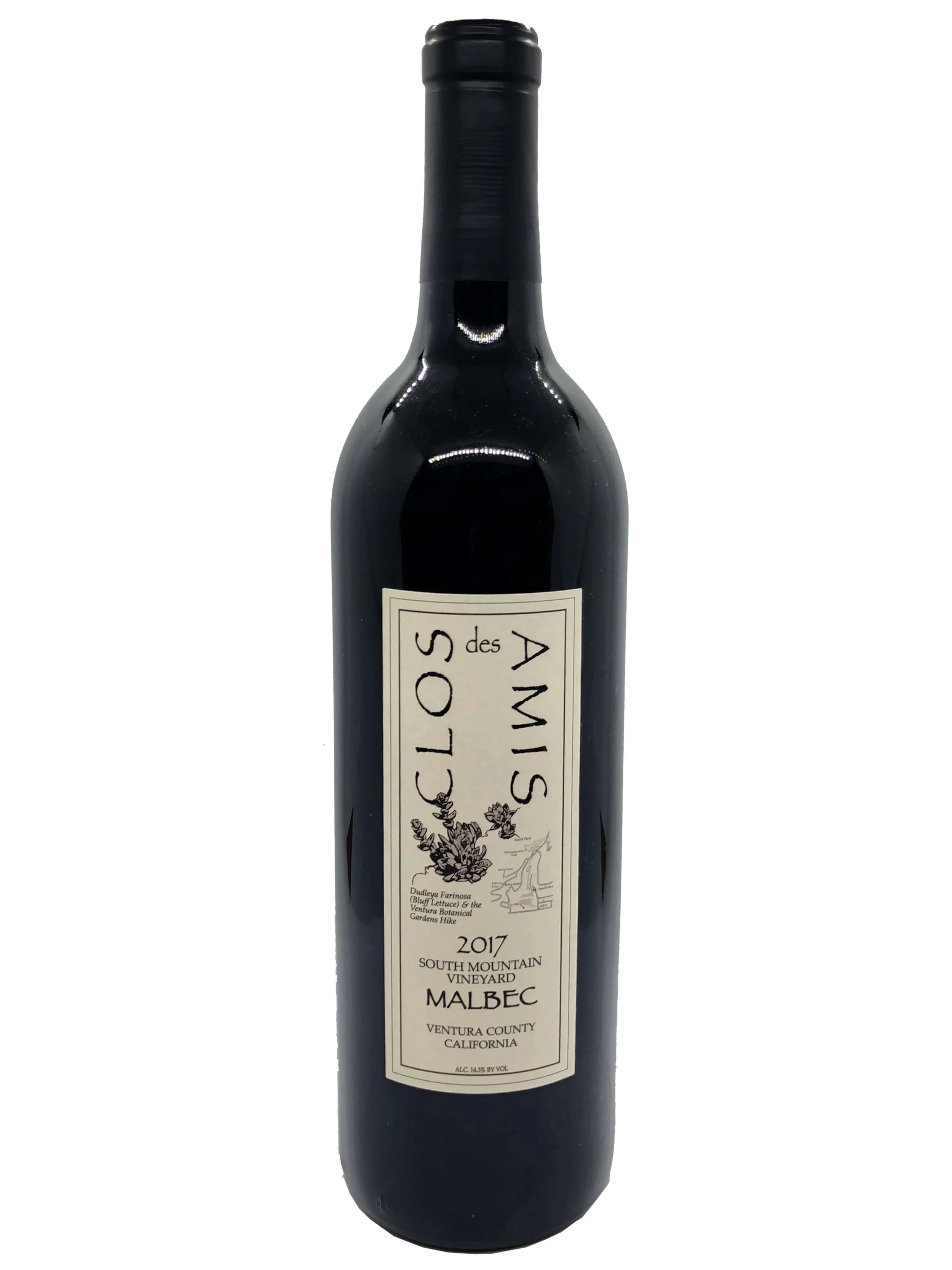
From their own South Mountain Vineyard, this is an inviting Malbec with intriguing tea leave aromas and approachable tannins. Great with steak, a hamburger and lamb.

Davide Febo

An organic & vegan natural wine made from 100% trebbiano abruzzese, a white wine grape which the New York Times cites a grape “worth knowing better”. It has an inviting straw yellow color and an exotic nose (look for the saffron!) and an intriguing fruity and herbal taste.
This white wine is age-worthy too! Fermented and refined in grandfather Febo’s concrete vessels.
Region: Italy > Abruzzo > Chieti
Tastes Like: Peaches and Saffron
Farming & Winemaking Highlights: Regenerative Agriculture | Sustainable Winery | Biodynamic | Native Yeast Fermentation | Vegan | Single vineyard | Old Vine | Organic | Natural Wine
Fun Facts: This wine is named from the single vineyard from which it comes, Parella in Chieti.
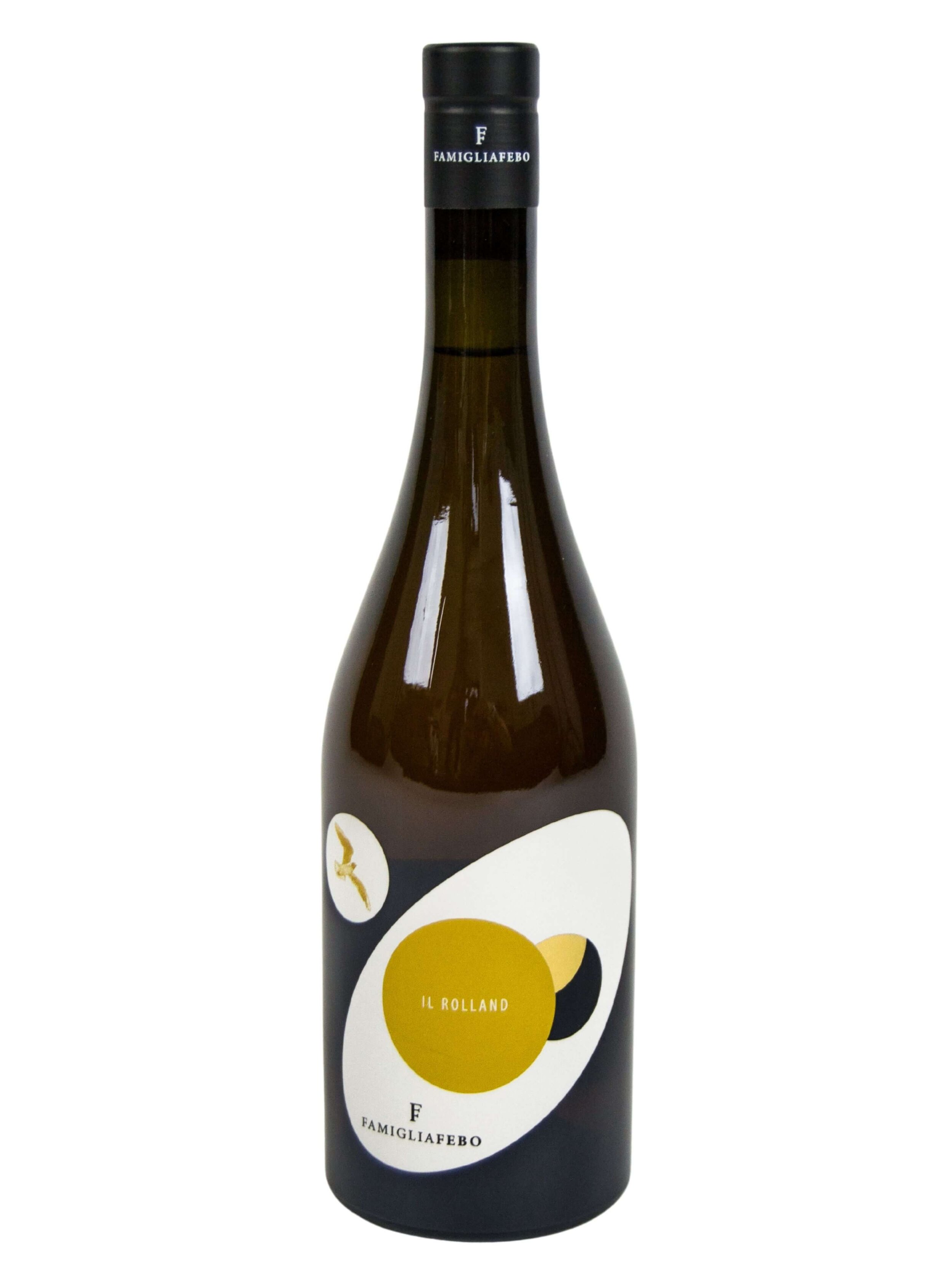
Rolland’s deep straw yellow or rusty color likens it to an orange wine, but this color comes from the vineyard, sun, and weather. A fresh and textured mouthfeel leaves you pondering and wanting to have another sip. We recommend to let it breathe before enjoying to the fullest.
The 2023 vintage offers a drier, more savory, and complex profile. With golden raisin and saffron flavors, it evolves into deeper sensations of caramel, sage, and a pronounced orange rind on the finish. It wraps up with a long, distinctive mineral finish. The 2023 really summarizes well the age-worthiness of this wine.
Region: Italy > Abruzzo > Spoltore & Chieti
Tastes Like: Golden Raisins & Saffron
Farming & Winemaking Highlights: Regenerative Agriculture | Sustainable Winery | Biodynamic | Native Yeast Fermentation | Vegan | Single vineyard | Organic | Natural Wine
Fun Facts: This wine is named for Grandfather Febo, Rolando, who bought the concrete vessels the family ages their wines in.
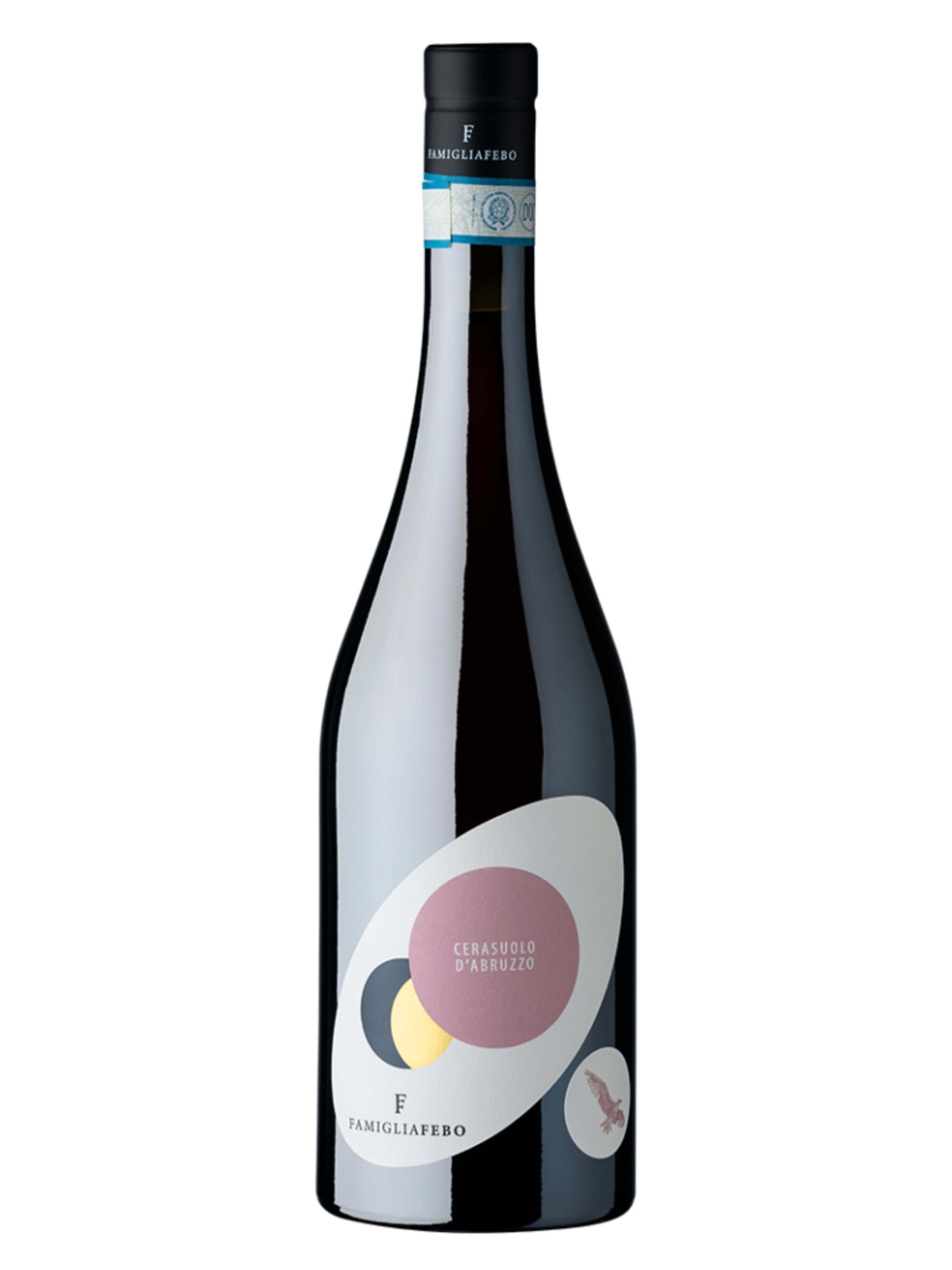
While made as a rosé wine, this Cerasuolo d’Abruzzo is actually more like a light red wine thanks to the dark pigments of the Montepulciano grapes used, farmed on Febo family’s estate vineyards in Abruzzo.
The minimal intervention approach of this natural wine producer results in a lot of vintage variation year after year. For example, the 2021 Cerasuolo d’Abruzzo has a cherry taste with a salty finish, and is considered a “serious” rosé wine while the 2024 is a Rosorange color that bursts with blood orange flavors mixed with cherry.
Region: Italy > Abruzzo > Spoltore & Chieti
Tastes Like: 2021 - Cherries | 2024 - Tart cherries and blood orange
Farming & Winemaking Highlights: Regenerative Agriculture | Sustainable Winery | Biodynamic | Native Yeast Fermentation | Vegan | Organic | Natural Wine
Fun Facts: Both vintages are fermented with native yeast and refined in the winegrower's grandparents' concrete vessels. Great chilled and a good pairing is eggplant parmesan.
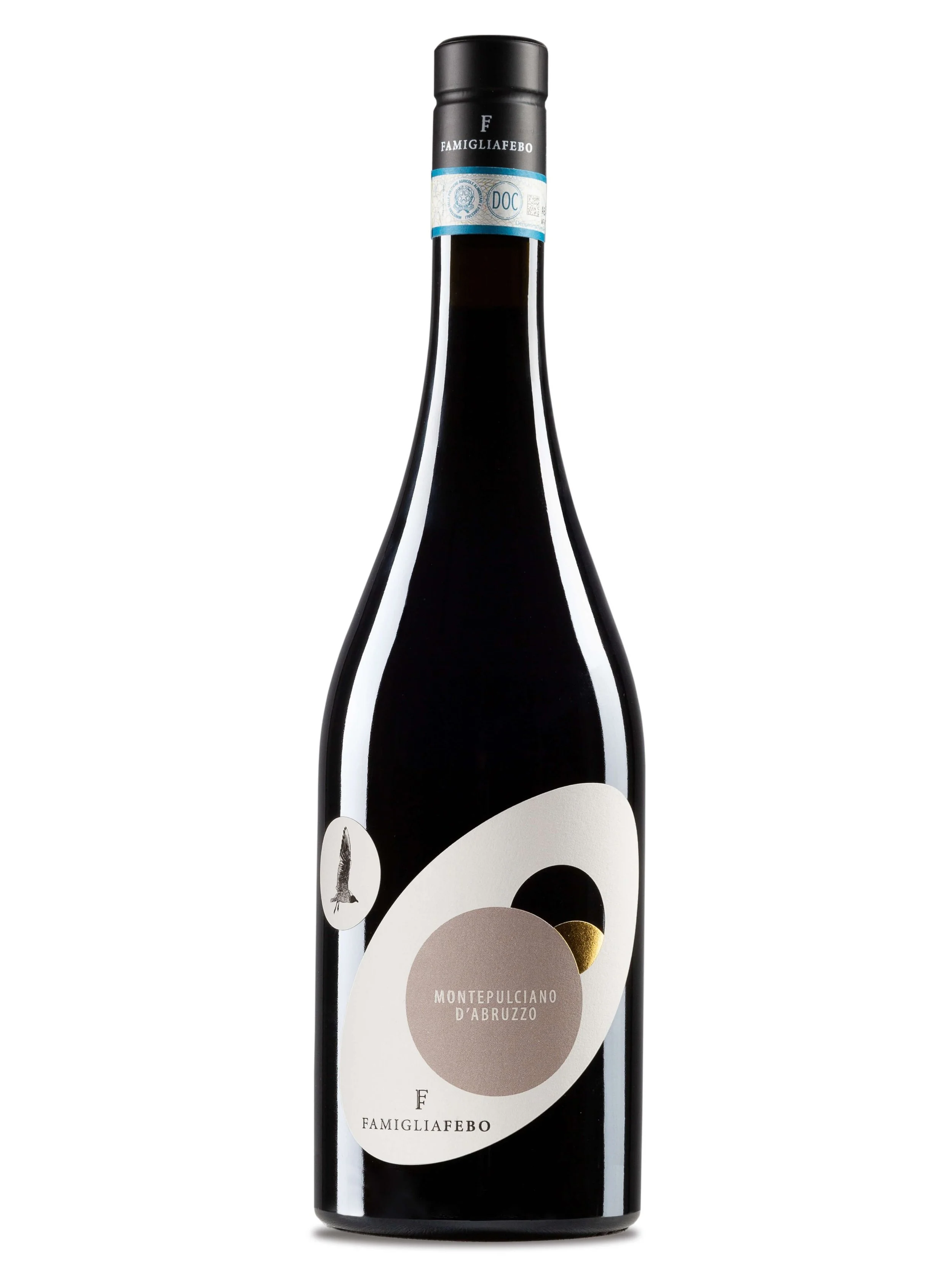
Made with 100% Montepulciano grapes spanning family vineyards in Spoltore and Chieti in Abruzzo, it has aromas of amarena cherries and licorice and a slight funkiness thanks to its 100% natural production. It tastes of dark fruit, with a rich texture and slightly bitter finish, with the funky vibe continuing while tasting. Fermented and refined in the winegrower's grandparents' concrete vessels.
Region: Italy > Abruzzo > Spoltore & Chieti
Tastes Like: Dark fruits
Farming & Winemaking Highlights: Regenerative Agriculture | Sustainable Winery | Biodynamic | Native Yeast Fermentation | Vegan | Organic | Natural Wine
Fun Facts: Pairs nicely with chicken parmesan. | While there is a famous wine “Vino Nobile di Montepulciano” from Tuscany, this grape has no connection to it; the “montepulciano name” there comes from the town noame, where as here in Abruzzo “montepulciano” actually refers to the grape used to make the wine.
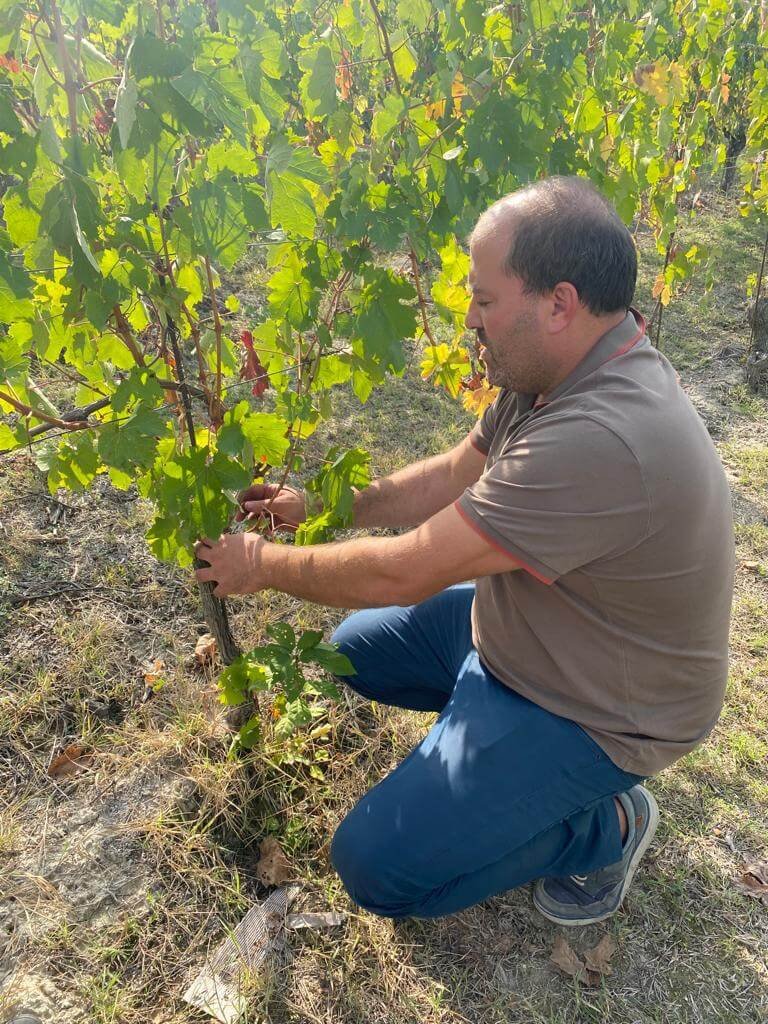
Andrea Ivaldi
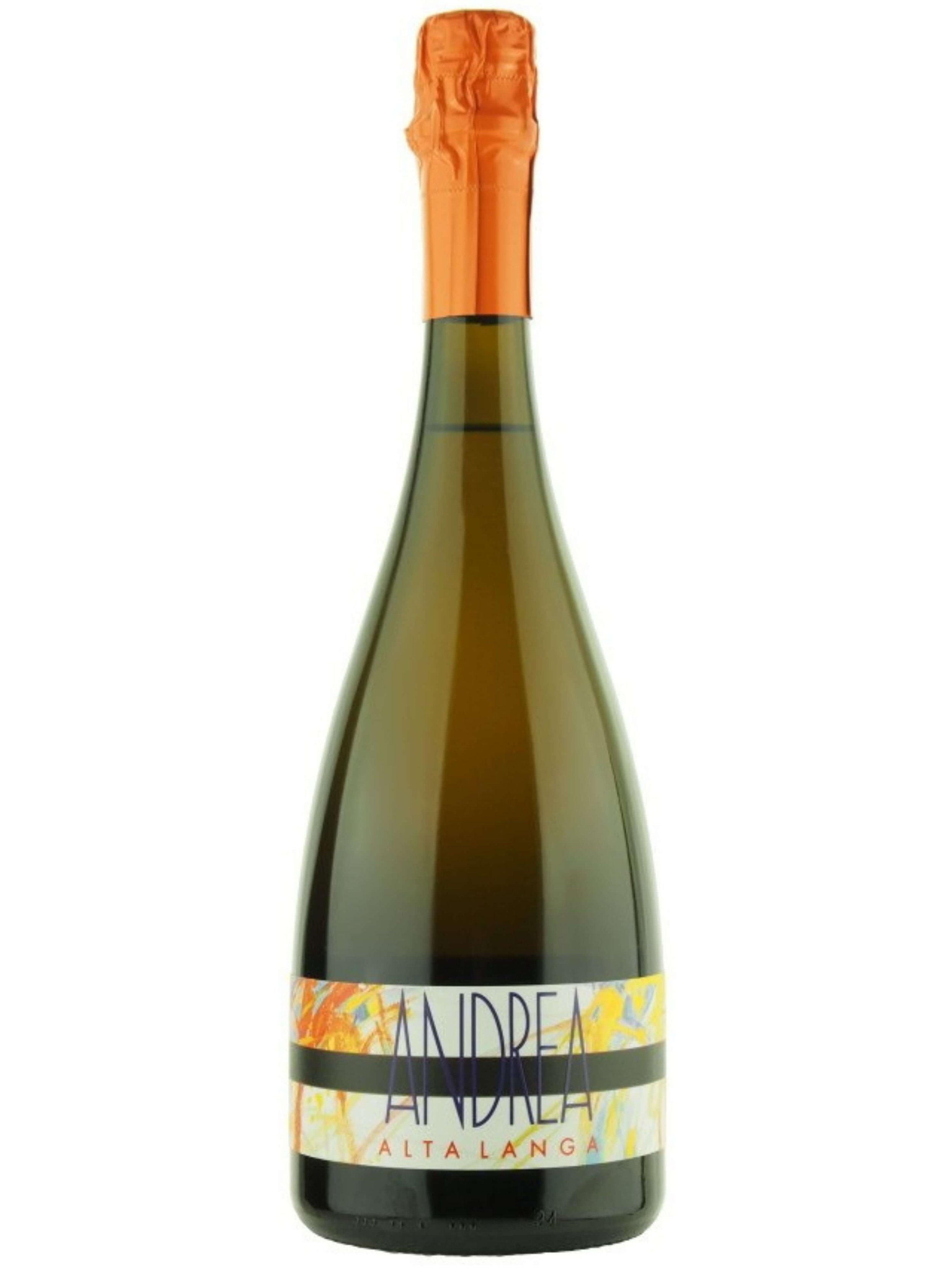
This Alta Langa Spumante, or an Italian sparkling wine, is an Extra Brut, with flavors of bread crust, caramel and candied fruit, with great acidity and salinity, a hint of sage and a long mineral finish.
Made following the traditional Champagne method, it ages on the lees for 30 months in the bottle. Alta Langa is a newer DOCG that is steeped in history and is an up-an-comer amongst Italian traditional method sparkling wines.
This vintage wine is from vineyards at 200 meters that are harvested slightly late to give the wine more structure. A Blanc de Blancs made from 100% chardonnay grapes, fine and persistent bubbles are present with an inviting straw yellow perlage.
Tastes Like: Bread crust, caramel, and candied fruit.
Farming & Winemaking Highlights: Regenerative Agriculture | Sustainable Winery | Biodynamic | Bottle fermented | Champagne Style
Fun Facts: - This wine is named for the current winemaker, Andrea Ivaldi, the 4th generation of his family to make wine, and the first to make a sparkling wine.
- A certified sustainable winery, Ivaldi practices regenerative farming.
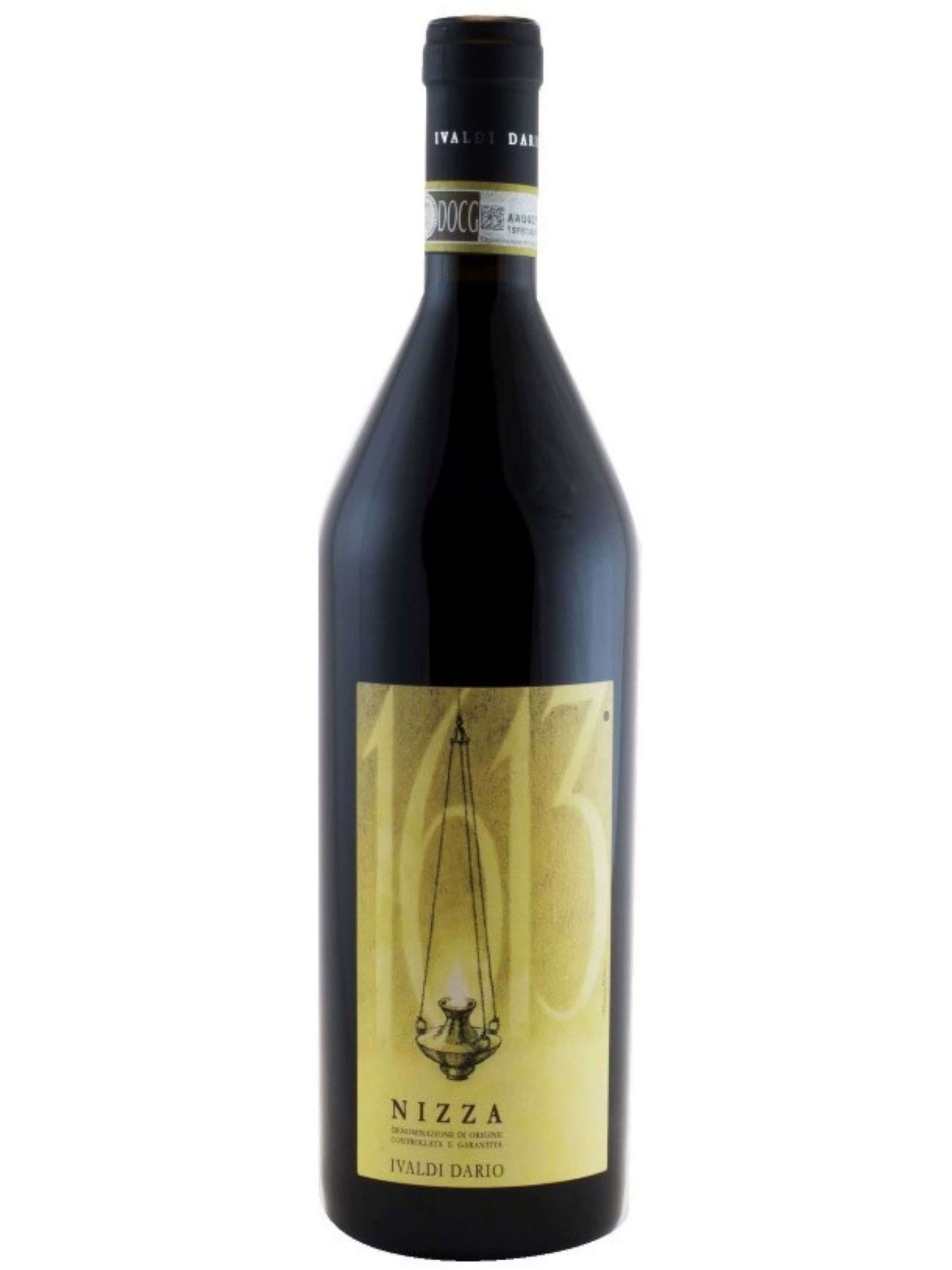
Nizza is the Barolo of Barbera, made from the birthplace of Barbera, Nizza Monferrato, the home of the 4th generation winemaking family, Ivaldi, and place where this wine is grown and made. This Nizza Barbera is a delicious old world style red wine with a rich cherry taste and an incredible mouthfeel.
This Nizza DOCG is made only in the best years, always made with 100% Barbera grapes, but only the best of the best of the Barbera clusters goes into this wine, before it spends 12 months in Slavonian oak barrels then 2 years resting in the bottle.
Made with native yeast fermentation, on the skins for 15 days. it has a pretty ruby red color with garnet reflections. A fruity bouquet transforms into spicy notes as it opens, and on the palate this wine has nice tannins and acidity balanced by a robust body.
The name of this red wine, 1613, is a homage to the siege of Nizza Monferrato in 1613 by the Mantovan army, showing the strong roots the Ivaldi family has to their home town. The women gathered to pray all night, and after the siege was lifted and won by Nizza Monferrato, an oil lamp in the church spontaneously burst into flames, despite the lack of spark and oil. Known as the ‘Miracle of the Lamp’, this wine pays homage to that evening, bearing not only the year as a name, but the image of the oil lamp on the label.
A certified sustainable winery, Ivaldi Dario practices regenerative farming.
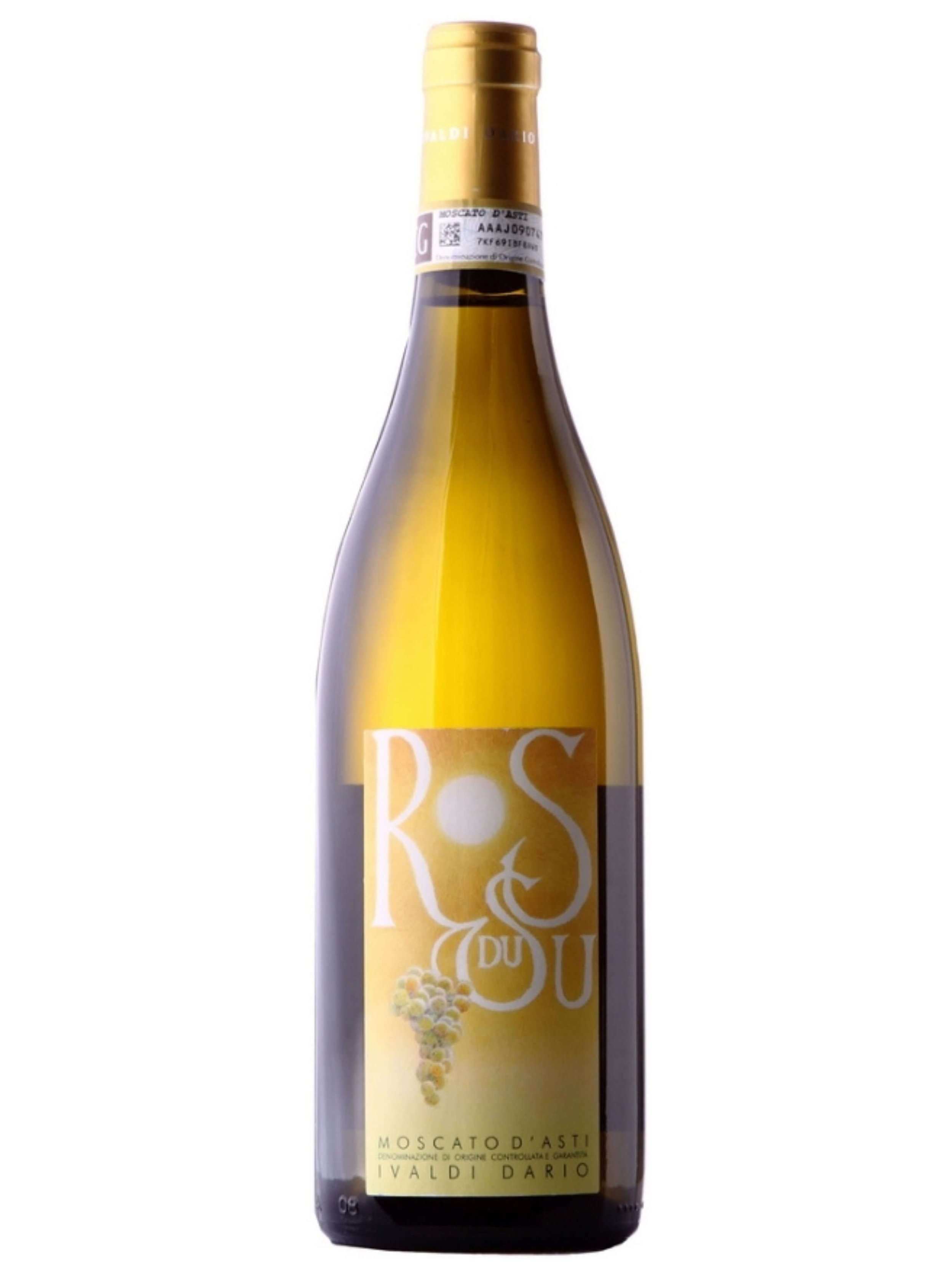
Who doesn’t like chamomile and honey? That’s what this wine reminds you of! It’s a Moscato d’Asti that appeals both to sweet wine lovers and dry wine drinkers wanting a moment with a touch of sweetness.
The name of this wine, Ros du Su, means ‘Rays of Sunlight’ in Piemontese dialect where this Moscato d’Asti comes from. Looking at its bright, golden-yellow color, it is easy to understand the inspiration for this name.
In the glass, the aromatic qualities of moscato are the first noticeable aromas, but underneath subtle and persistent notes of honey and acacia and chamomile flowers come forth creating a complex bouquet. Tasting, the sweetness of the residual sugars are well balanced with freshness and sapidity. A pleasant wine that keeps you sipping, it pairs well with desserts, but is every bit as enjoyable alone in contemplation.
A certified sustainable winery, Ivaldi practices regenerative farming.
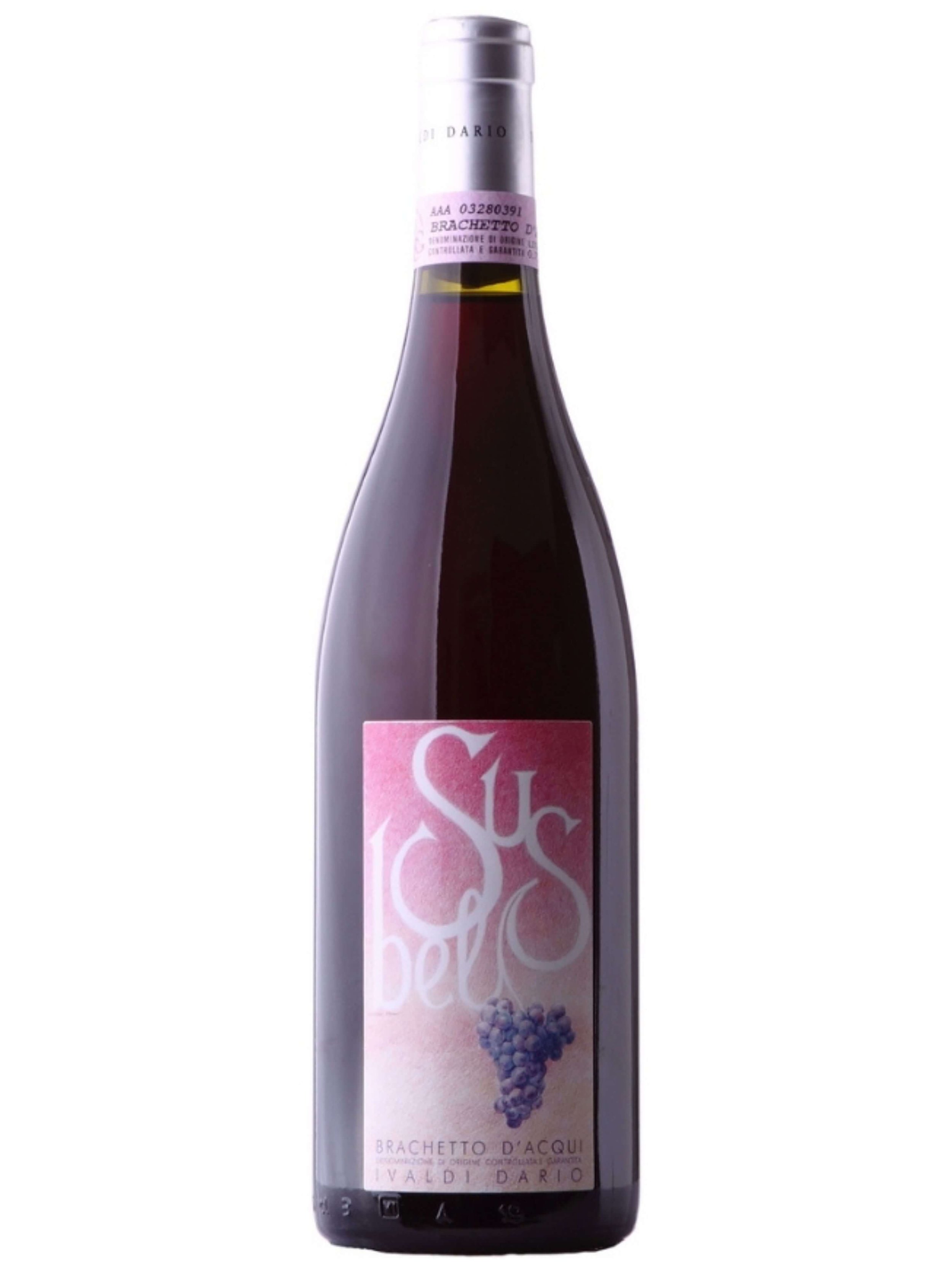
“Can we make Brachetto popular, please?” is how VinePair headlines why this artisanal, aromatic red sweet sparkling wine, just recently imported by us first time to the USA, made it to VinePair’s list of 13 Best Sweet Wines.
An aromatic grape, brachetto, creates a pleasantly slightly sparkling sweet red wine, with delicate rose flower and strawberry notes and strawberry and hibiscus taste. ‘Susbel’, in the local Piemontese dialect of Ivaldi in the Monferrato, refers to the location of the vineyard of this Brachetto d’Acqui, where the sun is bright and well exposed.
Left four days in contact with the skins and fermented with native yeast, this natural wine has a bright and clear light red color, dotted with fine effervescent bubbles. Sipping, the immediate impact is indeed sweet, yet with enough acidity and a hint of tannins to create a harmonious and balanced wine that keeps you coming back for more.
Wonderful to serve slightly chilled to sip with friends in the backyard on a hot summer day, or to serve with fruity desserts. Try pairing it with white or milk chocolate or a savory cheese, like with Humboldt Fog goat cheese - it goes incredibly well. It can also pair with charcuterie. Made with native yeast fermentation and has a residual sugar of 120 g/l.
A certified sustainable winery, Ivaldi Dario practices regenerative farming.

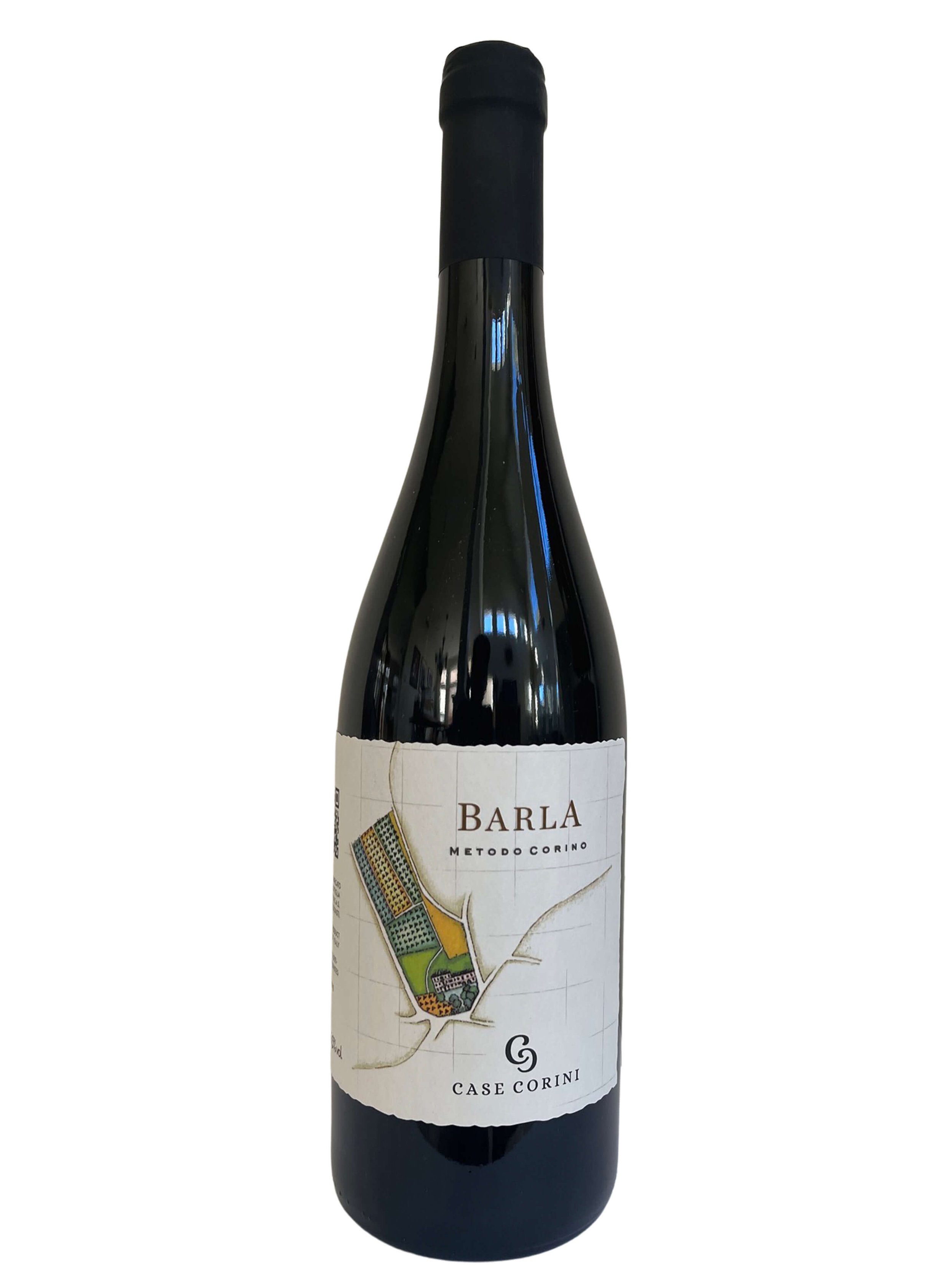
You never had a Barbera like this! Made from 95 year old Barbera vineyard, with some small percentage of other varieties planted over the years in the vineyard. This all natural wine has intense aromas of brandied cherries and a richly textured, delicious dark fruit taste with right balance of fruit, acidity and tannins. Barla is the antique name of the vineyard which used to be the land of an old convent. After a gentle crushing, fermentation starts with native yeast fermentation and wines are left with skin contact for 6-7 weeks, followed by about 36 months of aging in wooden barrels, housed under Lorenzo Corino's family home.
As with all of Case Corini wines, this is a 00 wine, nothing added, nothing removed, no yeast, no sulphites added, organic, biodynamic, vegan. In other words, all natural wine.

Earthy, age-worthy nebbiolo made from 70 year old naturally cultivated vines. Named for the dearly beloved grandfather of Lorenzo Corino. Having a garnet color with orange hues it has a complex, spicy nose with notes of cardamom and cinnamon. When tasting, it is fruit forward, cherry & forest fruits, followed by spices, and chalky tannins envelope the mouth and finishes elegantly. After a gentle crushing, fermentation starts with native yeast fermentation and wines are left with skin contact for 6-7 weeks, followed by about 36 mos of aging in wooden barrels.
As with all of Case Corini wines, this is a 00 wine, nothing added, nothing removed, no yeast, no sulphites added, organic, biodynamic, vegan. In other words, all natural wine.
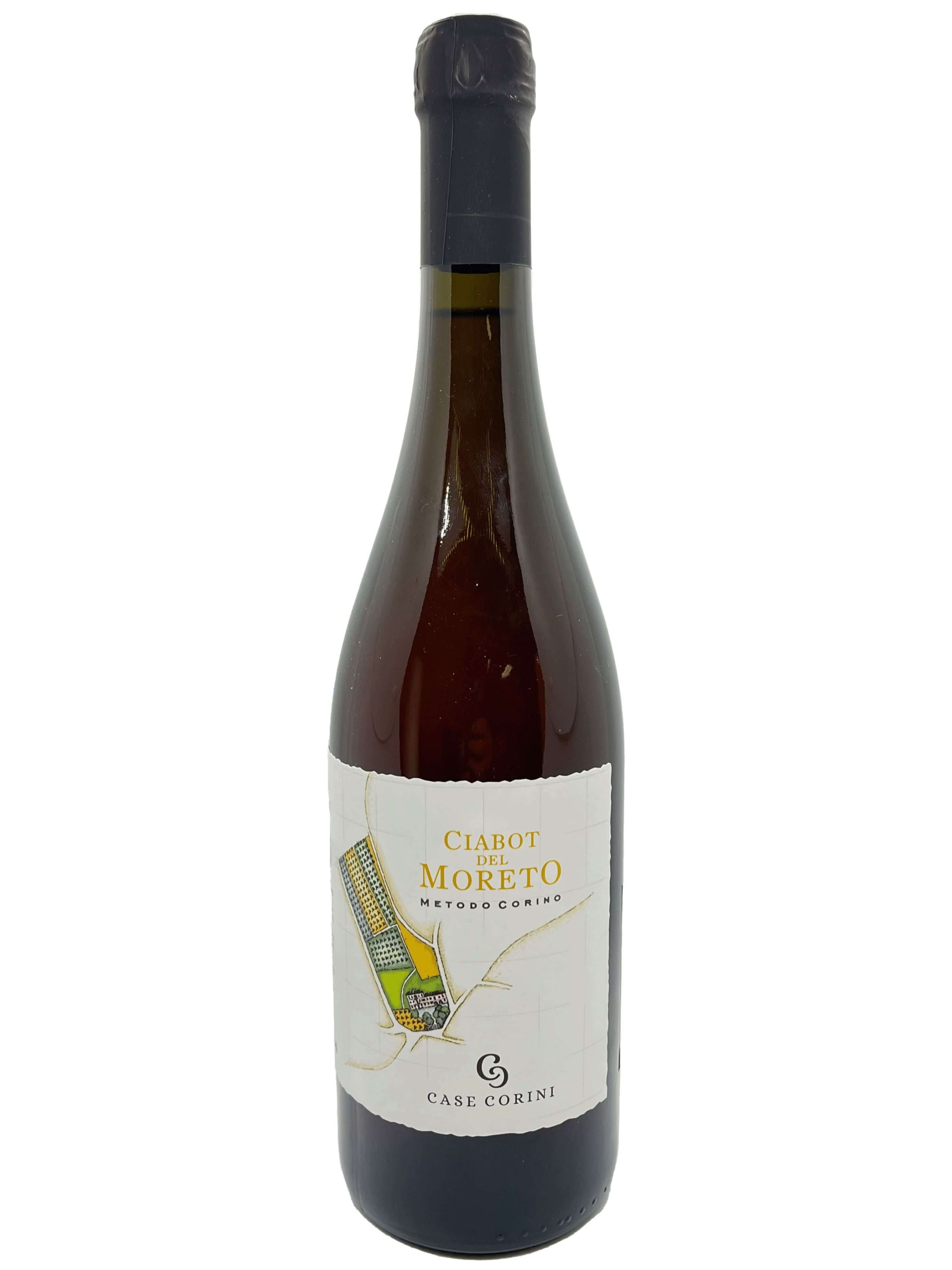
This is an aromatic late harvest skin contact Orange wine from the natural wine 'legend' Lorenzo Corino and his son Guido. The color of rust orange opens to a complex bouquet of orange blossom, candied fruits, caramel and pine leading to a fresh taste of apricots with some mineral savory-ness, pleasant tannins, lovely texture. It is balanced with a long finish. This vegan wine is made naturally, with no intervention of any kind made and no sulfites added. It is a super interesting wine for those who enjoy muscat natives and orange wines. The name Ciabot del Moreno refers to the small wine hut (part of the Piedmontese wine 'ways and culture) in the area where the single vineyard is (Moreto). A lot of local stories are born around these "ciabot". The 70 year old vineyard with different Moscato biotypes is 230m high in Santo Stefano Belbo, 15 min south of Costigliole d'Asti and a half hour east of Alba. After a gentle crushing, fermentation starts with native yeast fermentation and wines are left with skin contact for 2-3 weeks, followed by 6 months of aging in wooden barrels.
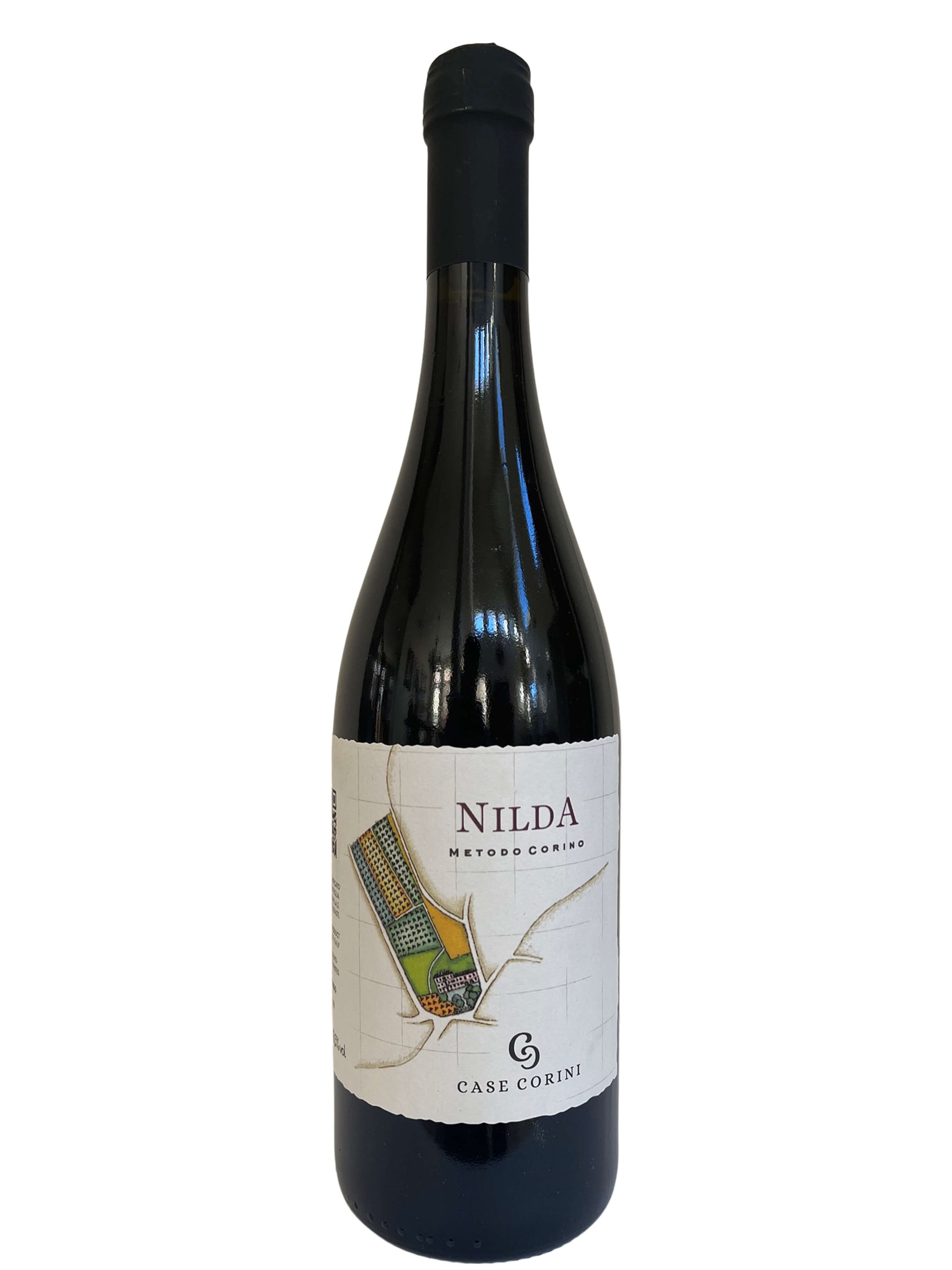
Named after Lorenzo Corino's grandmother, Nilda is Lorenzo & Guido Corino's new red wine from 20 year old vineyards in their hometown of Costigliole d'Asti. It is a field blend mainly of Barbera, along with a mix of other old varieties native to the area. It has aromas of spiced milk chocolate cookies and has a fresh, ripe dark fruit taste with an earthy funkiness and great texture. This vegan wine is made naturally, with no intervention of any kind made and no sulfites added. After a gentle crushing, fermentation starts with native yeast fermentation and wines are left with skin contact for 3-4 weeks, followed by about 12 mos of aging in wooden barrels.

Hilde Petrussa

With floral and citrus aromas and a pleasantly structured fruity and mineral salt taste, a chaulky mouthfeel and long finish, this age-worthy white from the indigenous variety Friulano, is made with indigenous yeast, then on the lees for 6 months while aged in used oak. It has a delicate bouquet of wildflowers and hints of almond on the palate. Delightful with hors d’oeuvres, various kinds of cured meats and fish-based dishes.
Vigna Petrussa is a certified sustainable and biodiverse women-owned winery.

Prepotto is the birthplace of the hard-to-find Schioppettino varietal. It gets its name from the Italian 'schioppare' or to burst, since the grape 'bursts' in your mouth when you eat it. Aromas and tastes of black pepper and plums. Fermented with indigenous yeasts and aged for two to two and a half years in oak barriques. Strong cheese lovers love to indulge in this wine.
Gold Medal Decanter, plus many other awards. Vigna Petrussa's oak-aged 2019 Schioppettino won the prestigious 3 Bicchieri Award by Gambero Rosso.
Vigna Petrussa is a certified sustainable and biodiverse women-owned winery.

“Run, don’t walk to find and grab this bottle. It is a prime example of the harmony and complexity this style of wine is capable of expressing” is how VinePair describes this wine in their list of 13 of the Best Sweet Wines.
Fruity, spicy and balanced, this multiple award winning women-made dessert wine, Picolit, is the rarest and most treasured varietal in Friuli, the extreme North East of Italy.
It is made from hand-picked and air-dried picolit grapes that went through noble rot, as with the best dessert wines in the world. Fermented and then aged for 18 months in french oak barrique. Only 1200 bottles were made, and we have the last few available so be quick to grab this meditation wine to sip and savor.
Vigna Petrussa is a certified sustainable and biodiverse women-owned winery.