
What is Biodynamic Wine Anyway?
The wine buzzword we’ve been hearing people talk about most lately is biodynamic.
When our small production artisanal wine & foods company started in 2018, organic wine was big. People get this because the definition is in line with the organic foods sections in your local supermarket.
Then, thanks to movements like Raw Wine and influential journalists like Alice Feiring, we started to hear the term natural wine used more. Around the same time the term biodynamic started to get thrown into the mix as well.
Then post pandemic we’re hearing a lot about regenerative agriculture and regenerative farming.
Even someone working in the wine industry can have difficulty amidst the maze of these different terms: not only what do they mean, but also how do they impact the wine we drink, and food we eat?
We wound up writing about incoherencies that we saw in natural wine circles in our article The Elephants in the Natural Wine Room. We also laid out these terms in this wine lingo article, however we only glossed over what biodynamics mean.
In this article, we focus on what is biodynamic wine, biodynamic wine vs organic, and what makes up a biodynamic farm.
What does it mean if a wine is biodynamic?
This is a hundred million dollar question.
Of course, the easy answer is if the winery is certified biodynamic.
For example, when we searched “biodynamic” on Jamie Goode’s blog, a sought after expert on technical wine topics like this, the most recent article that popped up was about the first biodynamic winery in Romania. He said that he did not get to see any of their vineyards; instead he was relying on the biodynamic certification the winery received by an Italian organization.

Like organic, there are certifications for being biodynamic, however organic certification is something overseen by government authorities. For example, the European Union provides an organic certification to EU farms and wineries, however when importing EU certified organic wines into the US, it is not sufficient to show the EU certification and be able to put organic wine on your US government approved label. You have to instead follow US specific rules to write ‘organic wine’ on your label, which are different than the organic requirements in the EU.
Meanwhile, the US government, i.e., the TTB, which approves all wine labels, does not scrutinize if you put “biodynamic’” on your wine label. Therefore, the government does not hold you to a claim on your label. By the way, it is the same with other terms like "sustainable farming" and "sustainably grown," and many other trending terms, like those mentioned in our natural wine lingo article.
The most widely known certification body for being biodynamic is Demeter, which is recognized in the US, Europe and other parts of the world. In fact, they claim to be “the world's only certifier of Biodynamic farms and products.” Many of the companies certifying for Demeter, which often differ country by country, are the same ones that certify for organic as well. This, frankly, is convenient since if, for example, the certifying company already knows a farm / winery because they gave it an organic certification, it would be familiar already with the organization, practices and products, to allow the biodynamic certification process, in theory, to be more streamlined. Note that Demeter’s biodynamic certification does not just apply to wine but can apply to the farm’s food products as well.
Without getting into the details, it seems that Demeter is what you do when you farm on top of your organic regime requirements. In fact, when our founder, Sheila Donohue, several years ago asked the author of Biodynamic Wine, Monty Waldin, what biodynamic wine means, his explanation was similar: organic is all about what you “don’t do” and biodynamic is all about what you “do do.” High level this seems to be in line with what Demeter is looking for in their biodynamic certification process.
But there is a lot behind biodynamic farming. After all, if it were easy, wouldn’t every farm be biodynamic? Plus, in the space of small farmers where Vero ‘lives,’ let’s face it: most small farms don’t have neither the time, resources nor money to pursue a biodynamic certification, in fact many don’t even get organic certifications.
So how can you know who is practicing biodynamic agriculture?
Peeling back the “biodynamic onion”
Rudolf Steiner
Let’s start with Wikipedia, in fact, Wikipedia has the #1 spot when googling “biodynamic wine.” It says that biodynamic methods is basically organic farming “while also employing soil supplements prepared according to Rudolf Steiner's formulas, following a planting calendar that depends upon astrological configurations, and treating the earth as ‘a living and receptive organism.’”…
Who was this guy, Rudolf Steiner? Why is Wikipedia elevating him in such an important status in the realm of biodynamics? How did astrology all of a sudden come into the picture when talking about farming?
On Wikipedia, they describe Rudolf Steiner as an Austrian “occultist” among other professions, who “attempted to find a synthesis between science and spirituality.” He became known as the father of biodynamic agriculture thanks to farmers, concerned for the future of agriculture, who had reached out to him for help. This led him to do research and publications on farming techniques, filling a need for those seeking holistic ways of farming, in contrary to where modern agriculture was taking the land, the fruits of the land, and ultimately impacting us human beings, with negative consequences.
Winegrowers and winemakers Sharom of Foligodia and Antonio of Pellagroso in Northern Mantova, just south of Lake Garda, have gone full-in, embracing that which Rudolf Steiner taught about the benefits of biodynamic farming, and are certified biodynamic through Agri Biodinamica in Italy.

This is showing closed cycle, or closed loop, farming. Lorenzo Corino to your left showed soil in one of La Maliosa’s vineyard, while his son, Guido, is showing soil in the one of the Corino family’s vineyard.
Following Lunar Cycles versus Astrology
Despite many wine producers following Rudolf Steiner’s beliefs, there definitely has been some hesitancy which have evidently carried into the definition of biodynamic farming, such as claims that his teachings about biodynamic agriculture is based on “pseudoscience” and “magic.”
In his defense, following lunar cycles is an ancient viticulture practice going back to the Etruscans and even the Greeks, as Lorenzo Corino pointed out in our last, and, sadly, final, recorded talk, where he said “The moon is very important. It is doing the tide and the birth. For example, during a new moon the vine grows faster.” In fact, Aldo Clerico, farmer & winemaker in the Langhe, shows the lunar cycle on his Barolo and other red wine labels. Like Lorenzo Corino, Aldo is a firm believer that you should plant a vine during a new moon, when the plant is stronger, and then to bottle on an old moon, in order for the wine to age longer in the bottle. In fact, Aldo has noticed that bottling during a full moon. there is more risk of a second fermentation happening in the bottle, along with oxidation.
But if you ask Aldo Clerico if he is biodynamic he’ll say “No” saying that biodynamic farming and winemaking involves following planets (aka astrology) which is not prudent and too risky. Lorenzo Corino was along the same lines when we spoke with him saying “following the moon is not biodynamics. Biodynamics is from ‘yesterday’.”
Similarly, during our VeroTalk with vigneron Andrea Ivaldi, he explained how he farms his vineyards, where he mulches and applies plant-based cover crops, which are regenerative agriculture principles. Yet, when he asked if he was biodynamic, he gave a quick and flat-out ‘No’ as an answer.
So, between these 3 wine growers, Aldo Clerico, Lorenzo Corino, and Andrea Ivaldi, who all seem to be following and believing in aspects of biodynamic farming, hold a common opinion that they are NOT biodynamic - that a biodynamic farmer is one who uses astrology to guide them instead of scientific principles.
Closed Loop Agriculture
Then we turned to Antonella Manuli, founder of La Maliosa Farm & Winery in Maremma, Tuscany. When La Maliosa was started “from scratch” by Antonella about 15 years ago, they got certified Demeter certified, quite early on, in 2011. In this testament from those early years, La Maliosa explains that they made decision to get certified to have an external verification of their commitment to biodynamic agriculture. Fast forward to today, we asked Antonella why she considers La Maliosa to be biodynamic and she answered “We practice a closed cycle agriculture and give maximum attention to life in the soil. However we don’t spray Demeter commercial preparations on our vineyards.”

This picture of biodynamic farmer Guido Corino on the border of his property and his neighbor’s demonstrates 1 of the many benefit of closed loop farming, which is minimizing erosion. Guido is standing on his neighbor’s property that practices conventional farming whose vineyard property at one point was the same height as Case Corini’s property to your right.
What Antonella is referring to as “closed cycle” is also referred to as “closed loop agriculture”. We found this definition which says it’s a “farming practice that recycles all nutrients and organic matter material back to the soil that it grew in. This forms part of an agricultural practice that preserves the nutrient and carbon levels within the soil and allows farming to be carried out on a sustainable basis.”
This definition is definitely a mouthful, as there are papers written about this practice, including the patented Metodo Corino, which Antonella Manuli created together with Lorenzo Corino, to have a playbook for farming and making wine in as natural way as possible. When you think about it, you can see many benefits to this painstaking practice, where as a vintner you spend more than 50% of your resources on the soil. The bottom line is that using a closed cycle farming approach , you not only give back to the earth but you leave it also in better condition. That is ultimately why there is so much hype about sustainability lately and what sustainability investments are trying to achieve, no?
Treat Your Farm as 1 Interconnected Ecosystem
We also recently turned to Lorenzo Corino’s son, Guido, to get his take on what is a biodynamic winery. He caught on, perhaps, to the confusion of the term biodynamic, and clarified that in biology versus agriculture, biodynamic as an adjective has different meanings.
In biology, biodynamic refers to “the dynamic relationship between organisms and the environment; our approach (at Case Corini) in the cultivation and management of the soil and plants is to respect these very important natural relationships as much as possible. Care for the environment therefore springs, above all, from respect for these elements, which interact together as 1 ecosystem, interactions that have taken place between them over time.”
Meanwhile, Guido recognizes that in agriculture the definition of biodynamic has spawn off a completely different meaning, due to those that have taken Rudolf Steiner’s vision and teachings to heart and have created a “series of pseudoscientific practices.” He then admitted in his email to us last week that he is getting married soon and does not have the time to “go there,” implying that there is a pandora’s box of debates and disagreements when you talk about biodynamic in the context of farming and winemaking.
Sustainability first
So there! Sounds like the topic of biodynamic wine is a hot potato talking amongst different wine growers, at least in Italy. We only touched the surface on this profound, and controversial, farming practice.
This article may have left you feeling more confused about what biodynamic farming is. But when it comes down to it, you as a wine buyer or wine drinking consumer can make up your own mind about what it means to you. Of course, a certification is convenient because it is usually clearly marked on the wine label. But, as you learned in this article, many wine producers are not certified biodynamic, yet they still follow biodynamic farming principles. So how do you know without doing a ton of research?
By relying on a supplier like Vero that seeks out small wine farms - people who are farming their own land, often for many generations, and want their land and soil to be as healthy as possible, and to last for future generations.
Here are some of the many biodynamic wines in our portfolio
La Maliosa in Maremma Tuscany Italy

Woman made Saturnalia Bianco, on VinePair’s list of Top 15 Best Orange Wines, is an award winning, unfiltered and delicious skin contact orange wine made from old vine procanico & trebbiano grapes cultivated in volcanic soil.
This natural wine is made from the patented Metodo Corino, based on regenerative farming principles. Nothing is added but grapes! Made with unpressed, free run juice with native yeast fermentation. A two week maceration imparts a dark amber color. Aged only in stainless steel tanks, it has aromas of candied fruit, dried apricot and ginger.
It has pleasant acidity and tannins, and is balanced with a long finish. A pretty deep orange color, it is a great wine for difficult food pairings, it pairs with almost any dish.
Tastes Like: Apricot nectar and chamomile
Farming & Winemaking Highlights: Regenerative Agriculture | Sustainable Winery | Biodynamic | Native Yeast Fermentation | Vegan | No additives (ie non sulphites added) | Unfiltered | Organic | Metodo Corino | Natural Wine
Fun Facts: - The natural farming method that produced this wine, the metodo corino, is actually patented by La Maliosa woman winemaker Antonella Manuli after she helped to develop it with natural wine legend Lorenzo Corino of Case Corini.
- Named in honor of the Roman festival in December which took place near the winery, La Maliosa, this wine was once called Saturnia Bianco.
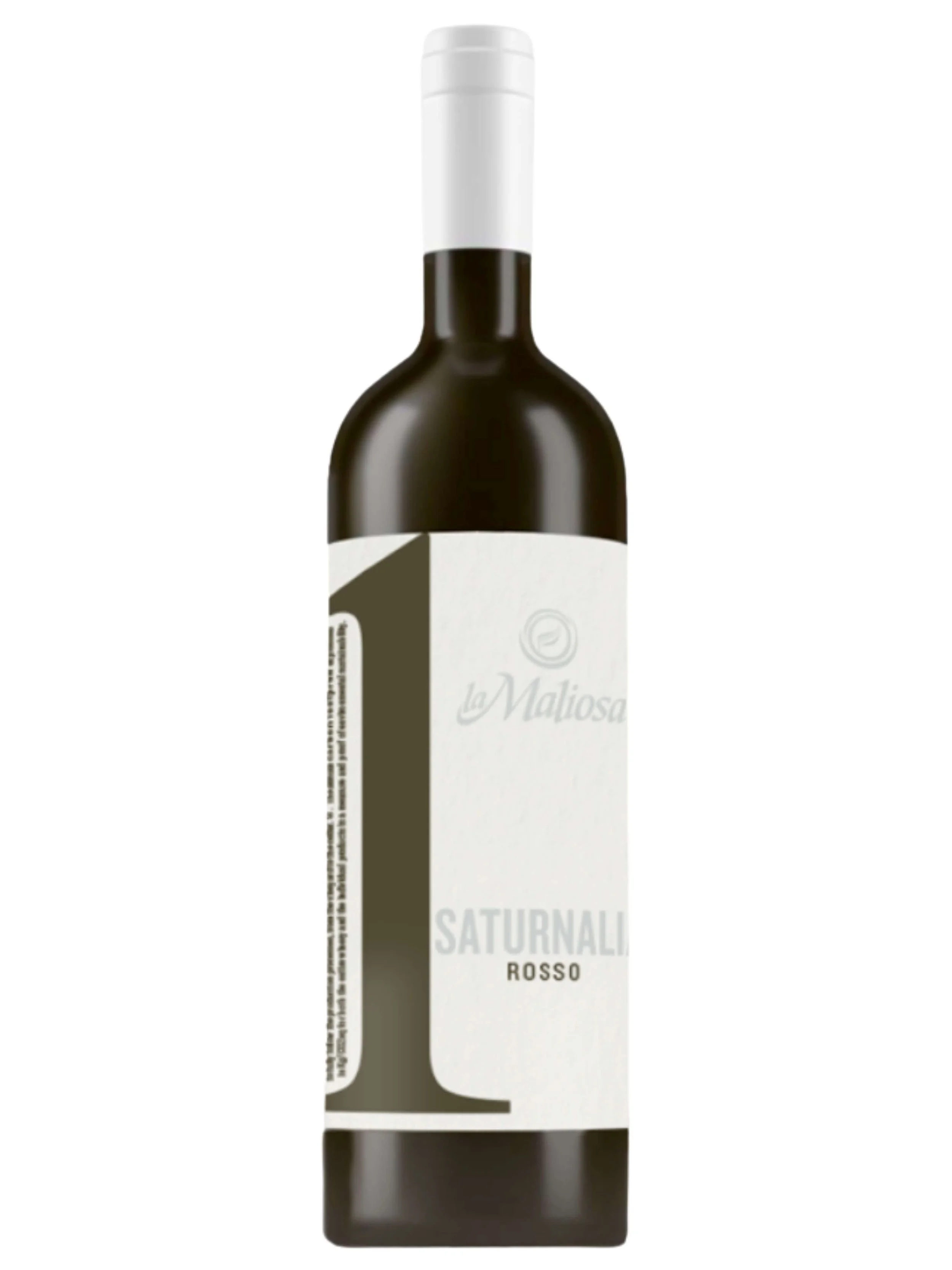
Saturnalia Rosso, once called Saturnia Rosso, is an approachable, balanced red wine with great texture and expressive finish made from a blend of native varieties from central Italy. A four week maceration on the skins is followed by aging in large wooden casks for 20 months. A pretty ruby color is accompanied by cherry and vanilla spice aromas. Pairs great with pork kebabs and cheese burgers. A woman-made organic, biodynamic and vegan natural wine using the patented Metodo Corino which is based on regenerative agriculture farming methods.
Tastes Like: Cherry and Strawberry Fruit Leathers
Farming & Winemaking Highlights: Regenerative Agriculture | Sustainable Winery | Biodynamic | Native Yeast Fermentation | Vegan | No additives (ie non sulphites added) | Unfiltered | Organic | Metodo Corino | Natural Wine
Fun Facts: The natural farming method that produced this wine, the metodo corino, is actually patented by La Maliosa woman winemaker Antonella Manuli after she helped to develop it with natural wine legend Lorenzo Corino of Case Corini.

An award winner in the Millennial Wine Competition, this all natural, fresh and earthy red is made from hard-to-find Tuscan varietal Ciliegiolo whose name derives from cherry - so guess what it tastes like! An organic, biodynamic and natural wine made from the patented Metodo Corino with nothing added but grapes. Made with free run juice, maceration continues for four weeks and then aged in neutral wooden barrels for a short period of time. A natural wine, no sulfites are added during the winemaking process. Cherry and spice aromas and taste with notable tannins and mouth feel contributing to its great structure and long finish.
Tastes Like: Cherry Jam
Farming & Winemaking Highlights: Regenerative Agriculture | Sustainable Winery | Biodynamic | Native Yeast Fermentation | Vegan | No additives (ie non sulphites added) | Unfiltered | Organic | Metodo Corino | Natural Wine
Fun Facts: The natural farming method that produced this wine, the metodo corino, is actually patented by La Maliosa woman winemaker Antonella Manuli after she helped to develop it with natural wine legend Lorenzo Corino of Case Corini.

All natural, old vine nebbiolo and barbera blend with no added sulfites and yeast. Aromas of milk chocolate covered cherries, it has a fresh and rich fruity taste with notable tannins and a has a long piquant finish. Name comes from the former owner of the 70 year old vineyard which has a mix of Nebbiolo and Barbera and is down the hill from the childhood home of Lorenzo Corino. After a gentle crushing, fermentation starts with native yeast fermentation and wines are left with skin contact for 6-7 weeks, followed by about 30 months of aging in wooden barrels. As with all of Case Corini wines, this is a 00 wine, nothing added, nothing removed, no yeast, no sulphites added, organic, biodynamic, vegan. In other words, all natural wine.

Earthy, age-worthy nebbiolo made from 70 year old naturally cultivated vines. Named for the dearly beloved grandfather of Lorenzo Corino. Having a garnet color with orange hues it has a complex, spicy nose with notes of cardamom and cinnamon. When tasting, it is fruit forward, cherry & forest fruits, followed by spices, and chalky tannins envelope the mouth and finishes elegantly. After a gentle crushing, fermentation starts with native yeast fermentation and wines are left with skin contact for 6-7 weeks, followed by about 36 mos of aging in wooden barrels.
As with all of Case Corini wines, this is a 00 wine, nothing added, nothing removed, no yeast, no sulphites added, organic, biodynamic, vegan. In other words, all natural wine.
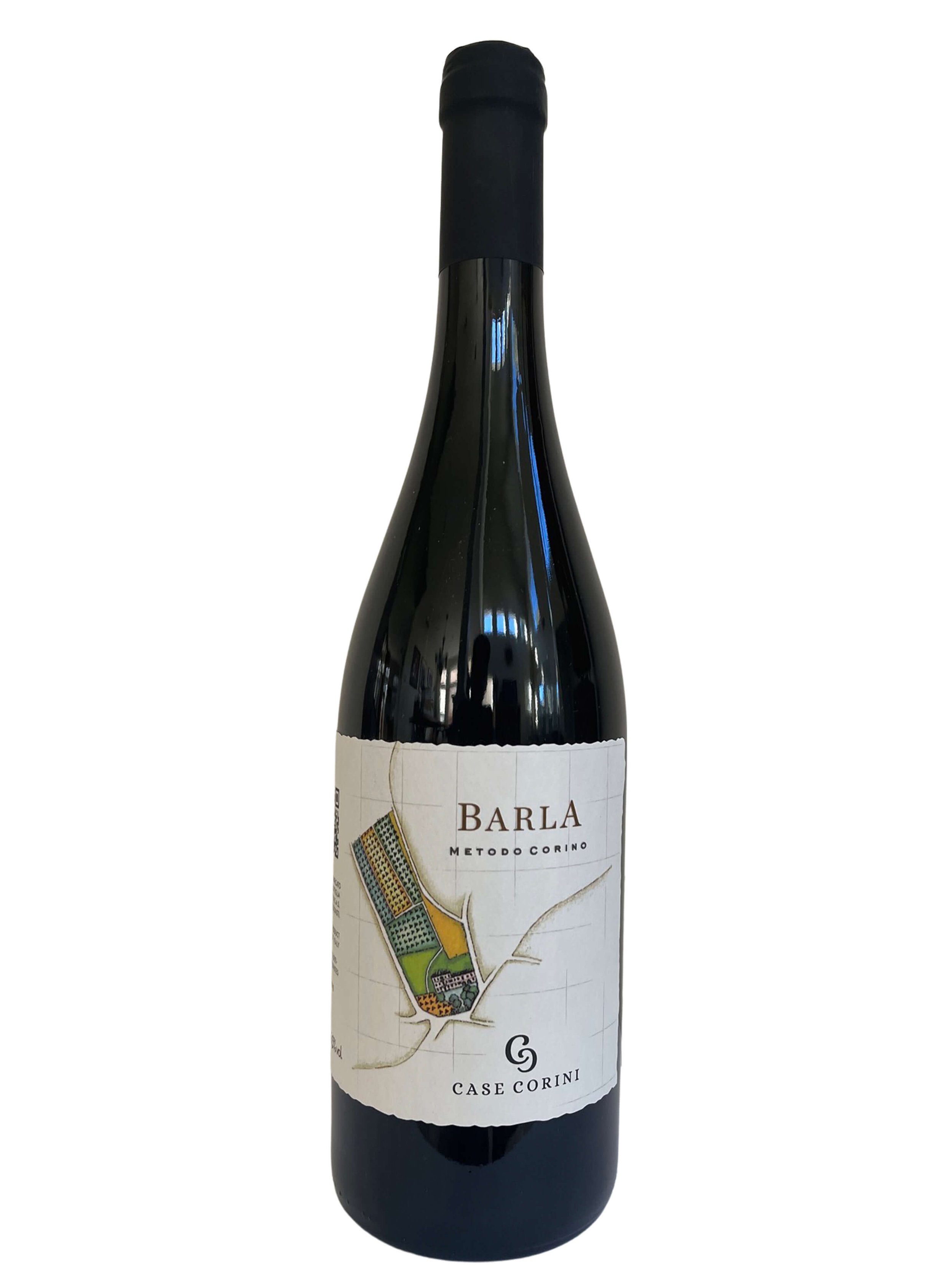
You never had a Barbera like this! Made from 95 year old Barbera vineyard, with some small percentage of other varieties planted over the years in the vineyard. This all natural wine has intense aromas of brandied cherries and a richly textured, delicious dark fruit taste with right balance of fruit, acidity and tannins. Barla is the antique name of the vineyard which used to be the land of an old convent. After a gentle crushing, fermentation starts with native yeast fermentation and wines are left with skin contact for 6-7 weeks, followed by about 36 months of aging in wooden barrels, housed under Lorenzo Corino's family home.
As with all of Case Corini wines, this is a 00 wine, nothing added, nothing removed, no yeast, no sulphites added, organic, biodynamic, vegan. In other words, all natural wine.

From the woman owned natural winery Foligodia, Metamorfosi is a complex orange wine that tastes like biting into a tart apricot. This fruit-forward wine gets its distinctive character from skin contact, and it's crafted from a blend of Chardonnay and Malvasia di Candia grapes.
Region: Italy > Lombardy > Mantova
Tastes Like: Like biting into a tart apricot.
Farming & Winemaking Highlights: Regenerative Agriculture | Sustainable Winery | Biodynamic | Native Yeast Fermentation | No additives | No Sulfites added | Unfiltered | Organic | Skin Contact | Natural Wine
Fun Facts: The name metamorfosi means “metamorphisis” in Italian.

This herbal tea is the handicraft of the woman winemaker behind Foligodia wines: while caring for her organic , biodynamic and regenerative farm which makes her natural wines, she collects wild plants and herbs growing in her vineyards to make this 100% natural, loose-leaf herbal infusion, known as a tisana in Italian. This blend of hand-harvested herbs and flowers is cultivated directly from the winery's vineyards and cold-dried to preserve its purity.
Each herbal tea is hand selected by Sharom of Foligodia and provides various health benefits, from promoting physical and mental relaxation to bolstering your immune system. Escape to the serene landscape in the vineyards and hills of Northern Italy with every cup of Sharom’s natural herbal infusions.
Region: Italy > Lombardy > Mantova
Tastes Like: Wildflowers and plants native to Northern Mantova Italy
Farming & Winemaking Highlights: Regenerative Agriculture | Sustainable Winery | Biodynamic | No additives | Organic | Natural
Fun Facts: You get many similar aromas when you taste together Foligodia’s natural wines and her teas.

A fun and fruit-forward red wine, Ascoltati offers an immediate burst of juicy strawberry and floral notes, reminiscent of fresh strawberry juice and a hint of lavender. With a medium acidity and very low tannins, this "glou glou" style wine is deliciously drinkable but still finishes clean with a distinct mineral character. Crafted by Foligodia, this low-alcohol blend of Merlot, Rondinella, and other grapes is a perfect wine for any occasion and is particularly refreshing when served chilled.
Region: Italy > Lombardy > Mantova
Tastes Like: Strawberry Juice
Farming & Winemaking Highlights:Regenerative Agriculture | Sustainable Winery | Biodynamic | Native Yeast Fermentation | No additives | No Sulfites added | Unfiltered | Organic | Natural Wine
Fun Facts: The name ascoltati means “listen” in Italian.
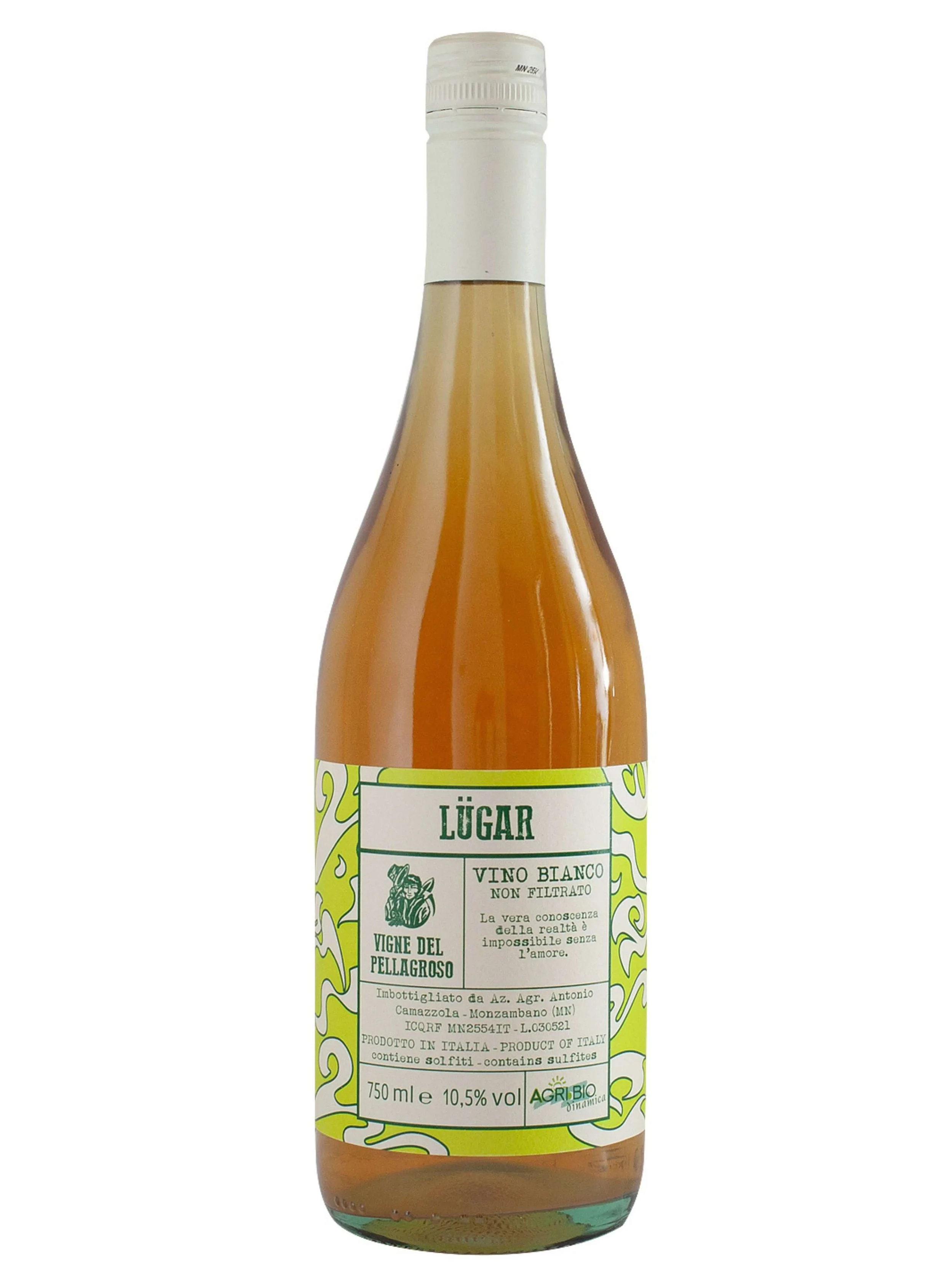
A fruit-forward and complex orange wine, Lugar immediately delights with flavors of tart peaches and a nose rich with exotic citrus and satisfyingly complex notes. This thirst-quenching character comes from a unique blend of Riesling, Garganega, and Moscato grapes grown in three different vineyards. Aged in cement with five days of skin contact, this serious orange wine achieves a notable acidity that is in full harmony with its flavors, leading to a long, clean, and saline finish. The wine presents an intense yellow color with striking green reflections.
Region: Italy > Lombardy > Mantova
Tastes Like: Tart peaches
Farming & Winemaking Highlights: Regenerative Agriculture | Sustainable Winery | Biodynamic | Native Yeast Fermentation | No additives | No Sulfites added | Unfiltered | Organic | Skin Contact Orange Wine | Natural Wine
Fun Facts: The name “lugar” refers to a type of small green lizard that lives in the vineyard.
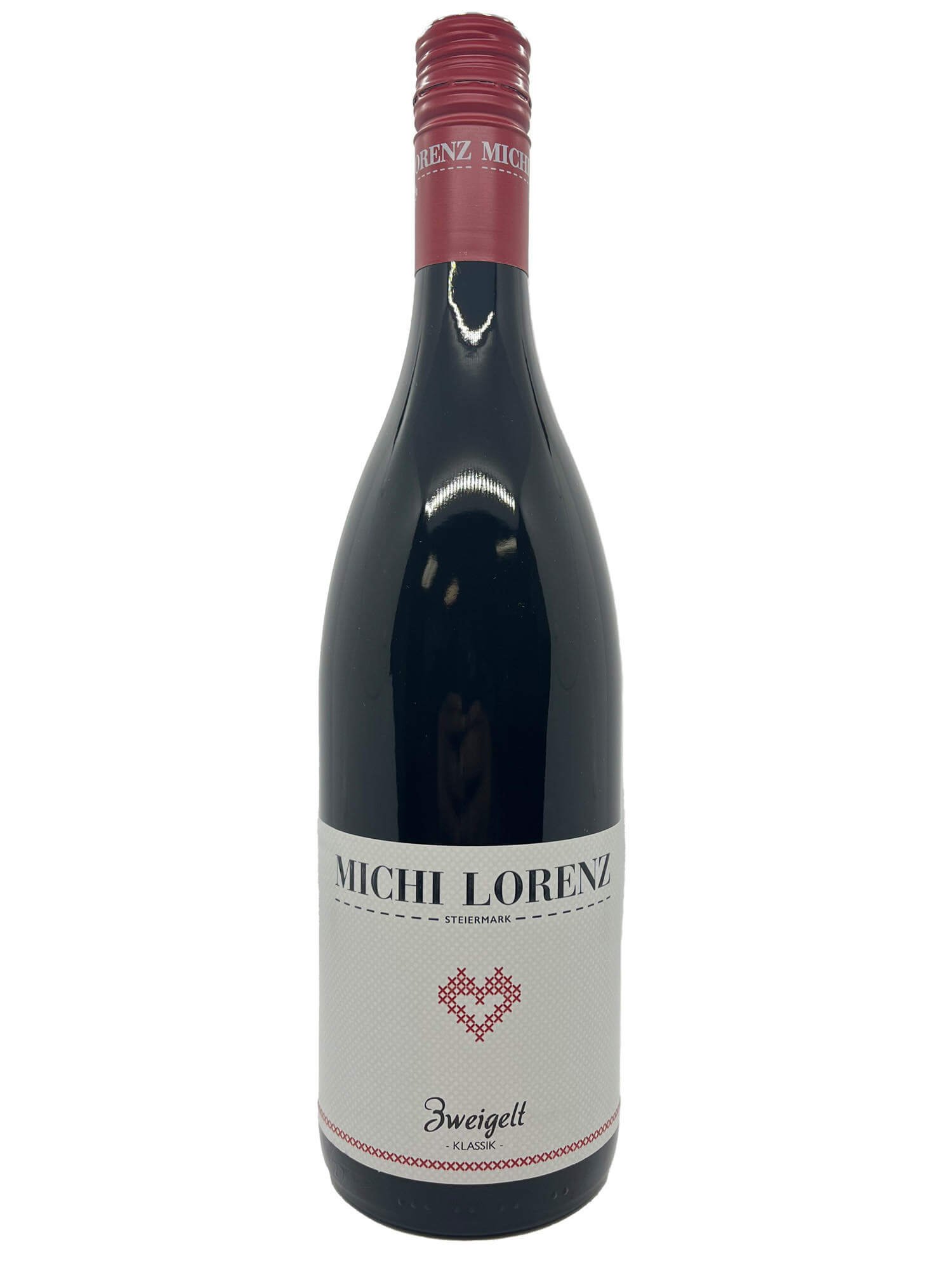
The organic and biodynamically farmed fruit was handpicked from estate hillside vineyards 400 meters above sea level in Sausal. Soils are red schist and loam. The wine underwent native yeast fermentation. After 25 days of maceration on the skins, the wine aged in a combination of stainless-steel tanks and oak barrels with very minimal sulfites added.
The first sniff of this quaffable Zweigelt natural wine is amarena cherries which then leads to vanilla and spice. In the mouth it is fresh with fruit that hides behind the structure and chalky tannins. It has nice texture and a medium slightly bitter finish. It is easy drinking and pairs great with hamburgers.

This unfiltered sauvignon blanc natural wine is playfully named after the limestone, mineral-rich soil where it was cultivated. It’s from the Sudsteiermark, or South Styria, Austria, known for some of the best sauvignon blanc in the world. It has a bright lemon yellow color with an intense reductive nose that has curious complex aromas that develop more once it breaths, such as tropical fruit aromas. The taste has a 'wow' factor with racy, prickly acidity, really nice texture a VERY long mineral finish. Think of what it’s like to lick a rock - this is it! This is your ‘atypical’ Sauvignon blanc, made from a mix of 9 different Michi Lorenz’s estate vineyards, some early, mid and late harvests, and across 4 different vintages using the complex solera method. A real one-of-a-kind sauvignon blanc.
A natural, and certified organic and biodynamic wine made with native yeast fermentation.

Cloudy mandarin orange color late harvest Sauvignon Blanc natural wine from one the best places in the world for Sauvignon Blanc leads to a saline and yeasty nose with a bit of lemongrass notes. It has laser-like, linear acidity and is super tasty, with great fruit and salinity. It is a 'meaty' orange wine with nice mouthfeel and slight tannins. This Sauvignon Blanc is from the Sudsteiermark region of Austria in South Styria.
This skin-contact orange wine is crafted with native yeast fermentation by certified organic and biodynamic Austrian winery Michi Lorenz.