It’s one of the most common wine questions we hear: how is it that wines and styles, even those from the same grape, can taste so different between California and Europe? The short answer is that wine is shaped by more than grape variety alone. Climate, tradition, and the way people drink and talk about wine all leave their mark on what ends up in the glass.
At Vero, we see this every day because we work with small producers on both sides of the Atlantic, and those differences show up clearly in the bottles we import and the bottles we offer from California.
A Dolcetto wine from Italy and a Dolcetto wine from California are still cousins, as we have discussed in the past, but they express themselves through different fruit, structure, and energy because they come from different places and different winemaking cultures.
If you compare wines this way, the goal is not to decide which side is “better.” Instead, it’s to understand which side fits your personal style and palate; like why one bottle may feel more immediate, fruit-forward, or plush, while another may feel more savory, structured, or food-focused.
That is where the fun begins, because the answer is usually a mix of geography, history, and palate familiarity.
Climate Effects
If you want to understand why a California Chardonnay and a Czech Chardonnay can taste like completely different wines, start with the sun. California's wine regions, from Sonoma to Santa Barbara, enjoy long, warm growing seasons with consistent sunshine and relatively mild winters. It might be easier for grapes to ripen fully and develop generous fruit, softer acidity, and higher natural sugar levels. The result tends to produce wines that are more round, rich, and immediately expressive, with, for example, ripe stone fruit, tropical notes, and a lush texture.
European wine regions, particularly in places like Tuscany, Piedmont, or the Czech Republic, tend to have more dramatic temperature swings between day and night, shorter growing seasons, and soils that push vines to work harder. That kind of stress builds structure and grapes develop slower, retain more natural acidity, and produce wines with more tension and minerality. The fruit is there, but it often plays a supporting role alongside earthy, herbal, or stony notes that reflect the land itself.
Style decisions in the winery follow the same logic:
In warmer climates where fruit is already abundant, winemakers may lean into that richness with oak aging, extended skin maceration, or harvests that push alcohol higher. Or they may try to combat the impacts of hotter weather by harvesting early, resulting in lower alcohol and “leaner” wines.
In cooler European regions, the winemaking tradition is often to let the terroir speak for itself. In this case the winemaker is aiming to preserve the natural balance the climate has already created in the grape.
Neither approach is wrong, but, rather, they are different approaches to achieve the type of style of wine that is sought after, considering many factors like the winemaker’s preferences, traditions, appellation restrictions, and, in some cases, who the target “persona” is that ultimately will purchase the wine.
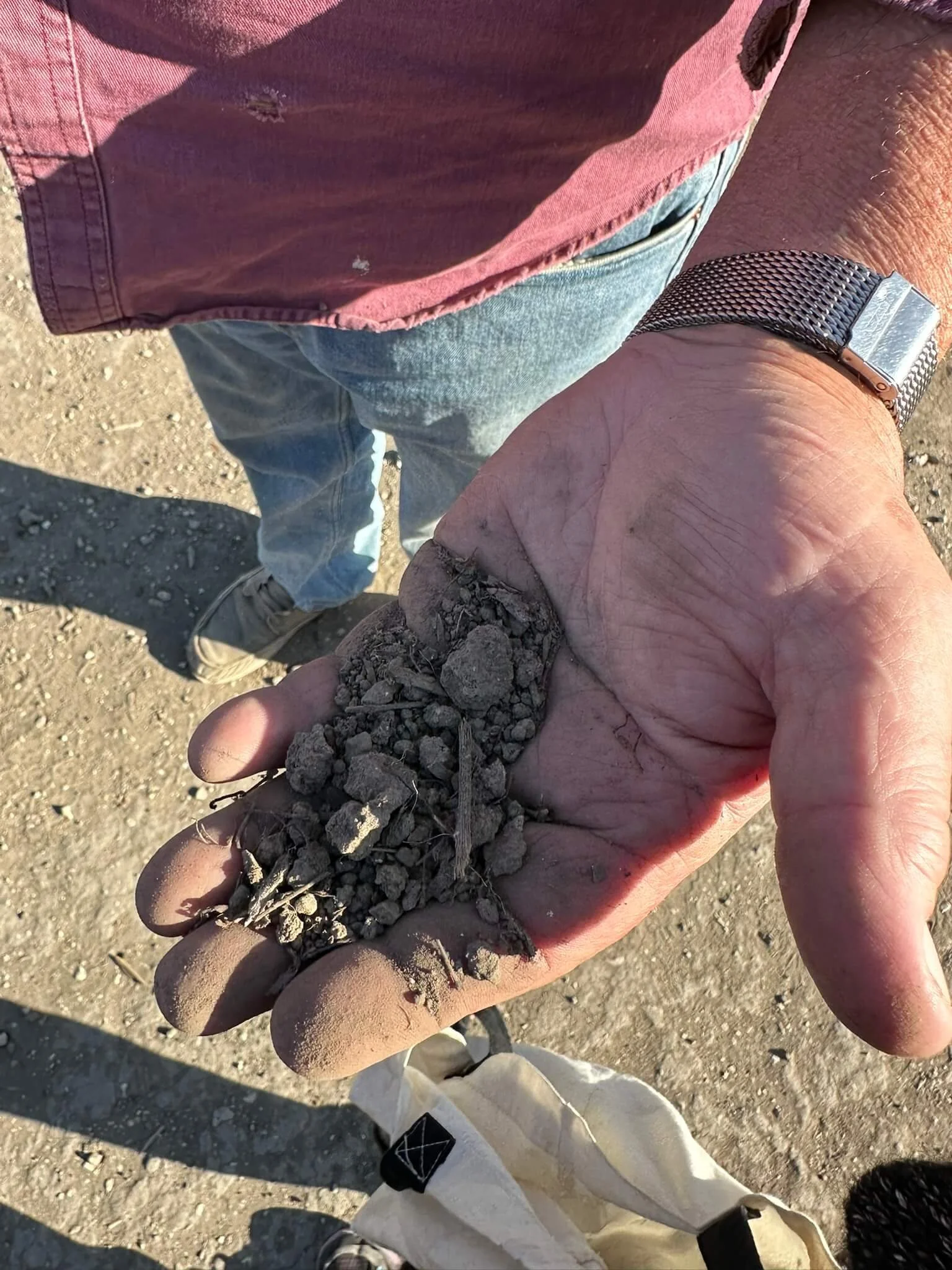
The terroir and soil of California, as shown by the winemaker and farmer behind Clos des Amis.
The Role of Tradition
Wine in Europe is old. Not just a few decades ago old, but we are talking centuries, rather millenia, of culture, ritual, and identity built around the vine.
In Italy, France, Spain, the Czech Republic, Austria, etc., wine is not just a beverage. It is part of how people eat, celebrate, and connect with their land. Regional traditions dictate which grapes grow where, how they are made, and what they are meant to accompany at the table. A Brunello di Montalcino is not just a wine, but it is the expression of a specific hillside, a specific grape, and generations of accumulated knowledge about what that place can produce.
California's wine story is much younger, and that youth shows up in both its freedom and its ambition. Without centuries of tradition to answer to, California winemakers have been free to experiment, and yes, borrow from the Old World, but also build a unique style that appeals to a broad and enthusiastic American market. That market, shaped by its own cultural habits approaches wine differently than a European who grew up with it at the family table.
In Mediterranean culture especially, wine has long been considered part of a balanced, healthy lifestyle. The Mediterranean diet has always had a modest glass of wine at the table as a natural companion, not an indulgence. Children in many European households grow up watching their parents pour a small glass with dinner, and in many countries it is not unusual for a teenager to be offered a glass at a family meal. Wine, in this context, is food. It is something you grow up with gradually, learning its flavors alongside the flavors of the kitchen.
The American relationship with wine is a little different. Prohibition, which banned alcohol across the United States from 1920 to 1933, did not just interrupt wine culture, it nearly erased it. The habit of pairing wine with food as a daily ritual never fully recovered. Today, the legal drinking age in the US is 21, meaning most Americans come to wine as adults, without the gradual, food-centered introduction that many Europeans take for granted. Wine often gets enjoyed on its own, without food, which naturally rewards wines that are rounder, softer, and more self-sufficient in the glass, styles that California has become very good at producing thanks to its climate as we discussed above.
This is not a criticism of either approach: it is simply context. European wines built around the tradition of the table can feel austere or even sharp when sipped without food, because they were never designed to stand alone. Their acidity, tannin, and structure are features, not flaws, they are the parts of the wine that make a slow Sunday lunch come alive. Understanding that context changes the way you experience the bottle entirely.
What’s Written On the Label
Pick up a bottle of European wine and a bottle of California wine side by side, and the labels alone will tell you something about the philosophy behind each one. European wines, particularly Italian ones, tend to lead with place. The label says Brunello di Montalcino, Dogliani DOCG, or Rosso di Toscana: there is a focus on the region, the appellation, or the geography. The grape variety may not even appear on the front, and that is not an oversight. It reflects a deeply held belief that where a wine comes from is more important than what grape it is made from, because place and tradition is what makes it unique.
California labels, by contrast, tend to lead with variety. You reach for a Chardonnay, a Pinot Noir, a Cab. The grape is the headline, and the region (called AVA in the US) is secondary. This approach makes wine more immediately accessible to a shopper who is still learning; you think you know what a Chardonnay tastes like, so you can make a confident choice. But it also flattens some of the nuance: a Chardonnay from Russian River Valley and a Chardonnay from Ventura County are very different wines, but the label may not immediately tell you that.
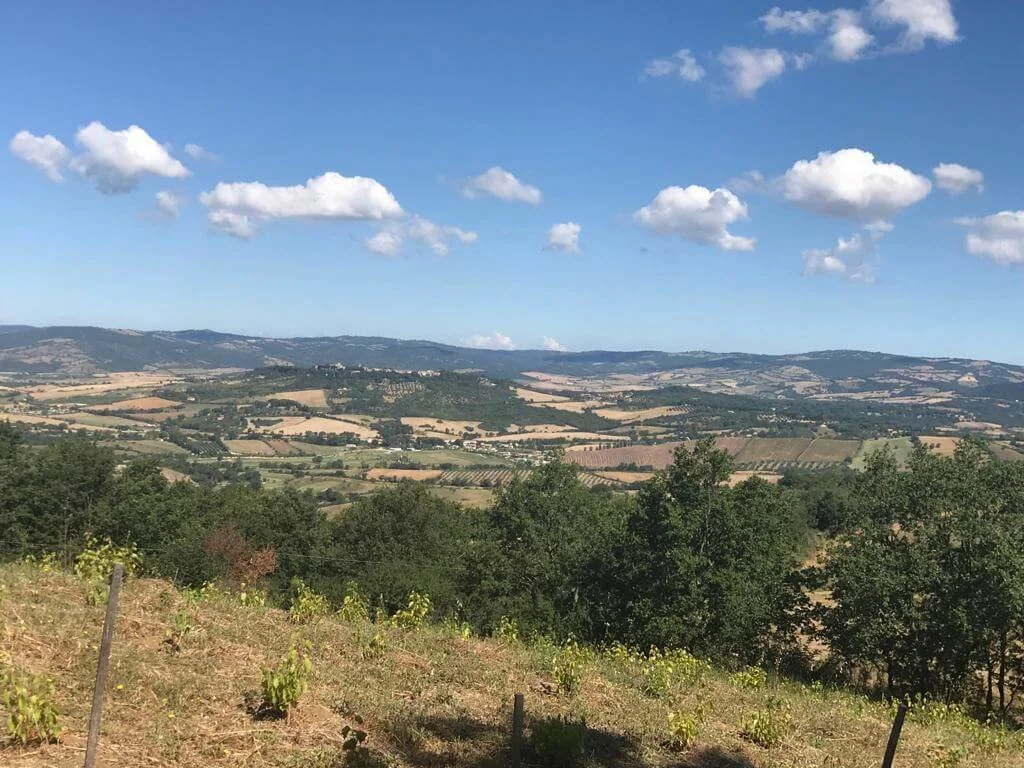
A Tuscan landscape from the Maremma vineyards of La Maliosa.
There is also a transparency question worth raising.
In the US, a wine can list a single grape variety on the label if it contains at least 75% of that grape. That means up to 25% of the bottle can be an entire other grape, and you would never know.
In Italy and much of Europe, the culture around labeling tends toward greater transparency, with stricter appellation rules that govern not just what grape goes in the bottle, but how it is grown, harvested, and made. Yes, blends are allowed for some single variety labeled denominations, but a lot of producers don’t use that “loophole”, or if they do, they use a smaller percentage of the “other” grape(s). For small producers like the ones Vero works with, that transparency is a point of pride not just a legal requirement.
The “You” Factor
Here is something worth sitting with: you probably like what you are used to.
That is not a flaw, it is just how taste works.
Our palates are shaped by what we grew up drinking, what we drink most often, and what food we drink it with.
If most of your wine experience has been built around California bottles, think ripe, bold, or fruit-forward, in other words, easy to enjoy on their own without pairing with food, then your first encounter with a leaner, more acidic or structured, food-driven European wine may feel harsh. That reaction is not a judgment about quality, it is simply your palate telling you it has not met this style before.
The good news is that palates are not fixed; they evolve, stretch, and surprise you. Many wine drinkers who start with softer, rounder styles gradually find themselves drawn toward wines with more tension, more savory character, and more to say with food on the table. The reverse is also true with European wine drinkers who discover California's small-production, artisan side often find wines that feel fresher and more approachable than the big commercial bottles they may have assumed represented the whole category. That is exactly the kind of discovery Vero was built around.
One useful frame is to think about context. A wine that feels sharp or austere on its own may completely transform alongside a plate of pasta, a grilled fish, or a simple cheese. Equally, a rich, fruit-forward California wine that feels almost overwhelming with a delicate dish may be exactly right for a backyard barbecue or a relaxed evening. Neither wine is wrong. They are simply speaking different languages, and learning to translate is one of the real pleasures of exploring wine.
Same Grape, Different Wine
The best way to understand everything we have talked about so far is to taste it, so let’s look at grapes that Vero carries from both California and Europe, so you can see and taste exactly how place, tradition, and style shape the wine in your glass.
These are conversations between two different expressions of the same idea, and not a competition ;)
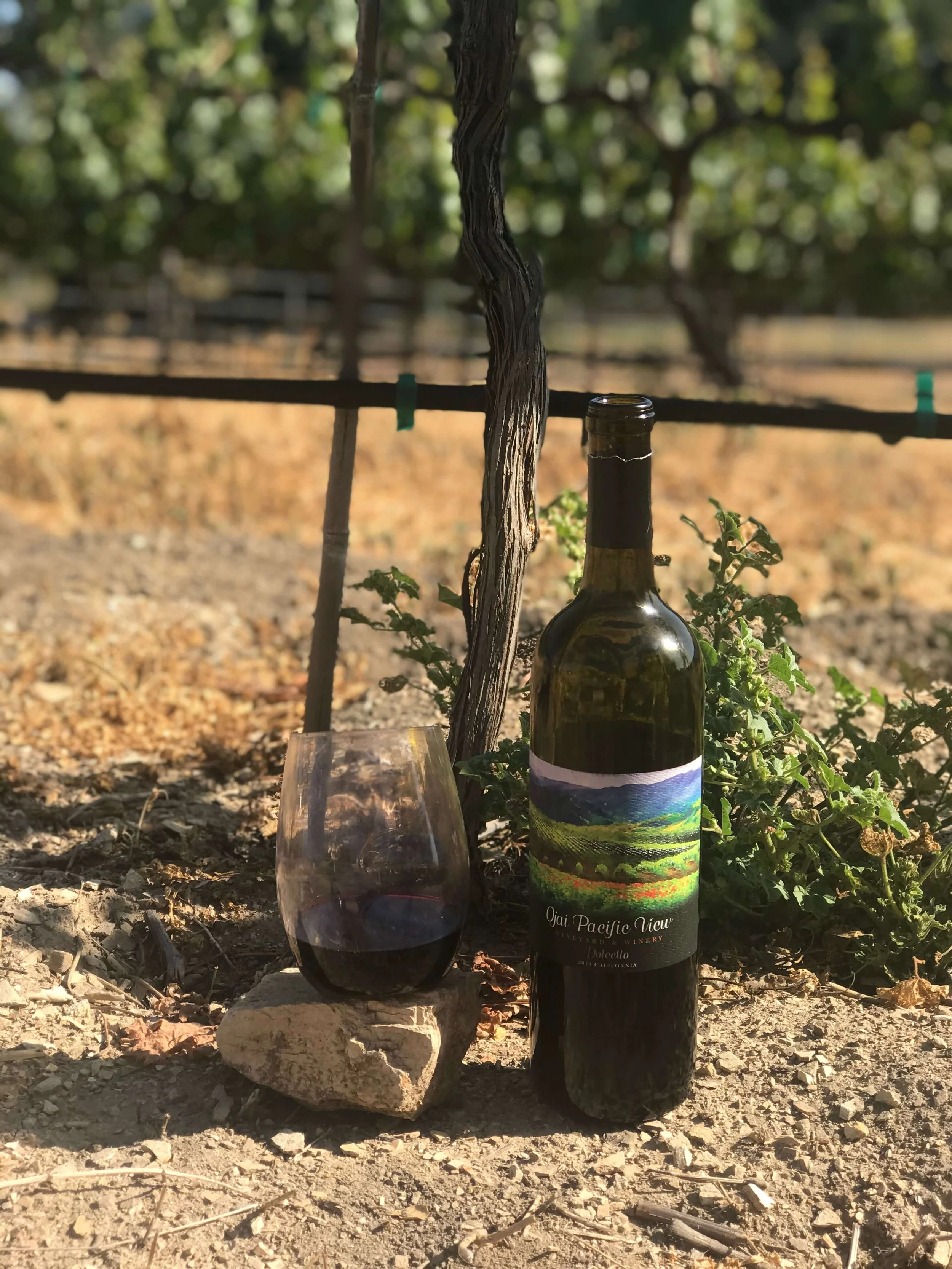
A Dolcetto wine from California, in the vineyard.
Dolcetto: Piedmont vs California
Dolcetto is a grape with deep roots in Piedmont, in northwestern Italy, where it is known as the everyday wine that is approachable, food-friendly, and unpretentious. The name loosely translates to "little sweet one," though the wine itself is typically dry. The Aldo Clerico Dogliani DOCG is exactly that kind of classic Dolcetto wine. It comes from the Dogliani appellation in Piedmont, one of Dolcetto's most celebrated homes. It shows the classic Italian profile: red plum, floral notes, firm but approachable tannins, and that characteristic almond finish that makes it a natural partner for cured meats, antipasti, and pasta dishes.
The Ojai Pacific View Dolcetto tells a different story. Grown and made in Southern California, this is a wine that takes an Italian grape and gives it a California twist. The warmer climate and higher elevation site produce a Dolcetto that is richer and more dark fruit-forward, with cassis, wild berry, and a mineral-saline edge that reflects the Pacific influence of its coastal terroir. The winemaking style is artisan, which keeps it honest and far from the big commercial California mold, however the fruit expression is unmistakably New World.
Chardonnay: Czech Republic vs California
Chardonnay is one of the most widely planted grapes in the world, which also makes it one of the most misunderstood. Say "Chardonnay" to many American wine drinkers and they picture something buttery, oaky, and rich, or the classic big California style that dominated restaurant wine lists for decades. But Chardonnay is actually a remarkably neutral grape, meaning it takes on the character of wherever it is grown and however it is made, and that makes it a perfect grape for this kind of comparison.
The Thaya Unoaked Chardonnay from South Moravia in the Czech Republic is about as far from the buttery stereotype as you can get. Grown in a cool continental climate with significant day-to-night temperature swings, this wine is crisp, fresh, and lively, with bright fruit, natural acidity, and a chalky mineral quality that keeps every sip clean and focused. No oak, no manipulation, just the grape and the place. It is the kind of Chardonnay that pairs effortlessly with lighter dishes, white fish, or a simple vegetable risotto.
California gives us two very different takes on Chardonnay. The Clos des Amis Chardonnay from Ventura County is unoaked and fruit-forward, showing that not all California Chardonnay fits the big, buttery mold. This one is made in a lighter, more approachable style that bridges the gap between Old and New World, fitting with winemaker Bruce Campbell of Clos des Amis’ philosophy. The Field Russian River Chardonnay from Sonoma is a more classic California expression with a fuller, rounder, and more generous palate, reflecting the warmth of one of California's most celebrated Chardonnay appellations.
Gewurztraminer: Czech Republic vs California
If Chardonnay is the chameleon of the wine world, Gewurztraminer is the opposite and might be one of the most recognizable grapes you will ever encounter. Intensely aromatic, it will classically have signature notes of lychee, rose petal, ginger, and exotic spice. The question, as always, is what happens to that personality when it is grown in different places and made in different styles.
The Thaya Unoaked Gewurztraminer from South Moravia carries a touch of natural residual sugar that softens the wine's edges without making it feel sweet in an obvious way. The cool Czech climate preserves the grape's natural aromatics beautifully, keeping the floral and spice notes bright and lifted while the acidity provides balance and freshness. It is elegant, food-friendly, and a wonderful partner for aromatic dishes like Thai cuisine, soft cheeses, or roasted root vegetables.
Then there is the Field L'Orange from California, and this one takes a genuinely unexpected turn. The Gewurztraminer grapes are used as if for a red wine, leaving the skins in contact with the juices to create an orange wine. This extended skin contact during fermentation extracts tannin, texture, and a deeper amber color from the grape skins. The result is a wine that still carries the grape's unmistakable aromatics (white raisin, dried rose, exotic spice) but adds a savory, textured dimension that feels earthy and complex. It is Gewurztraminer, but not as you might expect it.
This pairing is perhaps the most vivid illustration in this entire article of how winemaking style can be just as transformative as geography. Same grape, but a completely different philosophy in the cellar produces two wines that could almost fool you into thinking they share no common ancestor at all.
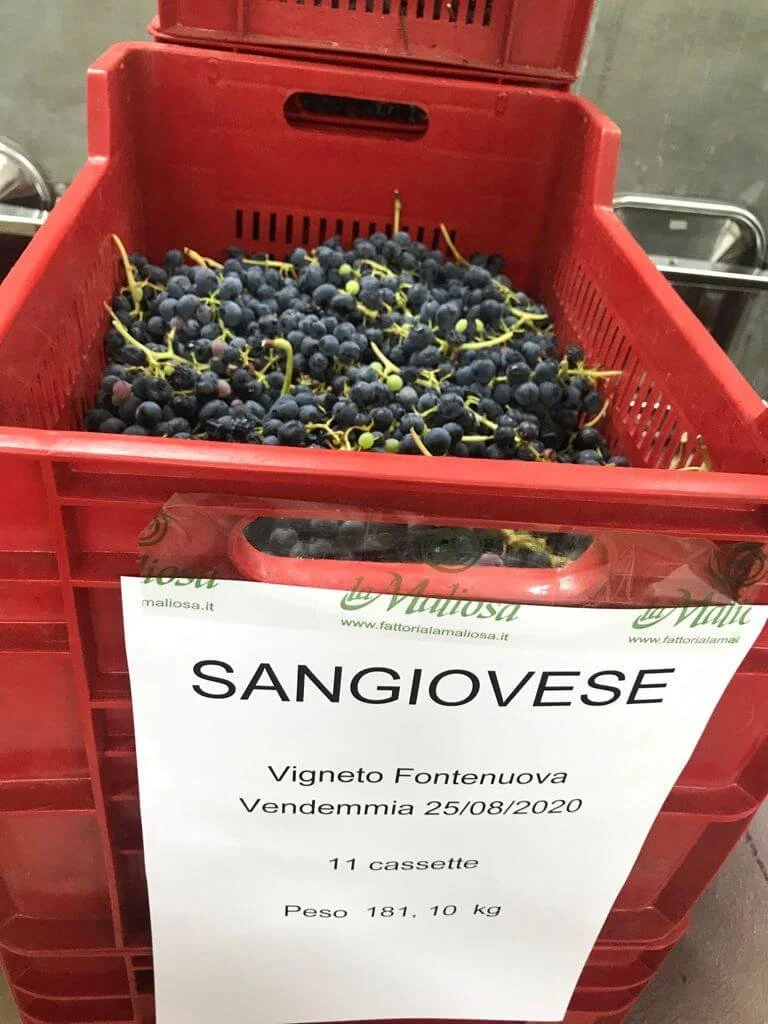
Freshly harvested Sangiovese from Tuscany.
Sangiovese: Tuscany vs California
Sangiovese is Italy's most planted red grape, and in Tuscany it is nothing short of an institution. Sangiovese expresses itself across a remarkable range of styles that are all shaped by elevation, soil, and the winemaker's hand. It is a grape that rewards patience, pairs beautifully with food, and carries a distinctly Italian soul: high acidity, firm tannins, and a savory, earthy depth that makes it one of the most food-friendly reds in the world.
Vero carries a beautiful range of Tuscan Sangioveses that show just how much variety exists within a single grape and region. The Canalino Rosso di Toscana is the most approachable: an organic, vegan wine made with native yeasts that is fresh, vibrant, and easy to love. Step up to the Canalino Rosso di Montalcino and the wine gains structure and complexity, reflecting the prestige of the Montalcino appellation. At the top sits theCanalino Brunello di Montalcino, a wine that asks for time, a good meal, and your full attention. And then there is the La Maliosa Tarconte, a natural, biodynamic expression from the Maremma part of Tuscany that brings a wilder, more untamed energy to the grape in an earthy, mineral, and deeply expressive viewpoint of its land.
Across the Atlantic, the Clos des Amis Sangiovese from Southern California takes this ancient Italian grape and gives it a sunnier, more fruit-forward personality. Strawberry, floral notes, and a softness that makes it approachable even slightly chilled makes this a Sangiovese made for the California lifestyle, without the weight of centuries of tradition telling it what it must be. It is charming, honest, and a wonderful reminder that a grape can travel and still find its voice in a new place.
What Does Your Palate Prefer?
At Vero, we have always believed that the best way to understand wine is to taste it. Not to impress anyone, not to follow a trend, but to pay attention to what is in the glass and ask why it tastes the way it does. Climate, tradition, labeling culture, winemaking style, and your own personal history all shape that answer, and the more bottles you open, the more fluent you become in reading it.
For those of you that know our curation style, you know that we love to support small producers and bring you unique and fun wines, and specialty foods. And you can enjoy these curations by trying a selection of different wines, foods, and olive oils from our portfolio. We sell to both businesses and consumers across the US:
We are enlarging our network of distributors around the country. Reach out to us if you are interested in distributing our products.
We sell to wine stores and restaurants in certain states - contact us if you would like more info.
We do corporate gifts and sommelier guided wine tastings. Email us and we’ll tailor unique and sustainable corporate gift ideas.
If our farm crafted wines, specialty foods, and olive oils are not in your local shop or restaurant buy wine online hereand we’ll ship it to you, and we ship to most states.
We also have an award winning wine club for true wine explorers seeking to continually discover unique, sustainable and authentic small production wines they never had.
The New World Contenders
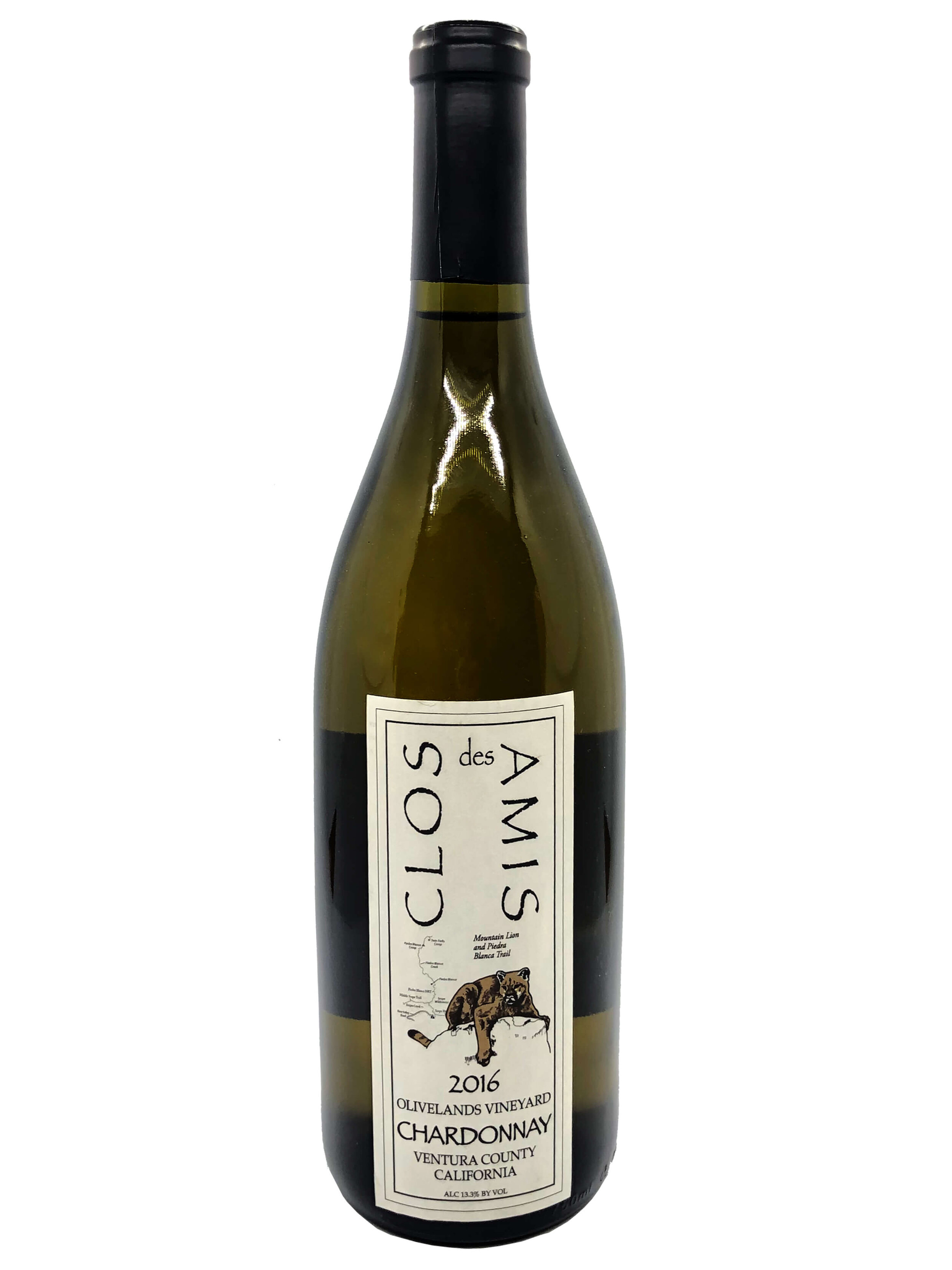
Bruit, juicy fruit on this un-oaked chardonnay from Ventura County in Southern California.

Organically grown grapes, they come from a small part of the Field family vines where the soil is rich in minerals and has a sandy and loamy texture. This chardonnay is made with whole cluster fermentation and native yeast fermentation before being aged in neutral oak.
The 2020 vintage of this Russian River chardonnay is riper, with notes of flint on the nose and pineapple on the palate. Then the 2021 is more reserved and could use some extra time to open. It has a more mineral presence with an apple profile thanks to an earlier harvest in 2021. Overall, in both vintages we find a chardonnay that is balanced with great minerality and fruit and has a long finish.
Small production of only 250 cases were made of this Russian River Chardonnay.

This Gewürztraminer skin contact wine from the Santa Lucia Highlands in California was left on the skins for 15 days creating an inviting orange color. It has juicy white raisin taste which is balanced with minerality, creating a long finish and pleasant mouthfeel with just the right amount of residual sugar.

This mother-daughter winery keep hitting home runs with their ‘experimental’ one acre vineyard of dolcetto on a mountaintop in upper Ojai, California, which started with an idea they brought back with them from Piedmont Italy over 10 years ago. Their super small production Dolcetto experiment is a success, backed up with back-to-back gold medals on their 2019, 2020 and 2021 vintages, and then winning Double Gold and Best of Class in the International Womens Winemakers competition.
The 2020 vintage produced only 23 cases and was aged for over a year in neutral oak. It is fresh and juicy with rich wild berry cassis-like taste. It's an approachable yet complex with a mineral-saline finish. And now, coming off of their wins in 2019 and 2020, Ojai Pacific View has now released the latest edition of their California Dolcetto, the 2021 vintage.
Overall, the wine is a dark purple color, the nose is complex with a mix of plum, herbs, flint and vanilla spice. The fruit and terroir of this old world new world dolcetto red wine that really stands out, thanks to the high altitude and marine fossil soil of this wine estate in upper Ojai.
Here is what other sommeliers are saying about this wine:
Sommelier Marc R. Kauffman:
“Fine wine from Southern California! Italian varietals have been attempted in California with some successes and some not so good examples over the years. The 2019 California Dolcetto from Pacific View Vineyard and Winery is a stunning success! Darkly brooding in the glass, aromas of cedar, spice and vanilla offer a promise of seriously complex wine. Dark cherry and blackberry flavors mingle and dance in your mouth. The tannins are smoothly integrated, and the finish is so smooth I did not want it to end! Harmonious is the one word I would use to describe this wine. This is the third vintage from a very small plot of Dolcetto grapes growing high above the Pacific Ocean in a secluded spot north of Los Angeles. Available only in limited quantities direct to consumer or to a few select restaurants it is well worth the effort to search it out.”

From a vineyard in Camarillo, Ventura County in Southern California, winery Clos des Amis brings us this delicious, fruit forward California Sangiovese.
Think sipping on a wild strawberry black tea as a wine. Fresh wild strawberries take center stage, so sweet and juicy it's like biting into summer. Then, these delicate floral notes come through. This is a wine for kicking back and enjoying the good stuff. Perfect for a summer night with friends, a lighter dinner, or just because. Chill it a bit, to enjoy a different dimension of this wine.
The European Contenders

Dogliani is known as the area which produces the best dolcettos in the world. This expressive structured yet easy-to-drink red wine has purple color, and floral bouquet with red plum notes. On the palate, this dolcetto opens pleasantly with notable tannins that are, however, not overpowering. It finishes with light almond notes. Coming from a single vineyard near Monchiero, this Dogliani is also make with native yeast fermentation.
It can be enjoyed just after bottling, yet it can better itself after a bit of aging in bottle.
Tastes Like: Juicy plump, plums
Farming & Winemaking Highlights: Biodynamic | Native Yeast Fermentation | Single Vineyard
Fun Facts: Originally called Dolcetto di Dogliani, local winemakers lobbied to change the denomination to simply ‘Dogliani’ to avoid the misconception that this wine was ‘little sweet’, as suggested by the translation of ‘dolcetto’ in Italian. They wanted this special dry red wine to be able to make its own name, and let its importance stand for itself.
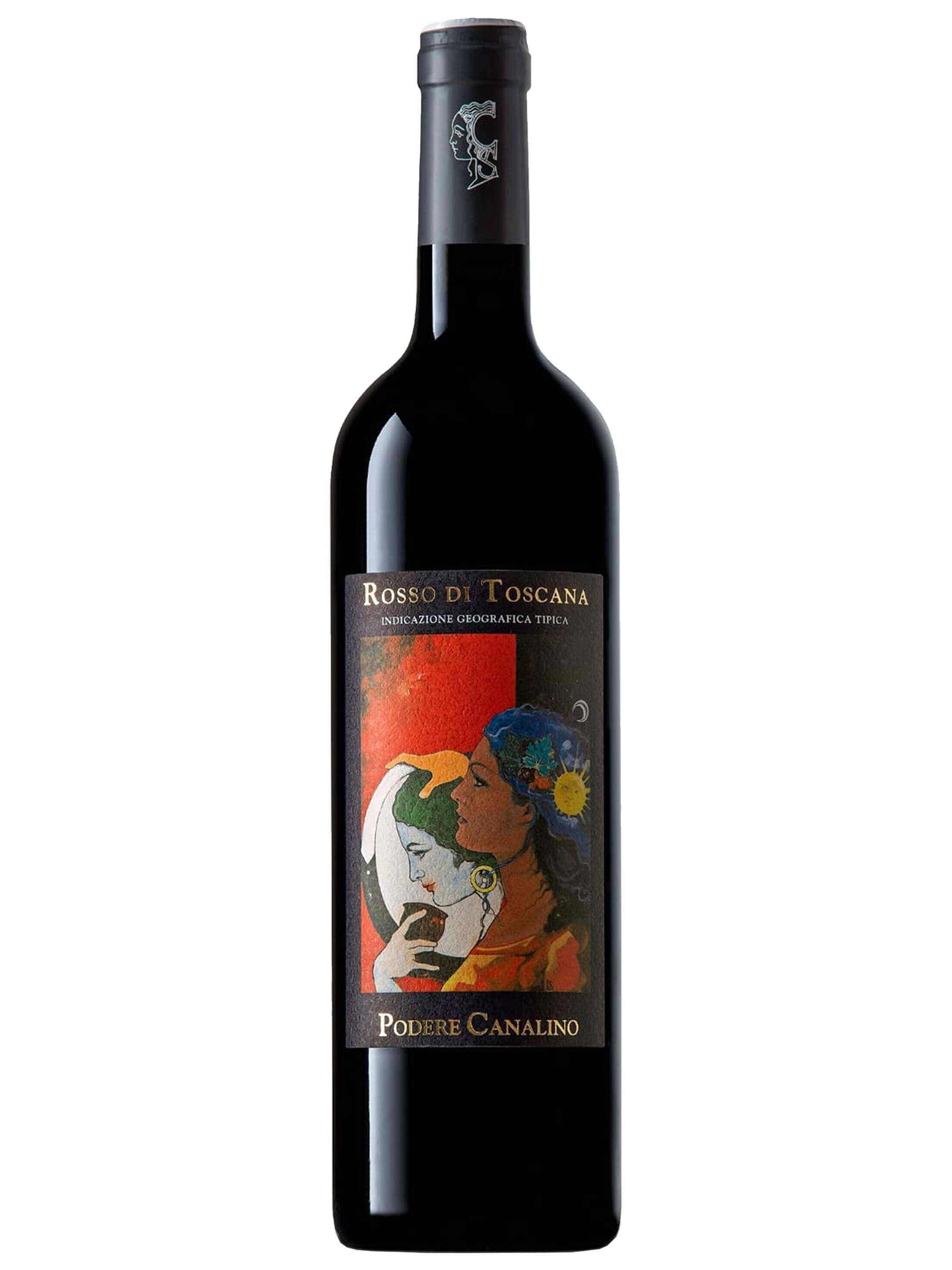
Made from sangiovese vineyards in Montalcino, this is an approachable, people pleaser for red wine lovers, the unoaked offering from the Brunello producer Canalino. It has notes of cherry, with hints of black pepper and toast. This wine is fresh, fruity and balanced with soft tannins and a pleasant clean finish.
Tastes Like: Crunchy, fresh cherries
Farming & Winemaking Highlights: Regnerative Agriculture | Sustainable Winery | Biodynamic | Native Yeast Fermentation | Unfiltered | Organic | Natural Wine | Vegan
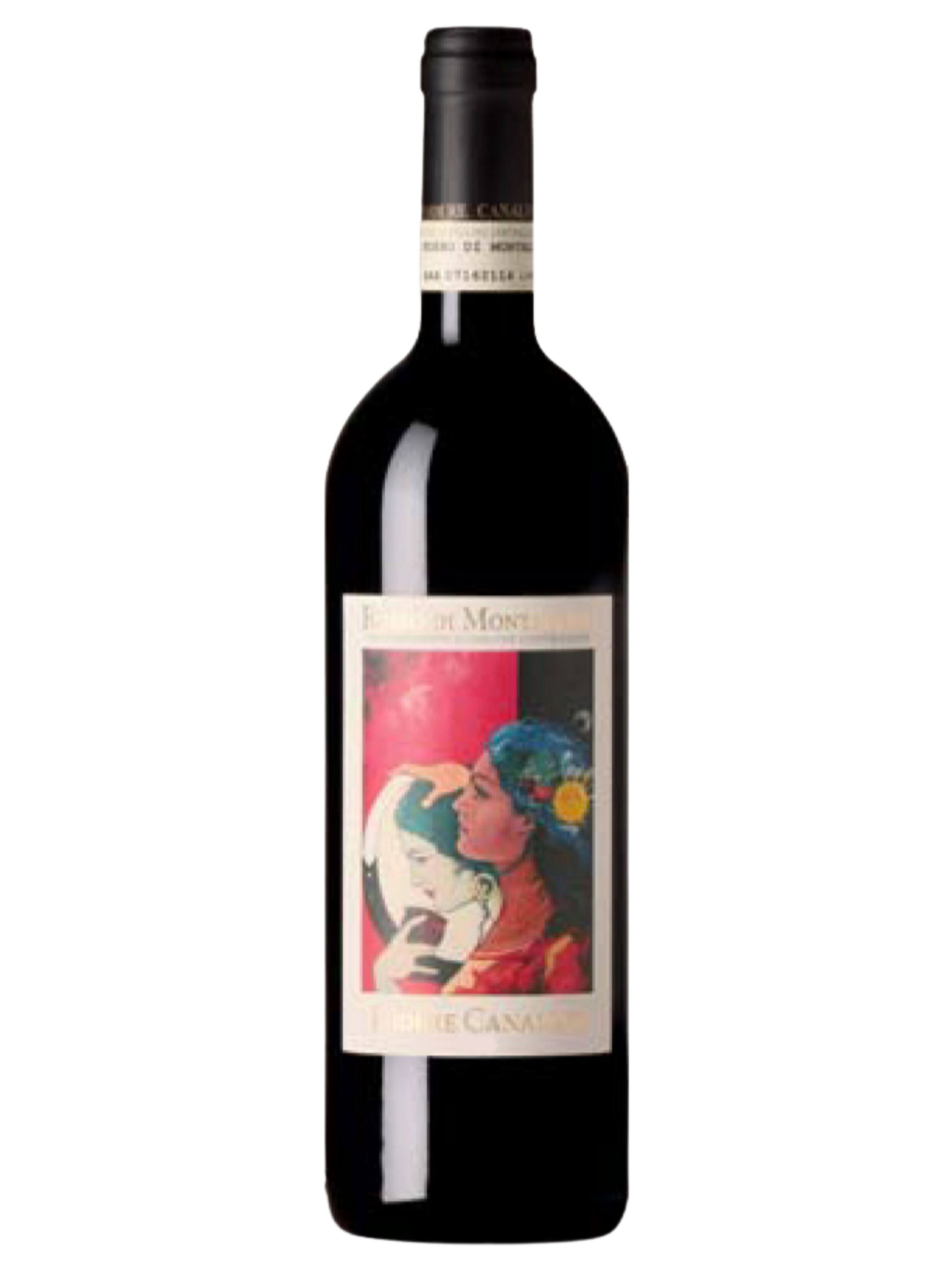
This is a complex, intense age-worthy vegan red wine; Once opened balsamic notes burst forth. We recommend to decant it or at least let it breathe a bit before tasting. When tasting, you understand that it comes from a terroir which one of the best Italian reds, Brunello, is made from; its structure is noteworthy, from acidity, to tannins to mineral structure. A delight for serious red wine lovers.
Tastes Like: Spiced Cherry Jam
Farming & Winemaking Highlights: Regnerative Agriculture | Sustainable Winery | Biodynamic | Native Yeast Fermentation | Unfiltered | Organic | Natural Wine | Vegan
Fun Facts: From 100% sangiovese vineyards right outside the historic center of Montalcino.

This Brunello di Montalcino from winery Canalino is crafted using specially selected sangiovese grapes. A gorgeous ruby color, the nose is a potpourri of intense mature fruit and spice aromas from prune to menthol to leather. The wine is structured, with freshness, minerality and age worthy tannins and a fantastic mouthfeel.
Tastes Like: Stewed Cherries or Cherry Jolly Rancher candy
Farming & Winemaking Highlights: Regnerative Agriculture | Sustainable Winery | Biodynamic | Native Yeast Fermentation | Unfiltered | Organic | Natural Wine | Vegan
Fun Facts: The name “brunello” comes from the local name used for the type of sangiovese typically used in the area.

This wine is a rare treat, being one of the very few Sangiovese red wines grown on volcanic soil. This natural wine is a complex yet approachable. Tarconte is a distinctive old world style natural red wine with a touch of new world, having been aged for 36 months in oak barrels. Notes of earth, mineral, herbs, black pepper, it is super juicy with ripe tannins, a real food wine. A good pairing is with rosemary Asiago cheese. Don't be in a rush to enjoy it: open it and see how it evolves!
Tastes Like: A Baking Spice Cabinet
Farming & Winemaking Highlights: Regenerative Agriculture | Sustainable Winery | Biodynamic | Native Yeast Fermentation | Vegan | No additives (ie non sulphites added) | Unfiltered | Organic | Metodo Corino | Natural Wine
Fun Facts: - The natural farming method that produced this wine, the metodo corino, is actually patented by La Maliosa woman winemaker Antonella Manuli after she helped to develop it with natural wine legend Lorenzo Corino of Case Corini.
- Named after an Etruscan mythological hero.

From the Czech Republic, Thaya crafts organic wines in the area of South Moravia, near the Austrian border.
A bright lemon color with apple and carnation flower aromas, this chardonnay is round, fresh and fruity with a chalky texture and long finish, all-in-all, nicely balanced. Aged 6 months in stainless steel before bottling.

The flavors that take center stage in this unoaked Gewurztraminer will remind you of a tropical fruit drink: think pineapples, ripe peach, nectarine, honey, and dried raisins.
The expressive yet balanced aroma hints at this sweetness with notes of candied lychee and rose hips, with the warmth of cloves and cinnamon. Made from the gewurztraminer grape, in the Czech Republic it can sometimes be called “red traminer”, and is characterized by its more pronounced residual sugar and vibrant character.
From a winery called “Best in the Czech Republic” for multiple years in a row, this wine is farmed organically in a local national park.
Tastes Like: Honey coated peaches
Farming & Winemaking Highlights: Regenerative Agriculture | Sustainable Winery | Organic
Fun Facts: On this label is a praying mantis, an insect that is found in the national park, where these grapes are grown.