
Foraging for Nature's Wild Treasures

Beatrice Calia setting off to forage around her home.
With spring just upon us, outdoors will soon be bursting with plants and flowers all around us, from under our feet when we walk, to lively colors of flowers and green all around, to whiffs of the scents of nature in the air.
With it also being Women’s History Month, we are inspired to write about Beatrice Calia, an Italian author, lecturer, and consultant of Mediterranean wild food plants, chef and environmental hiking guide. Her passionate interest in plants started with her first career as a chef, where she was one of the first to teach vegetarian cooking in Italy. From there, she took it upon herself to learn about wild plants that she found around her home in Emilia Romagna, in central north Italy. She garnered the branded name L’Erbana after she documented and published her findings of wild local plants and what you could do with them, followed by books and speaking engagements. What inspired Beatrice to pursue the discovery of wild plants and what you can do with them? Let’s dig into her story and this niche she carved out for herself.
Visiting Beatrice
When Vero founder, Sheila Donohue, met Beatrice at a lunch with the Italian Women in Wine Association, Donne del Vino, she was captured by what Beatrice does, which is to put into practice her research and extensive knowledge of wild plants, in particular the ones she finds around her home in the hills surrounding Bologna, Italy. When Sheila was working from her home in Bologna in the dreadful heat last summer, she reached out to Beatrice to visit her and get to know her area of expertise while getting some fresh air and a change of scenery.

The ancient Comacine stone over the front of Beatrice’s home.
Beatrice’s home is in Val di Zena, a beautiful landscape with a mix of low lying mountains & farmland, in the village of Monte delle Formiche, meaning ant mountain. (Fun fact: it gets its name from an annual ritual in the beginning of September where flying ants gather to mate.) Val di Zena was an ancient seabed, evidenced by a local farmer finding remains of a 30 foot whale on his property which dates back to over 2 million years ago.
When Beatrice began her tour with Sheila of nature and plants around her house, she started with some history, showing the ancient Comacine stone over the front of her building which was a symbol of a special place, put there by Matilde of Canossa herself…. You remember the story of this badass woman Italian ruler from the Medieval times, right?… They say that she was one of the most powerful and influential people to have lived during the Middle Ages. In fact, Beatrice mentioned Matilde di Canossa several times during Sheila’s visit, emphasizing how she stood out among other rulers of her day since she went out of her way to empower the common people, which most medieval rulers avoided.
One reason why this place was special is because it was a monastery; in fact, the area is known to have had pilgrims passing through, visiting the many old monasteries which dot the landscape of the Bolognese Hills. The monastery where Beatrice is had nuns who specialized in foraging wild plants for food, with a specialty in curing illnesses, using both plant and sun therapy, as Beatrice’s property is in an exposed bright spot. Hence, a testament to the diversity and gifts of nature surrounding Beatrice’s home.
Phytoalimurgia - Say What?
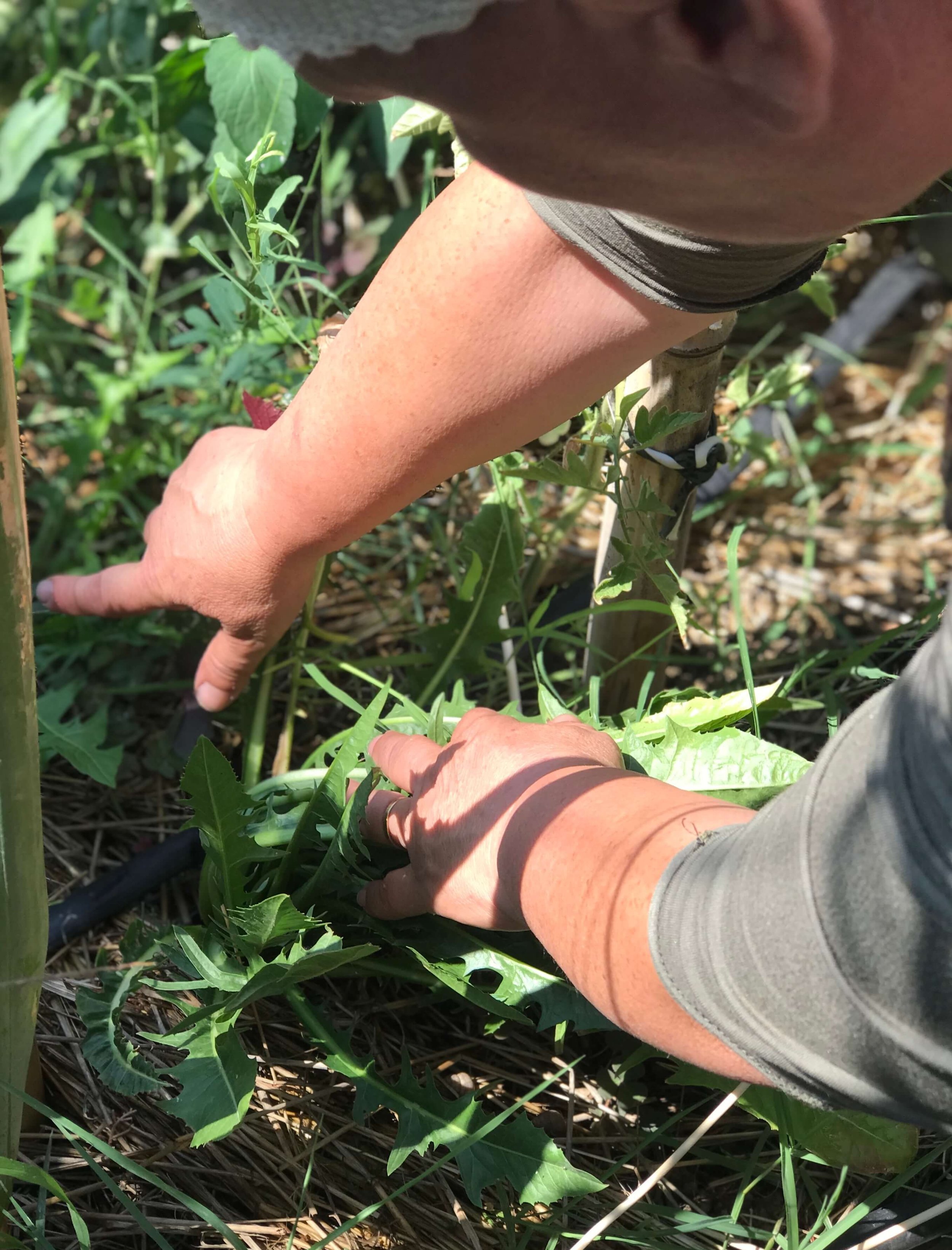
On a forage with Beatrice.
Beatrice, on her Facebook page, uses the word Phytoalimurgia to describe her area of expertise. The term was devised by the Italian doctor Giovanni Targioni Tozzetti in 1767 when he was hired by the Grand Duchy of Tuscany to find ways to combat famine using wild plants in bread making. Foraging was not something new at the time, since it is part of our DNA as humans with our hunter-gatherer roots. Yet he is credited for coming up with the term in Italian Fitoalimurgia to describe Beatrice’s profession.
Phytoalimurgia comes from a combination of these Ancient Greek words:
phytón = plant
alimos + ergon = works towards removing hunger.
So when Beatrice’s ambitions as a vegetarian chef were growing, she became more and more interested in wild food plants. Across the span of 1 year she took it upon herself to learn 1 new plant a day, documenting her findings as she went along. To visit her and see her in action, you can understand and appreciate the deep and expansive knowledge she has about wild plants. She would definitely be a millionaire if she were on a ‘Who Wants to Be a Millionaire’ show about plants.
L’Erbana
From tiglio, or linden, whose flowers you can eat and whose leaves are used as an herbal tea that can help you go to sleep, to nigella, whose seeds look like poppy seeds but taste like strawberries, to tasso barbasso, seemlingly translated to Great Mullein, which was used as toilet paper… and also to help a man’s virility. Listening to Beatrice is like getting an inside look at a foragers guide to wild food!
So, you can see, the knowledge she has gained is quite useful and is as sustainable and farm-to-table as can be, while relying on wild plants within walking distance to her home. And, who knows, maybe one of these wild plants will become the next superfood?!

View from Beatrice’s garden.
When asked how can you know if a plant is poisonous to touch or ingest, Beatrice’s advice is to use common sense. If the plant does not look healthy or does not look attractive to eat or touch, stay away from it. When man relied on foraging to survive in years past, they would listen to their head and gut before touching and using. Of course, the more knowledge you have the better.
Beatrice’s general approach to her craft, livelihood and general philosophy is holistic and based on biodynamic principles. She believes in all life being interconnected in an ecosystem. In fact, foraging with Beatrice during the drought in Italy this past summer, you could see with your own eyes how the wild plants were fighting for survival, even wild flowers that insisted on showing their beautiful colors in such difficult conditions; there was such fierce competition for survival between insects and plants, with natural resources at a minimum due to the lack of rain. Beatrice believes that plants speak to you, and all living beings for that matter, including animals, and our job is to listen and communicate with them. She admits to welcoming all of nature into her garden… except for the stink bugs which were desperate in last summer’s drought and ate up a lot of her tomatoes.
Keep Learning about Wild Food, and Wine Too
As we were sharing the philosophy and passion that drives Beatrice, we were reminded by another woman who also is committed to a healthy ecosystem allowing plants to go about their natural grow untouched by modern technology and chemicals, which is Antonella Manuli, founder and owner of La Maliosa Farm and Winery in Maremma Tuscany. Antonella along with Lorenzo Corino developed the ‘Metodo Corino’, a patented set of procedures for making natural wine based on regenerative agriculture principles. Her natural wines have aromas and taste that take you to the vineyard and natural habit where her organic and biodynamic vineyards at her wild winery Tuscany. She makes award winning, top organic extra virgin olive oil too.
We learned so much visiting Beatrice that we will be publishing more articles about the wild plants we discovered with her and how to use them in wholesome food dishes. Be sure to subscribe to our newsletter to keep on top of the interesting, fun and delicious things we have to share.
Try the Wild Wine & EVOO of La Maliosa

Woman made Saturnalia Bianco, on VinePair’s list of Top 15 Best Orange Wines, is an award winning, unfiltered and delicious skin contact orange wine made from old vine procanico & trebbiano grapes cultivated in volcanic soil.
This natural wine is made from the patented Metodo Corino, based on regenerative farming principles. Nothing is added but grapes! Made with unpressed, free run juice with native yeast fermentation. A two week maceration imparts a dark amber color. Aged only in stainless steel tanks, it has aromas of candied fruit, dried apricot and ginger.
It has pleasant acidity and tannins, and is balanced with a long finish. A pretty deep orange color, it is a great wine for difficult food pairings, it pairs with almost any dish.
Tastes Like: Apricot nectar and chamomile
Farming & Winemaking Highlights: Regenerative Agriculture | Sustainable Winery | Biodynamic | Native Yeast Fermentation | Vegan | No additives (ie non sulphites added) | Unfiltered | Organic | Metodo Corino | Natural Wine
Fun Facts: - The natural farming method that produced this wine, the metodo corino, is actually patented by La Maliosa woman winemaker Antonella Manuli after she helped to develop it with natural wine legend Lorenzo Corino of Case Corini.
- Named in honor of the Roman festival in December which took place near the winery, La Maliosa, this wine was once called Saturnia Bianco.
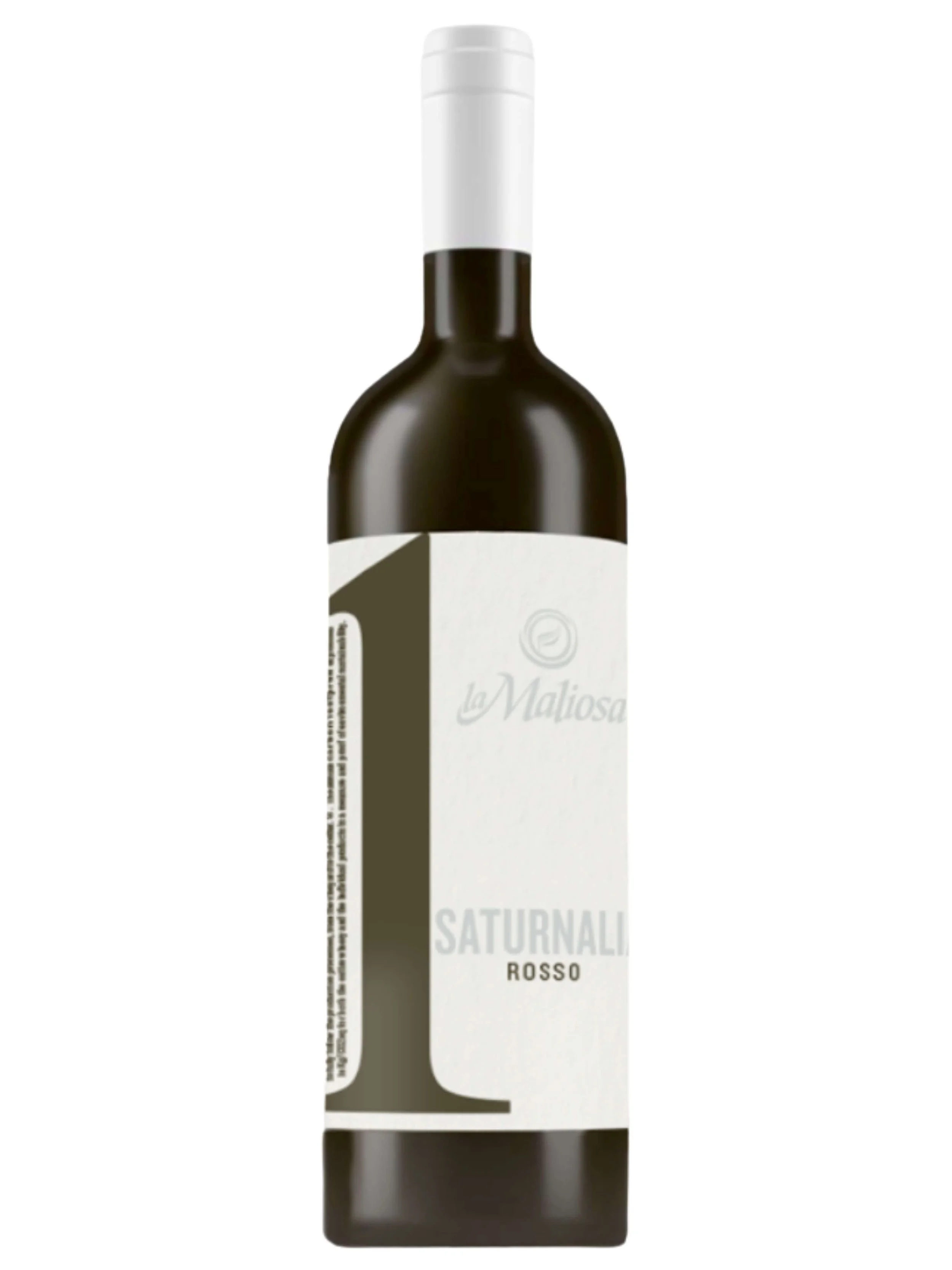
Saturnalia Rosso, once called Saturnia Rosso, is an approachable, balanced red wine with great texture and expressive finish made from a blend of native varieties from central Italy. A four week maceration on the skins is followed by aging in large wooden casks for 20 months. A pretty ruby color is accompanied by cherry and vanilla spice aromas. Pairs great with pork kebabs and cheese burgers. A woman-made organic, biodynamic and vegan natural wine using the patented Metodo Corino which is based on regenerative agriculture farming methods.
Tastes Like: Cherry and Strawberry Fruit Leathers
Farming & Winemaking Highlights: Regenerative Agriculture | Sustainable Winery | Biodynamic | Native Yeast Fermentation | Vegan | No additives (ie non sulphites added) | Unfiltered | Organic | Metodo Corino | Natural Wine
Fun Facts: The natural farming method that produced this wine, the metodo corino, is actually patented by La Maliosa woman winemaker Antonella Manuli after she helped to develop it with natural wine legend Lorenzo Corino of Case Corini.

An award winner in the Millennial Wine Competition, this all natural, fresh and earthy red is made from hard-to-find Tuscan varietal Ciliegiolo whose name derives from cherry - so guess what it tastes like! An organic, biodynamic and natural wine made from the patented Metodo Corino with nothing added but grapes. Made with free run juice, maceration continues for four weeks and then aged in neutral wooden barrels for a short period of time. A natural wine, no sulfites are added during the winemaking process. Cherry and spice aromas and taste with notable tannins and mouth feel contributing to its great structure and long finish.
Tastes Like: Cherry Jam
Farming & Winemaking Highlights: Regenerative Agriculture | Sustainable Winery | Biodynamic | Native Yeast Fermentation | Vegan | No additives (ie non sulphites added) | Unfiltered | Organic | Metodo Corino | Natural Wine
Fun Facts: The natural farming method that produced this wine, the metodo corino, is actually patented by La Maliosa woman winemaker Antonella Manuli after she helped to develop it with natural wine legend Lorenzo Corino of Case Corini.

This wine is a rare treat, being one of the very few Sangiovese red wines grown on volcanic soil. This natural wine is a complex yet approachable. Tarconte is a distinctive old world style natural red wine with a touch of new world, having been aged for 36 months in oak barrels. Notes of earth, mineral, herbs, black pepper, it is super juicy with ripe tannins, a real food wine. A good pairing is with rosemary Asiago cheese. Don't be in a rush to enjoy it: open it and see how it evolves!
Tastes Like: A Baking Spice Cabinet
Farming & Winemaking Highlights: Regenerative Agriculture | Sustainable Winery | Biodynamic | Native Yeast Fermentation | Vegan | No additives (ie non sulphites added) | Unfiltered | Organic | Metodo Corino | Natural Wine
Fun Facts: - The natural farming method that produced this wine, the metodo corino, is actually patented by La Maliosa woman winemaker Antonella Manuli after she helped to develop it with natural wine legend Lorenzo Corino of Case Corini.
- Named after an Etruscan mythological hero.
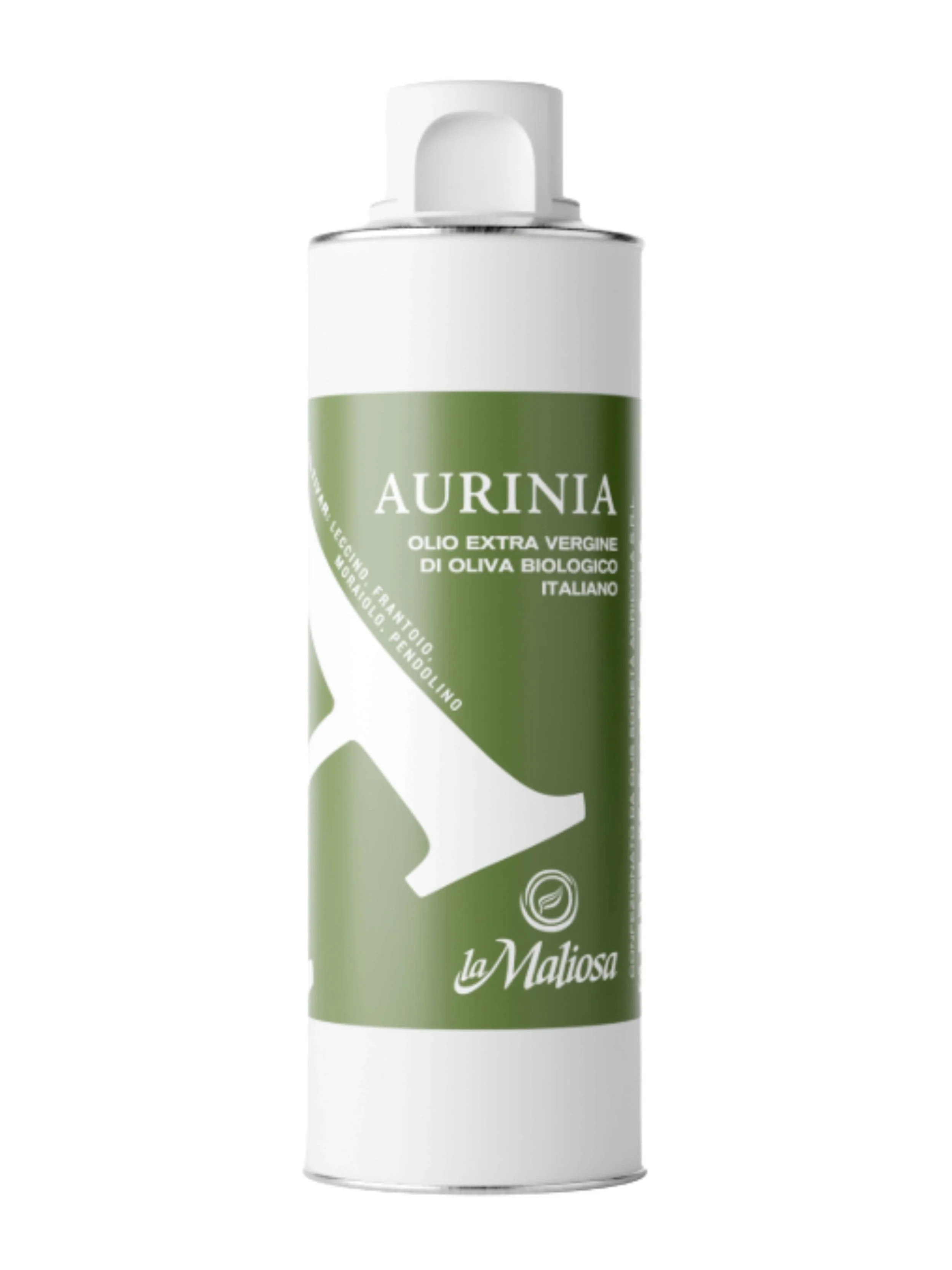
This is a woman made, limited production first cold press organic Extra Virgin Olive Oil from the Maremma hills of Tuscany made from a blend of four Tuscan cultivars. Buttery deliciousness with a bitter kick at the end, thanks to its polyphenols. It has won gold medals in a competition which judges the best extra virgin organic olive oils from around the world.
Farming & Winemaking Highlights: Regenerative Agriculture | Sustainable Farming | Biodynamic | Vegan | No additives | Unfiltered | Organic | Metodo Corino
Fun Facts: The natural farming method that produced this extra virgin olive oil, the metodo corino, is actually patented by La Maliosa woman winemaker Antonella Manuli after she helped to develop it with natural wine legend Lorenzo Corino of Case Corini.
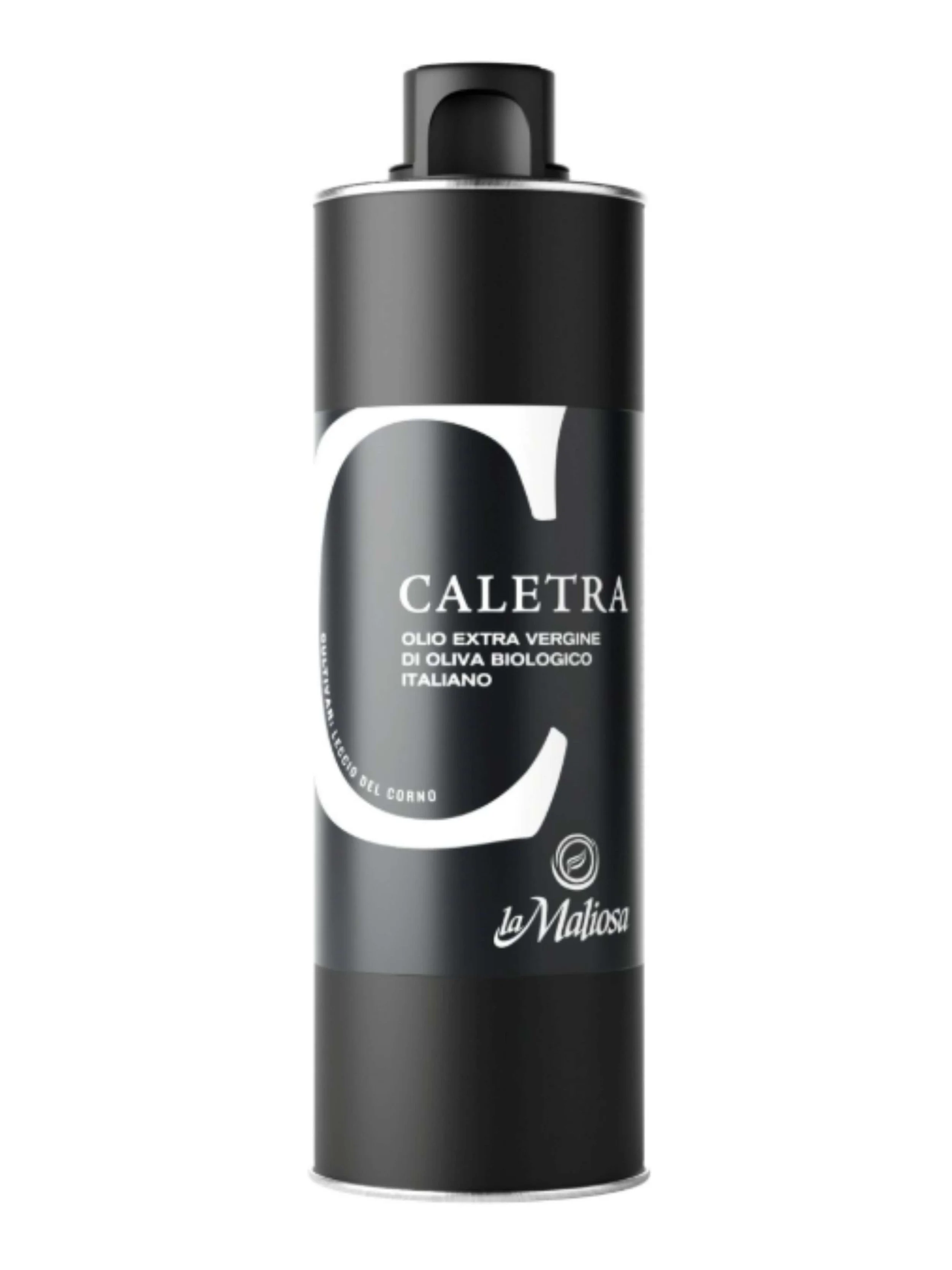
A prestigious first cold press monocultivar organic extra virgin olive oil from the Maremma hils of Tuscany which has won best organic extra virgin olive oil from Tuscany! Its polyphenols which are used to determine how good an olive oil is, are exceptionally high!
Top awards include extra gold, as best Tuscan organic EVOO by Biol Novello which evaluates the best olive oils in the world. In the past this olive oil has also won Best in Italy, as well as Gambero Rosso 3 leaves (their highest rating).
Its aromas of grass, green pepper and mint lead to an intense hot pepper taste and a long finish with black pepper lingering in your mouth. Even just a little drizzled over a simple lettuce salad will bring it to life with flavor.
Farming & Winemaking Highlights: Regenerative Agriculture | Sustainable Farming | Biodynamic | Vegan | No additives | Unfiltered | Organic | Metodo Corino
Fun Facts: The natural farming method that produced this extra virgin olive oil, the metodo corino, is actually patented by La Maliosa woman winemaker Antonella Manuli after she helped to develop it with natural wine legend Lorenzo Corino of Case Corini.
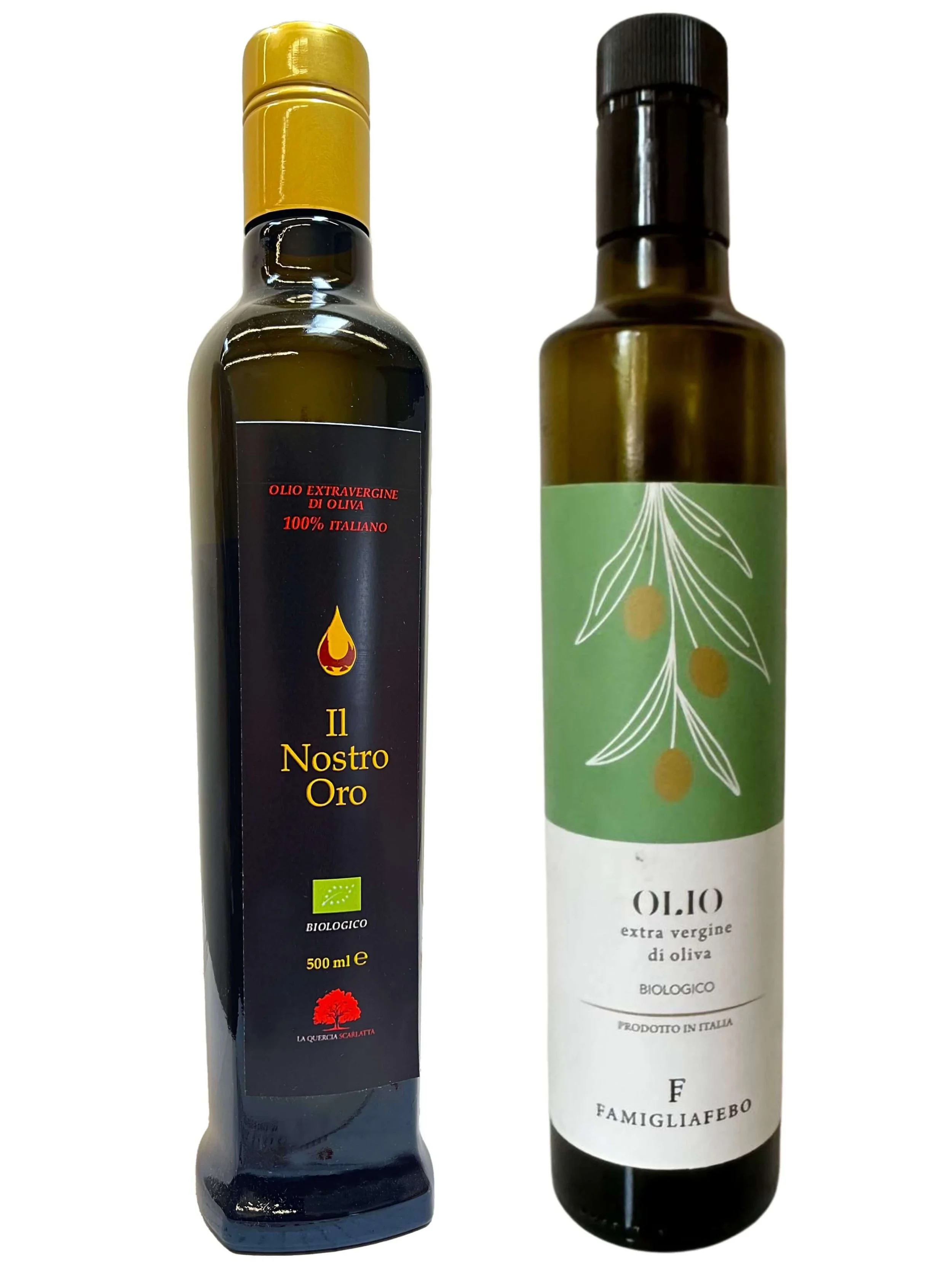
Up your culinary game with delicious & hard-to-find organic extra virgin olive oils from small family run biodynamic farms in Italy. Made with local cultivars and sustainably farmed, these evoos are packed with flavor. This set comes with two 500 ml bottles, one from Abruzzo and one from Le Marche, Italy, great for stocking your pantry or to give as an olive oil gift for that special foodie in your life and for keeping really good olive oil always on hand!
Any add-on to your order has free shipping within the Continental US. If you’re a real foodie, try our other organic EVOOs from a woman-owned small Italian farm La Maliosa, both award winning and high in polyphenols, Aurinia and Caletra.
Included in this box are:
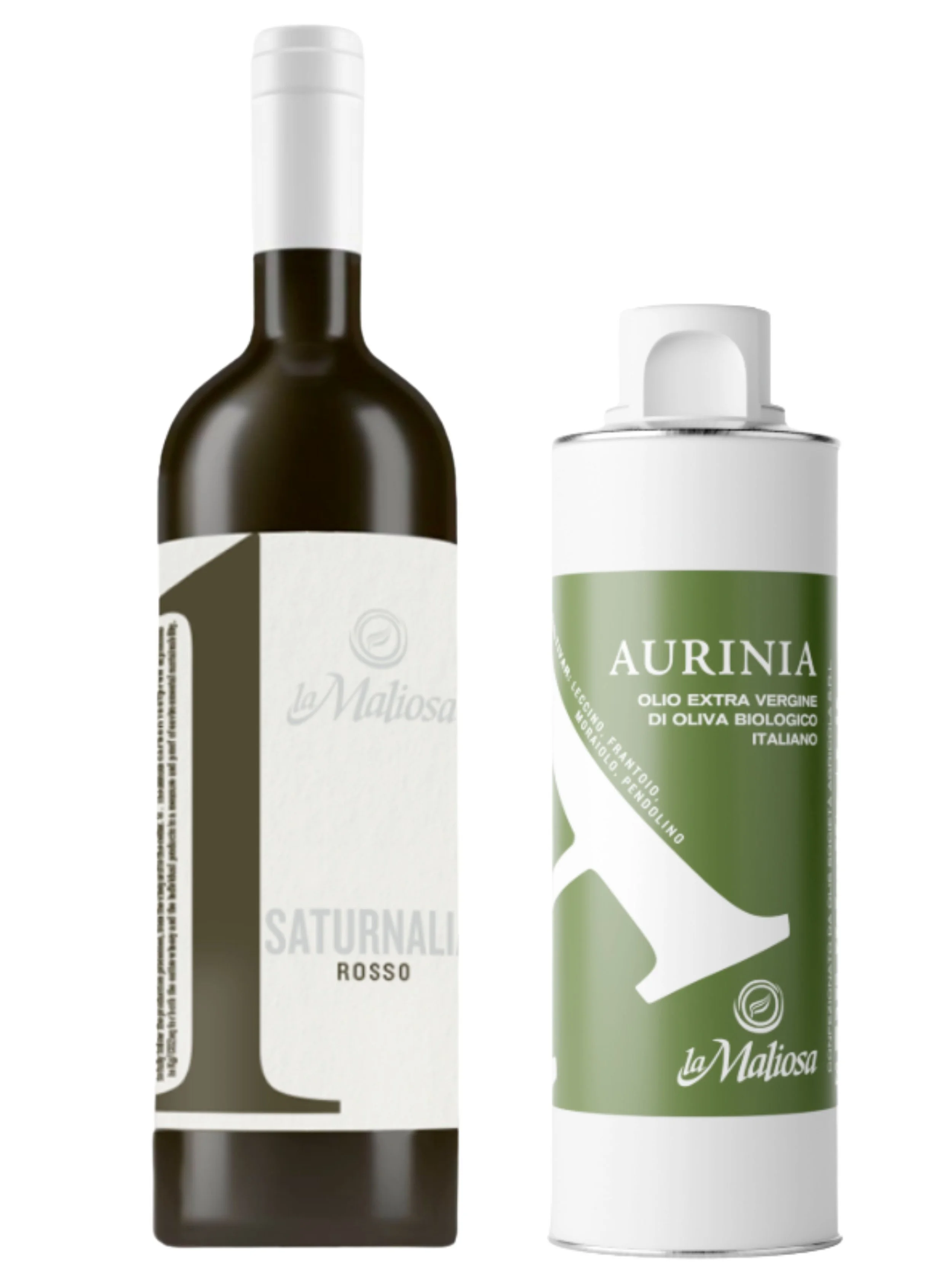
Let your taste buds travel to the rolling hills of Maremma Tuscany with this Explorer Set containing a natural red wine and a first cold press organic extra virgin olive oil from La Maliosa. All La Maliosa products are natural, organic, vegan, and farmed sustainably according to the patented Metodo Corino.
Included in this box are:
This special offer set has shipping included for the Continental US and all add-ons have free shipping.
If you are curious (or already a fan) of Orange Wine, add-on with free shipping La Maliosa La Maliosa | Saturnalia Bianco | Tuscan Natural Orange Wine | Organic Vegan.