Super Natural Wines: the Super Heroes of Sustainability
Just like Super Heroes, Super Natural Wines take care of people AND the planet-- they go beyond a natural wine to do more in terms of sustainability, a broad concept that focuses on three major areas: economic, social, and environmental.

Biodiversity in the vineyards of Lorenzo Corino, 6th generation estate making natural wines in Piedmont, Italy.
What is Super Natural Wine, Anyway?
Natural wines should be alive and full of natural microbiology.
Natural wines should grow from a healthy ecosystem in the ground.
Natural wine grape growers should farm organically.
Natural wine makers should transform their organic grapes into natural wine using native yeasts.
Natural wine makers should use minimal interventions in the natural processes of fermentation and minimal sulfites.
Natural wine makers should avoid additives or other processing aids as well as fining and often are not filtered.
"Given that the microbiological life of the vineyard is what enables both successful fermentations in the cellar and the creation of wine that is able to survive without a technological crutch, sustaining a healthy habitat in the vineyard for these microbes is fundamental for the natural wine grower," writes Isabelle Legeron MW in Natural Wine: an introduction to organic and biodynamic wines made naturally. "This microbiological life follows the grapes into the cellar, transforms the juice and even makes its way into the final wine in the bottle."
"Natural wine is therefore, literally, living wine from living soil," states Isabelle Legeron.
Super natural wines take a 360 degree perspective
Super natural wines do all that natural wines do and they do more when it comes to sustainability because they are taking a 360 degree perspective from the vine out to include everything in sight. Growing grapes organically and creating a healthy biome in the soil is important, but a SUPER NATURAL wine creates a healthy ecosystem and healthy community for all species--one that promotes prosperity for all by taking everything into account.
Organic, biodynamic, and natural wines may all be sustainable, but there are key differences. To better understand the idea of super natural wines, put these wines with amazing super powers to help the planet and people in the center of a circle. In concentric rings, place wines that have super powers, but not to the same extent. As we move away from the center, away from super natural wines and sustainability, we'll find wines that are organic but don't have other sustainable practices, until you are firmly in the land of conventional, commercial, chemically laden wines.
The triple bottom line is what sustainability is all about
Instead of one bottom line-- profit for the business -- the triple bottom line looks at the 3Ps: people, planet, AND prosperity. An accounting framework introduced in the 1990s, the triple bottom line evaluates performance based on ecological, social, AND financial aspects.
Sustainable economic practices include social measures that promote equity, and environmental strategies that guarantee environmental stewardship. A natural wine takes into account some ecological aspects as detailed above but a super natural wine recognizes that a vineyard doesn't stand alone. It's part of a larger ecosystem and community that is populated by people and biodiversity of plants, animals, insects, and amphibians.
In addition to using natural wine making techniques as articulated above, super natural wineries might:

La Maliosa’s natural wine and olive oil farm in Maremma Tuscany measures their consumption of carbon. They are a carbon sink!
grow their own grapes or be intimately involved with growing them
use integrated pest management
provide habitat for predators that prey on the vines
approach winemaking sustainably
make wines that reflect their place of origin or terroir
encourage biodiversity on the farm
create a supportive community for all species
develop a closed system shunning irrigation for established plants as well as fertilizers from outside the farm
consider carbon footprint in decision making (for example, bottle weight)
base decisions on the impact to the planet over time
find uses for materials considered waste that would otherwise go into a landfill
provide financial security for employees.
To be organic, in general, requires attentive handling of resources such as water, soil, and air; no synthetic mineral fertilizers or chemical/synthetic pesticides; use of beneficial insects; creation of diverse ecosystems; and use of natural products instead of genetically modified ones.
Biodynamic is a form of regenerative agriculture which means that the farming of the grapes seeks to restore the soil and the planet. biodynamic wines are definitely super natural because they certify that farming practices see the vineyard as part of a farm that exists and thrives as one solid, integrated organism, a self-sustaining ecosystem that functions as a whole, with each part contributing to the rest. As a self-sustaining system, natural materials, soils, and composts from the immediate area sustain the vineyard. Farming is not extractive but regenerative: the farm is healthier each year. In addition, biodynamic practitioners take into account biological and cosmic rhythms and they use special biodynamic preparations to activate specific processes in the vines and the soil.
Vero Producers are Sustainable
Vero seeks out small producers that are driven by passion farming their own land and making authentic products . A natural consequence of their commitment to their land and craft is to embrace sustainability. Hence all Vero producers follow a sustainable approach to farming and winemaking whether it’s natural, vegan, organic, biodynamic, etc. These include:
Vigna Petrussa just to name a few.
Our next blog article will focus on procedures to cultivate and make natural wine using regenerative agriculture, specifically the Metodo Corino used by La Maliosa and Lorenzo Corino Vero producers.
We will follow with an article about organic and biodynamic lambrusco, featuring Bugno Martino's Lambrusco wines leading up to World Lambrusco Day on June 21.
Taste some super natural wines!

Woman made Saturnalia Bianco, on VinePair’s list of Top 15 Best Orange Wines, is an award winning, unfiltered and delicious skin contact orange wine made from old vine procanico & trebbiano grapes cultivated in volcanic soil.
This natural wine is made from the patented Metodo Corino, based on regenerative farming principles. Nothing is added but grapes! Made with unpressed, free run juice with native yeast fermentation. A two week maceration imparts a dark amber color. Aged only in stainless steel tanks, it has aromas of candied fruit, dried apricot and ginger.
It has pleasant acidity and tannins, and is balanced with a long finish. A pretty deep orange color, it is a great wine for difficult food pairings, it pairs with almost any dish.
Tastes Like: Apricot nectar and chamomile
Farming & Winemaking Highlights: Regenerative Agriculture | Sustainable Winery | Biodynamic | Native Yeast Fermentation | Vegan | No additives (ie non sulphites added) | Unfiltered | Organic | Metodo Corino | Natural Wine
Fun Facts: - The natural farming method that produced this wine, the metodo corino, is actually patented by La Maliosa woman winemaker Antonella Manuli after she helped to develop it with natural wine legend Lorenzo Corino of Case Corini.
- Named in honor of the Roman festival in December which took place near the winery, La Maliosa, this wine was once called Saturnia Bianco.
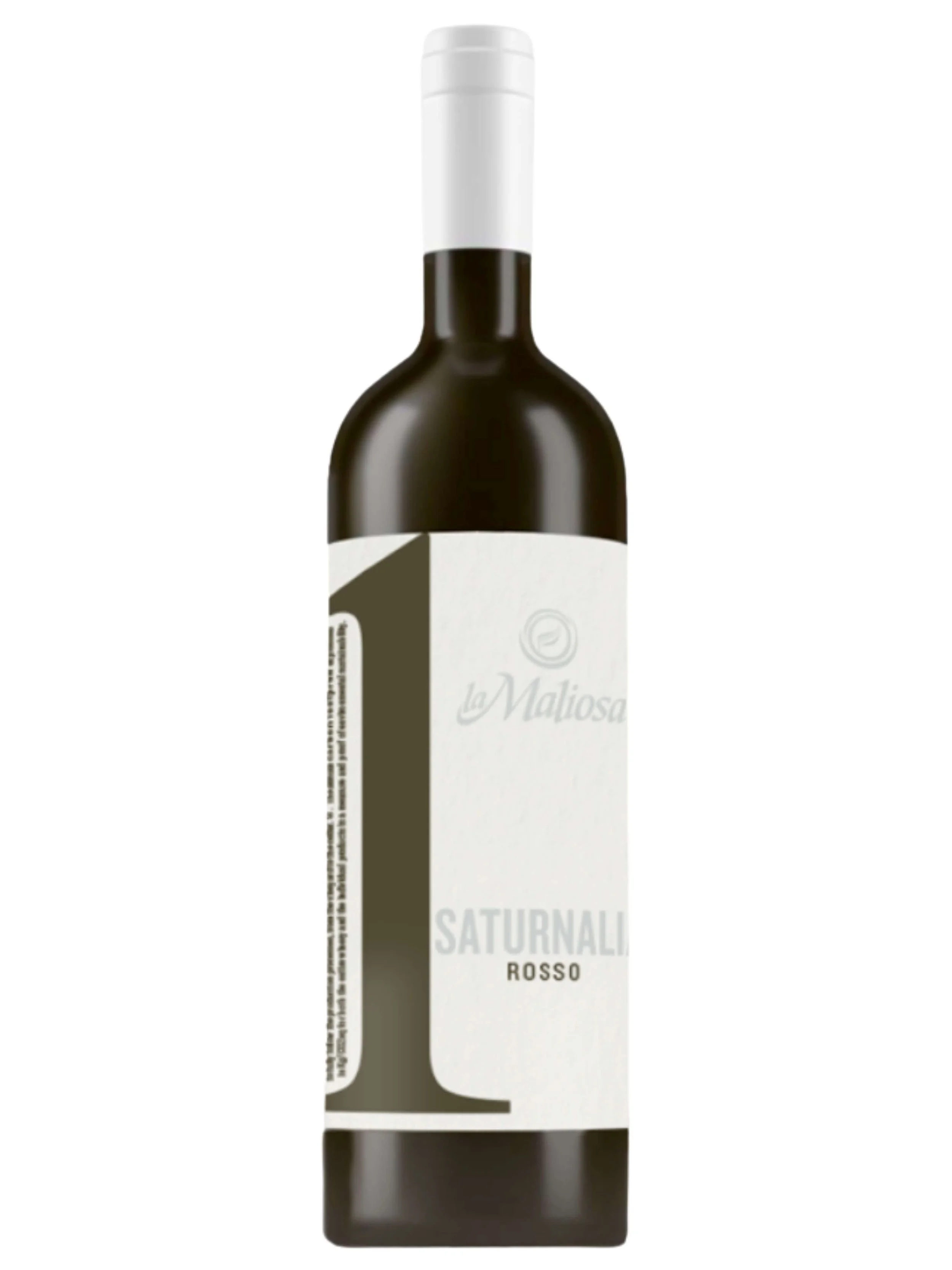
Saturnalia Rosso, once called Saturnia Rosso, is an approachable, balanced red wine with great texture and expressive finish made from a blend of native varieties from central Italy. A four week maceration on the skins is followed by aging in large wooden casks for 20 months. A pretty ruby color is accompanied by cherry and vanilla spice aromas. Pairs great with pork kebabs and cheese burgers. A woman-made organic, biodynamic and vegan natural wine using the patented Metodo Corino which is based on regenerative agriculture farming methods.
Tastes Like: Cherry and Strawberry Fruit Leathers
Farming & Winemaking Highlights: Regenerative Agriculture | Sustainable Winery | Biodynamic | Native Yeast Fermentation | Vegan | No additives (ie non sulphites added) | Unfiltered | Organic | Metodo Corino | Natural Wine
Fun Facts: The natural farming method that produced this wine, the metodo corino, is actually patented by La Maliosa woman winemaker Antonella Manuli after she helped to develop it with natural wine legend Lorenzo Corino of Case Corini.

An award winner in the Millennial Wine Competition, this all natural, fresh and earthy red is made from hard-to-find Tuscan varietal Ciliegiolo whose name derives from cherry - so guess what it tastes like! An organic, biodynamic and natural wine made from the patented Metodo Corino with nothing added but grapes. Made with free run juice, maceration continues for four weeks and then aged in neutral wooden barrels for a short period of time. A natural wine, no sulfites are added during the winemaking process. Cherry and spice aromas and taste with notable tannins and mouth feel contributing to its great structure and long finish.
Tastes Like: Cherry Jam
Farming & Winemaking Highlights: Regenerative Agriculture | Sustainable Winery | Biodynamic | Native Yeast Fermentation | Vegan | No additives (ie non sulphites added) | Unfiltered | Organic | Metodo Corino | Natural Wine
Fun Facts: The natural farming method that produced this wine, the metodo corino, is actually patented by La Maliosa woman winemaker Antonella Manuli after she helped to develop it with natural wine legend Lorenzo Corino of Case Corini.

Earthy, age-worthy nebbiolo made from 70 year old naturally cultivated vines. Named for the dearly beloved grandfather of Lorenzo Corino. Having a garnet color with orange hues it has a complex, spicy nose with notes of cardamom and cinnamon. When tasting, it is fruit forward, cherry & forest fruits, followed by spices, and chalky tannins envelope the mouth and finishes elegantly. After a gentle crushing, fermentation starts with native yeast fermentation and wines are left with skin contact for 6-7 weeks, followed by about 36 mos of aging in wooden barrels.
As with all of Case Corini wines, this is a 00 wine, nothing added, nothing removed, no yeast, no sulphites added, organic, biodynamic, vegan. In other words, all natural wine.

This wine is a rare treat, being one of the very few Sangiovese red wines grown on volcanic soil. This natural wine is a complex yet approachable. Tarconte is a distinctive old world style natural red wine with a touch of new world, having been aged for 36 months in oak barrels. Notes of earth, mineral, herbs, black pepper, it is super juicy with ripe tannins, a real food wine. A good pairing is with rosemary Asiago cheese. Don't be in a rush to enjoy it: open it and see how it evolves!
Tastes Like: A Baking Spice Cabinet
Farming & Winemaking Highlights: Regenerative Agriculture | Sustainable Winery | Biodynamic | Native Yeast Fermentation | Vegan | No additives (ie non sulphites added) | Unfiltered | Organic | Metodo Corino | Natural Wine
Fun Facts: - The natural farming method that produced this wine, the metodo corino, is actually patented by La Maliosa woman winemaker Antonella Manuli after she helped to develop it with natural wine legend Lorenzo Corino of Case Corini.
- Named after an Etruscan mythological hero.

All natural, old vine nebbiolo and barbera blend with no added sulfites and yeast. Aromas of milk chocolate covered cherries, it has a fresh and rich fruity taste with notable tannins and a has a long piquant finish. Name comes from the former owner of the 70 year old vineyard which has a mix of Nebbiolo and Barbera and is down the hill from the childhood home of Lorenzo Corino. After a gentle crushing, fermentation starts with native yeast fermentation and wines are left with skin contact for 6-7 weeks, followed by about 30 months of aging in wooden barrels. As with all of Case Corini wines, this is a 00 wine, nothing added, nothing removed, no yeast, no sulphites added, organic, biodynamic, vegan. In other words, all natural wine.
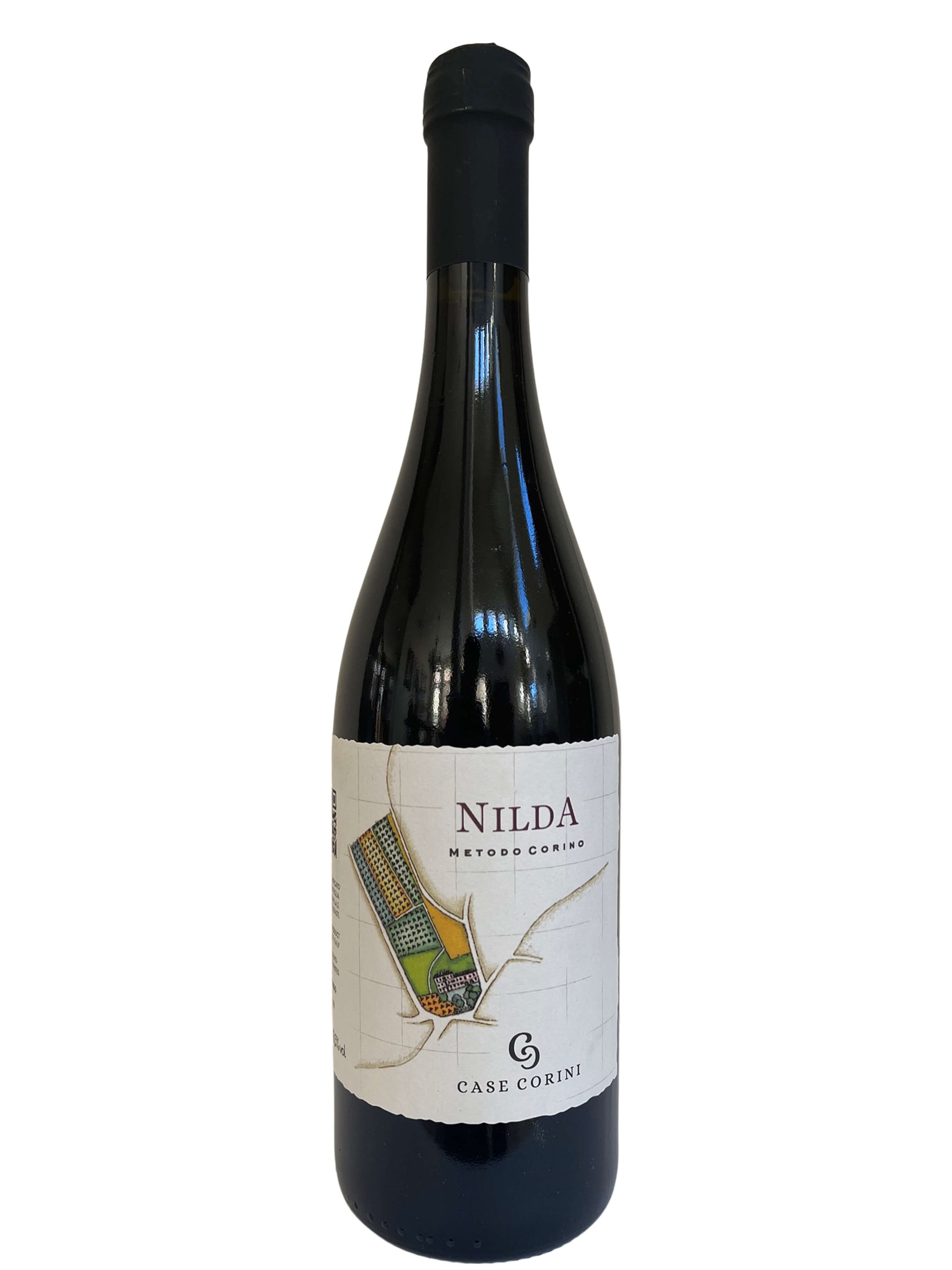
Named after Lorenzo Corino's grandmother, Nilda is Lorenzo & Guido Corino's new red wine from 20 year old vineyards in their hometown of Costigliole d'Asti. It is a field blend mainly of Barbera, along with a mix of other old varieties native to the area. It has aromas of spiced milk chocolate cookies and has a fresh, ripe dark fruit taste with an earthy funkiness and great texture. This vegan wine is made naturally, with no intervention of any kind made and no sulfites added. After a gentle crushing, fermentation starts with native yeast fermentation and wines are left with skin contact for 3-4 weeks, followed by about 12 mos of aging in wooden barrels.