Alba Through the Eyes of a Local

Alba Italy is located in the top left, north western corner of Italy.
In Italian, alba means ‘sunrise’, but for most of us, including even the residents of Alba, Alba equates to wine and food. It is smack in the center of the Langhe, in north west Italy, a wine region producing some of the red wines in the world, such as Barolo. Being in this enviable location, which equates to our vision of what wine heaven would be like, the people of Alba, as well as the rest of the Langhe, "had” to figure out how to enjoy the delicious wines at their fingertips. So, you guessed it, food has also become “a thing” in the region, and has turned into a mecca for both foodies and wine lovers.
The city of Alba Italy is located in the flat land next to the Tanaro river, with the wine hills of Barolo and Barbaresco rising up on either side of the city. From some parts, you can see the Alps and Monviso (also called Monte Viso, think the Paramount logo!) peeking out in the far background. You may have heard of Alba from wines like the Barbera d Alba, a red wine made with the barbera wine grape. Or perhaps from the weighed-by-the-gram precious Alba White Truffle; a pungent mushroom-like food that grows underground in the roots of certain trees. Shaved paper thin over food transforms the flavor in a very flavorful, exotic way, think umami to the max!
Perhaps you are you getting the itch to travel there?… to visit an Italian winery in the Langhe, tasting some Barbera or Nebbiolo wine with some freshly found Alba white truffle on the side? Alba does see its fair share of tourists come through, sampling delectable specialty foods and amazing Barolo wine.
But there is another side to Alba: the side a lot of tourists don’t take the time to find… what the locals see living day in and day out in Alba. Let’s discover the Alba from the eyes of a local.
Alba Throughout History
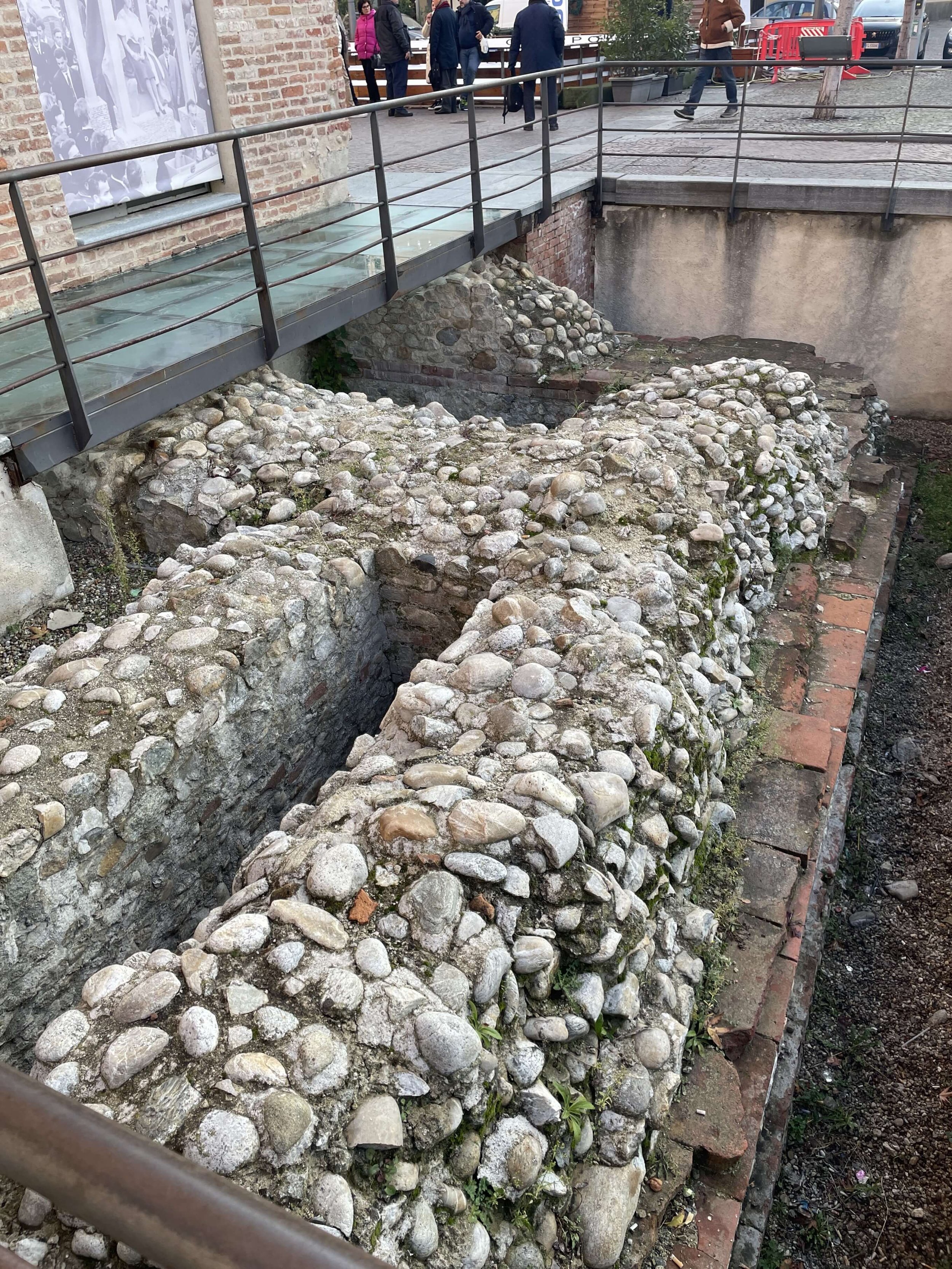
Roman foundations found in Piazza San Francesco (aka Piazza Pertinace).
Locals in Alba, native Italians, and all those living in the boot shaped peninsula, tend to walk past and not notice the evidence of Alba’s past lives displayed throughout the city. While tourists can engage with the local museum (Museo Eusebio) or local history tours (Underneath Alba), there are more obvious signs, like the pile of bricks in Piazza Monsignor Grassi, or the slightly sunk foundations visible in Piazza San Giovanni (or Piazza Pertinace as Google Maps says). For people passing them every day, these sights blend into the pavement and buildings, just things to walk around. But nonetheless, they are signs of the past livelihoods.
Starting out as a Neolithic settlement, the plot of land known today as ‘Alba’ follows a trend much like a great many cities throughout Italy and Europe in general: foundations that if cut cross-sectionally would resemble a 5 Layer Dip. The walled city during Roman times, known as Alba Pompeia, was built on top of by Medieval inhabitants (building the city’s famous towers), and Rennaisance buildings were built on top of those. And then even more was built on top of that.
Hence why a lot of historical tours will include an underground visit exploring these various layers. While surviving WWII and playing important parts for the Italian Resistance, Alba in the 20th century blended a mix of agriculture and industry, with the hills covered in vineyards, valleys with hazelnuts blending into large factories such as Ferrero (yes, the Ferrero famous for Nutella, Tic Tacs, and Roches), and Miroglio (a textile and clothing manufacturer). Modern Alba is characterized still by some of these factors with the Ferrero Headquarters and factory looming large over the center of the city and with vine covered hills in the background.
However, there has been a tourism boom in recent years. Both wine and food based tourism has become a major player in local economy, as evidenced by the proliferation of wine and food shops in the historical city center, replacing many historic ‘local’ stores.
So, what does all of this mean for the average person living in Alba day to day?
Living Like a Local

The octagnal layout of Alba, with the main streets (Via Maestra and Via Cavour) and piazzas (Piazza Garibaldi, Piazza Risorgimento and Piazza Michele Ferrero).
Before you get into the vine covered hills, the area around Alba is surrounded by a suburb/industrial/residential ring where most supermarkets, stores, and homes are located. But the true heart of the city, what people think of when they talk about ‘Alba’ is the historical center. Octagonal in shape, it follows roughly the ancient Roman borders of Alba Pompeia, and is delineated by an outer road. It takes roughly 30 minutes of brisk walking to completely go around this ‘border’; and within this historical center, it is mostly a zona pedonale or pedestrian zone, with only a handful of streets being accessible by car (unless a resident with a permit).
Getting Oriented
The main heartbeat of the center is along a sort of upside down L shape, starting on the upper left corner of the octagon in Piazza Garibaldi, following Via Cavour into the main Piazza Risorgimento with the local cathedral, then turning downward on Via Vittorio Emanuele to the center bottom of the octagon ending in Piazza Michele Ferrero. These three piazzas and two roads may form the life lines of the city, but true locals know of the gems hidden in the smaller piazzas and back roads.
If you look at a map of Italy and then talk to a local, be aware you might hear some different names or ways to refer to a place. Sometimes the names of places change, but locals always refer to the old name. Like for example the newly renamed Piazza Michele Ferrero which is still affectionately referred to as Piazza Savona by locals. This is the same story for Piazza San Giovanni that is now called Piazza Pertinace (in honor of the Roman Emperor Pertinax born in the hills above Alba), but usually referred to by Alba locals by its former name.
Another peculiarity: Locals don’t walk down the main street of Via Vittorio Emanuele to arrive at the main center square, Piazza Risorgimento. Rather they take the long way, strolling down Via Maestra to get to the Piazza Duomo first. In fact, via Maestra is a common street name similar to a ‘main street’, and ‘duomo’ is the cathedral found in that main piazza.
Sometimes for easy parking, locals will meet up ‘dal pace’ or at pace, which is a piazza, or square, where, years ago, there was a store owned by a man named ‘Pace’. And so the name has stuck and the piazza is still referred to by his name colloquially rather than the piazza’s actual name. These nicknames can sometimes be confusing for newcomers, but once you get the hang of it, they become normal to use.

The towering Alba ‘Duomo’, or Cathedral of San Lorenzo, in the main Piazza Risorgimento (aka Piazza Duomo).
A common sound heard throughout the local streets of Alba is the Piemontese dialect. A version of the Italian language found and spoke only in the region of Piedmont in Italy, Piemontese is nearly incomprehensible to someone from outside of the area.
While it is mostly spoken by the vecchietti, or older generation, there is a large percentage of the younger generations that carry on the tradition of using the dialect amongst friends and family. As one walks through Alba, you can often hear snatches of Piemontese mixed in with Italian, creating a different ring to the sounds and language of the city.
Another quirk of Alba is the Willy-Wonka-esque chocolate scent that can, depending on manufacturing schedules and wind direction, fill the city. It can get so strong that at times it feels like you could bite into the air. This comes from the local factory headquarters of Ferrero, located just outside the historic center and an active factory. In fact, Ferrero employs a large number of people in Alba, and is generally beloved by the inhabitants. Especially during the making of Ferrero Roche, or other chocolate products, the wind will waft the scent of gooey chocolate through the city, spiking a craving for Nutella!

Some contestants in the Palio degli Asini, or donkey races.
Events the Locals Don’t Miss
During the fall fair for the Alba white truffle, Alba Italy can become a little busy. The streets are jammed with tourists trying to get a shaving of the elusive fungi or enjoying a glass of wine Barolo style. This causes a great many locals to avoid the city center during fall weekends.
However, there are a few other events that locals never miss out on. These take place on the first few weekends of the two month truffle fair usually starting in October: the Sfilata (parade), Palio degli Asini (donkey races), and the Baccanale. The first two, the sfilata and palio, are tied together, with the sfilata leading directly to the palio. Basically, every neighborhood of Alba dresses up in medieval garb and creates a scene shocking, amazing, or awing spectators. They parade through the streets of Alba (like a medieval Macy’s Thanksgiving Parade), performing their scene before arriving at the piazza where the palio takes place. After awarding the neighborhood with the best sfilata performance, the palio takes off. Each neighborhood is represented by a donkey and jockey, who must race around the square three to five times, vying to be the first to cross the finish line. Based on famous races like the Palio of Siena or the Palio of Asti, this historical race was created to good naturedly poke fun at the more serious horse races, and has become a must-do for many locals, cheering for their neighborhood.
Another tappa fissa for locals is the Baccanale. Here, the entire historical center is draped in medieval finery and straw, turning itself into a medieval village. Each neighborhood puts on a section with some hosting games (like archery contests, and bottle fishing competitions), others hosting kitschy shopping (candles, specialty foods, and spices are often found), and some others hosting food and wine tasting stands selling food-truck style offerings of local delicacies. While often packed, many locals try to pass by once a year to experience the lively atmosphere and fun that the baccanale represents.
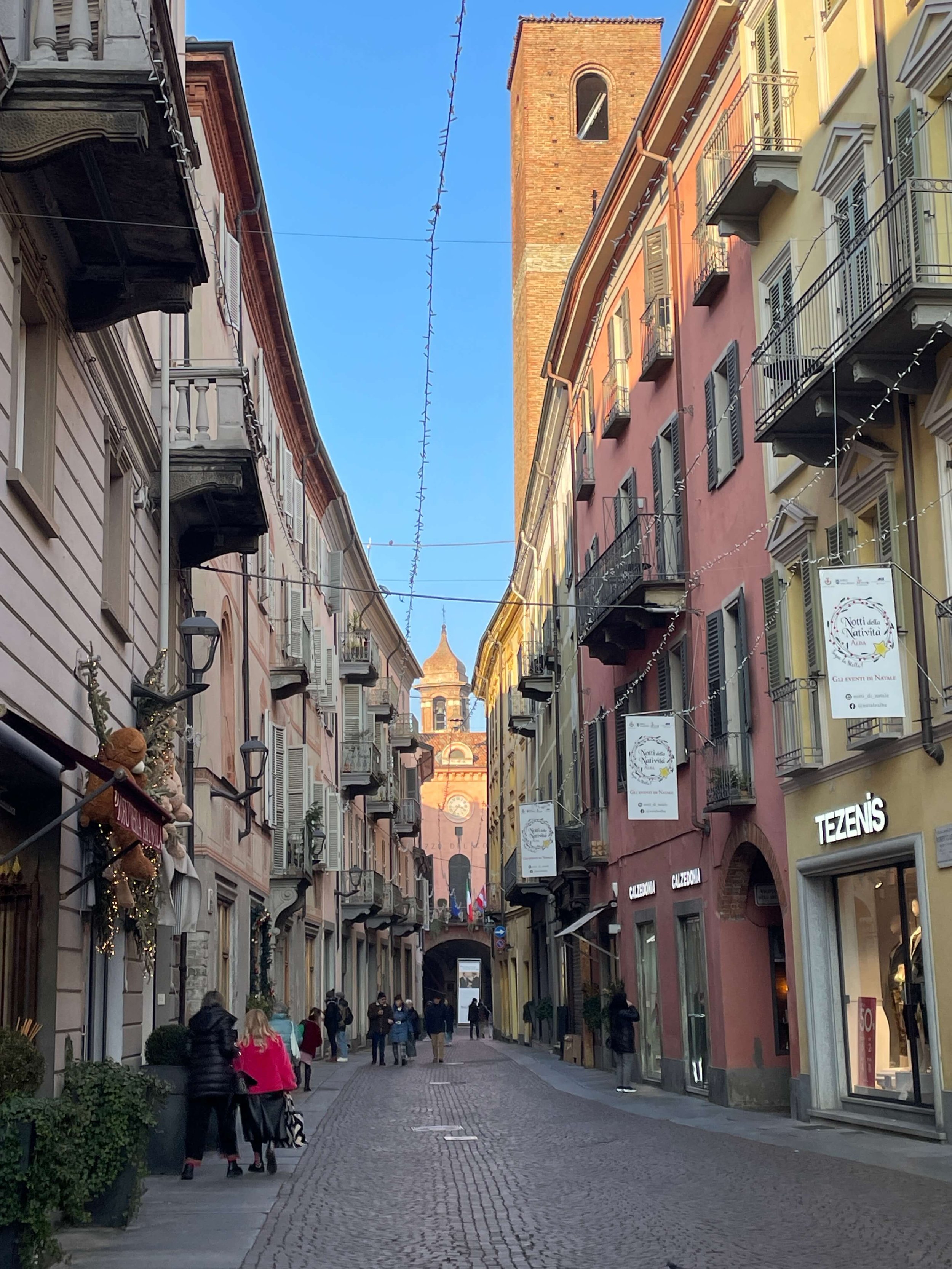
A view of Via Vittorio Emanuele (aka Via Maestra) with the city hall peeking through in the background.
Every Day Shopping and Socialization
What is it like every day in Alba? While larger supermarkets are confined to the suburbs of the city, the city center is still filled with smaller shops and markets. In the center you can find a little bit of everything: clothing, jewelry, home goods, gelato shops, specialty food stores, wine shops, and some smaller supermarkets. The locals in the know however, hit up the weekly markets, taking place on Thursday and Saturday mornings. These are big bustling farmers market style affairs, and scattered throughout the streets and piazzas of Alba you can find pretty much anything you need. Be it clothes (check out Via Maestra and Via Cavour), home goods (Piazza Garibaldi and in front of del pace with the flowers), fresh fruits and vegetables (in Piazza Mercato with the meats, cheeses, and food trucks), and in Piazza San Giovanni you can find the Mercato della Terra, or local market, of farm to table, small production, home made goods and produce.
A lot of locals also use the markets to socialize, bumping into old friends, chatting and having an espresso. Again, you will hear a lot of piemontese dialect floating around.
Local Hangouts
Like most tourist centered cities in Italy and Europe, locals tend to shy away from restaurants and bars on the main tourist piazzas and streets. Instead they head into back roads and out of town into the hills when looking for a cozy and yummy spot. There are a great many italian restaurant to be found in the hills, some serving Langhe traditional dishes like carne cruda, bagna caoda, or precious white truffles when in season. Some like to say, it is difficult to eat poorly in Alba and the Langhe… it is simply a matter of eating amazing food, or food that is a little less amazing… but in the end it is all delicious.
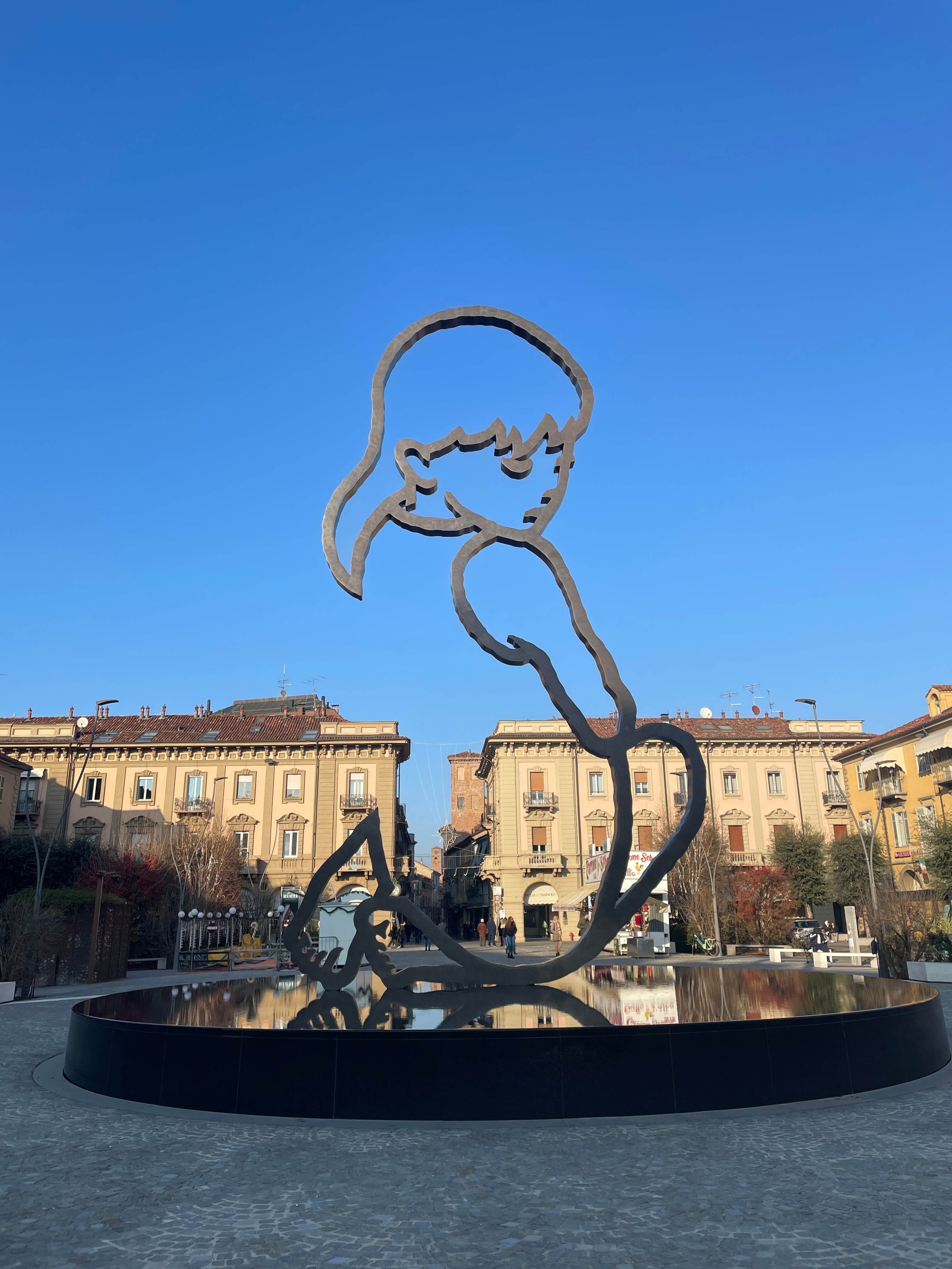
This statue and fountain, recently unveiled in Piazza Michele Ferrero (aka Piazza Savona), is titled ‘Alba’. The form of the young girl named after the city has become a symbol and mascot of sorts for the town.
What is very common amongst locals are two customs based upon the Italian tradition of aperitivo, or happy hour. Langhe locals love to partake in apericena, a pormanteau of ‘aperitivo’ and ‘cena’, the word for dinner. As the name suggests, this is an aperitivo that replaces your dinner, kind of like a late day brunch. Basically, you sit chit chatting and enjoy the aperitivo long enough, snacking on enough focaccia and salame and sipping on a bottle of wine barbera or otherwise, that the aperitivo goes late and turns into your dinner. An ‘apericena’ can also be heard referred to as a merenda senoira by residents; but that is more of a reference to a private gathering at a home or other meeting place rather than drinks out at a bar or café.
And what to wines to drink?
Drink Like a Local
The wines of the Langhe are known to be some of the best of Italy. These are hard hitters like Barolo and Barbaresco. But there are other wines, the daily drinking wines, from the region that you find locals reaching for with their meals. These are wines like that made from nebbiolo or barbera wines. Older generations love their dolcetto wines too, often not even served in a bottle, but in a carafe or pintun, the local word for magnum sized bottles.
While Barolo and Barbaresco wines are found during important dinners and gatherings, the other Piedmont reds are the ones that take center stage in daily life. Barbera grape wine is becoming more and more popular every day, and Langhe Nebbiolo is always a favorite of locals.

The city of Alba, with its distinctive skyline of towers.
And even if you live in the US, you can taste a bit of Alba thanks to winemakers like the Barolo-ista Aldo Clerico. Aldo runs the gamut on typical Langhe red wines, offering classics like his Dogliani Dolcetto, Langhe Nebbiolo, and Barbera d’Alba made with the barbera grape. Of course, Aldo and his wife Valentina wouldn’t be the true-blue Barolo winemakers they are without having a few Barolo wines in their lineup. And the best part? Each of his three Barolos give you a unique Barolo experience, from Aldo’s Classic Barolo where he blends nebbiolo grapes from five different vineyards to craft the perfect Barolo, to his single vineyard Barolos from different hilltops. These are the Serralunga Barolo and the prized cru, the Ginestra Barolo.
So, what are you waiting for? Grab some of Aldo’s wines (or maybe a few like in our Barolo Set and Langhe Red Set), and prepare to drink like a local of Alba Italy! Now… where to get our hands on some truffles…
As a reminder, we sell nature wines and organic EVOO to both businesses and consumers across the US:
We are enlarging our network of distributors around the country. Reach out to us if you are interested in distributing our wines.
We sell to wine stores and restaurants in certain states - contact us if you would like more info.
We do corporate gifts and sommelier guided wine tastings. Email us and we’ll tailor unique and sustainable corporate gift ideas.
If our farm crafted wines and olive oils are not in your local shop or restaurant buy wine online here where we ship to most states.
We also have an award winning wine club for true wine explorers seeking to continually discover unique, sustainable and authentic small production wines they never had.
Let These Wines Take You to the Langhe

This is one of the best Barolo wines from the Langhe in Piedmont Italy as well as a great value from one of the storied families of Barolo wineries. This Barolo red wine is the maximum expression of the nebbiolo grape from Aldo Clerico. With vineyards right next to those of Domenico Clerico Barolo vineyards, this Barolo is a good substitute for Burgundy wine.
This garnet colored artisan Barolo has red fruit, rose and spicy leather and tea leaf aromas with elegant structure, long finish leaving a silky mouthfeel. On the nose it is very intense while floral notes mix with typical vineyard scents of violets and red berries. On the palate, the violets blend with licorice flavors and noticeable tannins. A creamy texture from the oak barrels creates a pleasant mix of fresh yet complex flavors.
Tastes Like: Cherries and licorice
Farming & Winemaking Highlights: Biodynamic | Native Yeast Fermentation | Single Vineyard
Fun Facts: This is Aldo's first wine made from 5 different Barolo designated vineyards surrounding his home in Monforte d'Alba, all within the Bricco San Pietro MGA. He vinifies each vineyard and then does an assemblage, creating each vintage a unique expression of his nebbiolo vineyards. It is also made with native yeast fermentation, so can be called a natural wine.

Made with native yeast fermentation, this Barolo Serralunga is a special natural wine. Rich on the nose with dried violets typical of the nebbiolo grape, the bouquet is austere and profound with balsamic notes. Once sipped, the earthy texture is out of this world, which marries pleasantly with the structure, fruit and spice of this elegant red. Well accented tannins are soft and decanting is strongly recommended.
Tastes Like: Earthy Spices
Farming & Winemaking Highlights: Biodynamic | Native Yeast Fermentation | Single Vineyard
Fun Facts: This is a single vineyard Barolo from the Serralunga d'Alba village, known to produce the most age worthy Barolos.

Made from the sought-after Ginestra Barolo Cru, this single vineyard wine epitomizes the greatness of the nebbiolo grape from the Barolo wine region, in terms of structure, age-worthiness and fruit expression. The native yeast fermentation used in making this natural wine also helps bring out the special and sought after terroir of the Ginestra cru.
An intense garnet color, on the nose this Barolo tends towards red fruits, with a touch of balsamic notes. As it opens on the palate the elegant tannins harmonize with the acidity for an overall richness that creates a pleasant and enjoyable experience while sipping alone or with food.
Tastes Like: Balsamic Tabacco leaves
Farming & Winemaking Highlights: Biodynamic | Native Yeast Fermentation | Single Vineyard
Fun Facts: The Ginestra cru is very limited and only a few wineries have access to harvest from there. Aldo can thanks to his wife’s, Valentina’s, Conterno family vineyards.
Fun Facts: The hands on the bottle represent Aldo’s two daughters; for this reason he often says this is the wine closest to his heart.

Dogliani is known as the area which produces the best dolcettos in the world. This expressive structured yet easy-to-drink red wine has purple color, and floral bouquet with red plum notes. On the palate, this dolcetto opens pleasantly with notable tannins that are, however, not overpowering. It finishes with light almond notes. Coming from a single vineyard near Monchiero, this Dogliani is also make with native yeast fermentation.
It can be enjoyed just after bottling, yet it can better itself after a bit of aging in bottle.
Tastes Like: Juicy plump, plums
Farming & Winemaking Highlights: Biodynamic | Native Yeast Fermentation | Single Vineyard
Fun Facts: Originally called Dolcetto di Dogliani, local winemakers lobbied to change the denomination to simply ‘Dogliani’ to avoid the misconception that this wine was ‘little sweet’, as suggested by the translation of ‘dolcetto’ in Italian. They wanted this special dry red wine to be able to make its own name, and let its importance stand for itself.
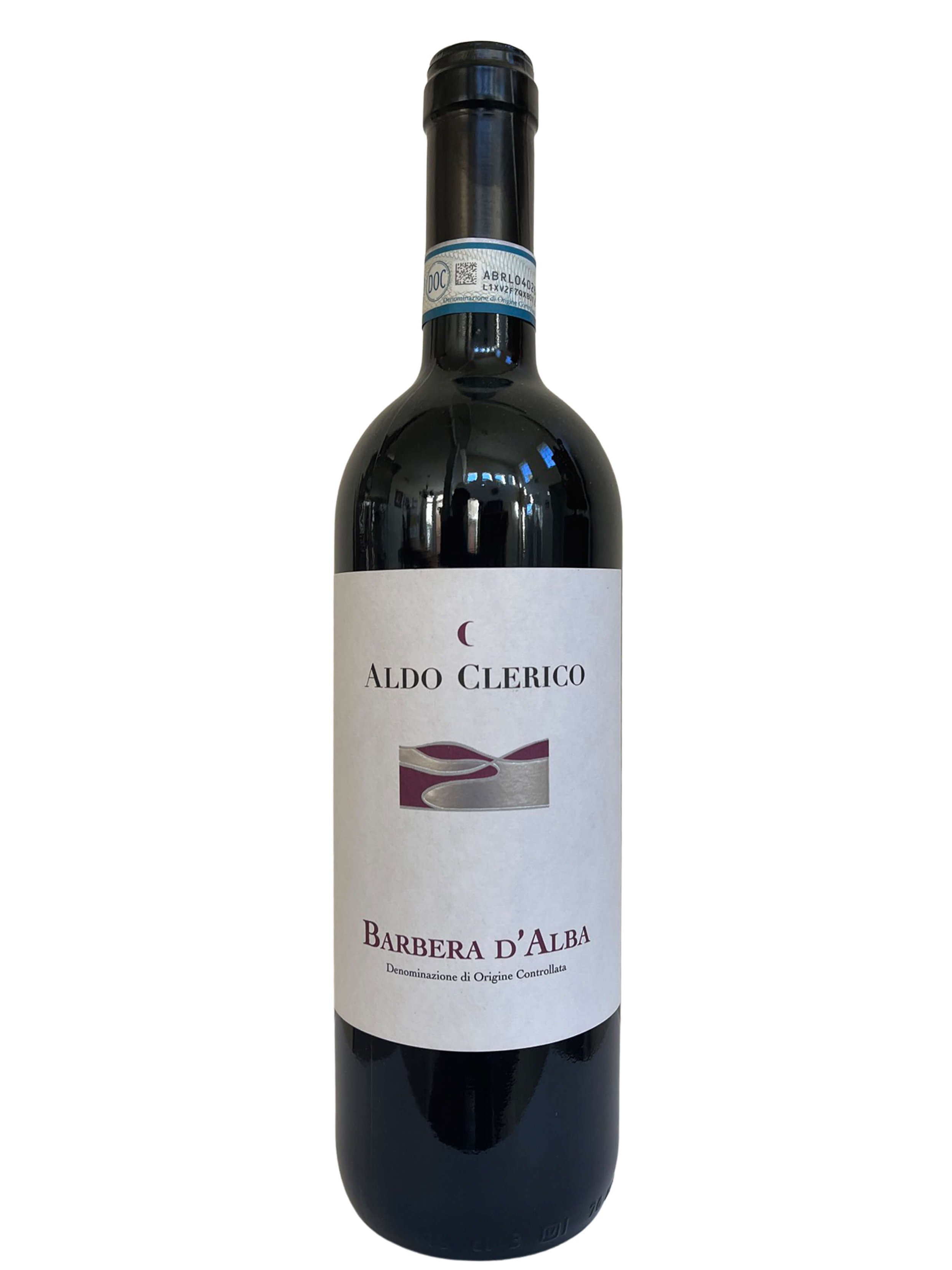
A really good, soft and fleshy Barbera from Alba, from a single vineyard located in the Barolo designated wine region, one of the best areas for Barbera. Nice acidity and fruitiness with some spice, thanks to 14-16 month aging in new and used oak.
A very balanced and elegant wine on the nose, and a good body and structure on the palate with a pleasant and vibrant acidity. A rounded wine with fresh yet fruity notes that finish with a creamy texture thanks to the oak barrel aging.
Do you want to regularly purchase this wine? Check out the Subscribe and Save option available HERE!
Tastes Like: Pretty, ripe, dark cherries
Farming & Winemaking Highlights: Biodynamic | Native Yeast Fermentation | Single Vineyard
Fun Facts: With its aging, this Barbera d’Alba technically follows guidelines for a Barbera d’Alba Superiore, but winemaker Aldo Clerico decides to declassify it.

It is a wine with great structure and personality, an excellent expression of the nebbiolo vine. With a delicate floral bouquet of rose and violets, there is also a finish of licorice. Tasting it really brings out its elegance with pleasant yet decisive tannins that signal great potential for good aging.
As well, the native yeast fermentation used to make this nebbiolo natural wine lets you taste the natural terroir of the Langhe.
Tastes Like: Crunchy pink cherries
Farming & Winemaking Highlights: Biodynamic | Native Yeast Fermentation
Fun Facts: This Langhe Nebbiolo is known as a ‘Baby Barolo’, since it comes from Barolo vines, and is a great introduction to the Langhe wines, where some of the best reds in the world come from.
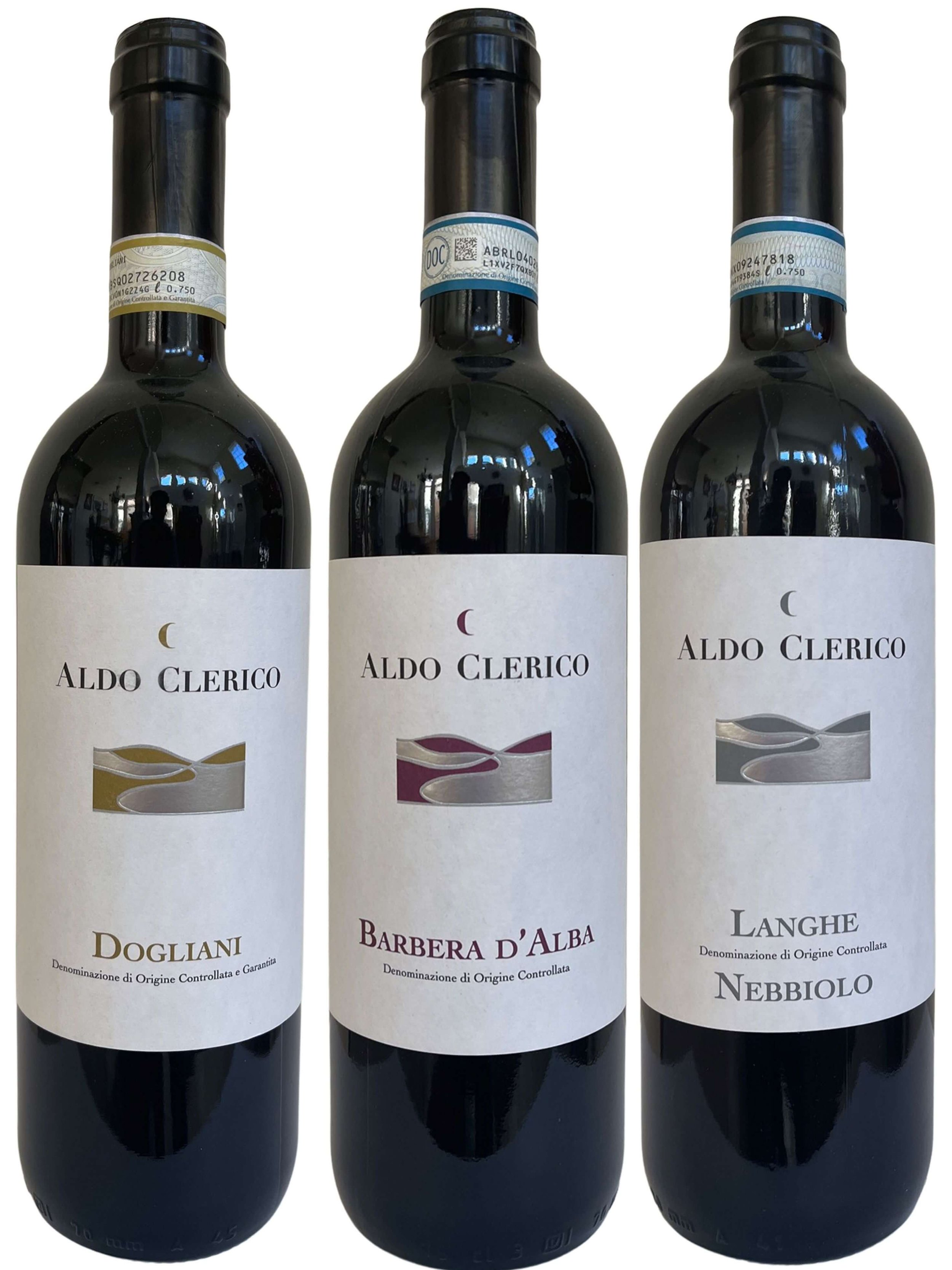
Tucked in the hills of Northern Italy is a land of rolling hills covered in vineyards known as the Langhe. While famous for the Italian King of red wines, Barolo, there are several other varieties that hail from the area that are just as delicious. Wines made with grapes from Dolcetto, Barbera, and Nebbiolo are prized from the Langhe, and native born producer Aldo Clerico has them all in his blood. In this set, try these less famous jewels of Piedmont and the Langhe: a dolcetto from Dogliani, a Barbera d’Alba, and a Langhe Nebbiolo… all from the cream of the crop vineyards in Piedmont.
Shipping in the Continental US is also included for this set, and extends to any other products you add to your order… so this is an excellent time to add on a Barolo or two from the Langhe.
These wines were featured in a VeroTalk with winemaker Aldo Clerico and Vero Chef Jacqueline Mitchell live from Italy in an authentic Italian Trattoria! Watch this virtual food and wine pairing event HERE.
Included in this box are:

Barolo is considered one of the most sought after red wines in the world. It’s made from the nebbiolo grape, which is know for having a great balance between acidity and tannins, and ages very gracefully.
This set contain a Barolo DOCG and ‘Baby Barolo’, a Langhe Nebbiolo made from Barolo vines, by Barolo area native, Aldo Clerico, in Monforte d’Alba.
Any red wine lover, especially one seeking hard-to-find treasures, would enjoy side by side to compare Aldo’s Barolo and his Baby Barolo, Langhe Nebbiolo! Barolo’s elegance, aging ability, and fullness of character all blend together to create a delicious red wine that lingers on the palate.
This special offer set has shipping included for the Continental US. Great as a gift!
Included in this box are: