Barolo versus Brunello: Italian Kings Go Head to Head
In the world of Italian wine, there are many greats, but two stand out as true monarchs: Barolo and Brunello di Montalcino.
Often referred to as "the kings" of Italian red wine, these two are highly sought after by collectors and enthusiasts alike. While they share some similarities, like both are highly-regarded Italian red wines with DOCG status, the highest level of Italian wine law, and both, coincidentally, start with the letter “B,” a closer look reveals their distinct personalities.
At Vero, we believe that the best way to understand these wines is by discovering the unique stories of the small, passionate producers who craft them. By learning about the land and the people behind the bottle, we can truly appreciate the nuanced beauty of each wine. So, let’s begin our journey of discovery and learn more about the kingdoms these two wines reign over.
The King of Piedmont: Barolo
From the rolling, mist-covered hills of the Langhe region in Piedmont, northern Italy, Barolo is a wine of power and prestige. It is crafted from 100% Nebbiolo grapes, a variety known for its high tannins and acidity, which give the wine its incredible structure and longevity. The Barolo appellation is strictly limited to 11 municipalities, with grapes and winemaking facilities required to be within these geographical confines. (Fun fact:municipality in this case is translated into comune in Italian, or plural comuni.
The Nebbiolo grape takes its name from the word "nebbia," or fog, which frequently blankets the vineyards in the autumn. This unique climate, combined with the region’s diverse terroir, is what gives Barolo its complexity. The soil in the Barolo region is a mix of limestone and sandstone, with different concentrations in the various sub-regions. The chalky, limestone-rich soils of the eastern part of the region, like in the commune of Serralunga, tend to produce wines with richer tannins and a greater capacity for aging. In fact, Serralunga d’Alba is known to be, geographically speaking, the oldest area among the 11 comuni. In contrast, the younger, more clay-based soils of the western part of the region, such as around La Morra, “technically” create wines that can be enjoyed at a younger age.
Barolo is required to age for a minimum of three years, with at least 18 months spent in oak barrels. The result is typically a wine with a beautiful bouquet of flavors and aromas, often described as sour cherry, rose, tea leaf, and violet, with additional notes of leather and licorice developing as the wine ages.
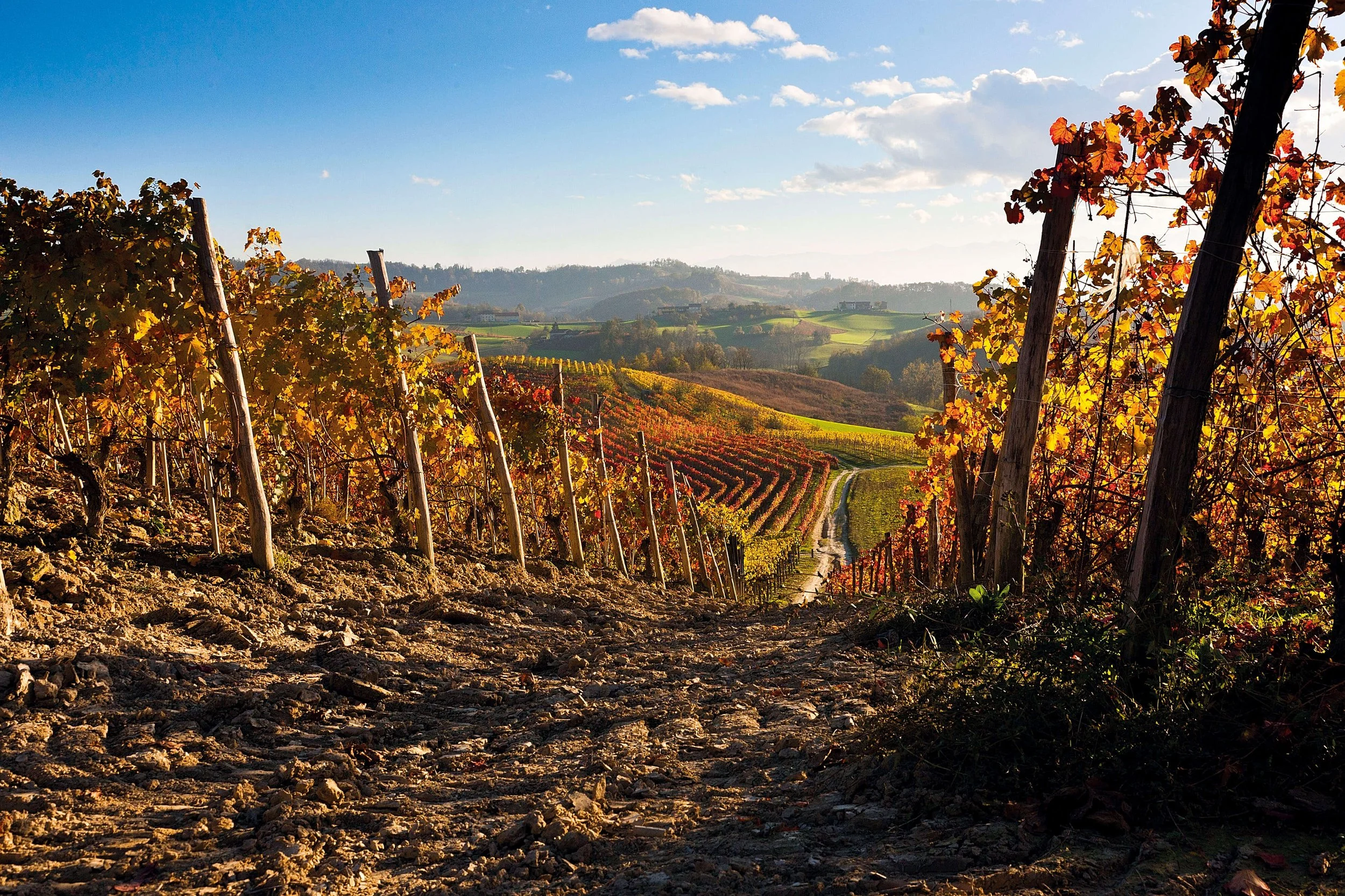
Aldo Clerico’s Barolo vineyards in the Langhe.
About the Barolo We Tasted
One producer who truly embodies the authentic spirit of Barolo is Aldo Clerico, a third-generation grape grower from Monforte d’Alba. After studying accounting, Aldo realized that he preferred a career working the land and crafting wine, so returned to his “Clerico” winemaking roots by first interning at his dad’s cousin’s winery, Domenico Clerico, before becoming the first in his immediate family to start making wine.
While he makes three Barolos from his Langhe vineyards, in this article we are focusing on his “classic” Barolo, a masterful blend of grapes from five vineyards within the prestigious Bricco San Pietro MGA in his hometown of Monforte d’Alba. This Barolo of Aldo’s is a biodynamic wine, like all of his wines, with a beautiful, velvety texture. It is a great representation of a classic, well-made Barolo. Of course, you can always repeat this trial yourself using some of Aldo’s single vineyard Barolos, like the Barolo Serralunga d’Alba or his Barolo Ginestra.
We tasted this classic Barolo for this Barolo vs Brunello test. So, what does it taste like?
This Barolo is a true expression of the nebbiolo grape, showcasing that aforementioned artistry of Aldo Clerico in blending the different vineyards together to create one harmonious product. The Barolo DOCG appellation requires minimum of 3 years of aging, although Aldo Clerico typically ages his Barolos for significantly longer than the minimum. He is very picky about how the wine tastes, and only when it is “ready” does Aldo release any of his wines.
On the palate, this Barolo by Aldo Clerico offers a beautiful mix of sour cherry and licorice flavors, which are met by the grape's elegant tannins and lead to a long, memorable finish. The tannins are still present, giving definition to the nebbiolo, but softened thanks to the age, giving a pleasant extra dimension to the wine. The rich flavors are first hinted at on the nose, which is intense with classic aromas of violets and rose. The wine itself reveals a beautiful, classic garnet color. One classic tell-tale sign of any Barolo by Aldo Clerico is its elegant mouthfeel, laced with glycerine, a naturally occurring byproduct from the wine grape.
The King of Tuscany: Brunello di Montalcino
From a small, picturesque hilltop town in Tuscany, Brunello di Montalcino is a wine of grace and stature. It is made exclusively from the sangiovese grape. The name "Brunello" once referred to a specific clone of sangiovese, which was locally known as "the little dark" due to the grape's dark skin. The wine can only be made from grapes grown on the slopes surrounding the comune, or town, of Montalcino, which is situated just south of the famous city of Siena.
Brunello is a wine with a rich history. While winemaking has been a tradition in Montalcino for a very long time, the modern history of Brunello began in the mid-19th century when Clemente Santi was the first to make a wine exclusively from the sangiovese grape. This bold move paved the way for Brunello to become one of the most celebrated wines in the world. It was also one of the first Italian wines to be awarded DOCG status, in 1980, actually, along with Barolo. In fact, the wines were among a total of four Italian wines to be given the first DOCG statuses that year.
A Brunello wine typically has a beautiful ruby color with a garnet rim and offers a palate of ripe red fruits, like cherry and plum, with earthy notes of leather, tobacco, and forest floor.
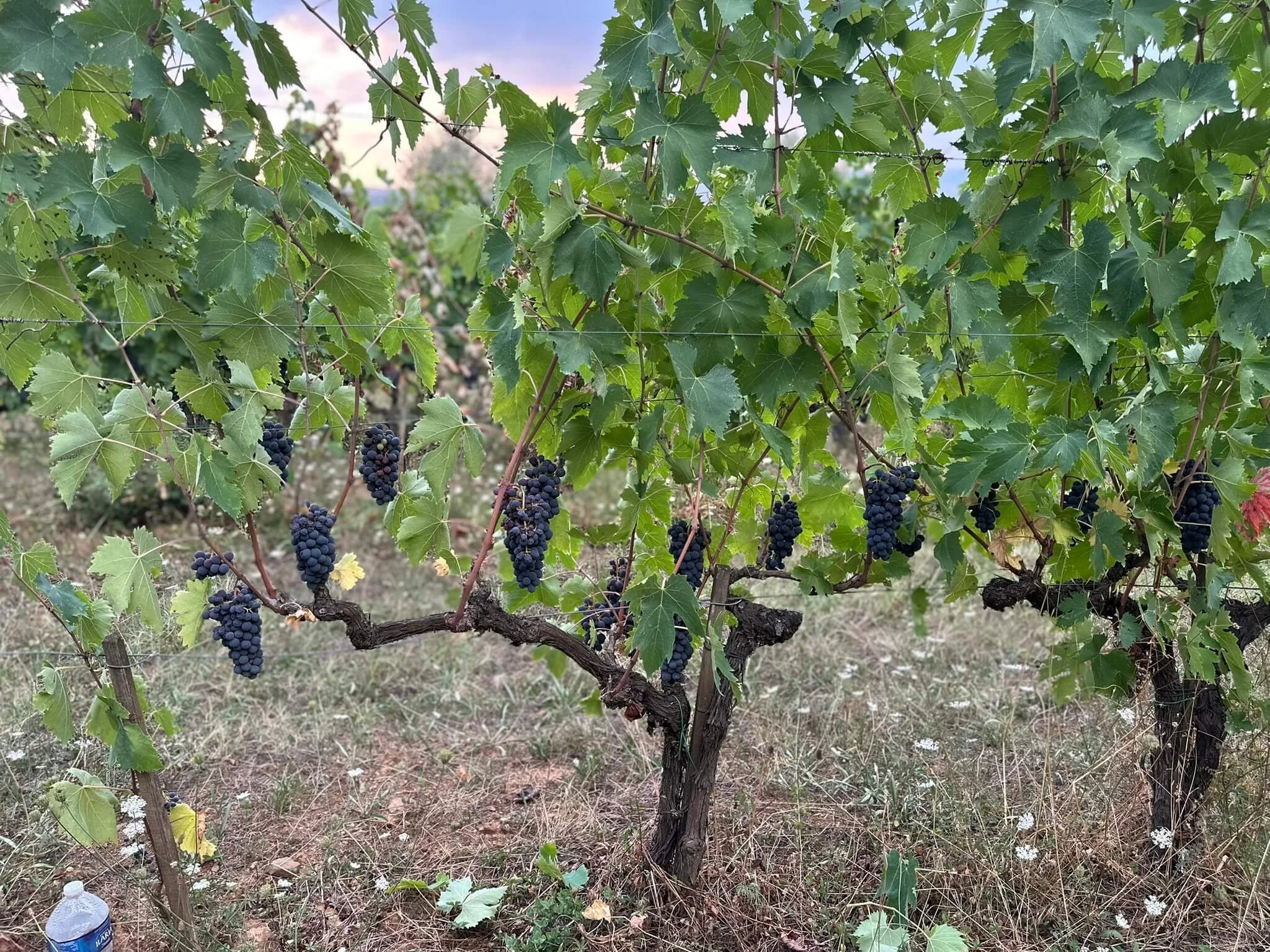
A sangiovese grape laden vine from the vineyards of Canalino.
One of the key differences between Brunello and Barolo is their aging requirements. Brunello must age for a minimum of five years before release, with at least two of those years spent in wood barrels. Consider that the sangiovese grape suffers a lot on the vine in the area of Montalcino due to its typical hot and dry climate. This means that the vine will create more structured, robust, Sangiovese red wines. Hence, this is why Montalcino is known for such age worthy Sangiovese wine. Brunello di Montalcino’s extended aging not only accentuates its complexity and depth but also makes this red wine more approachable and smooth.
About the Brunello We Tasted
The Brunello di Montalcino we tasted for this experiment is the handicraft of the spirit of family tradition and authentic winemaking beautifully captured by the small, family-run Canalino farm and winery. Located just outside the gates of Montalcino, winemaker Alberto Pagliantini uses biodynamic and organic farming methods. The winery uses a specially selected Sangiovese grosso clone that best represent the Montalcino hills and their terroir. Alberto’s Brunello, which he only makes in the best years, is a true expression of the Tuscan terroir and a testament to his passion for the Sangiovese grape. The taste? On the palate, the wine offers an elegant mix of flavors reminiscent of stewed cherries and ripe red fruits; we also tasted a distinct flavor like a red jolly rancher. A fantastic freshness and age-worthy tannins give the wine its superb structure and complexity. These beautiful flavors are first hinted at on the nose, which is an intense potpourri of mature fruit and spice, with distinct notes of prune, menthol, and leather. The wine reveals a gorgeous ruby color with a classic garnet outline.
Head to Head: Barolo vs Brunello
Now that we have a bit more context, let’s get into comparing and contrasting Barolo vs Brunello.
While both Barolo and Brunello di Montalcino are considered kings of Italian wine, one some of the best red wines in the world, they are each unique in their own right. A closer look at their origins and characteristics reveals their distinct and beautiful personalities.
When evaluating these 2 different red wines, you need to consider the context of geography: Barolo hails from the cool, northern region of the Langhe in Piedmont, while Brunello comes from the warm, sun-drenched hills of Tuscany.
Then, the most significant distinction between the two lies in the grape variety used, which is the ultimate source of their unique character:
Nebbiolo, as we mentioned, is known for its high tannin and acidity, giving the wine an elegant structure with a bouquet of red fruit, floral, and spicy notes.
Sangiovese from Montalcino tends to produce a red wine that has a more bold structure, with cherry, often the main flavor, surrounded by spicey and earthy undertones.
These two different grapes, along with different winemaking regulations, lead to unique aging processes. Let’s compare:
Barolo’s minimum aging requirement of three years, with at least 18 months in oak barrels, which helps to soften its assertive combination of high acidity and tannins.
Brunello, on the other hand, ages for a five years, of which, two years are in wood. This extra extended aging is also a key difference. It allows a Brunello to have a slightly more graceful evolution.
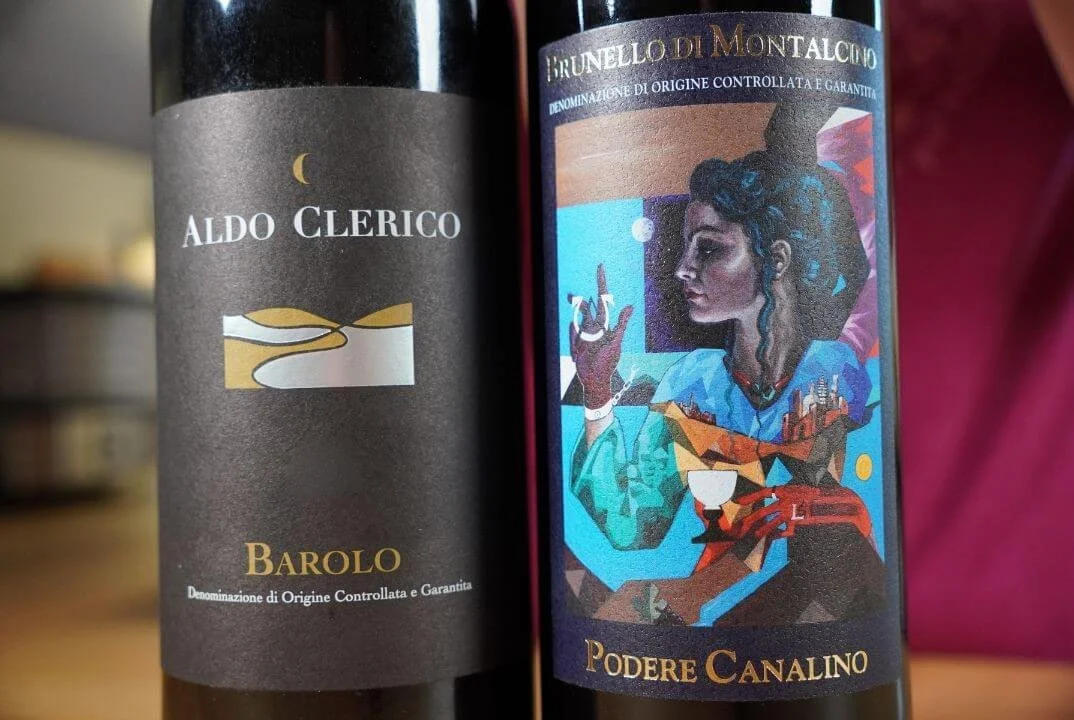
Here are the 2 kings of Italian red wine, Barolo vs Brunello, literally head-to-head.
As a result, it is difficult to compare wines of the same vintage; one will always have a bit more oak aging, or more bottle aging. This will cause different tertiary aromas and flavors, the ones that predominantly come from aging, to develop in each wine. Brunello might come out with more earthy flavors as it softens and integrates, like forest floor and leather. Meanwhile Barolo, while still a wine that can age for decades, can be more approachable in its youth, needing more time spent in the bottle before its tertiary flavors of truffle, licorice, and tobacco come out. These differences culminate in very unique flavor and aroma profiles, meaning that a lot of times we can sort of tell the difference right out of the gate.
In this winetasting on our YouTube channel, Vero collaborator and sommelier Jacqueline Mitchell was able to tell right off the bat which wine was which. Admittedly, it wasn’t a blind tasting, but she still believed that if it had been a blind tasting, she might have been able to distinguish which was the Brunello and which was the Barolo.
The Barolo greeted her with notes of truffle, mushrooms, sour cherry and dried rose petals. Overall, she felt it was complex, yet still had a surprising fruity profile to it. The tertiary flavors of truffle and mushroom and licorice played second fiddle to the cherries. Meanwhile the Brunello had riper fruit, like stewed cherries, she loved the cherry jolly rancher note! The earthiness of the Sangiovese came through, and she could definitely feel the sustained aging since it was softer, more velvety in the way it coated her mouth.
In short: she felt fresher fruits in the Barolo and more cooked, aged fruits in the Brunello. As well, she could feel the difference in aging with the Brunello being softer and more evolved, as would be expected.
Ultimately, producers like Aldo Clerico of the Langhe and Canalino of Montalcino intricately capture the spirit of their respective regions, offering a direct path to understanding the character of each wine. The discovery of their unique styles is what makes tasting these two kings so rewarding.
Learn Through Tasting
Ultimately, the choice between Barolo and Brunello comes down to personal preference. If you prefer a powerful, structured, and age-worthy wine with a complex bouquet, then Barolo is the king for you. If you are seeking a wine that is elegant, fruit-forward, and earthy with a softer more velvet texture, then Brunello is your monarch.
The beautiful thing about wine is that there is no right or wrong answer. We encourage you to continue your own personal journey of discovery by tasting different Barolos and Brunellos and finding the uniqueness in each one. For those of you that know our curation style, you know that we love to really dive into the nitty gritty of the wine world. And you can too, by trying a selection of different wines and different winegrowers from our portfolio. We sell to both businesses and consumers across the US:
We are enlarging our network of distributors around the country. Reach out to us if you are interested in distributing our wines.
We sell to wine stores and restaurants in certain states - contact us if you would like more info.
We do corporate gifts and sommelier guided wine tastings. Email us and we’ll tailor unique and sustainable corporate gift ideas.
If our farm crafted wines and olive oils are not in your local shop or restaurant buy wine online here and we’ll ship it to you. Browse the VeroShop to find some great small production wines and try their various vintages.
We also have a wine club for true wine explorers seeking to discover a unique and authentic small production wine they never had - plus it has won an award for Best Wine Club!
Do Your Own Barolo vs Brunello Taste Test

This is one of the best Barolo wines from the Langhe in Piedmont Italy as well as a great value from one of the storied families of Barolo wineries. This Barolo red wine is the maximum expression of the nebbiolo grape from Aldo Clerico. With vineyards right next to those of Domenico Clerico Barolo vineyards, this Barolo is a good substitute for Burgundy wine.
This garnet colored artisan Barolo has red fruit, rose and spicy leather and tea leaf aromas with elegant structure, long finish leaving a silky mouthfeel. On the nose it is very intense while floral notes mix with typical vineyard scents of violets and red berries. On the palate, the violets blend with licorice flavors and noticeable tannins. A creamy texture from the oak barrels creates a pleasant mix of fresh yet complex flavors.
Tastes Like: Cherries and licorice
Farming & Winemaking Highlights: Biodynamic | Native Yeast Fermentation | Single Vineyard
Fun Facts: This is Aldo's first wine made from 5 different Barolo designated vineyards surrounding his home in Monforte d'Alba, all within the Bricco San Pietro MGA. He vinifies each vineyard and then does an assemblage, creating each vintage a unique expression of his nebbiolo vineyards. It is also made with native yeast fermentation, so can be called a natural wine.

Made with native yeast fermentation, this Barolo Serralunga is a special natural wine. Rich on the nose with dried violets typical of the nebbiolo grape, the bouquet is austere and profound with balsamic notes. Once sipped, the earthy texture is out of this world, which marries pleasantly with the structure, fruit and spice of this elegant red. Well accented tannins are soft and decanting is strongly recommended.
Tastes Like: Earthy Spices
Farming & Winemaking Highlights: Biodynamic | Native Yeast Fermentation | Single Vineyard
Fun Facts: This is a single vineyard Barolo from the Serralunga d'Alba village, known to produce the most age worthy Barolos.

Made from the sought-after Ginestra Barolo Cru, this single vineyard wine epitomizes the greatness of the nebbiolo grape from the Barolo wine region, in terms of structure, age-worthiness and fruit expression. The native yeast fermentation used in making this natural wine also helps bring out the special and sought after terroir of the Ginestra cru.
An intense garnet color, on the nose this Barolo tends towards red fruits, with a touch of balsamic notes. As it opens on the palate the elegant tannins harmonize with the acidity for an overall richness that creates a pleasant and enjoyable experience while sipping alone or with food.
Tastes Like: Balsamic Tabacco leaves
Farming & Winemaking Highlights: Biodynamic | Native Yeast Fermentation | Single Vineyard
Fun Facts: The Ginestra cru is very limited and only a few wineries have access to harvest from there. Aldo can thanks to his wife’s, Valentina’s, Conterno family vineyards.
Fun Facts: The hands on the bottle represent Aldo’s two daughters; for this reason he often says this is the wine closest to his heart.

This Brunello di Montalcino from winery Canalino is crafted using specially selected sangiovese grapes. A gorgeous ruby color, the nose is a potpourri of intense mature fruit and spice aromas from prune to menthol to leather. The wine is structured, with freshness, minerality and age worthy tannins and a fantastic mouthfeel.
Tastes Like: Stewed Cherries or Cherry Jolly Rancher candy
Farming & Winemaking Highlights: Regnerative Agriculture | Sustainable Winery | Biodynamic | Native Yeast Fermentation | Unfiltered | Organic | Natural Wine | Vegan
Fun Facts: The name “brunello” comes from the local name used for the type of sangiovese typically used in the area.

Dogliani is known as the area which produces the best dolcettos in the world. This expressive structured yet easy-to-drink red wine has purple color, and floral bouquet with red plum notes. On the palate, this dolcetto opens pleasantly with notable tannins that are, however, not overpowering. It finishes with light almond notes. Coming from a single vineyard near Monchiero, this Dogliani is also make with native yeast fermentation.
It can be enjoyed just after bottling, yet it can better itself after a bit of aging in bottle.
Tastes Like: Juicy plump, plums
Farming & Winemaking Highlights: Biodynamic | Native Yeast Fermentation | Single Vineyard
Fun Facts: Originally called Dolcetto di Dogliani, local winemakers lobbied to change the denomination to simply ‘Dogliani’ to avoid the misconception that this wine was ‘little sweet’, as suggested by the translation of ‘dolcetto’ in Italian. They wanted this special dry red wine to be able to make its own name, and let its importance stand for itself.
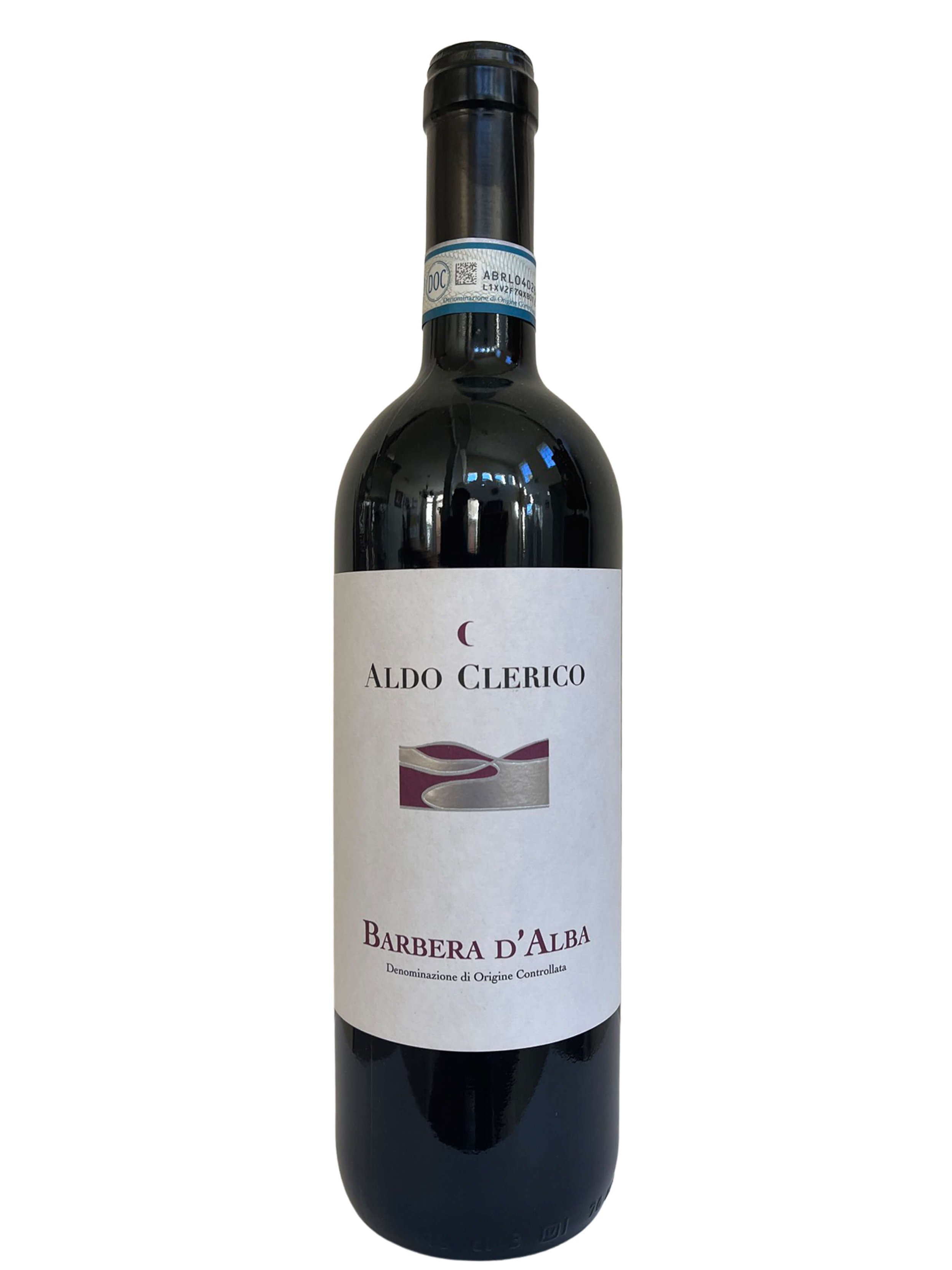
A really good, soft and fleshy Barbera from Alba, from a single vineyard located in the Barolo designated wine region, one of the best areas for Barbera. Nice acidity and fruitiness with some spice, thanks to 14-16 month aging in new and used oak.
A very balanced and elegant wine on the nose, and a good body and structure on the palate with a pleasant and vibrant acidity. A rounded wine with fresh yet fruity notes that finish with a creamy texture thanks to the oak barrel aging.
Do you want to regularly purchase this wine? Check out the Subscribe and Save option available HERE!
Tastes Like: Pretty, ripe, dark cherries
Farming & Winemaking Highlights: Biodynamic | Native Yeast Fermentation | Single Vineyard
Fun Facts: With its aging, this Barbera d’Alba technically follows guidelines for a Barbera d’Alba Superiore, but winemaker Aldo Clerico decides to declassify it.

It is a wine with great structure and personality, an excellent expression of the nebbiolo vine. With a delicate floral bouquet of rose and violets, there is also a finish of licorice. Tasting it really brings out its elegance with pleasant yet decisive tannins that signal great potential for good aging.
As well, the native yeast fermentation used to make this nebbiolo natural wine lets you taste the natural terroir of the Langhe.
Tastes Like: Crunchy pink cherries
Farming & Winemaking Highlights: Biodynamic | Native Yeast Fermentation
Fun Facts: This Langhe Nebbiolo is known as a ‘Baby Barolo’, since it comes from Barolo vines, and is a great introduction to the Langhe wines, where some of the best reds in the world come from.
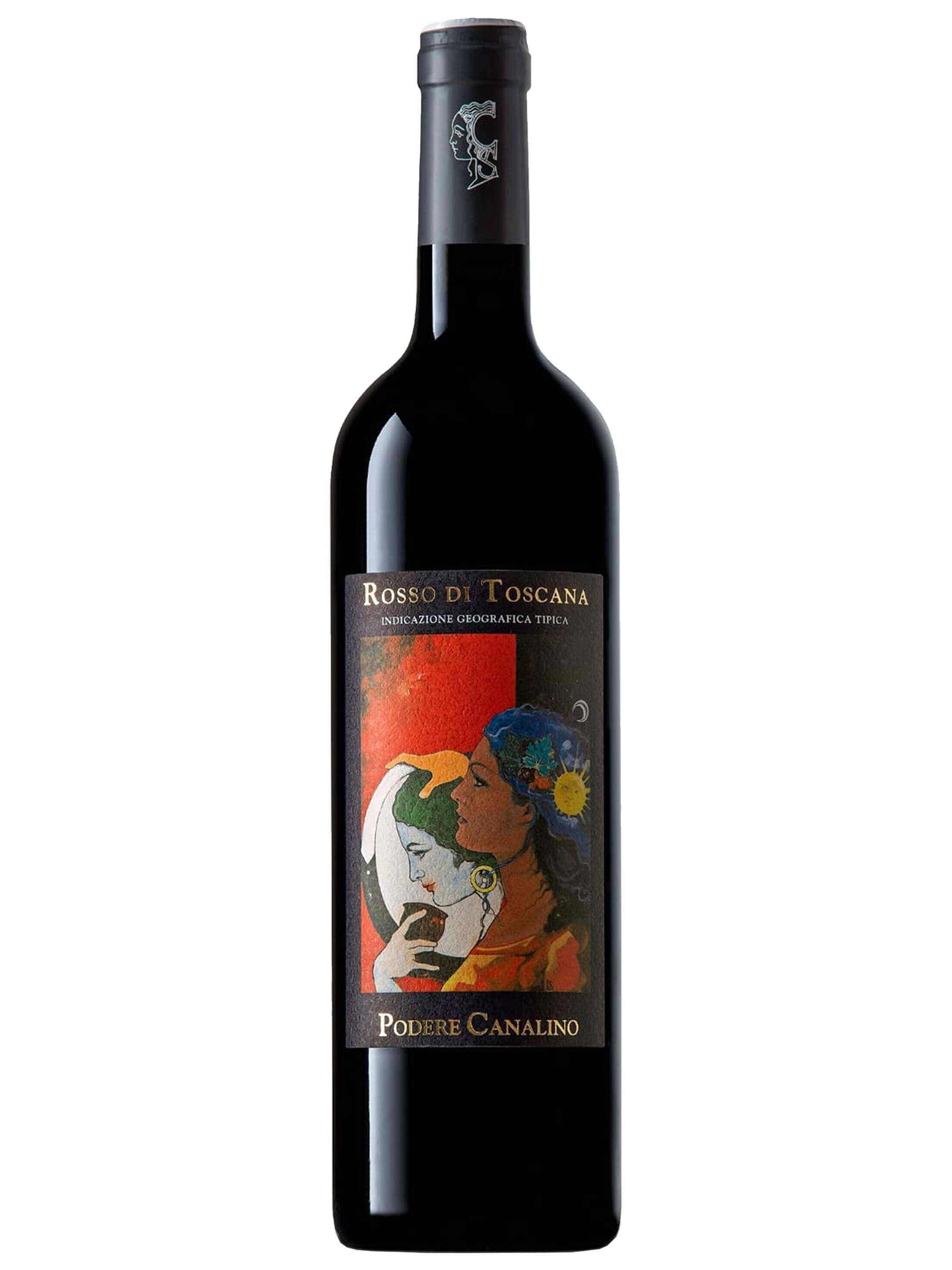
Made from sangiovese vineyards in Montalcino, this is an approachable, people pleaser for red wine lovers, the unoaked offering from the Brunello producer Canalino. It has notes of cherry, with hints of black pepper and toast. This wine is fresh, fruity and balanced with soft tannins and a pleasant clean finish.
Tastes Like: Crunchy, fresh cherries
Farming & Winemaking Highlights: Regnerative Agriculture | Sustainable Winery | Biodynamic | Native Yeast Fermentation | Unfiltered | Organic | Natural Wine | Vegan
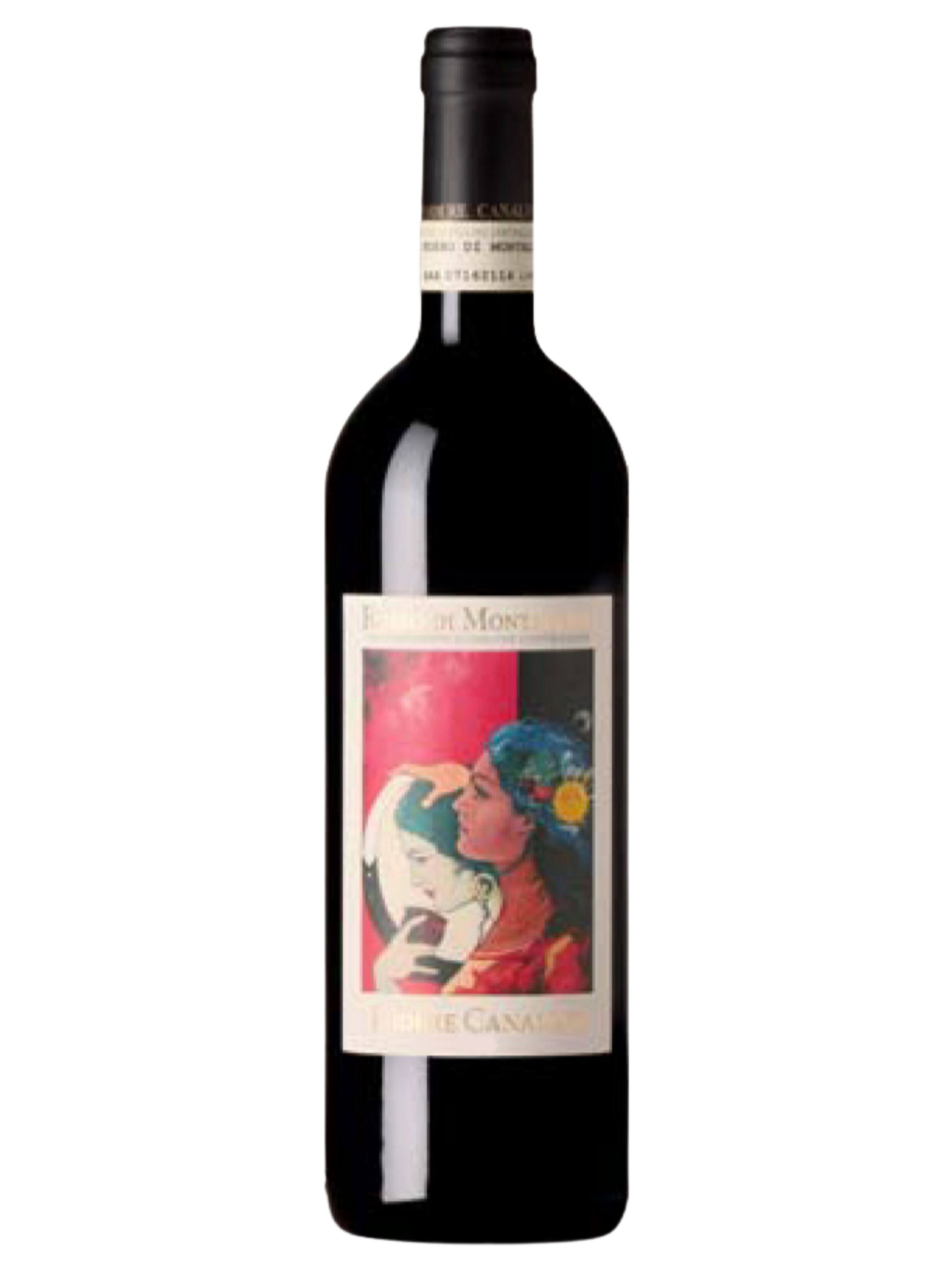
This is a complex, intense age-worthy vegan red wine; Once opened balsamic notes burst forth. We recommend to decant it or at least let it breathe a bit before tasting. When tasting, you understand that it comes from a terroir which one of the best Italian reds, Brunello, is made from; its structure is noteworthy, from acidity, to tannins to mineral structure. A delight for serious red wine lovers.
Tastes Like: Spiced Cherry Jam
Farming & Winemaking Highlights: Regnerative Agriculture | Sustainable Winery | Biodynamic | Native Yeast Fermentation | Unfiltered | Organic | Natural Wine | Vegan
Fun Facts: From 100% sangiovese vineyards right outside the historic center of Montalcino.
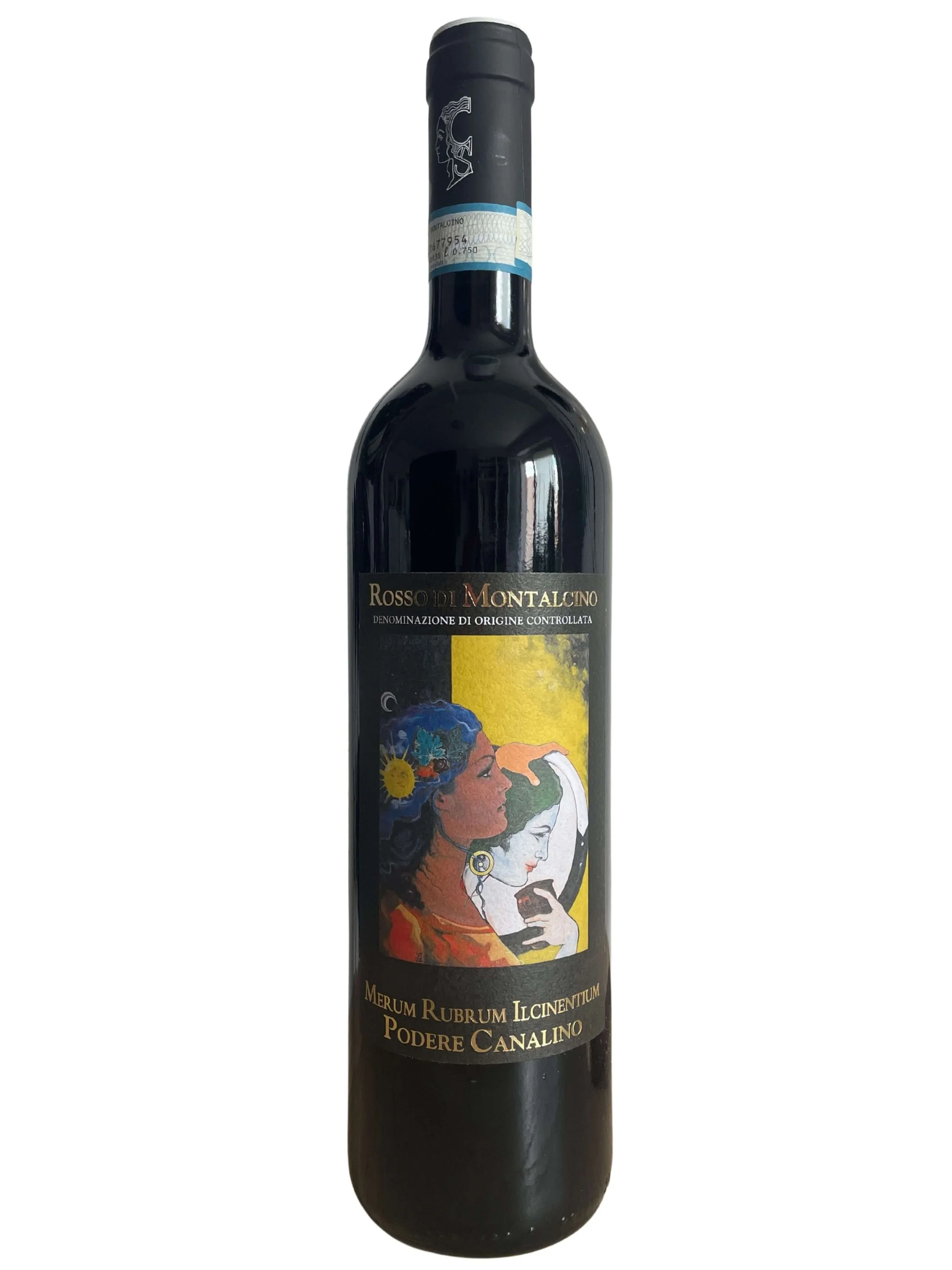
Steps from the historic center and birthplace of Brunello, this Rosso di Montalcino is expertly crafted by a winemaker who only grows on grape: Sangiovese. But this isn’t any standard Rosso di Montalcino: it’s like a Rosso di Montalcino Riserva. The vineyards are steps from the historic center of Montalcino, famed for one of the best red wines in the world. This Rosso di Montalcino is only made during the best years from the best fruit and is aged longer, minimum 14 months in neutral oak barrels, and released only when Alberto, Canalino’s winegrower and winemaker, feels it is at its best. Like a “Baby Brunello”, Merum Rubrum Ilcinentium is in fact, winemaker Alberto’s baby.
Tastes Like: Cherries with hints of spices & eucalyptus
Farming & Winemaking Highlights: Regenerative Agriculture | Sustainable Winery | Biodynamic | Native Yeast Fermentation | Unfiltered | Organic | Natural Wine
Fun Facts: The name is inspired by “Merum” meaning pure wine, or wine fit for the gods. “Rubrum” means red, Ilcententium refers to the people of Montalcino. So this is pure red wine of Montalcino.