The Corino Family's Lay of the Land
It happens that when we get to know a highly regarded, historic winery like Case Corini with rich stories of generations tending to their land, following a centuries old craft passed down to them, that we can lose the forest for the trees, or, rather, the vineyards for the vines. That’s OK, after all, the fascination in wine is all that went into producing an intense, alive beverage of nature.
Our admiration for Case Corini starts with Lorenzo Corino a viticulture researcher and 5th generation of Case Corini who our founder, Sheila Donohue, met first before getting to know his children, Guido and Luisa Corino. When he passed 2 years ago, Sheila wrote this memoir calling him the ‘Wise Man of Natural Wine’ due to his tireless work in the biodynamic wine world, his commitment to and expertise in regenerative agriculture and sustainable farming, and natural, no intervention, winemaking. Realizing that there was more to share about this inspirational, learned man, Sheila further shared these highlights of getting to know Lorenzo Corino, both personally and professionally.
More recently, our attention has focused on the 6th generation and getting to know them. We released a poignant sharing of our visit to Guido Corino and the family winery estate soon after the passing of his father. We then had a VeroTalk with Guido and his sister Luisa last year to start to get to know them with the highlights of the chat and learnings in this article. And we just paid a visit to Case Corini to really get the lay of the land, where we shared the intricacies of all 6 generations in this article.
Now, wait…. what about the wine? How is that made? What vineyards to they have and what products do they make?
We know, as natural wine lovers, that good natural wines are made on the vines and in the fields, so let’s give a run-down of Case Corini’s main production vineyards and figure out which wines come from where to get a better understanding of how they are each unique and special in their own right.
First, some quick recaps on the agriculture and winemaking philosophies of Case Corini.
Regenerative Agriculture and Case Corini
We’ve extensively covered in previous articles the regenerative farming principles of Case Corini, including directly from 6th generation Guido Corino himself in our video, so today let’s just touch on the highlights.
Regenerative agriculture focuses on the long-term life of a field or vineyard. For Case Corini, a big part of this is soil management: making sure their carefully cultivated and nutrient rich soil stays where it belongs, not running off into the gully. It also blends into biodynamic farming in some ways, allowing mother nature to work her magic with biodiversity and honoring the local ecosystem. This means, not deeply tilling the soil, letting natural ‘weeds’ grow (and covering the soil with hay mulch where natural grasses don’t grow). Farming organically is important too, not spraying harmful pesticides or fungicides, but letting and trying to work with the natural occurences in the vineyard. All of this is to help the soil maintain its natural fertility, nutrients, and mass.
Case Corini and 00 Winemaking
Just like how in the vineyard, Case Corini believes in working with nature rather than bulldozing and forcing nature into their plans, in the winery they follow a similar philosophy. They follow a ‘00 winemaking’ style, meaning nothing is added, nothing removed. So this means no added yeasts or sulfites, and no filtering to remove sediments. Rather, they rely upon native yeast fermentation and careful gravity-led siphoning instead. What comes out of their winery is little more than what went in: grapes, just in a slightly different (and arguably more delicous) form… talk about the definition of ‘nature wines’!
While most wineries flaunt certifications and appellations (think organic certifications or DOC appellations in Italy), Case Corini, instead doesn’t really care. Despite the fact that their bottles are filled with 100% organic wine, and they pride themselves that is vegan wine as well, you will not see an organic certification, or even a biodynamic wine certification. Similarly, despiting being within the boundaries of appellations such as the Barbera d’Asti DOCG, their labels state their product as deceivingly banal ‘table wine’. Why is this? Well, it has become a bit of tradition for the family, almost a ‘hallmark’ as Guido Corino says of their wines. Certifications, appellations, are, in the end, controls. They lay out lines and production methods, and the Corino family would prefer to beat their own drum (and that of their ancestors of generations past), to not worry if their are staying in the straight legal lines, but rather focus on making wine and farming their vineyards according to their own beliefs and philosophies. You can hear more from Guido about Case Corini winemaking in our visit video.

Locations of primary Case Corini vineyards in relation to Italy, the Monferrato, and the family home.
Case Corini… Wine by Wine and Vine by Vine
In the Case Corini lexicon, wines named after a vineyard (Achille, Barla, Bricco and Ciabot del Moreto) are single vineyard wines, coming solely from that location. Wines that are named after family (Centin and Nilda) come from fruit pulled from multiple vineyards.
In total the family works five vineyards: Achille, Barla, Bricco, Ciabot del Moreto, and Colletto. Of these the vineyards of Achille and Bricco are the closest to the nuclear family home, Colletto being nearby as well but not quite as close, and Barla and Ciabot del Moreto being found elsewhere in the Monferrato (see map).
Speaking of maps, you may have noticed on the Case Corini labels, there is a vineyard map (see below). Some Case Corini fans fondly refer to the drawing of their estate on their labels as the ‘beach chair’.
We asked the 6th generation winemakers Guido and Luisa Corino which vineyards the map represents, and if the land is still in use. They said,
‘The label, in addition to the main house, features the old vineyard that existed in the time of Vincenzo Corino (our great-great-grandfather, also known as Centin). Subsequently, around 1954-1956, the vineyard was uprooted to make the current Bricco vineyard. The land remains our property, now left as a natural meadow. The colors in the vineyard section on the label represent the primary grape varieties of our region (barbera, nebbiolo, and moscato).’
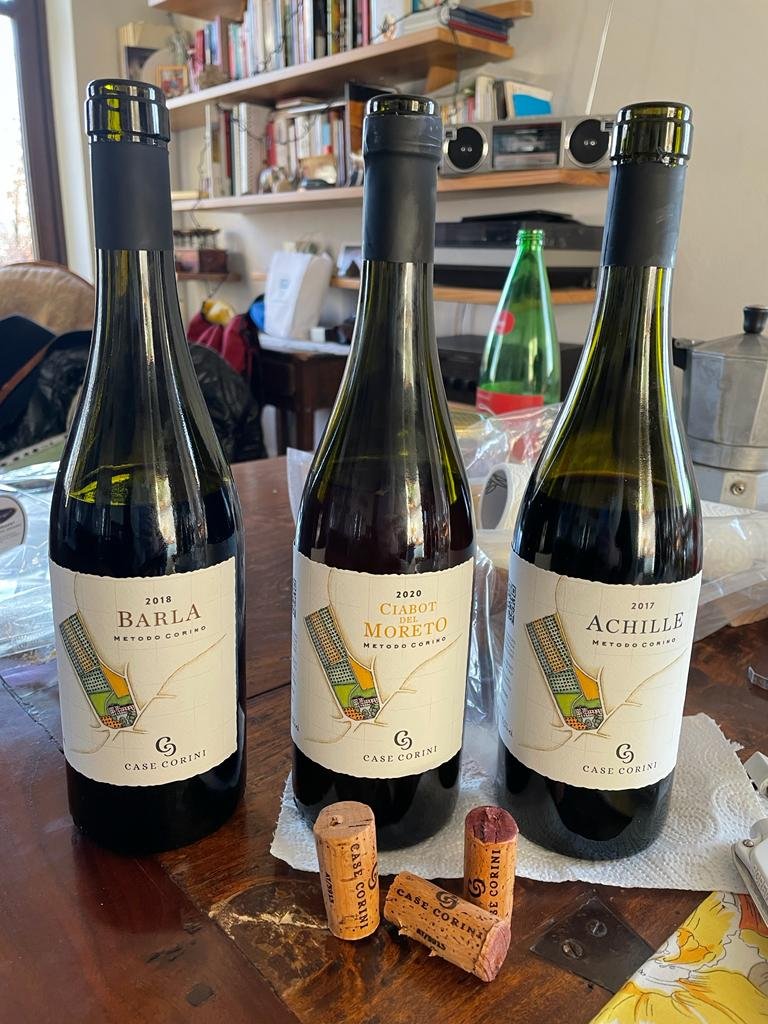
Three Case Corini wines, showing the historic old family vineyard map, aka ‘the beach chair.’
In fact, it is with these three varieties that Case Corini plays their heaviest hands. What you may notice below, is that with the exception of Ciabot del Moreto (a moscato vineyard), all other Case Corini vineyards are comprised in some way of red wine grapes native to Piedmont. So how do they choose what fruit from which vineyard goes into which nebbiolo wine or which barbera wines? Well, there are a variety of differing factors, some based on quality, with the ‘best’ fruit going to a mono-varietal wines, or younger re-planted vines all being blended into one wine. Other factors have to do with ripening, depending on which vineyards ripen when and how evenly will determine which wines get ‘harvested’ together.
And as one last note before we begin: vine age. Most of Case Corini’s vines would be considered ‘old vine’, with the average age bouncing between 50-70 years old. Part of this is the natural life cycle of the vines, part is due to phylloxera coming over to Europe.
So now let’s have a look at the five vineyards and two vineyard blend wines that the Case Corini family works with to get a better idea of the differences of just where their wines come from.

The Achille vineyard, growing nebbiolo and barbera.
Achille Vineyard
Soil: Marl, Sand
Location: Costigliole d’Asti near family home
Exposition: Southwest
Age: 70 years (planted in the 1950s)
Varieties: Barbera and Nebbiolo
Name history: Old owner of vineyard
Wines Produced: First choice of the nebbiolo fruit goes to Centin, with the rest of nebbiolo and all barbera to Achille.
Barla Vineyard
Soil: Marl, Sand
Location: Mongardino d’Asti
Exposition: Southeast
Age: 95 years old (1928)
Varieties: Old Vine Barbera for a deep, rich and complex wine.
Name history: Old maps referred to the area of this vineyard as ‘Barla’.
Wines Produced: Barla and Nilda
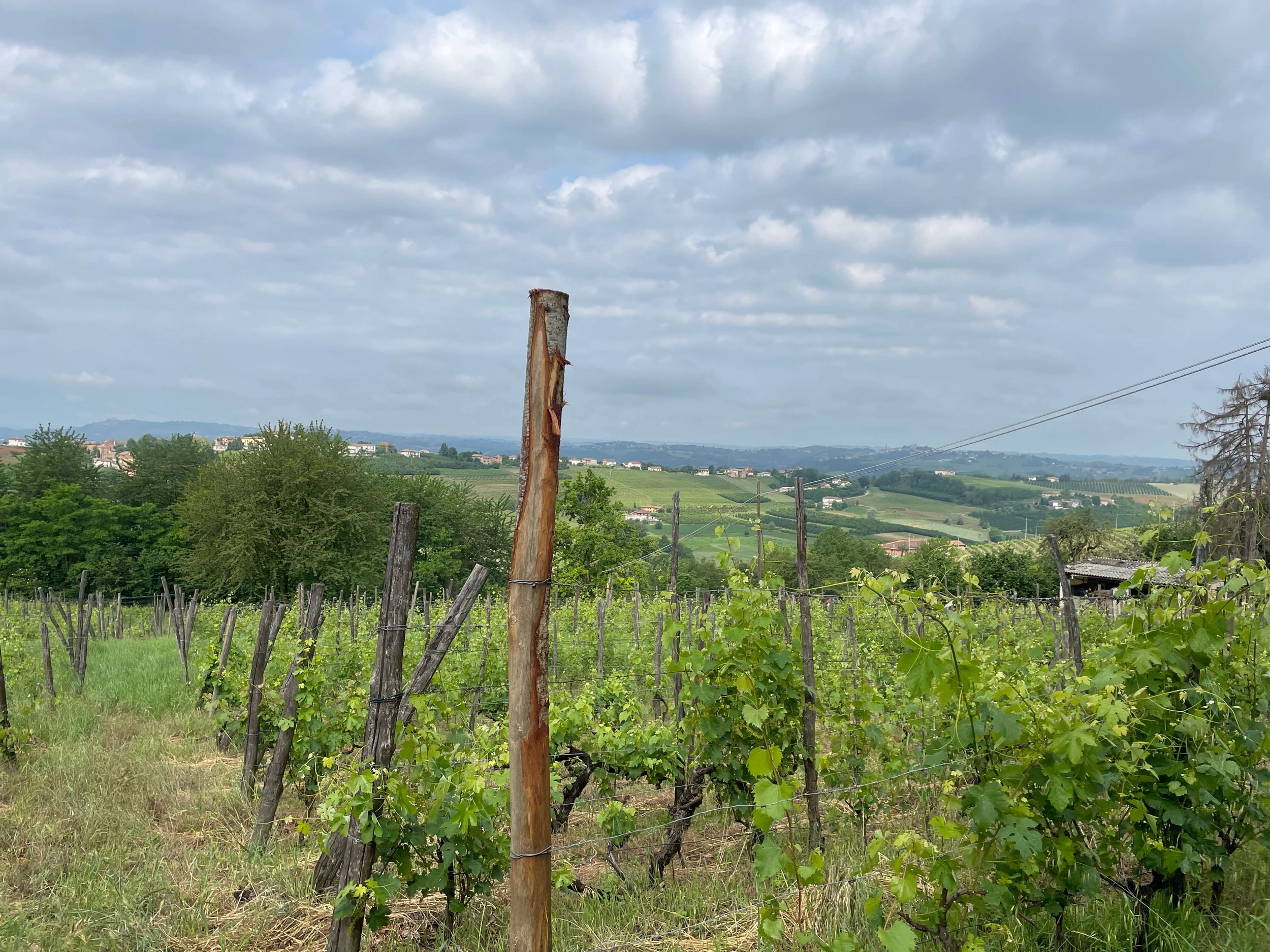
The Bricco vineyard
Bricco Vineyard
Soil: Marl, Sand
Location: Across the street from family home in Costigliole d’Asti, further up the hill from Achille
Exposition: Southwest
Age: A mix, the median age is around 50 years
Varieties: Mainly barbera with a mixture of indigenous varieties (dolcetto, freisa, uva rara, vespolina, uvalino, and nebbiolo)
Name history: Bricco is a top of a hill, this is just under house at ‘top’.
Wines Produced: Bricco and Nilda
Ciabot del Moreto Vineyard
Soil: Marl, sand, limestone
Location: Santo Stefano Belbo
Exposition: Southeast and West
Age: Approximately 50 years old
Varieties: Moscato
Name history: ‘Ciabot’ is local Piemontese dialect for a small house often found in fields or vineyards, and ‘Moreto’ refers to a local family name from the area of the vineyard.
Wines Produced: Ciabot del Moreto

View from a Case Corini family vineyard.
Colletto Vineyard
Soil: Marl, sand
Location: Costigliole d’Asti, near to the Bricco and Achille vineyards, just further up the road from the family home.
Age: Approximately 50 years old
Exposition: Southwest
Varieties: Nebbiolo and Barbera
Wines Produced: Achille, Centin, and Nilda
And now a quick look at two multiple vineyard blends:
Nilda Red Wine Blend
Soil: Marl, sand
Locations: Vineyards of Achille, Colletto, Bricco, and Barla. These grapes come from the younger vines or vines that are in less well positioned areas.
Age: 5-10 years
Varieties: Barbera and a blend of other indigenous varieties
Name history: Nilda was Lorenzo Corino’s grandmother
Centin Red Wine
Soil: Marl, Sand
Location: Achille and Colletto vineyards
Exposition: Southwest
Age: 70 years (planted around the 1950s)
Varieties: Nebbiolo; the best of the best gives deep and rich flavors
Name history: Centin was the grandfather of Lorenzo Corino
Now, How to Taste These Vineyards?
Ready to taste the land? As aficionados of natural wines know, minimal intervention wines like those of Case Corini are some of the best ways to taste the land and area that the wines come from. Taste for yourself the difference in the old vine barbera Barla, or the subtle changes in fruit selection from Centin to Achille, and see if in Nilda you can taste the younger vines. Maybe you will enjoy Bricco, from the top of the hill, full of sun and many different varieties. Of course, don’t forget Ciabot del Moreto, made with moscato, but definitely not the average moscato you would expect from the hills of Santo Stefano Belbo in the Monferrato. Order some wine today to taste these natural wine beauties, that are organic, biodynamic, vegan, and with no sulfites or other stuff added.
For those of you that know our curation style, we love to compare and contrast wine styles, varietals, places. Whether your interested in Case Corini wines, or other orgainic wines, try a selection of different ones from our portfolio, as mentioned above and shown below.
Come meet Guido in person and taste their wines at Raw Wine New York November 12th and 13th. We are still organizing Guido itinerary for the rest of that week. Contact us to organize to meet up with Guido Corino during US East Coast Tour the week of November 12th.
As a reminder, we sell to both businesses and consumers across the US:
We are enlarging our network of distributors around the country. Reach out to us if you are interested in distributing our wines.
We sell to wine stores and restaurants in certain states - contact us if you would like more info.
We do corporate gifts and sommelier guided wine tastings. Email us and we’ll tailor unique and sustainable corporate gift ideas.
If our farm crafted wines and olive oils are not in your local shop or restaurant buy wine online here and we’ll ship it to you.
We also have a wine club for true wine explorers seeking to discover a unique and authentic small production wine they never had - it just won an award for Best Wine Club of Ventura!

All natural, old vine nebbiolo and barbera blend with no added sulfites and yeast. Aromas of milk chocolate covered cherries, it has a fresh and rich fruity taste with notable tannins and a has a long piquant finish. Name comes from the former owner of the 70 year old vineyard which has a mix of Nebbiolo and Barbera and is down the hill from the childhood home of Lorenzo Corino. After a gentle crushing, fermentation starts with native yeast fermentation and wines are left with skin contact for 6-7 weeks, followed by about 30 months of aging in wooden barrels. As with all of Case Corini wines, this is a 00 wine, nothing added, nothing removed, no yeast, no sulphites added, organic, biodynamic, vegan. In other words, all natural wine.
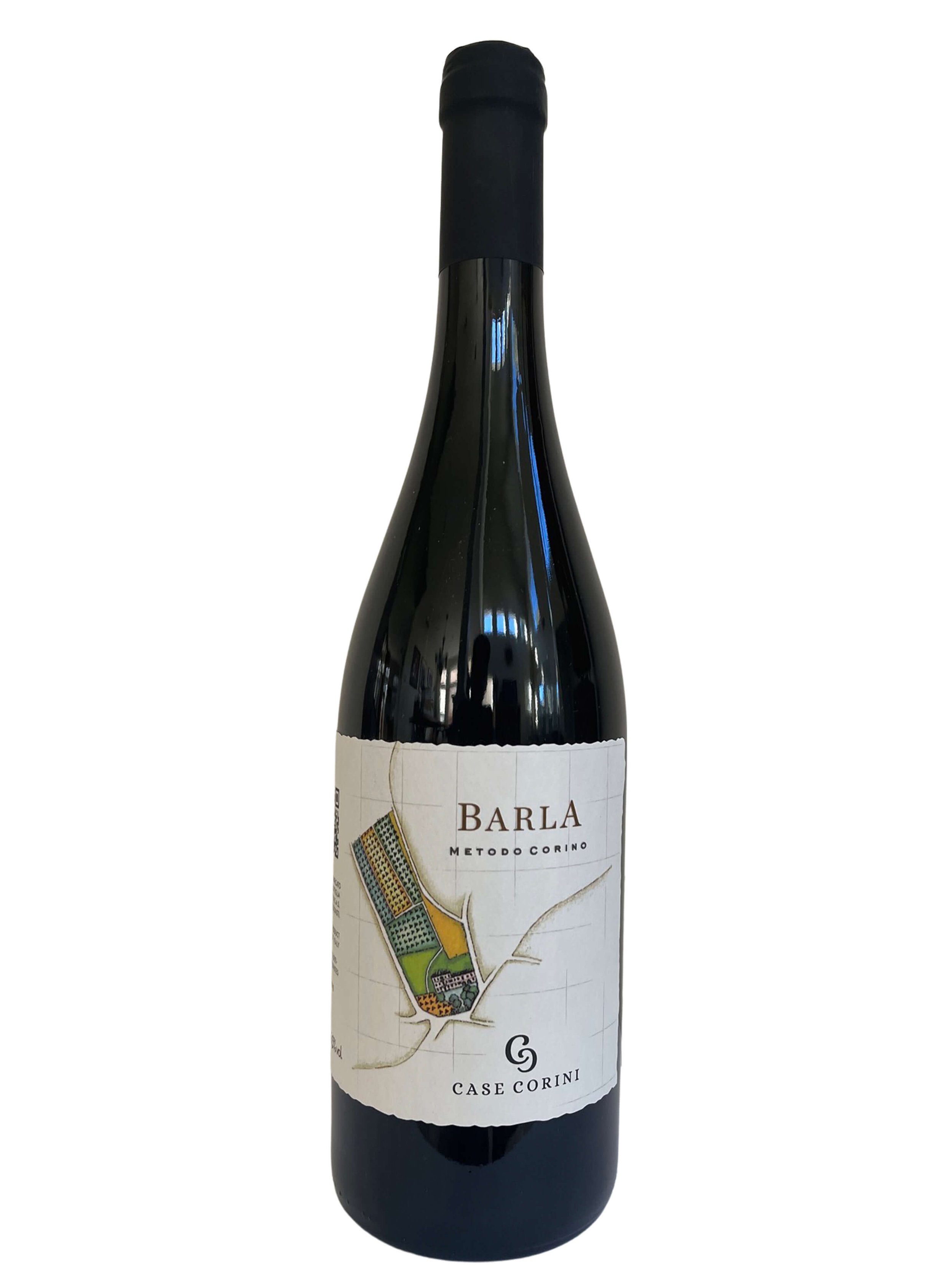
You never had a Barbera like this! Made from 95 year old Barbera vineyard, with some small percentage of other varieties planted over the years in the vineyard. This all natural wine has intense aromas of brandied cherries and a richly textured, delicious dark fruit taste with right balance of fruit, acidity and tannins. Barla is the antique name of the vineyard which used to be the land of an old convent. After a gentle crushing, fermentation starts with native yeast fermentation and wines are left with skin contact for 6-7 weeks, followed by about 36 months of aging in wooden barrels, housed under Lorenzo Corino's family home.
As with all of Case Corini wines, this is a 00 wine, nothing added, nothing removed, no yeast, no sulphites added, organic, biodynamic, vegan. In other words, all natural wine.
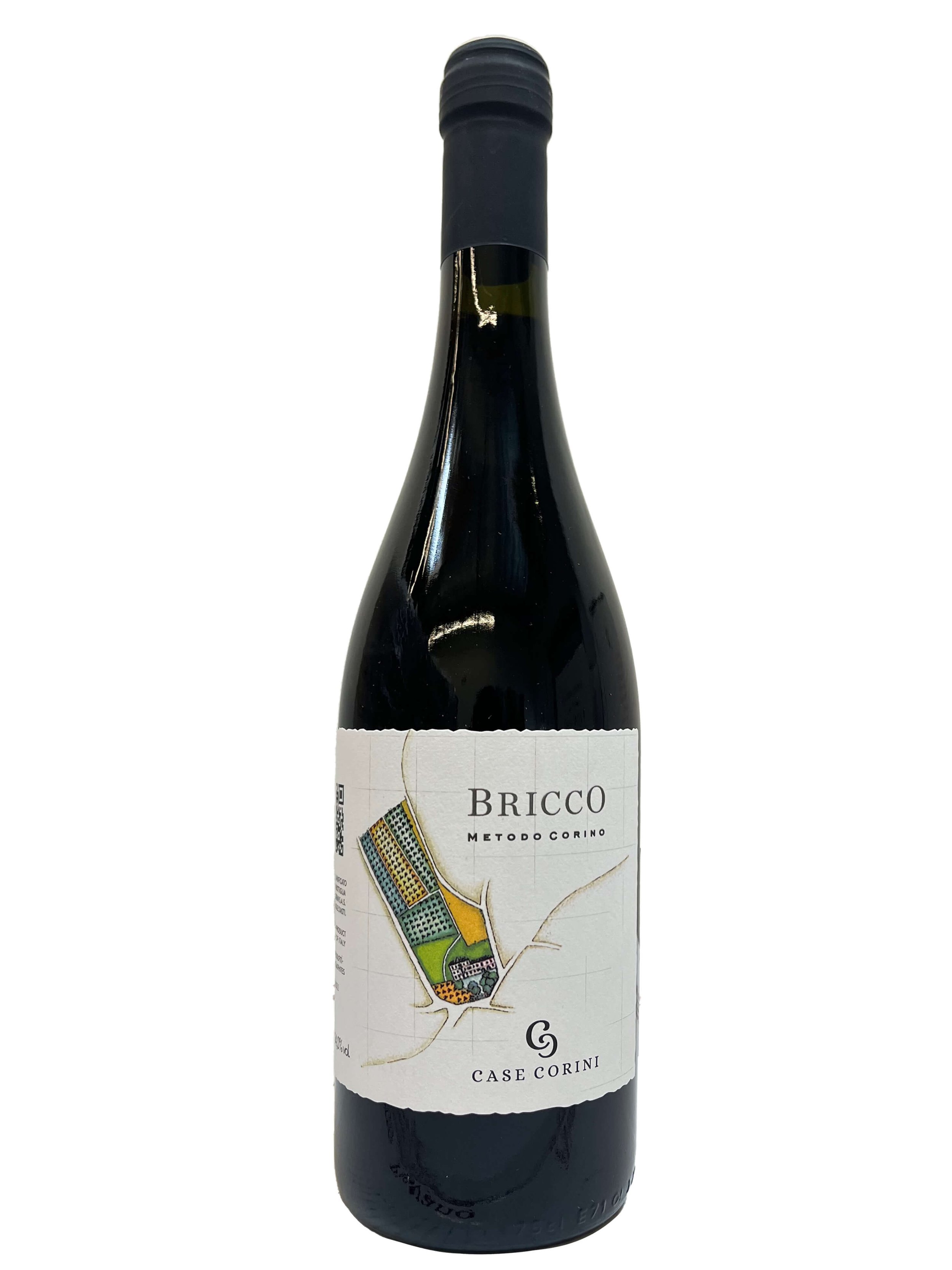
From the old historic field blend vineyard in the Corino's family's 'backyard', this is a fresh, delicious, and complex natural red wine, nicely balanced with fresh raspberry taste along with chocolate shavings.
The Bricco vineyard, an old single vineyard made up of 60% barbera, then freisa along with other red native varieties, is right behind the family ‘villa.’ It has been used as a sort of experimental vineyard by Lorenzo Corino, and is harvested as a field blend.
As with all Case Corini wines, this wine is made with minimal intervention, no added sulfites, native yeast fermentation, vegan, and following the principles of regenerative agriculture, biodynamic and organic farming.

Earthy, age-worthy nebbiolo made from 70 year old naturally cultivated vines. Named for the dearly beloved grandfather of Lorenzo Corino. Having a garnet color with orange hues it has a complex, spicy nose with notes of cardamom and cinnamon. When tasting, it is fruit forward, cherry & forest fruits, followed by spices, and chalky tannins envelope the mouth and finishes elegantly. After a gentle crushing, fermentation starts with native yeast fermentation and wines are left with skin contact for 6-7 weeks, followed by about 36 mos of aging in wooden barrels.
As with all of Case Corini wines, this is a 00 wine, nothing added, nothing removed, no yeast, no sulphites added, organic, biodynamic, vegan. In other words, all natural wine.
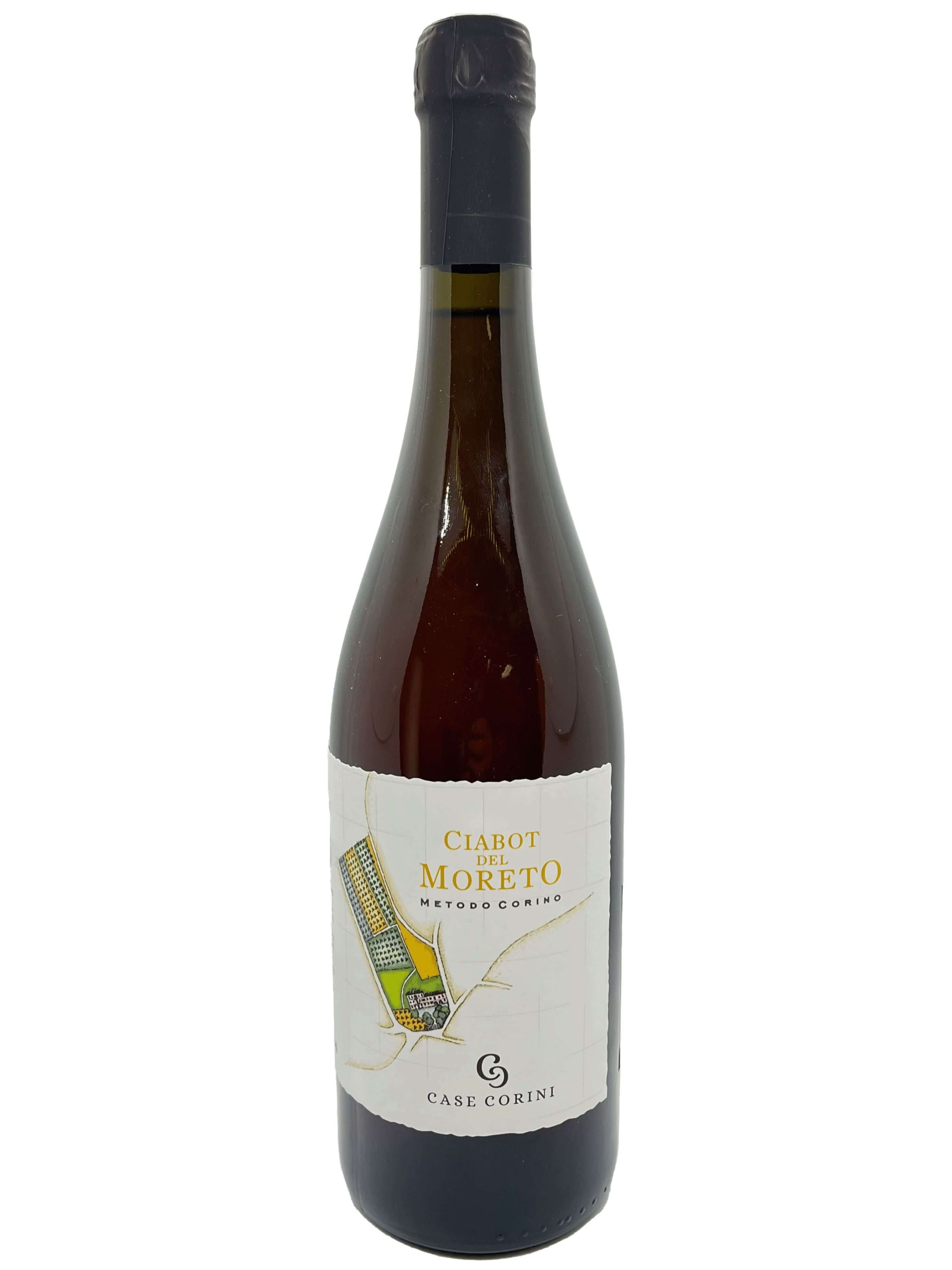
This is an aromatic late harvest skin contact Orange wine from the natural wine 'legend' Lorenzo Corino and his son Guido. The color of rust orange opens to a complex bouquet of orange blossom, candied fruits, caramel and pine leading to a fresh taste of apricots with some mineral savory-ness, pleasant tannins, lovely texture. It is balanced with a long finish. This vegan wine is made naturally, with no intervention of any kind made and no sulfites added. It is a super interesting wine for those who enjoy muscat natives and orange wines. The name Ciabot del Moreno refers to the small wine hut (part of the Piedmontese wine 'ways and culture) in the area where the single vineyard is (Moreto). A lot of local stories are born around these "ciabot". The 70 year old vineyard with different Moscato biotypes is 230m high in Santo Stefano Belbo, 15 min south of Costigliole d'Asti and a half hour east of Alba. After a gentle crushing, fermentation starts with native yeast fermentation and wines are left with skin contact for 2-3 weeks, followed by 6 months of aging in wooden barrels.
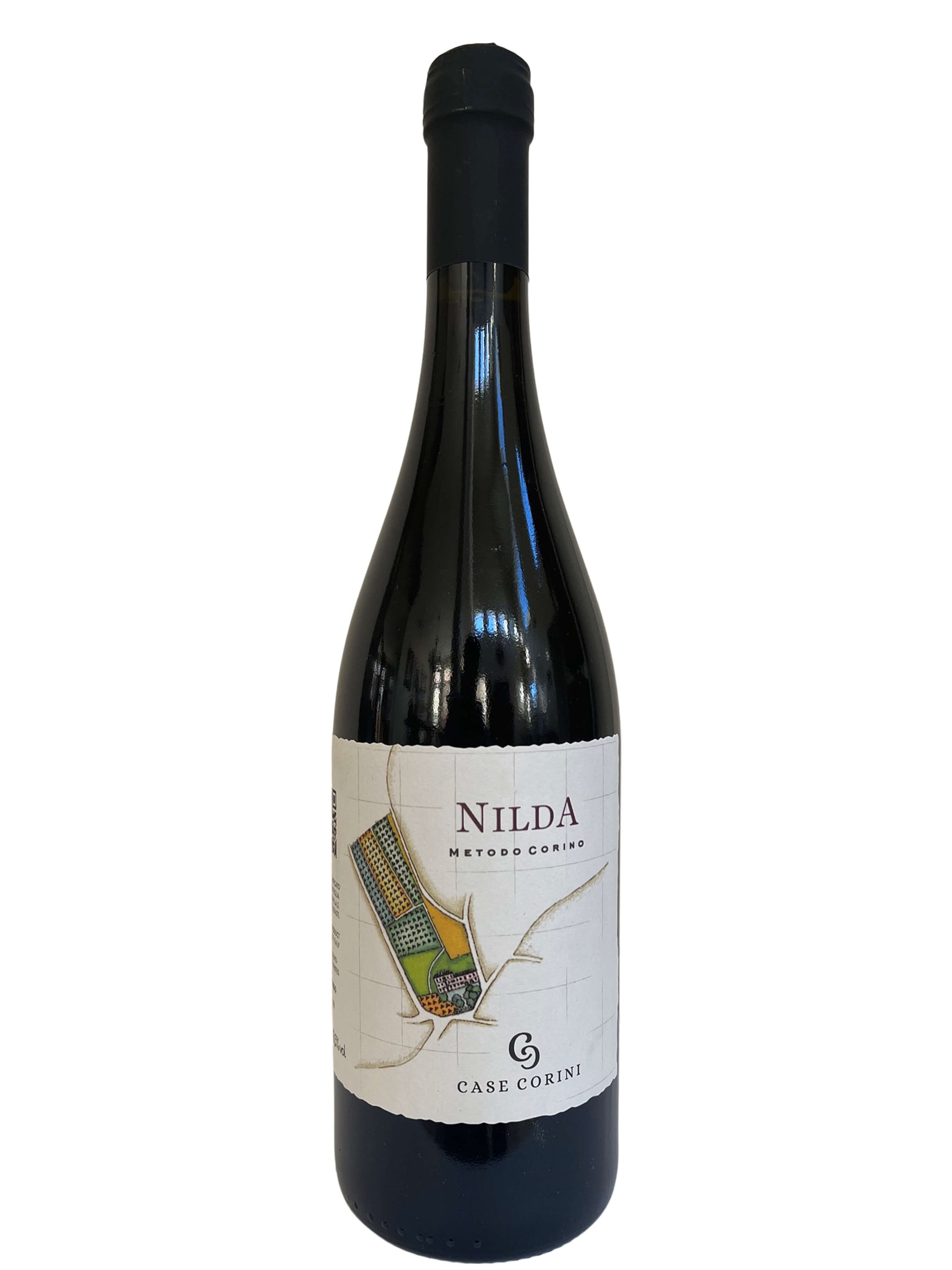
Named after Lorenzo Corino's grandmother, Nilda is Lorenzo & Guido Corino's new red wine from 20 year old vineyards in their hometown of Costigliole d'Asti. It is a field blend mainly of Barbera, along with a mix of other old varieties native to the area. It has aromas of spiced milk chocolate cookies and has a fresh, ripe dark fruit taste with an earthy funkiness and great texture. This vegan wine is made naturally, with no intervention of any kind made and no sulfites added. After a gentle crushing, fermentation starts with native yeast fermentation and wines are left with skin contact for 3-4 weeks, followed by about 12 mos of aging in wooden barrels.