Adding Art to Bubbles: The Champagne Method
The world of sparkling wine is vast. Yet, the most revered bottles and prized, share a singular, painstaking process: the Traditional Method.
Also known also as the Champagne Method, Méthode Champenoise, Classic Method, or in Italy Metodo Classico, this technique for creating bottle fermented sparkling wines is the foundation for creating wines with unparalleled finesse and bubbly complexity. With these plethora of descriptors ranging from English, to French, to Italian, we primarily refer to this sparkling wine method as the Traditional Method.
In this article, we describe this process, step by step, to understand why it is so prized among sparkling wine fans, and what exactly does it do to give a wine such unique flavors and complexity.
After all, every step is crucial, from the selection of high-acid grapes to the final stages of aging and disgorgement. Let’s find out what goes into making your favorite bottle of Champagne, and look at some amazing Italian alternatives that are up and coming on the sparkling wine scene and ready to amaze.
How to Make Champagne
The main key hallmark of a traditional method wine is the absolute necessity of the second fermentation that occurs inside of a sealed bottle. This principle of bottle fermentation is the main influencer that dictates every further choices made by the winemaker when making a Champagne style wine. Let’s go back to basics and start from the ground up, literally: first in the vineyard and on the vines.
The Vineyard and the Base Wine
As with most sparkling wines, we want to look at cooler climates, whether from northern latitudes or higher-altitude vineyards, and sites that are moderated by cool breezes.
A winemaker will carefully source grapes to achieve a high level of fresh acidity, that is crucial to allow for that second fermentation to take place, i.e., high acidity encountering lower sugar levels facilitates the creation of bubbles. Picking early also will allow a sparkling wine to be more crisp and lower in alcohol, two characteristics in sparkling wine that most winemakers want to achieve.
Once the grapes are harvested, an initial, “typical,” fermentation will happen, like with any other still wine, that then yields a base wine, which is typically a dry, light, and highly acidic still wine. This sets the foundation for the eventual creation of bubbles and aging.
Chardonnay and pinot noir are the usual “go-to” grapes to create Champagne style wines. This is thanks to the legacy that Champagne has created.
As you may know, every wine needs to have an appellation. That appellation could be as generic as the country where it was made, aka Italy. However, appellations are often very specific with requirements in order to put the appellation on the label. In fact, that is why you can’t call any Traditional Method wine a “Champagne”. In order to be called Champagne, it must come from the Champagne wine region, and made in a certain way, with only certain grapes, like Champagne can only be made with chardonnay, pinot noir, and pinot meunier grapes. Therefore, a wine cannot be called Champagne if it does not come from that area of France, as well as following the other rules of the appellation. In fact, France has quite a few wines made in the same way as Champagne, but we see them called cremant. Likewise other countries have their own appellations of Traditional Method wines, like Cava in Spain, and Alta Langa in Italy.
Interestingly, you can make a Traditional Method, aka “Champagne style,” sparkling wine using any grape. In fact, one of the most exciting type of sparkling Italian wine is a Metodo Classico wine which made using native Italian grapes; so instead of chardonnay and pinot noir the winemaker will often choose grapes that are indigenous to their area and will often experiment to create an “Italian champagne” which breaks from the Champagne tradition. Often, this produces a wine with truly unique expressiveness and flavors.
Depending on the grapes used, sometimes you will see Traditional Methold wines are referred to as blanc de noir (a white wine made from red grapes such as pinot noir or meunier), or blanc de blanc (a white wine made from white grapes such as chardonnay).

During the second fermentation, some bottles will have pressure valves inserted to help track the buildup of pressure and pace the bottle fermentation.
The Secondary Fermentation: Capturing the Fizz
Now we get to the funnest part of how is Champagne made: What causes bubbles in champagne glass?
As we mentioned earlier, the core principle of the method is the introduction of a second fermentation within the bottle itself. This is because the carbon dioxide gas that is produced during fermentation, i.e., when yeasts eat sugars to create alcohol, can be dissolved easily to create a liquid: it just needs to be “forced”.
Winemakers do this by adding a liqueur de tirage, or a blend of wine, sugar, and cultured yeast, to the base wine. Then they bottle and seal with a temporary crown cap,that looks like a beer bottle cap, and a tiny plastic cup-like contraption underneath, called a bidule (fun fact: bidule is a French word for “thingy.”).
As the newly added yeasts consumes the extra sugar, they produce alcohol and the needed carbon dioxide. But, because the bottle is sealed, the carbon dioxide gas cannot escape, and the pressure buildup of the extra gasses allows the carbon dioxide to dissolve into the liquid, and voilà: bubbles are created!
Aging on the Lees: Developing Complex Flavors and Aromas
Once fermentation is complete, the wine enters its aging phase. Here, the bottles will rest, but with that addition from the previous step: extra dead yeasts. Having eaten all the sugars, the yeasts die, and become what we know as the lees. Now, we get a slow interaction between the wine and these lees, called autolysis. This process will impart the signature yeasty, bready, and brioche notes characteristic of premium traditional method wine. The duration of this aging is a key quality differentiator, and each different winemaking place and regulation will require different times.
It is this step that really gives us the most exciting result of the traditional method however when we consider flavor in wine. This is the step where the transformation of simple fruit flavors into a rich tapestry of secondary and tertiary aromas that define complexity happens. This process transforms the primary fruity notes into the highly desirable bready, yeasty, and nutty secondary aromas that wine lovers cherish. When tasting a quality traditional method wine, you can expect complex notes that conjure the smell of a warm bakery: fresh bread, brioche, biscuit, and sometimes toasted almond or caramel.
All of this depends on how long the wines age on the lees; the more aging the more complexity and more yeasty flavors will come out. As well, we will get more rounded and creamy, soft textures with more aging. Younger aged wines will give us more freshness, acidity, and retain more of their original fruity characteristics.

Aging sparkling wines, some undergoing riddling in pupitre.
Riddling (Remuage) and Disgorgement (Dégorgement)
After bottle fermented wines have aged to perfection, exactly where law and the winemaker deem them to be optimal, it’s time to get them ready to enjoy.
However, at this point, we have bottles that are full of the lees, which present as a cloudy sediment. In order to achieve a clear, stable final product, these lees must be removed.
How can we do this without filtering the wine and losing so many bubbles? In comes one of the most painstaking and scary parts of making Champagne: riddling and disgorment.
Let’s start with riddling. For the disgorgement to work properly, we need all of the yeasts collected in the tip of the next of the bottle, essentially inside the bidule and the cap. At the moment, the bottles are resting horizontally, and all the lees are spread across the side of the bottle.
In order to gently coax the yeasts to where we need them, bottles are systematically turned and inverted to an upside down position. Historically and in small wineries, this is done by hand, and on wooden racks called pupitres, although in large wineries like champagne houses, they may use mechanical gyropalettes where wine is loaded into a crate and a machine will be programmed to do the turning and twisting. In either method, riddling can take days to weeks, and the goal and outcome is the same: to collect the sediment mass in the neck.
Once the winemaker has the yeasts where they want them, they can finally do the disgorgement, the most dangerous part of making classic method wines.
In order to disgorge properly, staying always in the upside down vertical position, the bottle neck is rapidly frozen and then turned upright and uncapped. The internal pressure of the gas and bubbles, which should be around 6 atmospheres, will naturally eject the icy plug containing the lees, leaving you with a clear and clean wine. Some liquid will be lost in the process. In this case, winemakers will take “extra” bottles of the same wine and use a little from each bottle to top up the other bottles and leave them full. Lastly, the classic mushroom-shaped cork will be inserted using high pressure mechanisms and the cage and foil will be added for extra protection. The bottle is now ready for you to enjoy!
Variation on a Theme: Pet Nat Wines
Now, you may have heard of Pet Nat wines, or ancestral method wines. These wines undergo a secondary fermentation in the bottle just like traditional method wines, however, it is the riddling and disgorgment that is the key difference between the two sparkling wine making methods. In the ancestral method wines, they are not disgorged, resulting in an unfiltered sparkling wine. Pet Nat wines have a cloudy lees sediment (known as as col fondo in Italian) still in the bottle. To learn all about Pet Nat wines, check out this article “What’s Old is New Again: Bubbles Col Fondo”.
Dosage: Determining Sweetness
We come to the last important step of making Champagne style wines: sweetness.
We had mentioned that there is a slight loss of wine during disgorgement that is usually replenished with other wine, that is from same vintage if it is a vintage wine, or from other vintages if it is a non-vintage wine. This is called the liqueur d’expédition and it can be just plain sparkling wine, or it can be a mixture of wine and sugar. This is an optional step in making Champagne style wines, since Zero Dosage sparkling wines do not have liqueur d’expédition added. However, most Traditional Method sparkling wines will have this final addition that will dictate the wine's sweetness level (e.g., Brut, Extra Brut, Zero Dosage). After which, the Champagne style wine is finally ready: the bottle gets corked and sent out to the world to enjoy!
For many Traditional Method sparkling wines, like Brut or Extra Brut for example, you won’t notice the addition of liqueur d’expédition because of the high acidity and complexity already present in the wine. That is what is so fascinating about the role of sugar in wine. We’ve covered sugar as a lever in winemaking in several articles, like this one about how winemakers use sugar in winemaking, including sparkling wines.
Other Factors to Consider When Buying Champagne
Many of you have probably heard the term Vintage Champagne. This is when all of the grapes in the wine come from the same vintage. It is something we take for granted in still wines, however, as the tradition of Champagne evolved in France, it became common to mix vintages in the same wine. However, makers of Champagne style wines recognize that there is an advantage to making a “Vintage Champagne”, i.e., a Traditional Method sparkling wine with grapes all from the same vintage. This allows for one to fully appreciate a specific vintage, which usually is one that is exceptional. Hence a Vintage Champagne is usually better than a non-Vintage Champagne.
Another trend in Champagne, especially over the past 10 years, is the growing interest in Grower Champagne. This is a Champagne that is made by the actual winegrower. Wine lovers seek them out since the approach to making these Champagnes is in smaller batches, thus resulting in wines that are usually more unique and expressive, i.e, better tasting Champagne.
In both cases, of Vintage Champagne and Grower Champagne, we embrace both aspects. In fact, all of the wines Vero curates and sells are made by growers, and all of the Champagne style wines that we currently carry are of a unique vintage. Hence, turning to us as your source of Traditional Method sparkling wines is a choice that will leave you with a bottle of a high quality, one-of-a-kind artisanal wine…. no wonder why we won “Artisan Wine Champions USA” this year!

The final step of the traditional method, disgorgement, as it happens at the Sandro de Bruno estate, where they grow and make “Italian champagne” using an “alternative grape”, i.e., their local, native durella grape which is grown on volcanic soil.
Explore Traditional Method Wines
While there is no doubt Champagne is the most famous traditional method sparkling wine (well heck, one of the many names for the method is champagne method), and legend has it it was a French monk, Dom Perignon, who “discovered” the art of the champagne method, we here at Vero are all about jumping off the beaten path. Not only do we embrace concepts like “Grower Champagne” and “Vintage Champagne”, in the Traditional Method sparkling wines that we source and sell, we also we turn to Italian producers that are mastering the Metodo Classico, and offering exceptional quality and depth in the process. These wines stand as proof that world-class traditional method sparkling wines thrive outside of Champagne.
Sandro De Bruno Lessini Durello DOC: The Volcanic Champagne Alternative
From the Lessini Durello DOC in Veneto, the Sandro De Bruno winery focuses on the indigenous, high-acid durella grape, which thrives in ancient volcanic soils, contributing a signature minerality and structure. Sparkling wines made with durella, called Durello winnes, maximize complexity through extended aging. Sandro De Bruno crafts three variations of Durello, a 36-Month Zero Dosage wine offers a pure, bone-dry expression, while the 60-Month Extra Brut delivers five years of deep, savory complexity, and it is all capped off with the 8 year aging of the 100-Month Extra Brut filled with bread crusts, caramel and creamy deliciousness.
Ivaldi Alta Langa DOCG: Piedmont’s Underdog Champion
The Alta Langa DOCG has a sparkling tradition dating back a long ways, but the appellation is relatively new. You see, the producers never bothered to certify their wines, until other Italian sparkling wine producers from other regions decided to insult their precious Alta Langa wine. You can read the full story in our article, “The Story of a Sparkling Underdog”.
We love, from the Ivaldi winery, the Andrea Alta Langa. A spectacular example of 100% chardonnay, it is crafted in an Extra Brut style, beautifully balances creamy autolytic notes of bread crust, a complex and full mouthfeel, and of course, a signature fresh acidity.
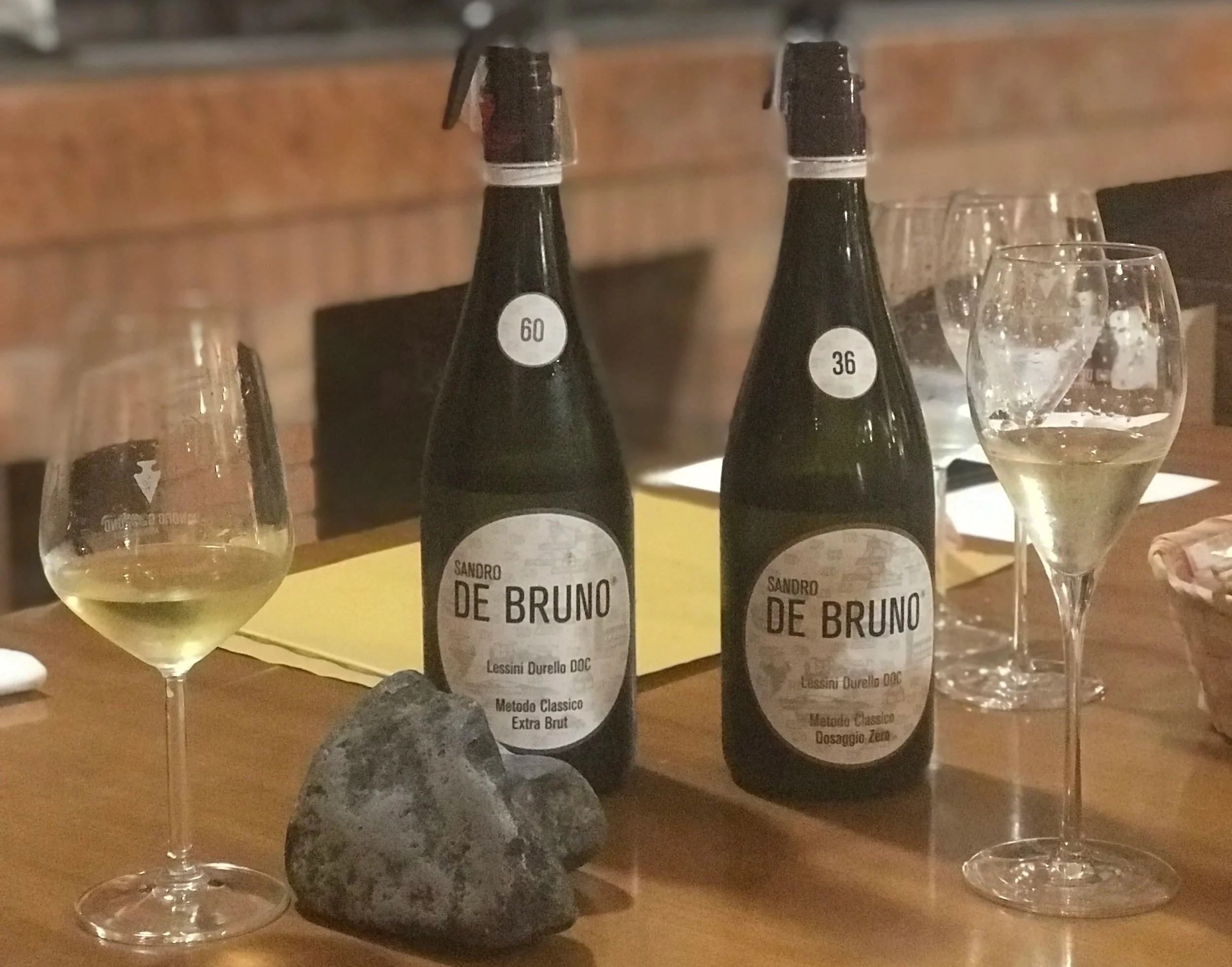
Nothing like tasting a flight of aged, volcanic soil Champagne style wines from the hard-to-find durella grape.
Time to Feel the Bubbles
We exist to allow all Americans, across the US, from businesses to consumers, to experience the pleasures of farm to glass wines, like the traditional method sparkling wines mentioned here today. Of course, you cannot forget a patented wine stopper, beloved by wine professionals the world over. It will keep your bubbles fresh for up to 3 days! How can you get your hands on this and other hidden gems we forage for?
If you are a distributor reach out to us introduce our highly curated portfolio of one of a kind small production wines to your state.
We sell to wine stores and restaurants in certain states - contact us to learn more.
If our farm crafted natural wines and olive oils are not in your local shop or restaurant, buy wine online here, and we’ll ship it to you, including wine gifts, like the popular Champagne Style Gift Set. Or surprise a Champagne lover with a vertical flight of volcanic Champagne style wines in the Metodo Classico Durello Gift Set.
We also have an award winning wine club for true wine explorers that are seeking to continually discover unique, sustainable and authentic small production wines they never had. These are wines selected by our sommeliers and curated for each box.
We do corporate gifts and sommelier guided wine tastings. Email us and we’ll tailor unique and sustainable corporate gift ideas plus unforgettable wine and food events!
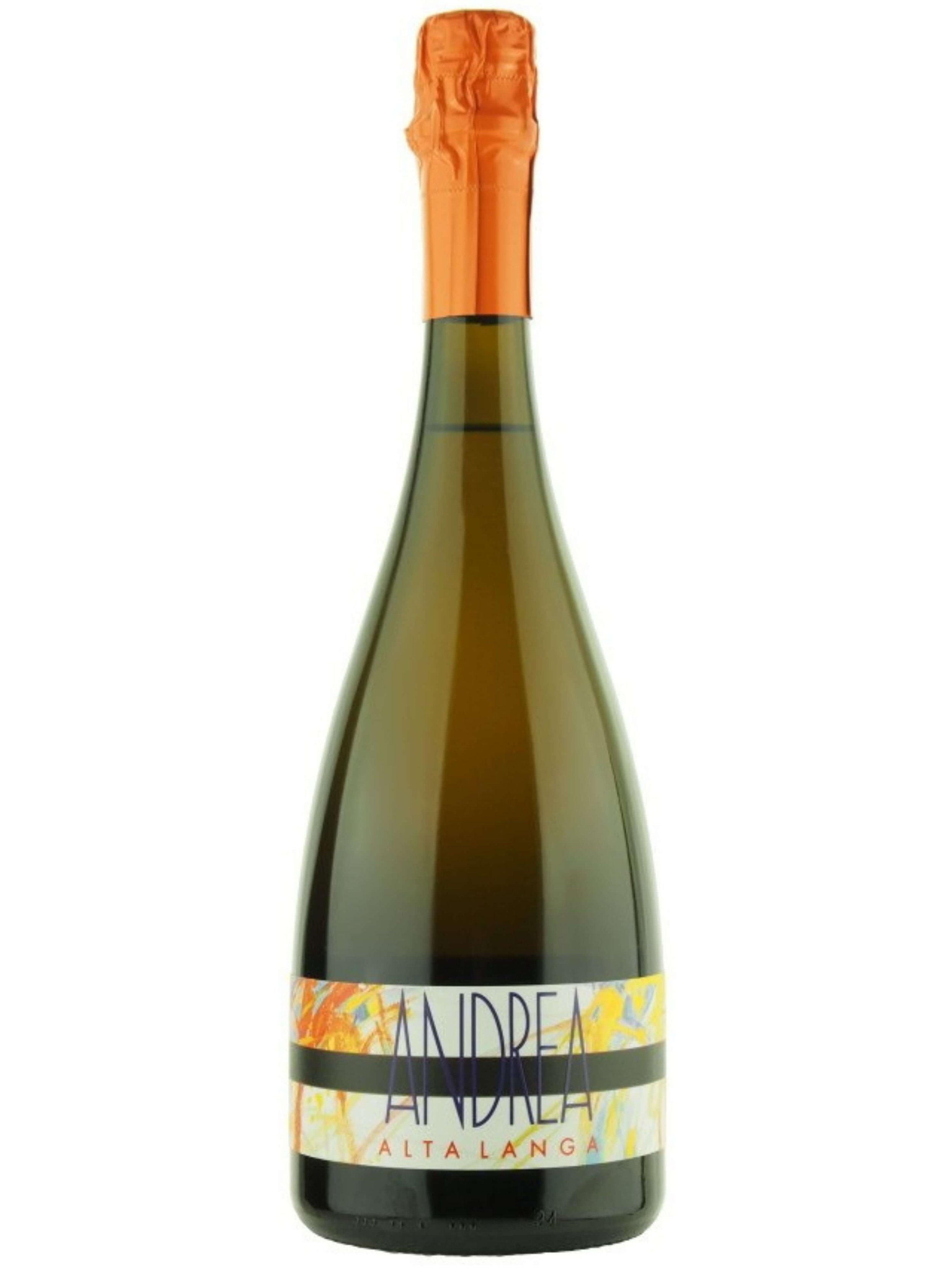
This Alta Langa Spumante, or an Italian sparkling wine, is an Extra Brut, with flavors of bread crust, caramel and candied fruit, with great acidity and salinity, a hint of sage and a long mineral finish.
Made following the traditional Champagne method, it ages on the lees for 30 months in the bottle. Alta Langa is a newer DOCG that is steeped in history and is an up-an-comer amongst Italian traditional method sparkling wines.
This vintage wine is from vineyards at 200 meters that are harvested slightly late to give the wine more structure. A Blanc de Blancs made from 100% chardonnay grapes, fine and persistent bubbles are present with an inviting straw yellow perlage.
Tastes Like: Bread crust, caramel, and candied fruit.
Farming & Winemaking Highlights: Regenerative Agriculture | Sustainable Winery | Biodynamic | Bottle fermented | Champagne Style
Fun Facts: - This wine is named for the current winemaker, Andrea Ivaldi, the 4th generation of his family to make wine, and the first to make a sparkling wine.
- A certified sustainable winery, Ivaldi practices regenerative farming.

With a persistent perlage, a bright gold color lights up the glass as complex exotic fruits and citrus aromas burst forth. Tasting, it is a dry wine with a delicate balance of acidity and sapidity keep you sipping and enjoying until the last drop.
The volcanic soil of the Sandro de Bruno vineyards lend well to this ancient, yet up and coming grape known as Durella. With a thick skin rich in polyphenols, they expertly craft this grape in a sparkling wine using a classic Champagne method. A zero dosage, for 36 months the wine rests on the lees before dégorgement and it then rests again.
It is markedly less intense than its 60 month aged and 100 month aged counterparts, creating a great entry point to the durello grape. You can try all three of these wines for yourself in the Durello Flight Set!
Tastes Like: Limes and Green Apples
Farming & Winemaking Highlights: Sustainable Winery | Volcanic Soil | Bottle Fermented | Champagne Style
Fun Facts: - “Linear and polished” is how Kerin O’Keefe in this Wine Enthusiast review describes this 95 point wine.

This Extra Brut Champagne style sparkling wine captivates the senses with complex flavors of lemons, delicate caramel, and underlying notes of apple, stone, and citrus pith.
It is a full-bodied sparkling wine, with a deep golden color and a marked minerality of flint and sapidity. The thick-skinned Durella grape thrives with long aging, and this wine’s 60-month on the lees aging delivers a fine, persistent perlage and a beautifully creamy texture on the palate.
It is markedly more intense than its 36 month aged counterpart, but less so than the 100 month aged counterpart, cutting a nice middle road between the two. You can try all three of these wines for yourself in the Durello Flight Set!
Tastes Like: Lemon cake and lemon pith
Farming & Winemaking Highlights: Sustainable Winery | Volcanic Soil | Bottle Fermented | Champagne Style
Fun Facts: - As noted by Kerin O'Keefe of Wine Enthusiast for a past vintage, this wine presents a "smooth dry and delicious" profile with a bright acidity, resulting in a persistent and evolving experience with every sip.
- Crafted by the winemaker of Sandro de Bruno on high-altitude volcanic soils, near the romantic city of Verona.
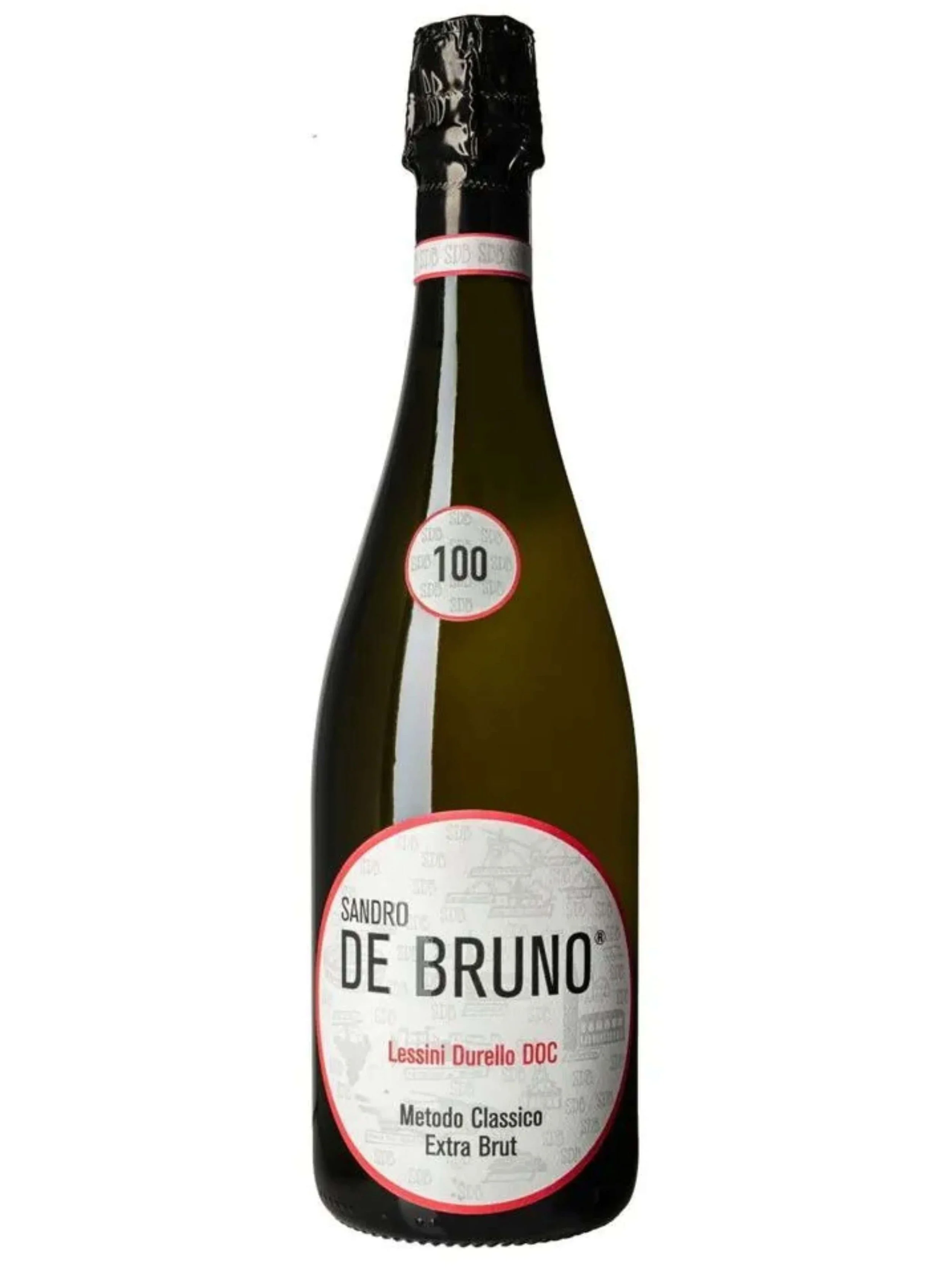
This rare and evolved Extra Brut Metodo Classico (Italian for the traditional method or Champagne method) is a special sparkling wine, offering a complex and rich flavor profile that tastes of caramel, crème brûlée, and warm croissant, followed by savory yeast and a hint of burnt caramel.
This wine is crafted mainly from the indigenous Durella grape on volcanic soil, which contributes exceptional saline and flinty mineral notes. An amazing 100 months of aging (8 years) on the lees gives it an incredibly fine, persistent perlage and a pleasantly dry, fresh finish.
It is markedly the most intense of its 36 month aged and 60 month aged counterparts, creating an amazing tip-top expression of the durello grape. You can try all three of these wines for yourself in the Durello Flight Set!
Tastes Like: Creme Brulee
Farming & Winemaking Highlights: Sustainable Winery | Volcanic Soil | Bottle Fermented | Champagne Style
Fun Facts: Born from volcanic soils at a dramatic 600 meters above sea level near the picturesque city of Verona.
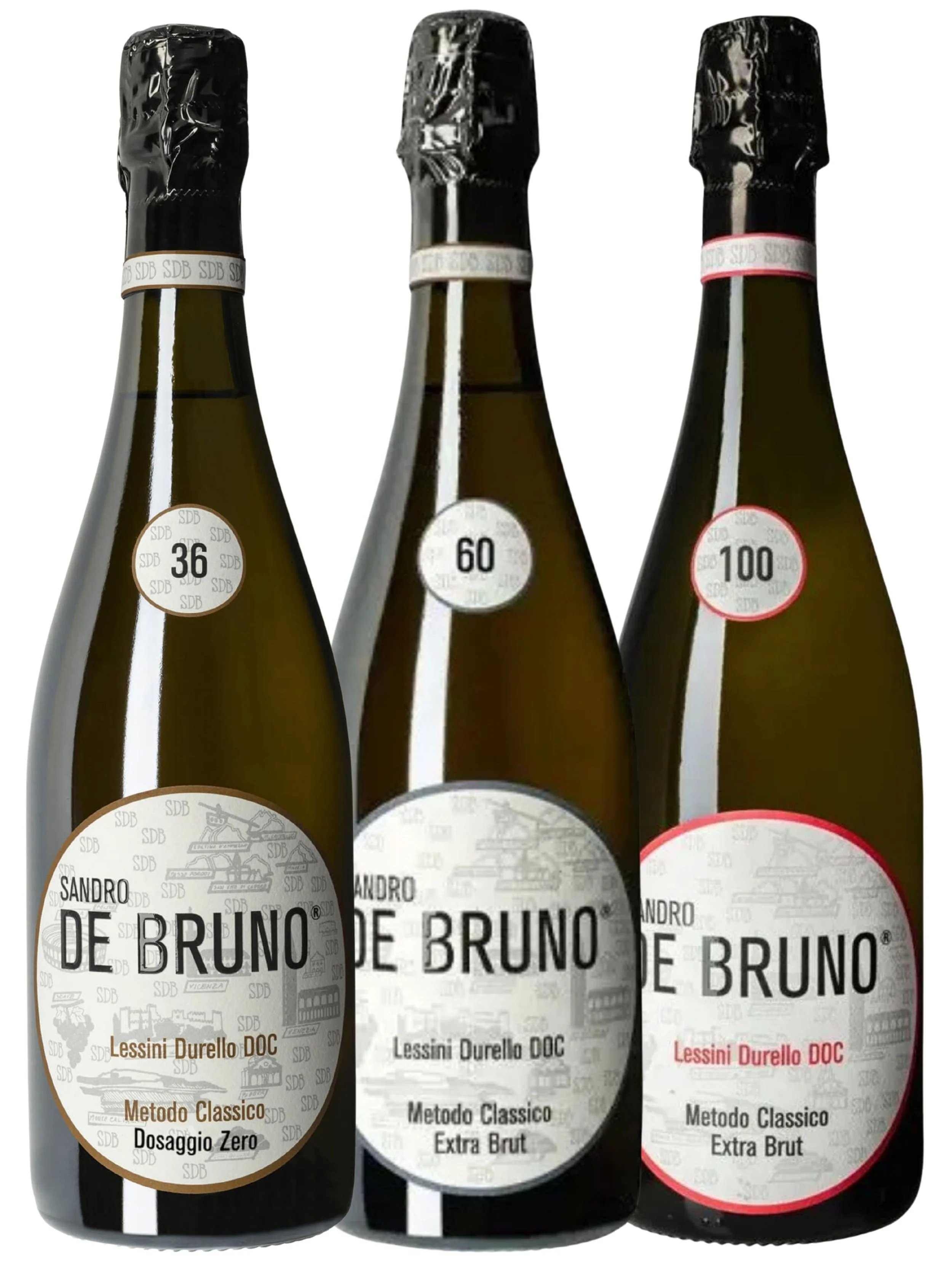
Experience the dramatic aging potential of the indigenous durella grape with this exceptional vertical flight from Sandro de Bruno, showcasing three distinct expressions of their Traditional Method sparkling wine. Born from high-altitude volcanic soils, the wines possess an inherent salinity and flinty minerality that underpins their complex structure. All traditional or Champagne method wines, the only difference here is how long they have each been aged on the lees. From 36 months, to 60 months, and finally 100 months, you can experience the evolution of the durella grape in sparkling wine form. Each bottle is a clear and fascinating study of how long-term aging on the lees transforms classic metod wines.
Shipping is included in the Continental US for any order with this set, as well we will include for a limited time only a patented WAF Professional Sparkling Wine Stopper (a $14.99 value) for free!
Included in this box are:
Sandro de Bruno Durello Metodo Classico Monti Lessini 36 Months Zero Dosage Sparkling Wine
Sandro de Bruno Durello Metodo Classico Monti Lessini 60 Months Extra Brut Sparkling Wine
Sandro de Bruno Durello Metodo Classico Monti Lessini 100 Mesi Extra Brut Sparkling Wine
Professional Champagne and Sparkling Wine Stopper | Made in Italy
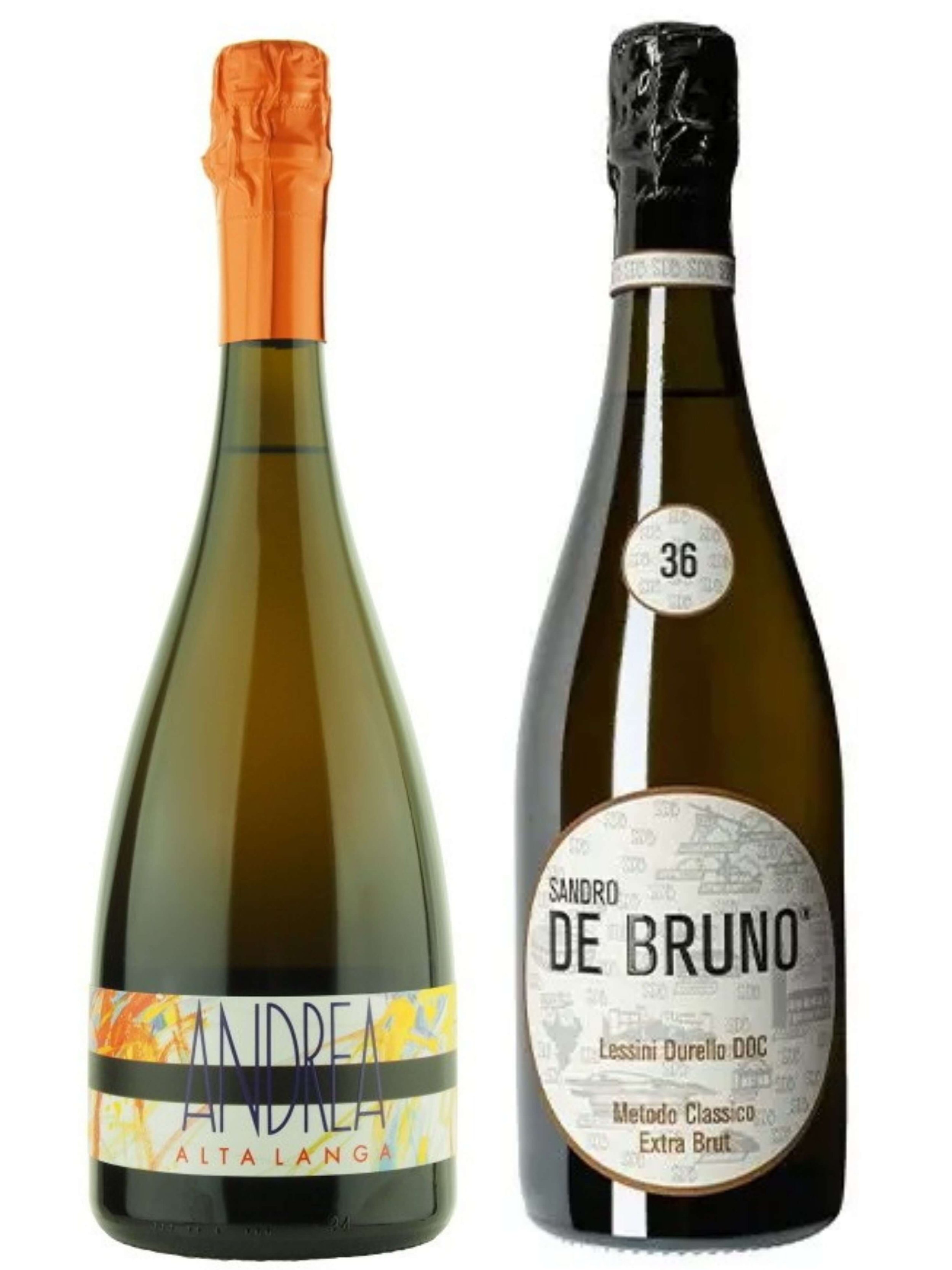
This set of artisanal white sparkling wines have 2 wines made in the traditional Champenoise method, one from Northern Italy, in Piedmont, an Alta Langa, and the other from Verona Italy made with the unique durella grape. Both were refermented on the lees in the bottle for over 30 months, making them complex and delicious. A real treat for yourself or as a gift to that special someone in your life. Shipping in the Continental US is included for any order with this set, as well we will include for a limited time only a patented WAF Sparkling Wine Stopper (a $14.99 value) for free!
Included in this box are:
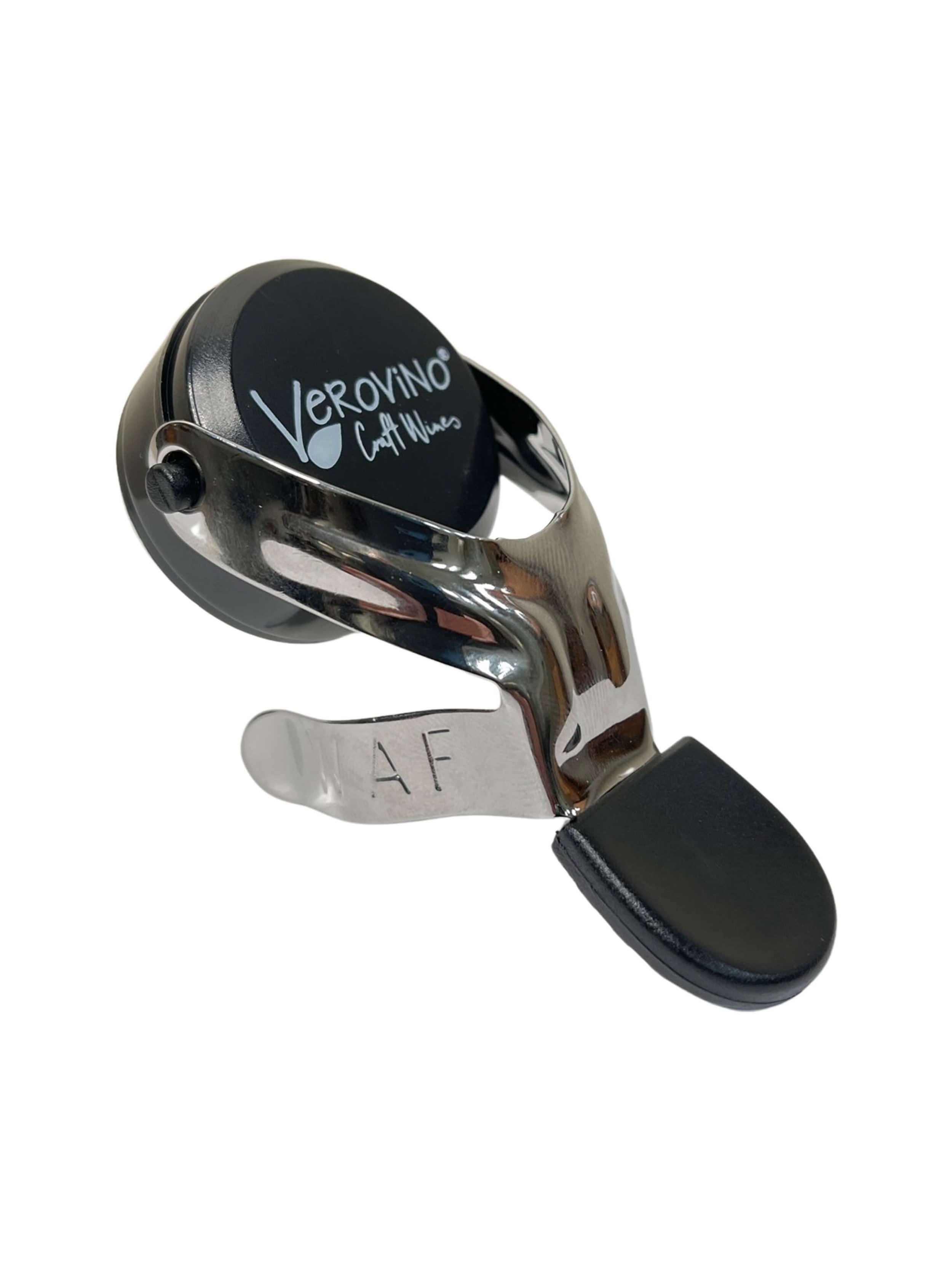
This is THE best sparkling wine stopper on the market, patented and imported from Italy. Use this and the bubbles in your sparkling wine will last for up to 3 days. The patented seal is based on physics: as pressure builds inside the bottle, the seal gets even tighter. It is the top choice among European sparkling winemakers. It comes with a patented design and is made in Italy. This is sommelier tested with many other products on the market and this one wins without a doubt.
This easy to use stopper is the best way to preserve your sparkling wines once opened, from frizzante to prosecco, pet nat and classic method champagnes. Now you don’t have an excuse to buy a bottle of sparkling wine because you can’t finish it in a day. Great for home or restaurant use.